
You call claude-fable-5, the response looks normal, and then you check the model field: claude-opus-4-8. Your request tripped a safety classifier, Fable 5 declined to answer, and a different model stepped in. This isn’t a bug. It’s how Fable 5 is designed to work, and your integration should handle it on purpose rather than by accident.
We covered the reasoning behind this architecture in our explainer on Fable 5’s safety safeguards. This article is the hands-on companion. You’ll learn what triggers a reroute, how to detect one in code, how the beta fallbacks parameter automates the retry, and how to test your refusal handling before a real user hits it.
Why Fable 5 reroutes some requests
Claude Fable 5 ships with safety classifiers that screen incoming requests. They watch three domains: cybersecurity, biology and chemistry, and model distillation. When a classifier trips, Fable 5 refuses the request. On Claude’s consumer surfaces, the request is then handled by Claude Opus 4.8 and the user is notified it happened. On the API, recovery is your call, and that’s where the fallbacks parameter comes in.
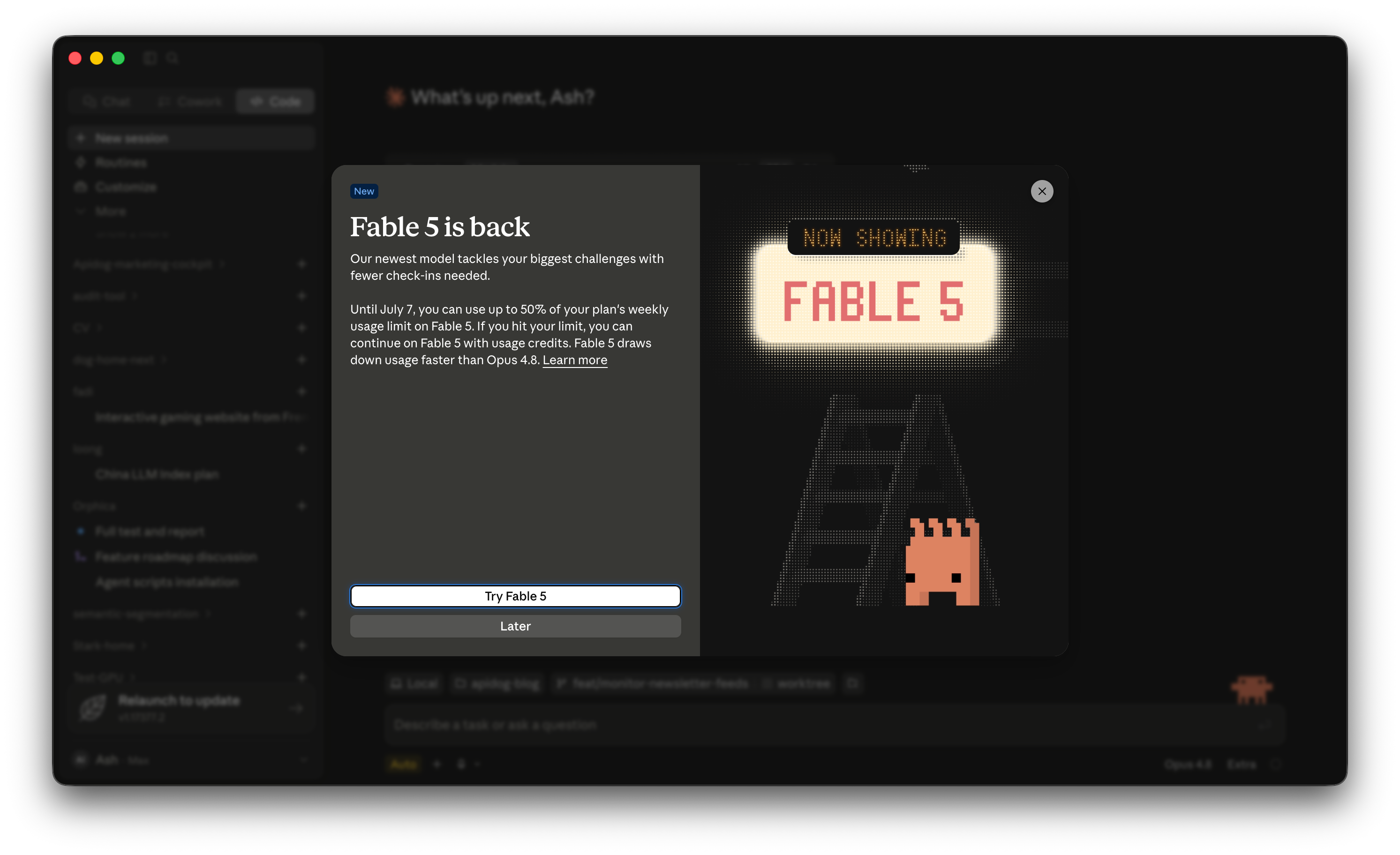
The classifiers aren’t frozen. After the June suspension, Anthropic retrained the classifier against a reported jailbreak technique; the updated version blocks more than 99% of attempts. Fable 5 was redeployed on July 1, 2026 with the new classifier in place. If you paused your integration during the outage, our Fable 5 is back hub has the full timeline and what changed.
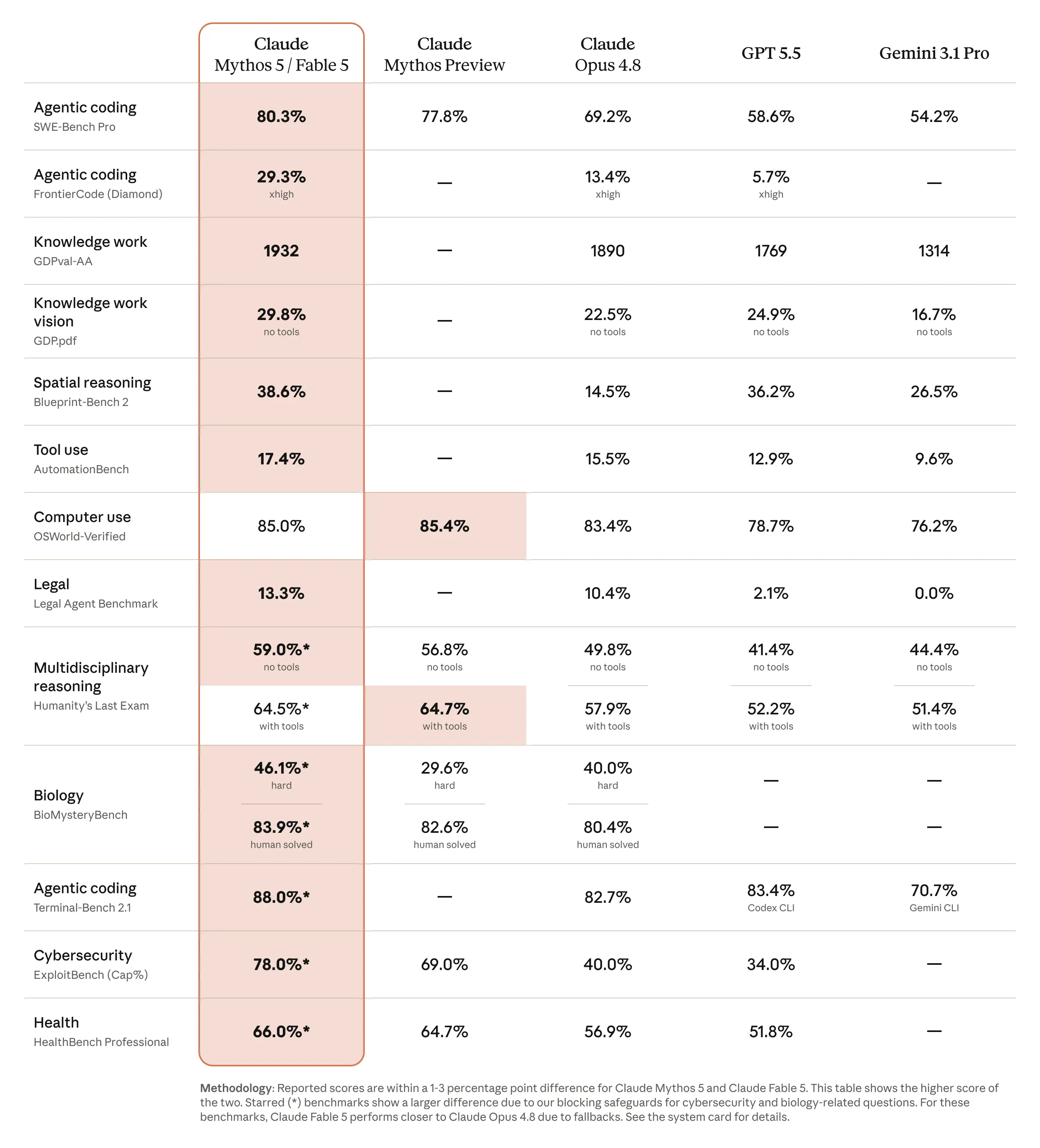
One more piece of context helps here. The classifiers sit in front of the model, not inside it. Claude Mythos 5 is the same model without classifiers, and access is restricted to Project Glasswing participants. More than 95% of Fable sessions involve no fallback at all, and for those sessions Fable 5’s performance is effectively identical to Mythos 5. We break down the differences in Fable 5 vs Mythos 5.
What a reroute means for your app
Fable 5 and Opus 4.8 are both strong models, but they aren’t interchangeable from an engineering standpoint. Fable 5 runs a 1M token context window with 128K max output at $10 per million input tokens and $50 per million output tokens; Opus 4.8 has its own pricing and its own behavior profile. The models overview lists current specs for both. A prompt you tuned against Fable 5 may produce different lengths, different formatting, or different tool-calling patterns on Opus 4.8.
Whether that matters depends on your use case:
- It usually doesn’t. For chat assistants, agents, and general generation, an Opus 4.8 answer is a good answer. More than 95% of sessions never fall back, so the blended effect on quality is small.
- It matters for evals and pinned pipelines. If you benchmark against a specific model, a silent reroute contaminates your data. Same for structured extraction with prompts tuned to one model’s exact behavior.
- It matters for cost attribution and compliance. Fallback attempts bill at the serving model’s rates, and some teams must record which model produced each output.
- It matters most near the trigger domains. Security tooling and life-sciences work sit close to the classifier’s targets, so false positives land there more often than elsewhere. If that’s you, treat fallback handling as a first-class code path, not an edge case.
Detecting a fallback programmatically
The reliable signal is the response’s model field. Every Messages API response names the model that produced it, so a request sent to claude-fable-5 that returns claude-opus-4-8 was rerouted. That’s standard Messages API behavior; you don’t need any beta feature to read it.
Two other fields belong in the same log line. stop_reason tells you whether the request was refused outright: a declined request without fallback handling returns HTTP 200 with stop_reason set to "refusal" and no usable content, so check it before reading response.content. And usage gives you the token counts you need to attribute cost to the model that billed them.
response = client.messages.create(
    model="claude-fable-5",
    max_tokens=16000,
    messages=[{"role": "user", "content": prompt}],
)

if response.stop_reason == "refusal":
    # Declined with no fallback configured: no usable content came back
    handle_refusal(response)
elif not response.model.startswith("claude-fable-5"):
    logger.info(
        "fallback served_by=%s in=%d out=%d",
        response.model,
        response.usage.input_tokens,
        response.usage.output_tokens,
    )
If you’re wiring up the API from scratch, start with our guide on how to use the Claude Fable 5 API and add this check once your first calls work.
The fallbacks parameter
Without any fallback configuration, a refused API request simply stops. You get the refusal, your user gets nothing, and the retry logic is yours to write. The fallbacks parameter moves that retry to the server: when Fable 5 declines, the API reruns the same request on a model you name, inside the same call, and returns that model’s answer.
The parameter is in beta on the Claude API and Claude Platform on AWS, documented on Anthropic’s refusals and fallback page. You opt in with a beta header, and at launch the only supported fallback target is claude-opus-4-8:
response = client.beta.messages.create(
    model="claude-fable-5",
    max_tokens=16000,
    betas=["server-side-fallback-2026-06-01"],
    fallbacks=[{"model": "claude-opus-4-8"}],
    messages=[{"role": "user", "content": prompt}],
)

print(response.model)  # claude-opus-4-8 if the request was rerouted
Billing works in your favor. A request declined before any output was generated isn’t billed at all; the rescue attempt bills at the fallback model’s own rates. Detection stays the same as before: response.model names the model that answered.
A few boundaries to know. The parameter is rejected on the Batches API and isn’t available on Amazon Bedrock, Google Vertex AI, or Microsoft Foundry; on those platforms you handle retries client-side. And if the fallback model refuses too, the final response carries stop_reason: "refusal", so keep the refusal branch from the previous section even with fallbacks enabled.
Designing your handling policy
Detection and retry are mechanics. The real decision is what your product does when a fallback happens, and there are three sane policies:
Accept the Opus answer. Right for chat products, assistants, and most agents. Enable fallbacks, log the event, and move on. Your user gets an answer in one round trip instead of an error.
Retry with a changed request. Right for pipelines where model consistency matters more than latency. Don’t resend the same prompt to Fable 5; the classifier that refused it once will refuse it again. Rephrase away from the trigger, route the whole job to Opus 4.8, or queue it for human review.
Surface it to the user. Right when customers pay for Fable 5 specifically, or when compliance requires disclosure. Show which model answered and let the user decide whether to rerun.
Whichever policy you pick, track your fallback rate. A rate near zero matches the platform-wide baseline. A rate creeping past a few percent means your prompts brush against a trigger domain, and it’s worth reviewing them before the volume grows.
Testing refusal paths before production
Fallback handling is the kind of code that works in the demo and fails six weeks later, because refusals are rare by design. You can’t wait for a real user to trip the classifier to find out whether your logging, retries, and UI all behave. You have to provoke the path yourself.
Apidog makes this practical. Define the Claude Messages endpoint once, keep your API key in an environment variable, and build a test scenario from a small suite of edge-case prompts: a handful of security-adjacent and bio-adjacent prompts that sit near the classifier’s targets, plus benign controls that should never reroute. Then assert on the response body. Each test checks the model field (did the control stay on claude-fable-5? did the edge case come back from claude-opus-4-8?) and the stop_reason (did anything refuse outright?).
Run the scenario on a schedule or in CI. When Anthropic retrains the classifier, as it did before the July 1 redeploy, your suite tells you within a day whether your edge cases still behave the way your handling code expects. That’s a five-minute setup in Apidog versus a silent production surprise.
FAQ
Does the fallbacks parameter cost extra? No. A request that’s declined before producing output isn’t billed. If the fallback model answers, you pay that model’s normal per-token rates for the rescue attempt. You’re never billed twice for the same answer.
Will security-related prompts always trigger a fallback? No. The classifiers target harmful requests in cybersecurity, biology and chemistry, and model distillation, not the topics themselves. Most security engineering work passes through untouched; more than 95% of all sessions see no fallback. False positives do happen near those domains, which is exactly why you test the path and log the rate.
I moved off Fable 5 during the June suspension. Is it safe to come back? Yes. With the July 1 redeploy, the retrained classifier is live and the API surface is unchanged. Our guide on switching back to the Fable 5 API walks through re-enabling it, and the fallbacks parameter is the piece most teams add on the way back in.
Wrapping up
Fable 5’s reroutes are a design decision, not an incident, so treat them like one in your code. Check response.model on every call, keep a refusal branch even with fallbacks enabled, opt into the fallbacks parameter unless you have a reason not to, and pick a policy for what your product does when Opus 4.8 answers. Then prove the whole path works: build the edge-case suite in Apidog, assert on model and stop_reason, and run it on a schedule. Download Apidog and you can have the refusal suite running before your next deploy.