
Claude API credits are a monthly allowance that Anthropic now includes with Max and Team subscriptions: $100 a month on Max 5x, $200 on Max 20x, and up to $500 pooled on Team. You claim them once by linking a Claude Console organization to your plan, they land in that organization every billing cycle, and you can spend them on the Claude API, Managed Agents, the Agent SDK and the playground without adding a card. They don’t cover Claude Code, they don’t roll over, and Free, Pro and Enterprise plans don’t get them.
Anthropic announced the credits in its Claude Haiku 5.5 launch post on October 7, 2026, and the API credits docs page carries the rules. This post covers who qualifies, how to claim, what the money covers, and what it buys at today’s model prices. You’ll need an Anthropic API key from the linked organization, and we’ll use Apidog to store it and watch the usage block on every call.
How much each plan gets
| Plan | Monthly credit | Notes |
|---|---|---|
| Max 5x | $100 | Refreshes each billing cycle |
| Max 20x | $200 | Prorated credit arrives right away if you upgrade from 5x |
| Team, Standard seat | $20 per seat | Pooled with the other seats |
| Team, Premium seat | $100 per seat | Pooled with the other seats |
| Team pool cap | $500 | Hard cap on the combined monthly balance |
| Nonprofit and Scientists Team plans | Same per-seat amounts | Same $500 cap |
| Free, Pro, Enterprise | None | Not eligible |
On Team plans the pool is computed from the seats on your plan at the start of the billing month. Anthropic’s own example: three Standard seats and two Premium seats receive $260 a month (3 x $20 + 2 x $100); add another Premium seat and the next month’s credit is $360. Annual plans still receive the credit monthly.
For scale, Claude’s pricing page lists Max from $100 a month, so a Max 5x subscriber gets the plan price back in API credit every month.
Who can claim
Three conditions, all from the docs page:
- Your plan must be Max 5x, Max 20x or Team (including the discounted Nonprofit and Scientists Team plans), active and in good standing.
- New subscribers wait 7 days on the eligible plan before claiming.
- Plans bought through the iOS or Android apps are eligible, but you claim on claude.ai in a web browser.
If you don’t see the API credits section yet, the support article says the rollout is happening “over a few days”, so check again before contacting support.
How to claim the credits
Claiming is a one-time link between your Claude plan and a Claude Console organization. You need both roles: on the plan side, the Max subscriber, or a Team Primary Owner or Owner; on the Console side, Owner, Admin or Billing in the receiving organization.
- On claude.ai, open Settings > Billing on a Max plan, or Organization settings > Billing on a Team plan.
- In the API credits section, choose Link organization, pick the Console organization (or create one in the flow), and accept the credit terms.
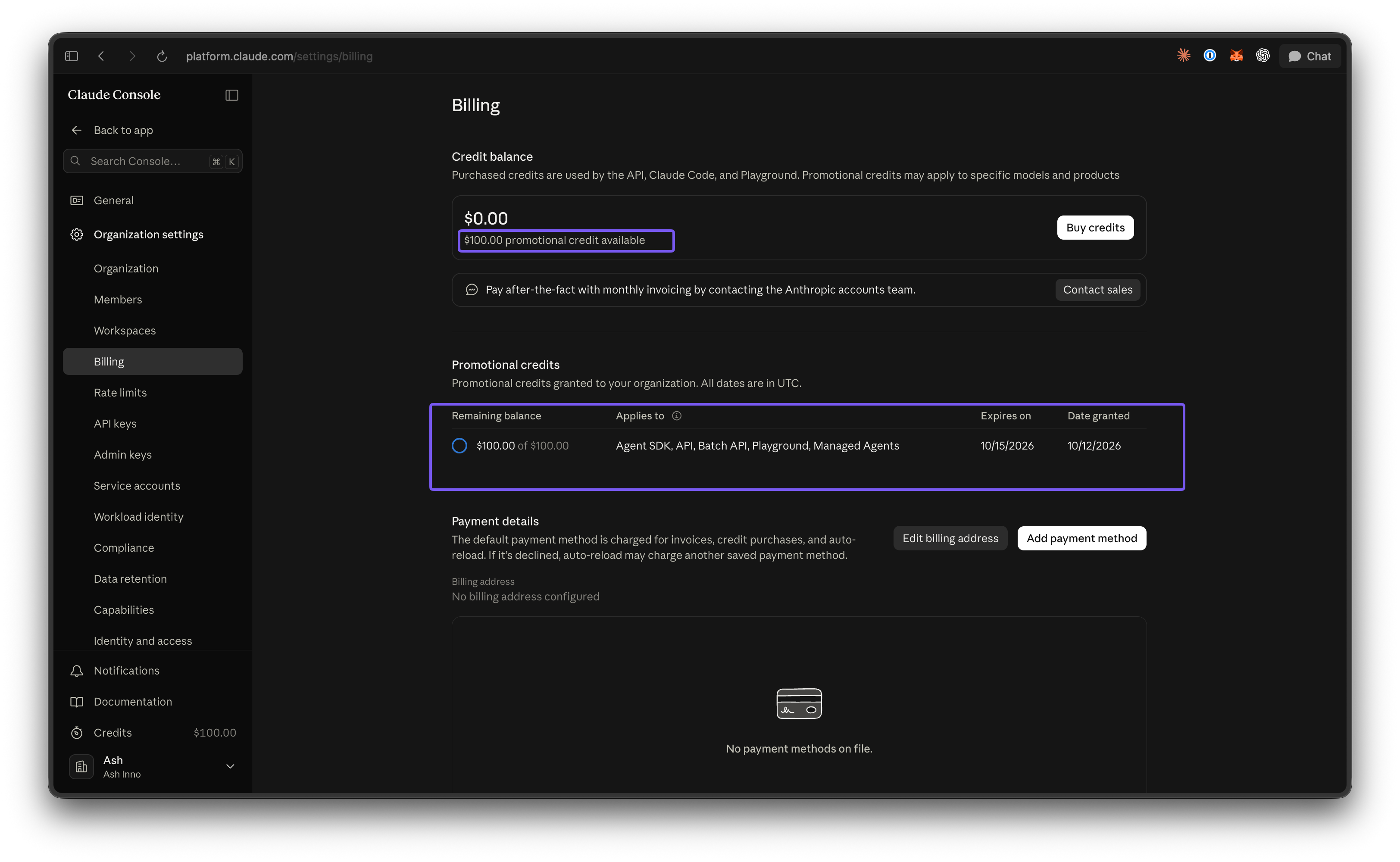
- Open the Console. The balance appears under Settings > Billing in the Promotional credits section with its amount and expiry date. Create an API key and send a request.
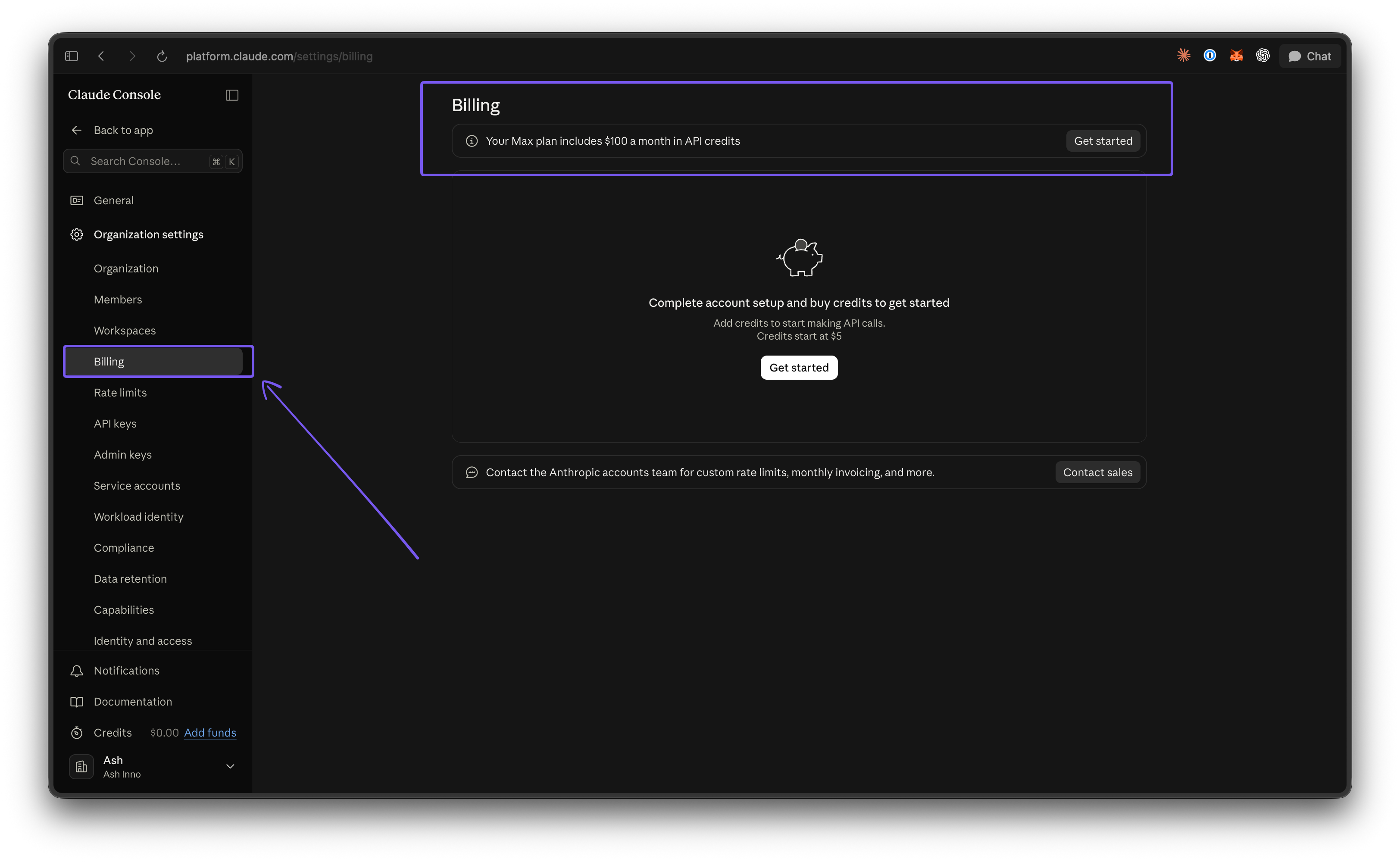
Each plan links to exactly one Console organization, each organization can receive credits from one plan, and only support can change the link later, so link the organization you intend to build in.
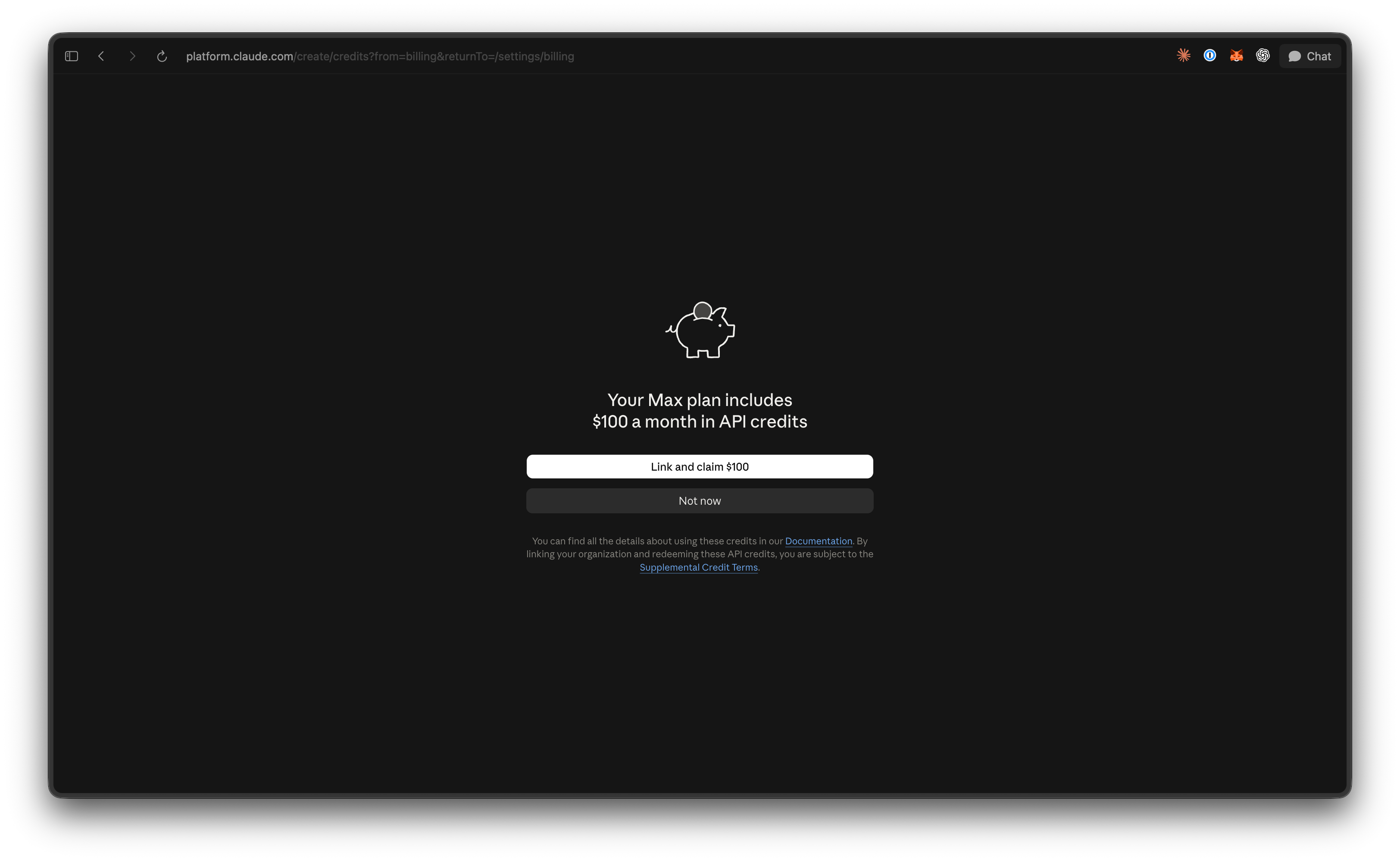
No payment method is required on the Console.
What the credits cover, and what they don’t
| Product | Covered |
|---|---|
| Claude API (Messages, including streaming, tool use, caching, Batch) | Yes |
| Claude Managed Agents | Yes |
| Claude Agent SDK, run with an API key from the linked organization | Yes |
claude -p run with an API key from the linked organization |
Yes |
| Console playground | Yes |
| Interactive Claude Code (terminal, IDE, desktop, web) | No |
claude -p while signed in with your Claude plan |
No, draws from plan limits |
Claude Code GitHub Action, IDE extension or desktop-app runs, even with -p |
No, counted as Claude Code |
| Extra usage in the Claude apps, Claude Code or Cowork | No |
| Claude on Amazon Bedrock, Google Cloud Vertex AI, Microsoft Foundry, or Claude Platform on AWS | No |
The claude -p rows come from the support FAQ. The rule is about which identity bills the call: an API key from your linked organization bills as Agent SDK usage and spends credits; a plan login bills against your subscription limits. Our Claude Managed Agents guide covers the hosted side. The credits never change your usage limits in Claude or Claude Code.
How the balance behaves
Timing. Credits arrive shortly after each plan payment is processed; monthly on annual plans.
Spend order. Included credits are spent first, then any credits you purchased. Auto-reload looks only at the purchased balance, so it can top up even while free credit remains.
Expiry. Unused credit expires at the end of the billing cycle. Nothing rolls over.
Sharing. Every API key and workspace in the linked organization draws from the same balance. To stop one experiment from draining the pool, give it its own workspace and set a workspace spend limit.
Spend caps and tiers. Credit usage counts toward the organization’s monthly spend cap, which resets on the first of the month while credits refresh on your billing date. Linked organizations move up to at least the Start tier ($500 cap), or Build ($1,000 cap) if the monthly credit exceeds $200, per the rate limits page. Credit spend doesn’t count toward tier promotion.
When it runs out. With purchased credits or auto-reload on, requests keep going. With nothing else in the organization, API requests stop until the next monthly deposit, and nothing is ever charged to your Claude plan. The API returns:
Your credit balance is too low to access the Anthropic API. Please go to Plans & Billing to upgrade or purchase credits.
Plan changes. Cancel or downgrade and new deposits stop, but the credit you hold stays usable until it expires. Upgrade from Max 5x to 20x and you get a prorated top-up at once, then $200 a cycle. Move from Max to Team and the Max link ends; a Team owner can claim after 7 days.
Not the same as the other “credits”
The phrase “Claude credits” now points at four different things.
- Monthly API credits (this post): Max and Team, Console organization, API and Agent SDK.
- Usage credits in the Claude apps: pay-as-you-go extra usage at standard API rates when you hit a plan limit, per the pricing page. Not Console money.
- The June Agent SDK change: announced, then paused on June 15. The support FAQ states the October credits are not that program.
- New-user trial credit: the pricing docs say new users receive “a small amount of free credits to test the API”, a one-time amount unrelated to your plan; how to use Claude for free covers it.
What $100 of credit buys
Credit is spent at list price, so the model you pick decides how far it goes. At Anthropic’s current pricing, a request with 2,000 input tokens and 500 output tokens costs:
| Model | Input / output per MTok | Cost per request | Requests per $100 |
|---|---|---|---|
| Claude Haiku 5.5 (prompts up to 100K tokens) | $0.10 / $0.50 | $0.00045 | about 222,000 |
| Claude Sonnet 5.5 | $2 / $10 | $0.009 | about 11,100 |
| Claude Opus 5.5 | $4 / $20 | $0.018 | about 5,500 |
The arithmetic for Sonnet: 2,000 / 1,000,000 x $2 = $0.004 input, plus 500 / 1,000,000 x $10 = $0.005 output, so $0.009 a call. Three levers stretch it, all from the docs page’s own advice: route easy work to a cheaper model (see Claude Haiku 5.5 pricing), use prompt caching for repeated context (cache reads are $0.10 per MTok on Sonnet 5.5 and $0.01 on Haiku 5.5 for prompts up to 100K tokens), and send anything that can wait through the Batch API at 50 percent off.
Track credit spend in Apidog
A fixed monthly budget makes per-request cost worth asserting on, not estimating. Here’s the setup in Apidog:
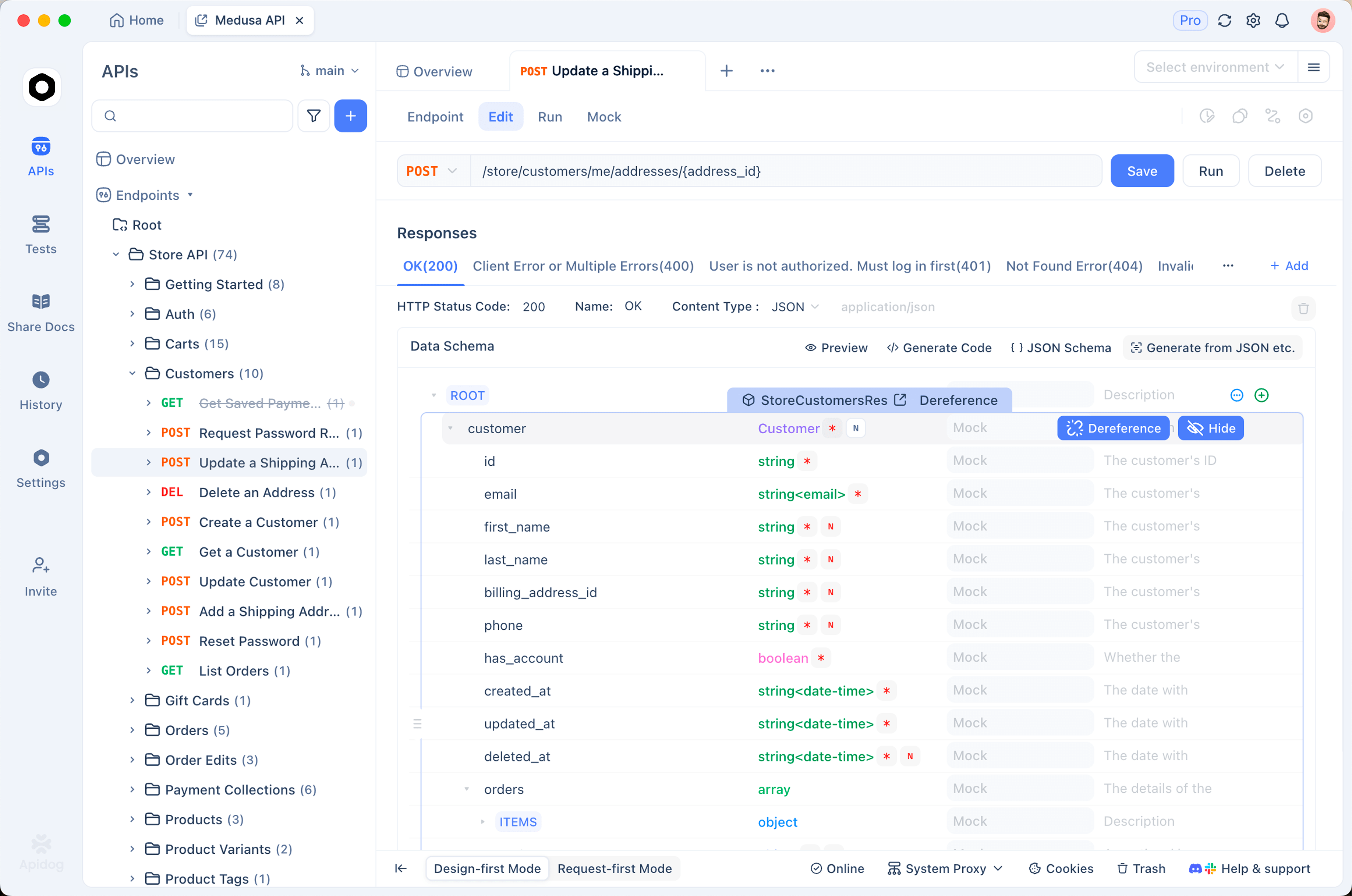
- Add
ANTHROPIC_API_KEYas a secret environment variable holding a key from the linked organization, and reference it as{{ANTHROPIC_API_KEY}}in thex-api-keyheader next toanthropic-version: 2023-06-01. - Save a POST to
https://api.anthropic.com/v1/messageswith your real system prompt and a typical user turn, modelclaude-sonnet-5-5. - Add assertions: status is 200,
$.usage.input_tokensis below your expected ceiling, and$.usage.output_tokensis belowmax_tokens. A prompt that balloons past the budget fails before it ships. - Duplicate the request with
claude-haiku-5-5and compareusageon the same prompt to decide which model each route deserves. - Add a cached-system-prompt variant and assert that
$.usage.cache_read_input_tokensis greater than 0 on the second run. - Save a negative test that expects the “credit balance is too low” message so your error handling runs before the balance hits zero.
Download Apidog to keep the runs; the free plan covers four users. For broader patterns, see testing LLM applications.
FAQ
Do Claude API credits expire? Yes. Each month’s credit expires at the end of that billing cycle (monthly on annual plans) and doesn’t roll over.
Does Claude Code use API credits or my subscription? Interactive Claude Code never spends these monthly credits; it draws on your subscription limits (or on purchased API credits, if you point it at a Console key). The only Claude Code form that spends the monthly credits is claude -p or the Agent SDK run with an API key from your linked organization.
Can I split or gift the credits? No. Credits go to one Console organization, which can receive credits from one plan. Every key and workspace inside it shares the balance.
How do I check the balance? Console > Settings > Billing, under Promotional credits, shows the amount and expiry date. The Cost page breaks down what consumed it.
What if I need more than the credit? Buy credits or turn on auto-reload in the Console. Rate limits are unchanged, so a burst of 429s is a rate-limit or monthly spend-cap problem, not an empty balance; our rate limit guide covers the headers to read.
Is the Claude API free with a Pro plan? No. Pro users get only the one-time new-user credit that any new Console account gets, then pay list price; how to use Claude Haiku 5.5 for free lists what is and isn’t free today.
Where to start
Link the organization you’ll build in, send one saved request from Apidog, and read usage before you write more code. The credit refreshes on your billing date, so the budget you set in week one decides whether $100 lasts the month.