SoapUI has been testing web services since 2005, and for WSDL-driven SOAP work it’s still the name everyone knows. But most teams searching for a SoapUI alternative in 2026 aren’t testing SOAP anymore. They’re testing REST, GraphQL, and gRPC APIs with a Java desktop app that was designed around XML contracts, stores projects as giant XML files, and pushes every dynamic behavior into Groovy scripts.
Here’s the direct answer: Apidog is the best SoapUI alternative for API teams working on REST and modern protocols. It replaces Groovy scripting with visual test orchestration, adds schema-aware mocking and published documentation, and runs a free plan for up to 4 users. This article covers where SoapUI shows its age, what a switch looks like, and the cases where SoapUI is still the right tool.
Where SoapUI shows its age
SoapUI Open Source is maintained by SmartBear, and releases still happen; version 5.9 shipped in mid-2025. The problems are structural rather than a lack of maintenance:
- It thinks in SOAP. SoapUI’s core abstractions come from WSDL contracts: operations, envelopes, XPath assertions. REST support was added later and it reads that way. Building and asserting on JSON payloads means fighting a UI designed for XML, a gap we broke down in SoapUI Pro vs SoapUI Open Source.
- Everything dynamic is a Groovy script. Chaining requests, extracting values, conditional logic, custom assertions: the answer is Groovy. That’s power for a QA engineer who knows the JVM, and a wall for everyone else on the team. Test suites become codebases only one person can maintain.
- Projects are XML files. A SoapUI project is one large XML document. Two people editing the same project produce merge conflicts that are miserable to resolve, so teams end up passing project files around instead of collaborating.
- The free tier is the demo tier. Data-driven testing, native CI integrations, and detailed reporting sit in the commercial product. SoapUI Pro was folded into ReadyAPI, and third-party trackers list ReadyAPI from around $829 per license per year. The upgrade path out of free SoapUI is a four-figure quote, which is usually the moment teams evaluate the wider market; our older roundup of SoapUI alternatives exists because of that moment.
- It’s heavy. A Java Swing desktop app that loads entire projects into memory. Large test suites mean long startup times and a UI that lags.
None of this matters if you live in WSDL contracts all day. It matters a lot if SOAP is 10% of your work and REST is the rest.
The answer: Apidog
Apidog is an API development platform used by over 500,000 developers. It handles API design, debugging, automated testing, mocking, and documentation in one workspace, built around your OpenAPI spec rather than a WSDL.
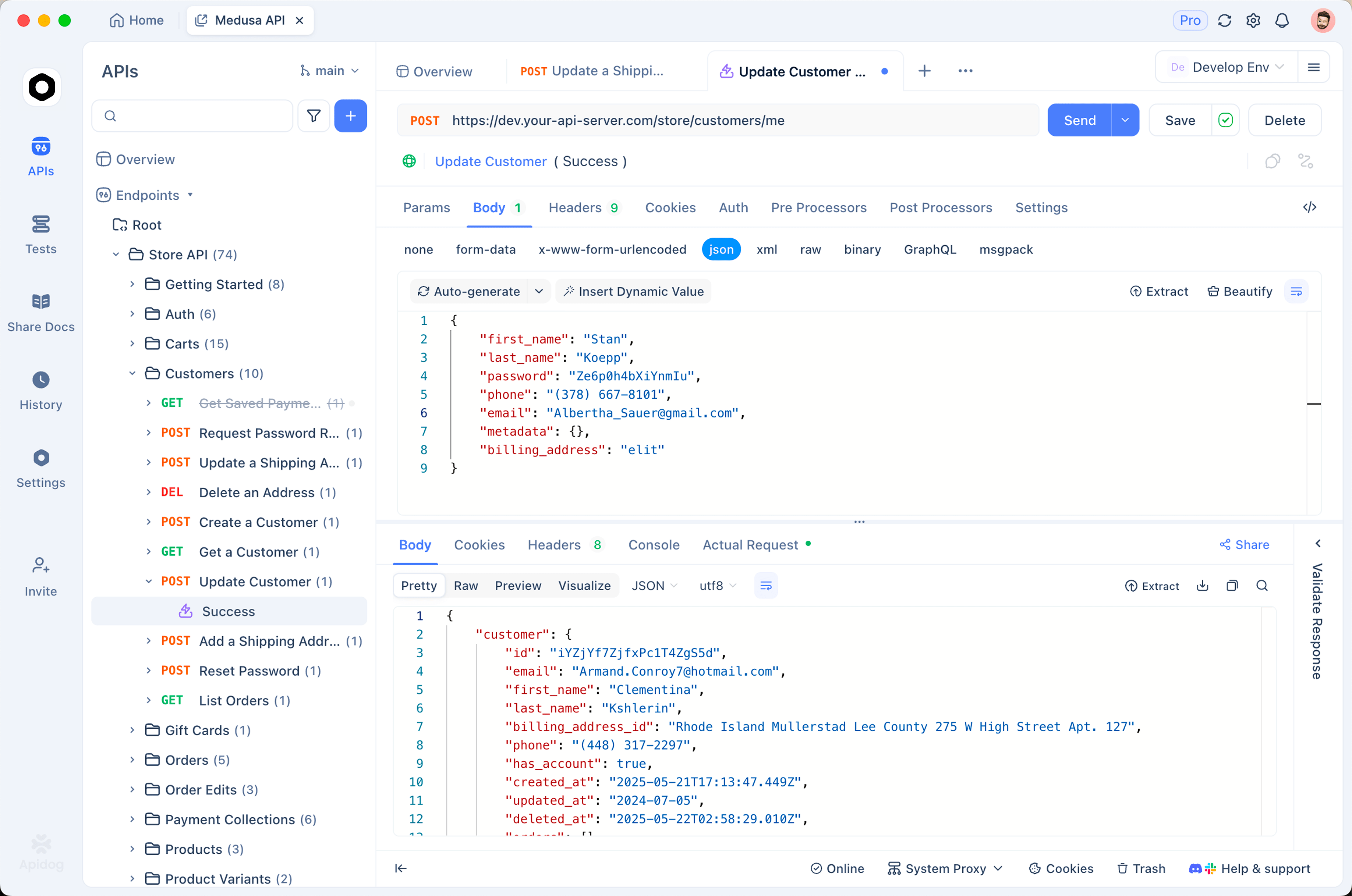
For a team leaving SoapUI, the relevant facts:
- Tests are visual, not scripted. Scenarios chain endpoints, pass values between steps, and assert on responses through a UI. The logic a SoapUI user writes in Groovy (extract this ID, feed it to the next call, assert on the result) is drag-and-configure in Apidog. When you do want code, scripts are supported, and the syntax is Postman-compatible rather than JVM-only.
- The free plan covers 4 users with unlimited APIs, requests, and test runs. The features SoapUI locks behind ReadyAPI (data-driven testing, CI integration, shareable reports) are in Apidog’s core product.
- Modern protocols are native. REST, GraphQL, gRPC, WebSocket, and SSE are first-class. JSON assertions work on JSON, not on XML representations of JSON.
- Paid plans start at $9 per user per month, so the jump from free doesn’t land on a four-figure per-seat license.
What changes in practice
Test logic without the Groovy tax
Apidog’s test builder covers the patterns SoapUI teams script by hand: extract a value from response A into request B, loop over a data set, branch on a condition, assert on status, schema, or specific fields. A QA engineer builds it; the rest of the team can read and edit it. Data-driven runs pull test data from CSV or JSON without a script, on every plan including free.
Mocking from the schema, not from scripts
SoapUI’s mock services work, especially for SOAP, but REST mocks need manual response setup and often more Groovy; we covered the details in SoapUI mock service: setup guide and modern alternative. Apidog’s smart mock engine reads your OpenAPI schema and returns realistic data automatically: an email field gets an email, a price field gets a number. Frontend teams get a working fake API the moment the spec exists, and a self-hosted mock option keeps traffic inside your network.
Performance tests in the same tool
SoapUI Open Source includes basic load testing, with the serious version sold separately in ReadyAPI. Apidog includes performance testing in the same workspace as functional tests: reuse the same scenarios, configure concurrency, and read latency and throughput results without exporting anything.
CI without wrestling
Apidog’s CLI runs any scenario headlessly and emits an HTML report per run:
npm install -g apidog-cli
apidog run scenario --scenario-id 12345 --env staging
It slots into Jenkins, GitLab CI, or GitHub Actions the way testrunner.sh never quite did; the full command surface is in how to manage APIs with Apidog CLI.
Documentation as an output, not an afterthought
SoapUI produces test artifacts. Apidog also produces the public face of the API: interactive docs generated from the spec, hosted on a custom domain, with a “try it” console. For teams that currently maintain docs in a separate tool, that’s a line item removed.
SoapUI vs Apidog at a glance
| SoapUI Open Source | Apidog | |
|---|---|---|
| Price | Free (Pro features moved to ReadyAPI, ~$829+/license/yr) | Free up to 4 users, then $9 per user/mo |
| Built for | SOAP/WSDL contracts | REST, GraphQL, gRPC, WebSocket |
| Test logic | Groovy scripts | Visual orchestration + optional scripts |
| Data-driven testing | Paid (ReadyAPI) | Included, all plans |
| Mocking | SOAP-centric mock services | Schema-aware smart mocks, self-hostable |
| Load testing | Basic free, full version paid | Included |
| CI integration | testrunner scripts | CLI with HTML reports |
| Docs generation | No | Yes, hosted with custom domain |
| Collaboration | Shared XML project files | Real-time team workspace |
| Platform | Java desktop | Desktop (Win/macOS/Linux) + web app |
The honest caveat in this table: if the first row’s “built for” column says SOAP and that’s your workload, most of the Apidog column matters less. More on that below.
Migrating a SoapUI workflow
There’s no one-click SoapUI project importer, and pretending otherwise would be dishonest. The realistic path:
- Start from the contract, not the project file. If your services have OpenAPI definitions, import those into Apidog directly; endpoints, schemas, and examples arrive structured. For SOAP-era services without specs, importing a Postman collection or cURL commands rebuilds the request layer fast.
- Rebuild test suites as scenarios. This is re-creation, not translation, but teams consistently find the second version smaller: the extraction-and-chaining logic that filled Groovy files becomes visual steps, and assertions that took XPath gymnastics become field-level checks.
- Wire the CLI into the same CI jobs that used to call testrunner.sh, then retire the Java installation from your build agents.
Budget a sprint for a mid-sized suite. Teams doing this migration usually report the rewrite forced a cleanup of tests nobody had audited in years.
Your first hour after switching
Minutes 0 to 15: import. Bring in the OpenAPI spec for one service, or a Postman-format export if that’s what you have. Endpoints, schemas, and examples arrive grouped and ready to send.
Minutes 15 to 30: rebuild one test case. Pick a SoapUI test case with a property transfer in it. Recreate it as a scenario: request A, extract a field from the response, feed it into request B, assert on the result. No Groovy, and the whole team can read what it does.
Minutes 30 to 45: make it data-driven. Attach a CSV of inputs to the scenario and run it once per row. In SoapUI this is where the ReadyAPI upsell appears; here it’s a built-in step on the free plan.
Minutes 45 to 60: put it in CI. Install the CLI, run the scenario by ID, and archive the HTML report in your pipeline. The Java installation on your build agent is now optional.
That hour answers the real question: not whether Apidog has the features, but whether your team can operate them without the one person who knows the old suite.
When SoapUI still makes sense
If your estate is WSDL-driven SOAP services (banking middleware, government integrations, enterprise service buses), SoapUI remains the specialist tool, and Apidog won’t import a WSDL or generate SOAP envelopes for you. If your team runs deep JMS or JDBC virtualization, that’s ReadyAPI territory too; we compared that stack in SmartBear pricing and top alternatives. And if one QA engineer owns a mature Groovy suite that works, rewriting it has a real cost that should be weighed against the collaboration gains. The switch pays off when REST and modern protocols are the bulk of your testing and the Groovy-and-XML overhead falls on the whole team.
Frequently asked questions
Is Apidog free like SoapUI Open Source?
Apidog’s free plan supports 4 users with unlimited APIs, requests, and test runs, and it includes the capabilities SoapUI reserves for ReadyAPI: data-driven testing, CI integration, and shareable test reports. SoapUI Open Source is free for one machine at a time with the core feature set.
Can Apidog test SOAP services?
Apidog can send XML request bodies over HTTP, so simple SOAP calls work. What it doesn’t do is import WSDLs or generate envelopes from contract definitions. If WSDL-driven testing is your daily work, keep SoapUI for that slice.
Do I need to know Groovy to use Apidog?
No. Chaining, extraction, data-driven loops, and assertions are all visual. Scripting is available when you want it, using Postman-compatible syntax rather than Groovy.
What replaces SoapUI’s testrunner in CI?
The Apidog CLI. Install with npm install -g apidog-cli, run scenarios by ID against any environment, and publish the HTML report as a build artifact. It replaces the Java-based testrunner scripts in Jenkins, GitLab CI, or GitHub Actions.
What happened to SoapUI Pro?
SmartBear merged SoapUI Pro into ReadyAPI, its commercial API testing platform. The open-source SoapUI continues, but advanced features live in ReadyAPI, which third-party pricing trackers list from around $829 per license per year.
Try it against one service
Pick one REST service you currently test in SoapUI, import its OpenAPI spec, and rebuild its test suite as an Apidog scenario. Download Apidog and time the exercise; most teams have a working, CI-connected scenario before the SoapUI project would have finished loading its XML. Your team of 4 works free, and nothing about the trial requires a sales call.