

TL;DR
Modal is a serverless Python infrastructure platform for running custom code on cloud GPUs. Its main limitations are coding overhead (you write custom Python containers), no pre-deployed model catalog, and per-second compute billing. Simpler alternatives include WaveSpeed (600+ pre-deployed models, REST API, no coding required), Replicate (open-source model catalog), and Fal.ai (fastest serverless inference).
Introduction
Modal is genuinely useful for a specific type of problem: you have custom Python code that needs to run on GPUs, and you want it to scale automatically without managing Kubernetes or EC2 instances. Writing a Modal function that runs on an A100 is much simpler than setting up your own GPU cluster.
The tradeoff is that you’re still writing and maintaining Python containers. You’re still thinking about infrastructure, just at a higher level of abstraction. For teams that need to run standard AI models (image generation, video creation, text generation), there’s a simpler path: call a managed API and skip the infrastructure entirely.
What Modal does
- Serverless GPU execution: Write Python functions, run them on cloud GPUs
- Automatic scaling: Functions scale to zero and back up without configuration
- Container management: Handles Python dependencies and GPU drivers
- Fast cold starts: Faster than traditional container orchestration
Where teams look for alternatives
- Coding overhead: You write Python containers; there’s no zero-code path
- No pre-deployed models: Standard models aren’t available; you build everything
- Per-second billing: Costs accumulate even when model loading takes time
- Maintenance: Your custom functions need ongoing updates as dependencies change
- Learning curve: Modal’s programming model has specific patterns to learn
Top alternatives
WaveSpeed
Models: 600+ pre-deployed models Interface: REST API, no Python container required Exclusive: ByteDance Seedream, Kling 2.0, Alibaba WAN Pricing: Pay-per-API-call
For teams using Modal to run image or video generation models, WaveSpeed eliminates the entire infrastructure layer. No Python functions to write and maintain. No container configuration. You call an endpoint and get a result.
WaveSpeed covers image generation (Flux, Seedream, Stable Diffusion), video generation (Kling, Runway, Hailuo), text generation (Qwen, DeepSeek), and more. If your Modal functions run any of these standard models, WaveSpeed is a direct replacement.
Replicate
Models: 1,000+ community models Interface: REST API, per-second billing Custom deployment: Cog tool for packaging custom models
Replicate handles the most common open-source models with a clean REST API. For teams using Modal specifically because they couldn’t find a hosted version of their target model, Replicate’s 1,000+ catalog is worth checking first.
Fal.ai
Models: 600+ serverless AI models Speed: Proprietary inference engine, 2-3x faster generation Interface: REST API with Python SDK
Fal.ai is architecturally closest to Modal: serverless, fast cold starts, scalable. The difference is that Fal.ai’s models are pre-deployed and managed. You call an API; you don’t write deployment code.
Comparison table
| Platform | Coding required | Pre-deployed models | Cold starts | Pricing |
|---|---|---|---|---|
| Modal | Yes (Python) | No | Fast | Per-second compute |
| WaveSpeed | No | 600+ | Zero | Per-API-call |
| Replicate | No (standard API) | 1,000+ | 10-30s | Per-second compute |
| Fal.ai | No | 600+ | Minimal | Per-output |
Testing with Apidog
The key difference between Modal and alternatives is testability. Modal requires deploying a function before you can test it. Hosted APIs test in Apidog immediately.
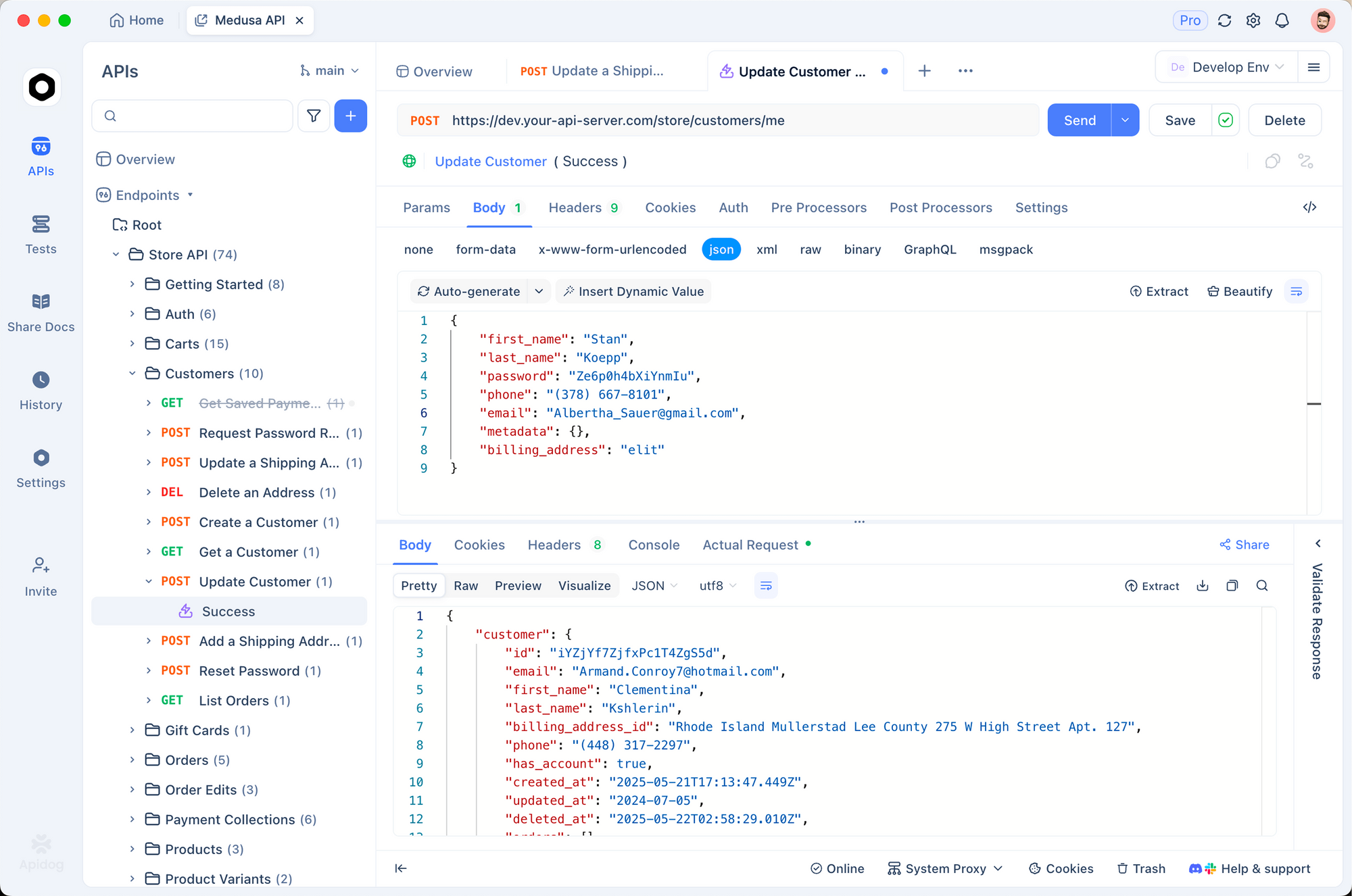
WaveSpeed image generation:
POST https://api.wavespeed.ai/api/v2/black-forest-labs/flux-2-pro
Authorization: Bearer {{WAVESPEED_API_KEY}}
Content-Type: application/json

{
  "prompt": "An isometric illustration of a city block, minimal style, soft colors",
  "image_size": "square_hd"
}
Fal.ai same model:
POST https://fal.run/fal-ai/flux-pro
Authorization: Key {{FAL_API_KEY}}
Content-Type: application/json

{
  "prompt": "An isometric illustration of a city block, minimal style, soft colors"
}
Create separate Apidog environments for each provider. Run both with your actual prompts. Compare quality, response time, and cost per request. Make a data-driven decision instead of guessing.
When Modal is still the right choice
Modal remains the right choice when:
- You need custom Python logic alongside model inference (preprocessing, post-processing, multi-step pipelines)
- Your model isn’t available on any hosted platform (custom fine-tunes, proprietary architectures)
- You need GPU access for non-AI workloads (simulation, data processing, rendering)
- You require specific GPU types for performance or compliance reasons
For standard model inference, hosted APIs are faster to deploy and lower maintenance.
FAQ
Can I use Modal and WaveSpeed together in the same application?Yes. Use Modal for custom Python logic and pre/post-processing. Use WaveSpeed for standard AI model inference. Many production systems combine both.
Is Modal cheaper than pay-per-use APIs?It depends on utilization. Modal’s per-second billing means idle time costs nothing. For high-utilization workloads, Modal can be cheaper. For sporadic workloads, pay-per-use APIs are more economical.
What does migrating from Modal to a hosted API look like?Replace your Modal function call with an HTTP request to the equivalent API endpoint. Update your response parsing for the new JSON shape. Remove Modal dependencies from your project. In most cases, this is a 1-2 hour code change.