TL;DR
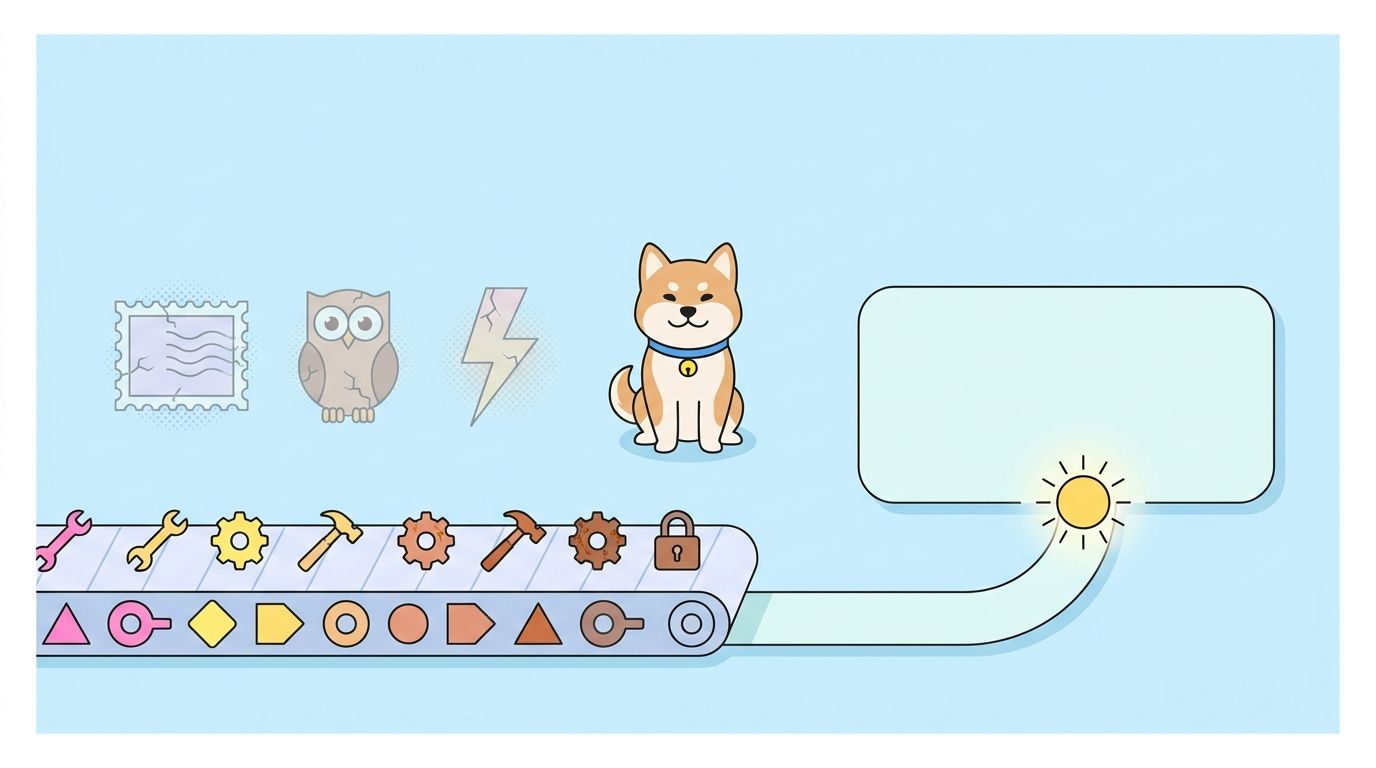
Postman removed offline mode. Insomnia locked collections behind mandatory login. Thunder Client paywalled git sync. The pattern is the same every time: a developer tool gains adoption, takes VC funding, and degrades its free tier to hit growth targets. If you’re tired of migrating between tools that follow this cycle, look for three things: local-first architecture, no mandatory cloud sync, and a business model that doesn’t depend on locking you into a paid tier to survive. Apidog checks all three and covers the full API lifecycle in one workspace.
Introduction
A 644-point thread hit r/programming this month with a title that resonated across the developer community: “The API Tooling Crisis: Why developers are abandoning Postman and its clones?”
The post struck a nerve because it named a pattern everyone has experienced but few have articulated. Developer tools follow a predictable lifecycle: launch with a generous free tier, grow through word-of-mouth, raise venture capital, then systematically degrade the product to force upgrades. Postman did it. Insomnia did it. Thunder Client did it.
The frustration isn’t about any single pricing change or feature removal. It’s about the realization that the tool you built your workflow around will, given enough time and enough investor pressure, turn against you.
This article maps the timeline of how we got here, explains the economics behind it, and lays out a framework for choosing API tools that won’t repeat the cycle.
The enshittification timeline: three tools, one pattern
The term “enshittification” describes how platforms degrade their products to extract value from users. In API tooling, the pattern has played out three times in three years.
Postman: the original breakup
Postman started as a Chrome extension for sending HTTP requests. Simple, fast, free. Developers loved it. It grew to 25 million users.
Then came the $225 million Series D. And with it, the pressure to generate returns on a valuation that no HTTP client can justify through organic revenue alone.
The changes came in stages:
- 2023: Scratchpad (offline/local mode) removed. Every request now syncs to Postman’s cloud by default.
- 2024: Free tier restrictions tightened. Collection runner limited to 25 runs per month.
- March 2026: Free plan reduced from 3 users to 1 user. Team plan set at $19 per user per month.
That last change means a three-person team now pays $684 per year to collaborate on API requests. For a tool whose core function is sending an HTTP request and displaying the response.
The security implications are worse than the pricing. With mandatory cloud sync, every API key, auth token, and database credential you test with gets uploaded to Postman’s servers. In 2023, CloudSEK found over 30,000 public Postman workspaces leaking API keys, including credentials for Razorpay and New Relic.
For teams in banking, healthcare, and government, security compliance teams flat-out banned Postman after cloud sync became mandatory. The tool didn’t change because of a technical failure. It changed because its business model required it.
Insomnia: the acquisition casualty
When developers fled Postman’s cloud-first push, many landed on Insomnia. Clean interface. Local storage. No account required.
Then Kong acquired Insomnia in 2019. For a while, nothing changed. But when Insomnia 8.0 shipped, it required mandatory login. Users who opened their collections one morning found them locked behind a sign-in screen. Local collections that had worked offline for years were suddenly inaccessible without a cloud account.
The community response was immediate and brutal. The Insomnia GitHub repo filled with issues from developers who lost access to their own data. The original creator’s departure reinforced the narrative: acquisition kills developer tools.
Thunder Client: the VS Code betrayal
Thunder Client emerged as the lightweight escape hatch. A VS Code extension that stored collections as JSON files. No Electron overhead. No account needed. Git-friendly by design.
Until the git-based collection sync feature moved behind a paywall. The feature that made Thunder Client worth using, storing your API collections alongside your source code in version control, became a paid feature.
Three tools. Three teams of developers who built workflows, wrote documentation, trained colleagues, and integrated CI/CD pipelines around a tool that changed the rules after adoption.
Why this keeps happening
The pattern isn’t random. It’s structural.
The VC math doesn’t work for utility software
An HTTP client is a solved problem. The core functionality, sending a request and displaying the response, can be built by a single developer in a weekend. The API testing tools market is projected to exceed $3.8 billion by 2026, but that number includes enterprise testing platforms, not standalone HTTP clients.
When Postman raised $225 million, investors expected returns that a simple developer tool can’t generate. The only path to those returns is converting free users into paying customers. And the most effective conversion mechanism is removing features from the free tier.
As one Hacker News commenter put it: “The UI for making API calls is such a simple problem that you can’t make supernormal profits off it.” The VC model requires supernormal profits. That tension is the engine driving every degradation you’ve experienced.
Cloud sync is an artificial moat
Mandatory cloud sync isn’t a feature. It’s a lock-in mechanism. When your collections, environments, and test scripts live on someone else’s servers, switching costs become real. You can’t drag-and-drop a Postman workspace into a competitor. You need export tools, format converters, and hours of manual verification.
Cloud sync also creates recurring revenue opportunities. Storage limits, collaboration seats, and API call quotas all become billable dimensions once your data lives in the vendor’s cloud.
Feature bloat hides the degradation
Each pricing change comes bundled with new features: AI assistants, flow builders, monitoring dashboards, governance panels. The narrative is always “we’re adding value.” But the features serve the enterprise sales motion, not the developer sitting at their desk.
A Reddit commenter captured the disconnect: “Ninety percent of developers want to ping an endpoint and see the JSON. These tools have turned that into an enterprise collaboration platform.”
The features aren’t bad. They’re a distraction from the fact that the basic functionality you relied on is getting worse: slower startup times, higher memory usage, more mandatory UI elements between you and your HTTP request.
The real cost: beyond the subscription price
Performance tax
Postman’s Electron architecture means 10+ second cold starts and memory consumption that regularly exceeds 1 GB. For a tool you open dozens of times a day, those seconds compound. Across a five-person team, slow startup times cost hours per month in lost focus and context switching.
Compliance risk
Mandatory cloud sync creates compliance exposure in regulated industries. If your API tests touch production data, patient health information, or financial records, syncing those requests to a third-party cloud service may violate HIPAA, PCI DSS, or SOC 2 requirements.
After the Vercel April 2026 breach (which exposed environment variables stored without encryption), security teams are scrutinizing every tool that touches API credentials. Postman’s cloud-first model is increasingly difficult to defend in a security review.
Migration cost
Every time a tool degrades, you pay the migration tax: exporting collections, learning a new interface, updating CI/CD integrations, retraining team members. If you’ve migrated from Postman to Insomnia to Thunder Client to whatever comes next, you’ve spent weeks on tool transitions that added zero value to your product.
Vendor lock-in cost
Postman’s collection format uses internally generated UUIDs and nested JSON structures that produce unreadable git diffs. Your API test definitions become coupled to Postman’s specific data model. The longer you stay, the harder it gets to leave.
What developers want (and what they keep not getting)
The community conversation is clear about what developers need. It’s a short list:
Send a request. See the response. The core use case hasn’t changed since Postman was a Chrome extension. Most developers need an HTTP client, not a platform.
Keep data local. Collections, environments, and variables should live on your machine or in your git repo. Cloud sync should be opt-in, not mandatory.
Work offline. Airplane mode, air-gapped networks, and spotty hotel WiFi are real. An API client that requires an internet connection to function has failed at its primary job.
Play nice with git. API test definitions should be diffable, mergeable, and reviewable in pull requests. Opaque JSON blobs with random UUIDs fail this test.
Don’t eat my RAM. A tool that sends HTTP requests shouldn’t need a gigabyte of memory. Native performance matters for a utility you keep open all day.
Price fairly. Collaboration shouldn’t cost $19 per person per month. Basic functionality shouldn’t be gated behind a paywall.
How to evaluate your next API client (without getting burned again)
Before you migrate to the next trending tool, evaluate it against criteria that predict whether it will follow the same degradation cycle.
1. Check the funding model
Who pays the bills? VC-funded tools face pressure to monetize aggressively. Open-source projects with corporate backing face the Insomnia problem: the backer’s priorities may diverge from yours. Self-sustaining tools with transparent pricing (one-time purchase, reasonable subscriptions, or generous free tiers) are more likely to remain stable.
2. Test the offline experience
Disconnect from the internet and try to use the tool. Can you create requests? Run tests? Access your collections? If anything breaks without a network connection, cloud dependency is baked into the architecture, not bolted on.
3. Inspect the data format
Export a collection and open it in a text editor. Is it human-readable? Can you diff two versions meaningfully? Can you store it in git alongside your source code? File-based formats (like Bruno’s .bru files) are inherently more portable than proprietary JSON schemas.
4. Measure the resource footprint
Check memory and CPU usage after opening 10 collections with 50 requests each. If the tool exceeds 500 MB, it’s carrying architectural overhead you’ll pay for every day.
5. Verify the migration path
Can you import your existing Postman collections? How about OpenAPI specs, cURL commands, or Insomnia exports? A tool that makes it easy to arrive also makes it easy to leave, and that’s a feature, not a bug.
6. Read the roadmap for red flags
Look for signs of the enshittification cycle: new “collaboration” features that require cloud accounts, “workspace” concepts that centralize data storage, or “team” plans that gate basic functionality. These aren’t improvements. They’re monetization infrastructure.
Breaking the cycle with Apidog
Apidog was built to address each of the pain points driving the API tooling crisis. Here’s how it maps to what developers need:
Full API lifecycle in one workspace
Apidog covers API design, development, testing, mocking, and documentation in a single application. You don’t need Postman for testing, Swagger for documentation, and a separate mock server. One tool. One interface. One data model.
This isn’t feature bloat. It’s consolidation. Instead of paying for five tools and dealing with data synchronization between them, you work in a unified workflow where your API spec drives your tests, your tests validate your mocks, and your documentation stays in sync with your implementation.
Local-first, cloud-optional
Apidog works offline. Your collections, environments, and test data live on your machine. Cloud sync exists for team collaboration, but it’s opt-in, not mandatory. You can run Apidog in air-gapped environments for compliance-sensitive work.
For enterprise teams, the self-hosted Runner lets you keep all API testing infrastructure inside your own network. No data leaves your premises.
One-click Postman import
Migrating from Postman takes minutes, not hours. Apidog imports Postman Collection v2.1 JSON files directly, preserving your folder structure, variables, and scripts. It also imports from OpenAPI/Swagger specs, Insomnia exports, cURL commands, HAR files, and WSDL definitions.
The conceptual mapping is straightforward:
| Postman | Apidog |
|---|---|
| Collection | Project/Module |
| Request | API Endpoint |
| Environment | Environment |
| Collection Variable | Module Variable |
| Pre-request Script | Pre-processor |
| Post-response Script | Post-processor |
You can also set up scheduled imports from git repositories for automatic synchronization, keeping your API definitions in version control where they belong.
Fair pricing that doesn’t punish growth
Apidog’s free tier supports up to 4 users with full feature access. No artificial limits on collection runs. No gated functionality. When you do need to upgrade, pricing scales with value delivered, not with the number of seats your team happened to fill.
Compare that to Postman’s $684 per year for three users. Or Insomnia’s $12 per user per month. Apidog’s model is designed to let small teams work without financial pressure, because the best way to earn upgrades is to prove value first.
Native performance
Apidog isn’t built on Electron. It starts in seconds, runs with a fraction of the memory footprint, and stays responsive even with large collections open. For a tool you keep open all day, this matters more than any feature list.
Zero npm dependency for core functionality
After the Axios npm supply chain attack on March 31, 2026 (which injected a cross-platform RAT into 83 million weekly downloads), developers are rethinking their dependency chains. Apidog’s core HTTP functionality doesn’t depend on npm packages. Your API testing tool shouldn’t be a vector for supply chain attacks.
Vault integration for credential security
Instead of syncing API keys to a third-party cloud, Apidog integrates with HashiCorp Vault, Azure Key Vault, and AWS Secrets Manager. Your credentials stay encrypted and managed by infrastructure you control. This isn’t a premium feature. It’s part of how Apidog handles authentication across all 13 supported methods, from basic auth to mutual TLS.
Real-world scenarios
Fintech startup (8 developers)
A payment processing team was paying $1,824 per year for Postman Team ($19/user/month x 8 users). After their compliance team flagged Postman’s mandatory cloud sync as a PCI DSS risk, they migrated to Apidog in one afternoon. They imported 340 Postman collections, connected their existing HashiCorp Vault instance, and resumed testing the same day. Annual savings: $1,824. Compliance risk: eliminated.
Healthcare SaaS (3 developers)
A HIPAA-covered entity needed to test APIs that handle patient health information. Postman’s cloud sync was a non-starter. They evaluated Bruno (too limited for their mocking needs), Hoppscotch (no vault integration), and Apidog. Apidog’s self-hosted Runner and mTLS support met their security requirements. The built-in Smart Mock generated realistic test data without exposing real patient records.
Solo developer
A freelance developer was spending $228 per year on Postman Professional for features they used twice a month. They switched to Apidog’s free tier, which covered everything they needed: REST and GraphQL testing, environment variables, automated test scenarios, and auto-generated API documentation for client deliverables. Annual savings: $228.
Conclusion
The API tooling crisis isn’t about Postman. It’s about a business model that treats developer tools as growth-stage startups instead of utilities. When a tool’s survival depends on converting free users to paid plans, feature removal and cloud lock-in become inevitable.
What to do right now:
- Audit your current tool’s offline capability and data portability
- Calculate your team’s true cost, including compliance risk and migration debt
- Evaluate alternatives against the six criteria in this guide
- If you’re on Postman, import your collections into Apidog in minutes and test the difference yourself
The developers in that Reddit thread aren’t complaining because they’re cheap. They’re frustrated because tools they trusted broke a promise. The next tool you choose should be one that never makes that promise in the first place; one that gives you local data, fair pricing, and a business model aligned with your interests from day one.
Download Apidog free and run your first API test in under two minutes.
FAQ
Why are developers leaving Postman in 2026?
Three main reasons: Postman eliminated its free team plan (now limited to 1 user), mandatory cloud sync creates security and compliance risks, and performance has degraded with 10+ second startup times and 1 GB+ memory usage. The March 2026 pricing change ($19/user/month for teams) was the tipping point for many.
What is the best free Postman alternative in 2026?
Apidog offers the most complete free alternative with support for 4 users, full API lifecycle coverage (design, testing, mocking, documentation), vault integrations, and no mandatory cloud sync. Bruno and Hoppscotch are strong options for simpler use cases, with Bruno excelling at git-native workflows and Hoppscotch at browser-based testing.
Is Postman still worth using?
For solo developers on the free plan who don’t mind cloud sync, Postman still works. For teams, the $19/user/month pricing, mandatory cloud storage, and performance issues make it harder to justify. If you work in a regulated industry (healthcare, finance, government), Postman’s cloud-first architecture may not meet compliance requirements.
How do I migrate from Postman to Apidog?
Export your Postman collections as Collection v2.1 JSON files. In Apidog, click Import and select the exported files. Apidog preserves your folder structure, variables, environments, and scripts. The process takes minutes. You can also import from OpenAPI specs, Insomnia, cURL, and HAR files.
Is Apidog free for teams?
Yes. Apidog’s free tier supports up to 4 users with full feature access, including API testing, mocking, documentation, and collaboration features. There are no artificial limits on collection runs or API calls.
What happened to Insomnia as a Postman alternative?
Kong acquired Insomnia in 2019. Version 8.0 introduced mandatory login, locking users out of local collections without a cloud account. Many developers who migrated from Postman to Insomnia found themselves facing the same forced-cloud pattern they’d left Postman to avoid.
Does Apidog work offline?
Yes. Apidog works fully offline. Your collections, environments, and test data are stored locally. Cloud sync is available for team collaboration but is opt-in, not required. Enterprise teams can use the self-hosted Runner for complete air-gapped operation.
How does Apidog compare to Bruno and Hoppscotch?
Bruno excels at file-based, git-native workflows with its .bru format. Hoppscotch is browser-based and requires no installation. Apidog covers the full API lifecycle (design, testing, mocking, documentation, CI/CD) in one platform with vault integrations, 13 auth methods, and AI-powered test generation. Choose based on your needs: Bruno for git purists, Hoppscotch for quick browser testing, Apidog for teams wanting a complete platform.