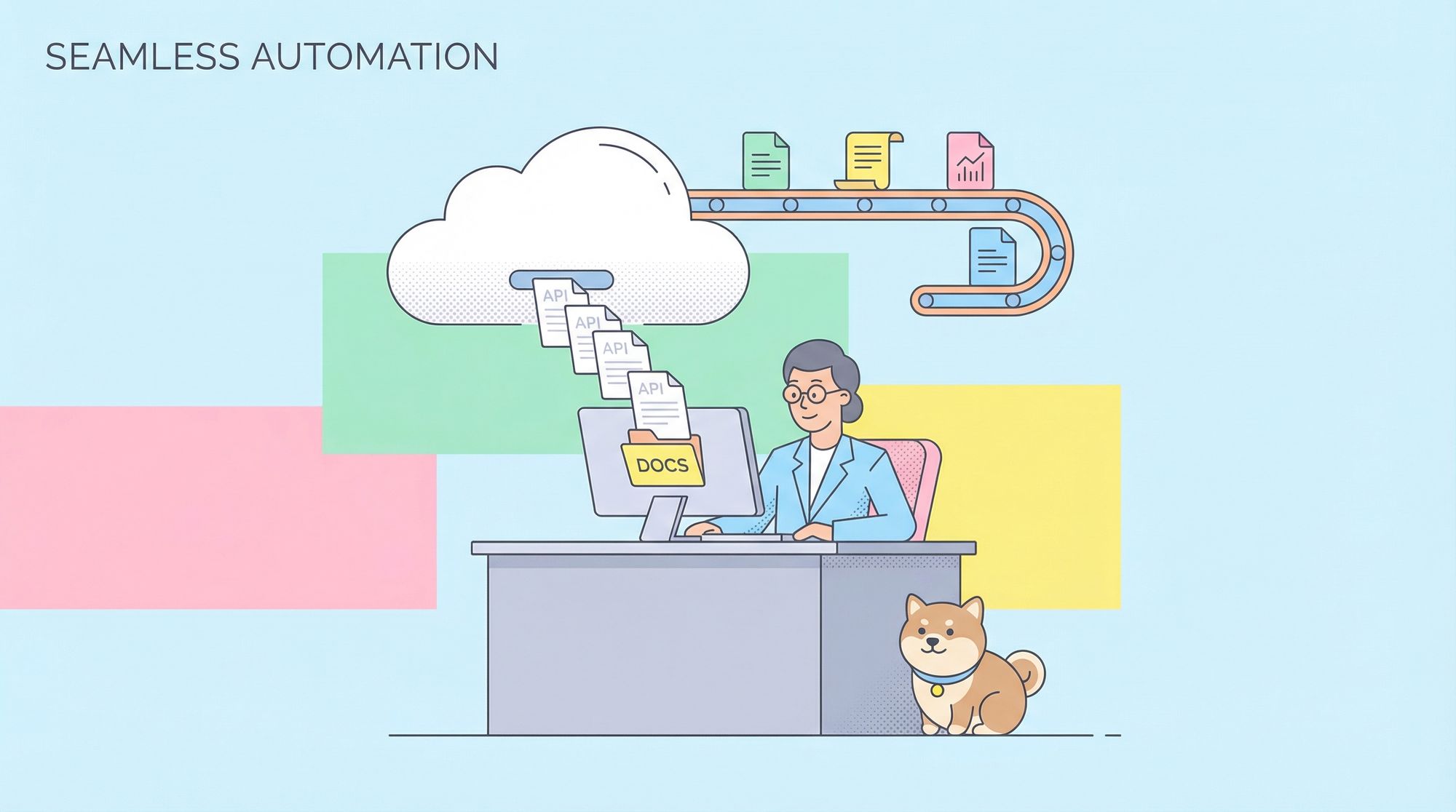
Keeping API documentation accurate is one of those things that sounds simple—until you're deep into versioning, bug fixes, and breaking changes. Manually updating docs every time the API changes isn’t just tedious, it’s risky. A missed update can break integrations, frustrate users, and lead to support headaches. That’s why auto-generated documentation tools have become a go-to for dev teams. They pull directly from your API specs and keep your docs in sync, so you spend less time editing and more time building.
This is where API documentation generators shine. These specialized tools automatically create and maintain documentation from your API specifications, saving development teams countless hours while ensuring documentation stays accurate and up-to-date. Let's explore ten powerful tools that can transform your API documentation process.
1. Apidog - The All-in-One API Development Platform

Apidog stands as the premier solution for automatic API documentation generation. This all-in-one collaborative API development platform combines powerful design features with seamless documentation capabilities, making it the top choice for development teams of all sizes.
Key Features:
- Comprehensive Documentation Generation: With a single click, Apidog automatically generates detailed documentation for your entire API, complete with descriptions, examples, and implementation details.

- Cloud-Based Platform: Access your API documentation from anywhere with an internet connection, facilitating effortless collaboration among team members regardless of their location.
- Performance Testing: Conduct load and stress tests to ensure your APIs can handle high traffic and identify performance bottlenecks.

- Intuitive Interface: The user-friendly design makes it easy to add endpoints, parameters, and other elements to your API documentation without extensive technical knowledge.

- Built-in Testing & Debugging: Test your APIs directly within the platform, ensuring your documentation accurately reflects actual functionality.

- Seamless Integration: Apidog works smoothly with popular tools like Postman and Swagger, allowing easy import and export of your API designs.

What truly sets Apidog apart is its ability to maintain synchronization between your API design and documentation. Any changes to your API are instantly reflected in the documentation, eliminating the risk of outdated or inaccurate information. This real-time updating mechanism ensures that developers always have access to current, reliable documentation.
For teams seeking an efficient, comprehensive solution for API documentation generation, Apidog delivers unmatched functionality in an accessible package, cementing its position as the industry leader.
2. Swagger/OpenAPI

Swagger, now part of the OpenAPI Initiative, has been a cornerstone in API documentation for years. This open-source framework produces interactive documentation that allows developers to visualize and interact with API resources without implementation.
Key Features:
- Industry Standard: OpenAPI Specification is widely recognized as the standard format for API documentation.
- Interactive UI: The Swagger UI generates interactive documentation where users can test endpoints directly.

- Extensive Ecosystem: Large community support with numerous tools and extensions.
- Code Generation: Automatically generate client libraries in various programming languages.

While Swagger offers powerful capabilities, it may require additional customization for more complex documentation needs and doesn't support conceptual documentation beyond API reference materials.
3. Postman

Originally known as an API testing tool, Postman has evolved to include robust documentation features that automatically generate from your collections.
Key Features:
- Collection-Based Documentation: Organize API requests into logical structures that form the backbone of your documentation.
- Automatic Updates: Documentation stays synchronized with your API collections, reducing manual maintenance.
- Collaborative Workflow: Team members can contribute to and share documentation easily.
- Publishing Options: Host documentation publicly or privately with shareable URLs.

Postman's documentation capabilities are particularly valuable for teams already using its testing features, creating a unified workflow from testing to documentation. However, it offers limited styling options and basic markdown support which may restrict more advanced documentation needs.
4. Stoplight

Stoplight takes a "design first" approach to API development with a focus on standardization and governance through its unique style guide feature.
Key Features:
- Style Guide Editor: Create validation rules for API definitions to maintain consistency.
- Visual Editor: Design APIs visually without writing code.
- Seamless Integration: Connect reference and conceptual documentation with interactive elements.
- Attractive UI: Visually appealing documentation that enhances user experience.

Stoplight excels in creating beautiful, consistent documentation but lacks metrics tracking capabilities to measure documentation effectiveness and user engagement.
5. ReadMe

ReadMe differentiates itself as an enterprise platform designed to create interactive API hubs with powerful usage metrics.
Key Features:
- API Usage Metrics: Track successful and unsuccessful requests to understand user behavior.

- Custom Styling: Support for custom CSS and JavaScript for maximum flexibility.
- Developer Experience Focus: Built to optimize the overall developer experience.
- Integration Capabilities: Works with tools like Slack for streamlined workflows.
The platform offers extensive customization and analytics but lacks some interactive features like embedded consoles in conceptual documentation.
6. FastAPI

For Python developers, FastAPI offers an impressive combination of high performance and automatic documentation generation.
Key Features:
- Automatic Interactive Documentation: Generates Swagger UI and ReDoc documentation automatically.
- Type-Driven Documentation: Uses Python type hints to create accurate parameter documentation.
- Data Validation: Built-in validation ensures documentation matches actual implementation requirements.
- Performance Focused: Designed for high-performance applications without sacrificing developer experience.

FastAPI provides exceptional documentation for Python APIs but is limited to Python development environments.
7. ReDoc

ReDoc focuses on creating beautiful, responsive API documentation from OpenAPI specifications with minimal configuration.
Key Features:
- Responsive Design: Documentation works well across all devices and screen sizes.

- Three-Panel Layout: Intuitive navigation with endpoints, details, and examples.
- Customizable Themes: Adapt the appearance to match your brand.
- Search Functionality: Built-in search makes finding specific endpoints easy.
ReDoc excels in creating reference documentation but requires integration with other tools for more comprehensive documentation needs.
8. DapperDox

DapperDox combines OpenAPI specifications with markdown documentation to create cohesive API portals.
Key Features:
- Cross-Referencing: Link between API operations and conceptual documentation.
- Markdown Support: Include rich markdown content alongside API specifications.
- Multiple Specification Support: Document complex systems with multiple API specifications.
- GitHub Integration: Pull documentation directly from GitHub repositories.

While powerful for linking conceptual and reference documentation, DapperDox has a steeper learning curve than some alternatives.
9. RAML (RESTful API Modeling Language)

RAML is a YAML-based language for describing RESTful APIs with a strong focus on the design-first approach.
Key Features:
- Resource Modeling: Clearly define API resources and their relationships.
- Reusability: Traits and resource types encourage consistent API design.
- Data Type System: Comprehensive system for defining and validating data structures.
- Code Generation: Generate client code and documentation from specifications.

RAML's structured approach facilitates consistent documentation but has declined in popularity compared to OpenAPI Specification.
10. API Blueprint

API Blueprint uses a markdown-based syntax to create human-readable API documentation that's also machine-parsable.
Key Features:
- Markdown Syntax: Easy to learn and write using familiar markdown.
- Focused on Readability: Prioritizes human-readable documentation.
- Tooling Support: Works with various tools for validation and rendering.
- Mock Server Generation: Create mock servers directly from documentation.

While API Blueprint offers excellent readability, it has less tooling support compared to more widely adopted standards like OpenAPI.
The Value of Automated Documentation Generation
Implementing automatic API documentation generation (ドキュメント自動生成) delivers multiple benefits:
- Time Efficiency: Developers save countless hours that would otherwise be spent writing and updating documentation.
- Accuracy: Documentation stays synchronized with the actual API, reducing confusion and implementation errors.
- Consistency: Generated documentation follows consistent patterns and formats across all endpoints.
- Maintenance: Updates to APIs automatically propagate to documentation without manual intervention.
- Developer Experience: Clear, interactive documentation improves adoption rates and implementation success.
Choosing the Right Tool
When selecting the best API documentation generator for your team, consider these factors:
- Team Size and Structure: Larger teams may benefit from collaborative features in tools like Apidog.
- API Complexity: More complex APIs might require advanced tools with custom validation rules.
- Development Workflow: Choose tools that integrate with your existing processes and technologies.
- Documentation Needs: Consider whether you need just reference documentation or more comprehensive guides.

Conclusion
Automatic API documentation generation has become essential for modern development teams. While each tool offers unique advantages, Apidog stands out as the most comprehensive solution, combining powerful documentation capabilities with collaboration features and an intuitive interface.
By implementing an automatic documentation generator, development teams can focus more on building great APIs and less on documenting them. This efficiency translates directly to faster development cycles, better developer experiences, and ultimately more successful API implementations.
The future of API documentation is clearly moving toward greater automation, integration, and interactivity. By choosing the right tool now, you position your team to deliver exceptional documentation that enhances rather than hinders the development process.