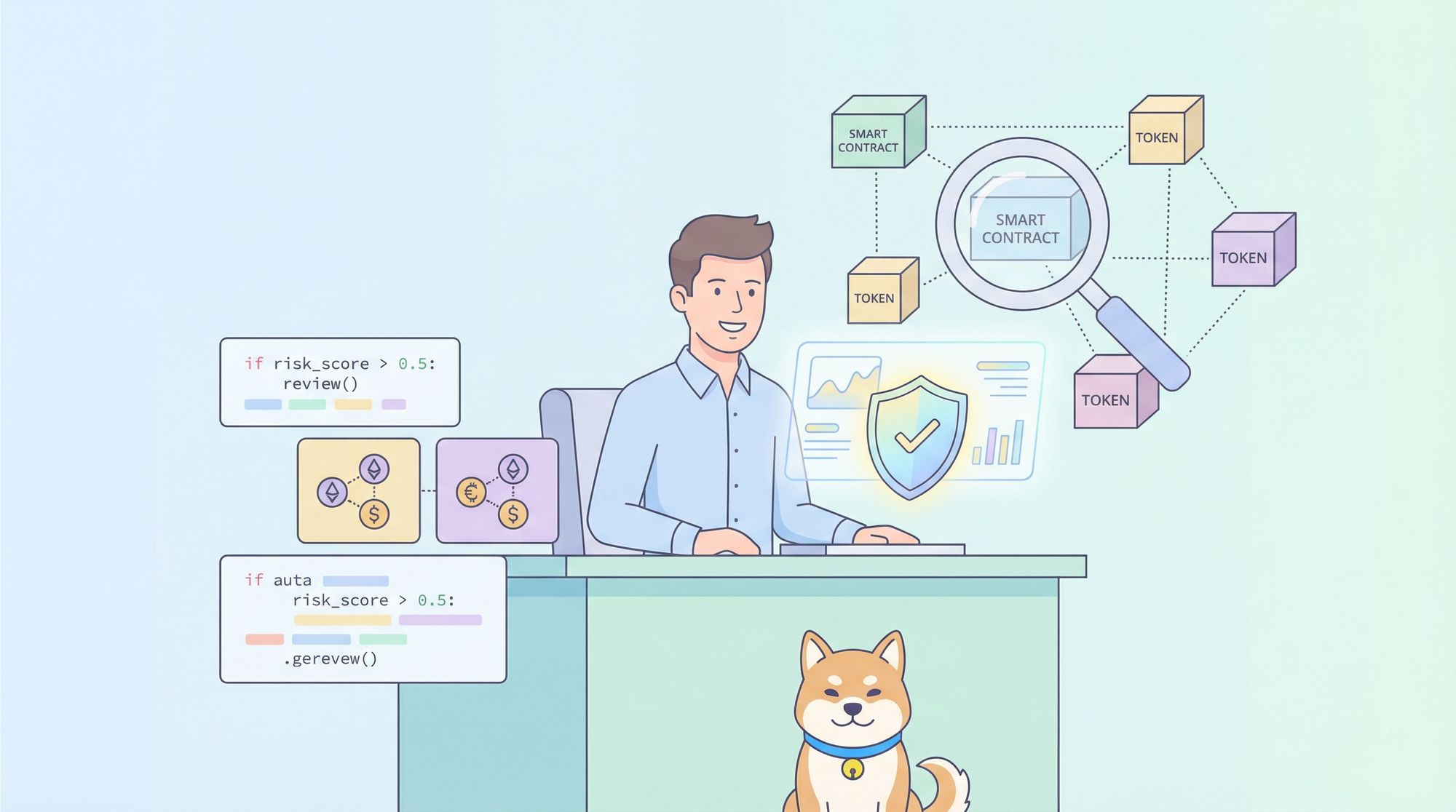
The world of cryptocurrency offers high rewards, but also significant risks—especially from rug pulls, malicious tokens, and poorly designed smart contracts. For API developers, backend engineers, and technical teams building trading tools or monitoring platforms, automating due diligence is critical to protect users and capital.
Rugcheck.xyz is a leading platform for programmatically analyzing crypto tokens and smart contracts for hidden risks. Its API enables you to scan tokens, assess wallet risk, fetch smart contract source code, and more—directly from your Python codebase.
In this guide, you'll learn:
- What Rugcheck.xyz and its API offer
- How to obtain and secure your API key
- Step-by-step Python examples for scanning tokens, analyzing wallets, and more
- Best practices for integrating crypto risk analysis into your workflows
💡 Looking for an API testing tool that generates beautiful API documentation and boosts your team's productivity? Apidog combines robust testing, collaboration, and documentation—all at a better price than Postman.
What is Rugcheck.xyz? Why Use Its API?
Rugcheck.xyz is a specialized security platform that analyzes cryptocurrency tokens and smart contracts for signs of malicious behavior or inherent risk. It inspects:
- Contract code for vulnerabilities or honeypot tactics
- Liquidity and lock status
- Tokenomics and tax structures
- Developer and owner wallets
- Holder distribution
- And more
The Rugcheck.xyz API allows you to:
- Automate risk analysis in your trading bots or dashboards
- Scale due diligence across thousands of tokens
- Create custom risk alerts or monitoring solutions
This is invaluable for engineering teams building DeFi tools, crypto exchanges, or wallet integrations.
Getting Started: Obtain and Secure Your Rugcheck.xyz API Key
Before making API calls, you need an API key:
- Register/Login: Create an account at Rugcheck.xyz.
- Find API Settings: Look for "API" or "Developer" sections in your dashboard.
- Generate Key: Create a new API key and name it for tracking.
- Secure the Key: Store it in a password manager or as an environment variable—never commit it to public code or client-side apps.
All API requests require the key in the X-API-KEY header.
Base URL:
https://api.rugcheck.xyz
Reference:
See the Swagger documentation for a full endpoint list: https://api.rugcheck.xyz/swagger/index.html
Core API Endpoints for Crypto Risk Analysis
Some of the most useful endpoints for developers include:
GET /tokens/scan/{chain}/{contractAddress}— Real-time token security scanGET /tokens/source-code/{chain}/{contractAddress}— Fetch verified contract source code and ABIGET /wallets/risk-rating/{chain}/{walletAddress}— Assess wallet risk profileGET /tokens/search— Search tokens by name or symbolGET /utils/chains— List all supported blockchain networks
Python Integration: Practical Rugcheck.xyz API Examples
The following Python snippets will help you quickly integrate Rugcheck.xyz API into your workflow. These examples assume:
- Python 3.x is installed
- The
requestslibrary is available (pip install requests) - Your API key is set in the environment variable
RUGCHECK_API_KEY
1. Setup: Secure API Key and Request Function
Store your API key securely as an environment variable. Here’s a reusable function for GET requests:
import requests
import json
import os

API_KEY = os.getenv('RUGCHECK_API_KEY')
BASE_URL = "https://api.rugcheck.xyz"

HEADERS = {
    "X-API-KEY": API_KEY,
    "Accept": "application/json"
}

def make_api_request(endpoint, params=None):
    if not API_KEY:
        print("Error: RUGCHECK_API_KEY environment variable not set.")
        return None

    url = f"{BASE_URL}{endpoint}"
    try:
        response = requests.get(url, headers=HEADERS, params=params, timeout=30)
        response.raise_for_status()
        return response.json()
    except requests.exceptions.HTTPError as http_err:
        print(f"HTTP error: {http_err}, Status: {response.status_code}")
        try:
            print(f"API Error Response: {response.json()}")
        except json.JSONDecodeError:
            print(f"API Error Response: {response.text}")
    except Exception as err:
        print(f"Request error: {err}")
    return None
2. Scan a Token for Security Risks
Scan any token on a supported chain and review its risk profile.
def get_token_scan_details(chain, contract_address, include_dex=True, include_events=False):
    endpoint = f"/tokens/scan/{chain}/{contract_address}"
    params = {
        "includeDexScreenerData": str(include_dex).lower(),
        "includeSignificantEvents": str(include_events).lower()
    }
    data = make_api_request(endpoint, params=params)
    if not data:
        print("Failed to retrieve token scan details.")
        return

    print(f"Risk Level: {data.get('riskLevel')}")
    print(f"Trust Score: {data.get('trustScore', {}).get('value')}")
    scams = data.get('scams', [])
    if scams:
        print("Scams Detected:")
        for scam in scams:
            print(f"  - {scam.get('type')}: {scam.get('message')}")
    else:
        print("No scams detected.")

    # Review warnings, liquidity, holders, taxes, etc.
    # ... (see original snippet for full details)
Usage Example:
# get_token_scan_details('bsc', '0xbb4CdB9CBd36B01bD1cBaEBF2De08d9173bc095c')
Interpretation Tips:
riskLevel"HIGH" or "CRITICAL" = proceed with caution- Unlocked liquidity, high or modifiable taxes, or suspicious owner wallets signal major risk
3. Retrieve Verified Contract Source Code
Check if a contract is verified and fetch its source code and ABI.
def get_token_source_code(chain, contract_address):
    endpoint = f"/tokens/source-code/{chain}/{contract_address}"
    data = make_api_request(endpoint)
    if not data:
        print("Failed to retrieve source code.")
        return

    print(f"Contract Name: {data.get('contractName')}")
    print(f"Is Verified: {data.get('isVerified')}")
    if data.get('isVerified'):
        source_code = data.get('sourceCode')
        if isinstance(source_code, str):
            print(f"Source Code Snippet:\n{source_code[:500]}")
Usage Example:
# get_token_source_code('ethereum', '0xA0b86991c6218b36c1d19D4a2e9Eb0cE3606eB48')
4. Assess a Wallet's Risk Profile
Reveal whether a wallet (such as a deployer or owner) is linked to risky projects.
def get_wallet_risk_rating(chain, wallet_address):
    endpoint = f"/wallets/risk-rating/{chain}/{wallet_address}"
    data = make_api_request(endpoint)
    if not data:
        print("Failed to retrieve wallet risk rating.")
        return

    print(f"Wallet Risk: {data.get('riskLevel')}")
    for token in data.get('associatedTokens', []):
        print(f"  Token: {token.get('symbol')} ({token.get('contractAddress')}) - Risk: {token.get('riskLevel')}")
Usage Example:
# get_wallet_risk_rating('bsc', '0x000000000000000000000000000000000000dead')
5. Search for Tokens by Name or Symbol
Find contract addresses and risk details for any token.
def search_for_token(query, chain=None, page_size=5):
    endpoint = "/tokens/search"
    params = {"query": query, "pageSize": page_size}
    if chain:
        params["chain"] = chain

    data = make_api_request(endpoint, params=params)
    if not data or 'items' not in data:
        print("No tokens found.")
        return

    for token in data['items']:
        print(f"{token.get('name')} ({token.get('symbol')}): {token.get('contractAddress')} [{token.get('chain')}] Risk: {token.get('riskLevel')}")
Usage Example:
# search_for_token("CAKE", chain="bsc")
6. List All Supported Blockchains
Quickly see which networks you can scan.
def list_supported_chains():
    endpoint = "/utils/chains"
    data = make_api_request(endpoint)
    if not data:
        print("Failed to retrieve chains.")
        return

    for chain in data:
        print(f"{chain.get('id')}: {chain.get('name')} ({chain.get('nativeCurrencySymbol')})")
Best Practices for Secure and Efficient Rugcheck.xyz API Integration
- API Key Security: Always use environment variables; never hard-code your key.
- Respect Rate Limits: Monitor for
429 Too Many Requestsand back off as needed. - Error Handling: Expand the sample function to log and handle errors as appropriate for your stack.
- Leverage Caching: Cache results like contract source code or scan data to avoid unnecessary API calls.
- Combine With Manual Review: Automated analysis is powerful, but always supplement with your own research and judgment.
💡 For collaborative API testing, documentation, and workflow automation, Apidog provides a unified platform for engineering teams—see how it outperforms Postman.
Conclusion
Integrating the Rugcheck.xyz API into your Python toolchain dramatically improves your ability to analyze and monitor crypto projects for hidden risks. With automated scans, wallet checks, and contract inspection, you can build safer trading systems and informed DeFi products.
For API-first teams, combining Rugcheck.xyz's insights with an API platform like Apidog can further streamline your security, testing, and documentation workflows.