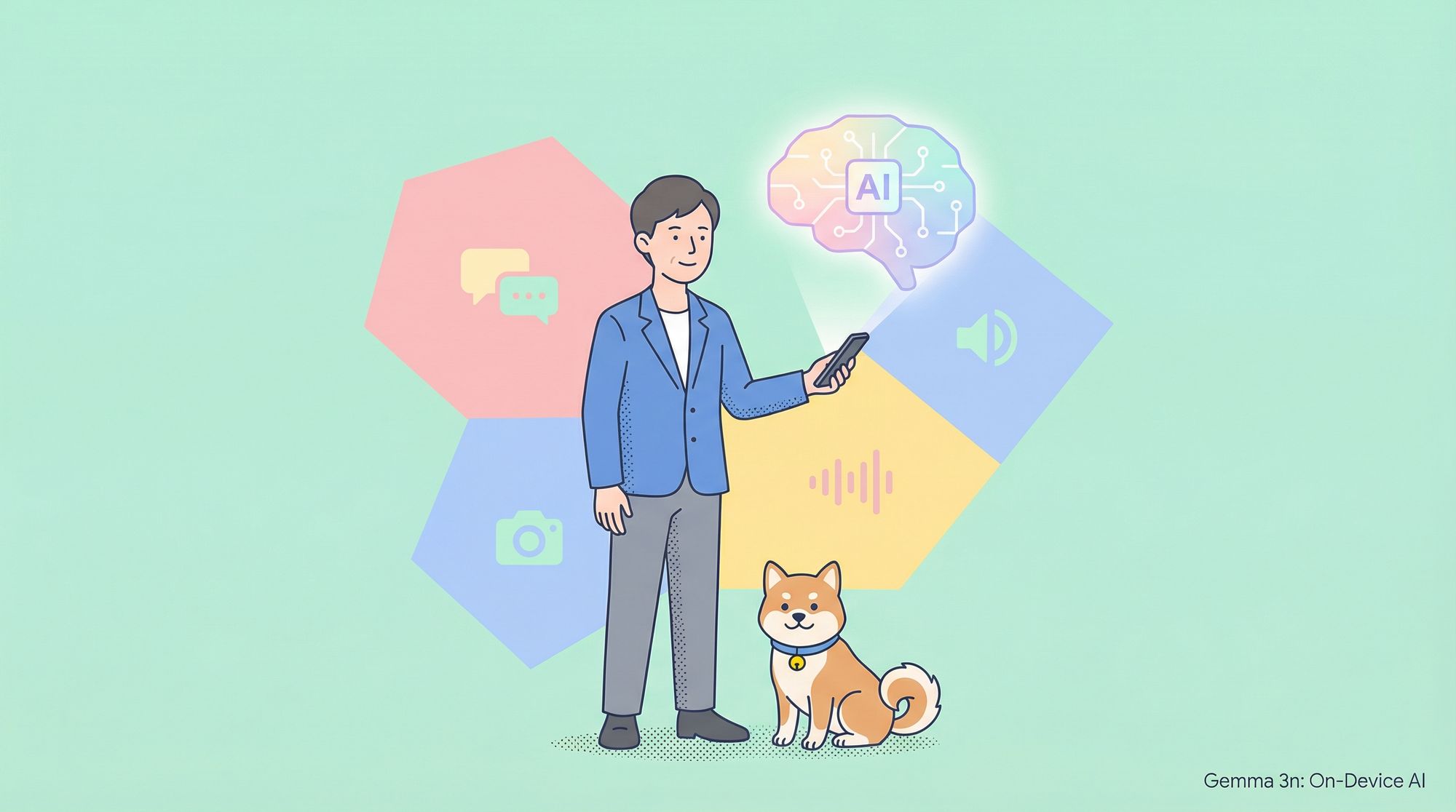
Google has unveiled Gemma 3n—a next-generation AI model optimized for mobile devices. For API developers and engineering teams, this marks a pivotal moment: robust AI is now accessible on smartphones and tablets, without the need for constant cloud connectivity. Gemma 3n’s efficient architecture means you can build smarter, privacy-focused apps that run directly on users’ devices.
In this deep-dive, we’ll explore Gemma 3n’s technical architecture, standout features, and actionable integration methods. If you’re building AI-driven apps with API workflows, Apidog can streamline your API design and testing—a perfect companion for Gemma 3n-powered projects.
What Is Gemma 3n? An Overview for Mobile-First AI
Gemma 3n is the latest addition to Google’s Gemma family—an open-source suite of lightweight AI models. Unlike traditional models that rely on high-performance servers, Gemma 3n is engineered specifically for the resource constraints of mobile hardware.
Why Does Gemma 3n Matter for Developers?
- On-device intelligence: Apps can run AI inference locally, reducing latency and eliminating the need for a constant internet connection.
- Enhanced privacy: User data stays on-device, aligning with regulatory and user demands for privacy.
- Broader accessibility: The efficient design means Gemma 3n can run on a wide range of devices, including entry-level and older models.
For API-centric teams, this opens new possibilities for mobile apps that are faster, more reliable, and privacy-conscious.
Inside Gemma 3n: Technical Architecture and Optimization
Google’s engineers built Gemma 3n with a focus on balancing performance and efficiency, critical for real-world mobile deployment.

Key Optimization Techniques
- Quantization: Reduces model weight precision (e.g., from 32-bit to 8-bit), significantly lowering memory usage and speeding up inference.
- Pruning: Removes redundant parameters, shrinking the model size with minimal impact on accuracy.
- Efficient layers: Likely uses depthwise separable convolutions and other mobile-first architecture patterns known from models like MobileNet.
These strategies enable Gemma 3n to deliver strong performance within the memory and compute boundaries of mobile devices.
Hardware Acceleration for Real-Time AI
Gemma 3n is optimized to leverage hardware accelerators found in modern smartphones:
- GPUs for parallel processing
- NPUs (Neural Processing Units) for dedicated AI workloads
- DSPs (Digital Signal Processors) for efficient signal handling
By utilizing these chips, Gemma 3n improves inference speed and battery efficiency, making AI-powered features practical—even on mid-range devices.
Security and Privacy
On-device inference means sensitive data never leaves the user’s device. This is critical for use cases like health, finance, or confidential communications, helping development teams meet privacy-by-design requirements.
Core Features: What Can Gemma 3n Do On Your Device?
Gemma 3n isn’t just small and efficient—it’s versatile, supporting a broad range of machine learning tasks vital for next-gen mobile apps.

1. Natural Language Processing (NLP)
- Conversational AI: Power offline chatbots, voice assistants, or smart input tools.
- Language translation: Real-time, on-device translation for travelers or global apps.
- Contextual understanding: Accurately interpret user queries, summarize text, or extract intent—all without network delays.
Example: Build a secure note-taking app that summarizes user notes and responds to questions—even when offline.
2. Computer Vision and Image Recognition
- Object detection: Quickly identify products, landmarks, or text in images.
- Augmented Reality (AR): Enable context-aware overlays and experiences.
- Scene classification: Automatically categorize photos or scan documents on-device.
Example: An AR retail app that recognizes products on shelves and provides instant details, powered by local inference.
3. Speech-to-Text
- Voice commands: Hands-free app navigation, voice search, or dictation.
- Accessibility: Real-time captioning for users with hearing impairments.
Example: Integrate live transcription into your app without sending audio to the cloud.
4. Multimodal AI
Gemma 3n can process text and images together, enabling advanced applications:
- Smart recipe apps: Snap a photo of ingredients, get suggestions based on both the image and user queries.
- Personal assistant features: Combine visual and textual context for richer interactions.
5. Performance vs. Other Models
Early benchmarks show Gemma 3n matches or exceeds the accuracy of larger, server-based models in core NLP and vision tasks—yet runs efficiently on mobile hardware.

Future Impact: What Gemma 3n Means for API Teams and Developers
Lowering the Barrier for AI-Powered Apps
- No cloud dependency: Solo developers and small teams can build powerful AI features without expensive infrastructure.
- Faster prototyping: Open-source access and mobile-friendly frameworks accelerate experimentation.
Privacy and Regulatory Compliance
- On-device processing: Helps meet GDPR, HIPAA, and other privacy standards by keeping user data local.
- Trust and adoption: Users are more willing to try AI features that don’t expose their information.
Expanding Access Across Devices
Gemma 3n’s efficiency means even older or budget devices can offer advanced AI features, broadening your app’s reach.
Industry Influence
As Gemma 3n sets a new standard for mobile AI, expect competitors to follow—driving innovation in on-device intelligence.
How to Start Using Gemma 3n: Access and Integration
Google provides straightforward paths for exploring and integrating Gemma 3n:
1. Cloud-Based Experimentation
Test Gemma 3n’s capabilities instantly via Google AI Studio. This web platform lets you interact with the model—enter prompts, generate responses, and evaluate NLP tasks—without setup or installation. Perfect for prototyping or benchmarking before full integration.

2. On-Device Integration
For production use, deploy Gemma 3n with Google AI Edge tools:
- TensorFlow Lite (Android) and Core ML (iOS) support fast, efficient inference.
- Download pre-trained models, sample code, and optimization tools for seamless integration into your mobile app.
Tip for API Developers:
When building AI-driven APIs or microservices to complement your mobile app, Apidog can simplify your API design, testing, and documentation—keeping your workflow efficient as you bridge on-device AI with backend services.
Conclusion: The Future of Mobile AI with Gemma 3n
Gemma 3n is a game-changer for mobile AI development. Its compact design, strong performance, and local processing unlock new possibilities for privacy-focused, responsive apps. For API-focused teams and developers, integrating Gemma 3n with the right tools—like Apidog—means you can deliver smarter features, faster.
Ready to build the next generation of intelligent mobile apps? Start exploring Gemma 3n today, and use Apidog to streamline your API workflows for a seamless development process.