
In today’s digital-first world, APIs (Application Programming Interfaces) are everywhere and the backbone of business innovation, from your favorite shopping app to your company’s cloud platform, APIs are the invisible glue that connects services, applications, and data with seamless efficiency.
But with great connectivity comes great responsibility, especially when it comes to security. This is where the concept of API management security steps in a vital practice that ensures your APIs are not only powerful but also protected.
Here’s the kicker: APIs are also one of the most vulnerable attack surfaces in modern IT ecosystems.
So, how do businesses protect themselves? The answer lies in API management security.
Want an integrated, All-in-One platform for your Developer Team to work together with maximum productivity?
Apidog delivers all your demands, and replaces Postman at a much more affordable price!
What is API Management Security?
Let’s start with the basics. API management security is the practice of safeguarding APIs against misuse, data breaches, and cyberattacks while ensuring they remain reliable and accessible to authorized users. In simple terms, API management security refers to the methods, tools, and best practices used to protect APIs and manage their security risks throughout their lifecycle.
It involves a combination of:
- Access control (deciding who can use the API)
- Authentication and authorization
- Traffic monitoring
- Threat detection and prevention
- Data encryption
- Compliance enforcement
In simple terms: It’s about balancing openness with protection. APIs should be easy for authorized developers to use but nearly impossible for attackers to exploit. API management security is a core function of API management platforms, which provide centralized solutions to secure, monitor, and govern API traffic.
Why API Management Security Matters More Than Ever
Now, you may be wondering: why is this such a big deal now?
In 2025, APIs have become ubiquitous, powering everything from mobile apps to IoT devices to cloud services. Unfortunately, this also makes them lucrative targets for cyberattacks like data breaches, denial-of-service, and injection attacks.
Here’s the truth: APIs are the #1 attack vector for many organizations. According to multiple industry reports, over 70% of cyberattacks in 2025 involve APIs in some way.
Some reasons why API security is more critical than ever:
- Explosion of APIs: Companies now run hundreds or thousands of APIs. More APIs = more attack surfaces.
- Sensitive data exposure: APIs often carry private information like financial transactions, healthcare records, or login credentials.
- Regulatory compliance: With laws like GDPR, HIPAA, and CCPA, poor API security can result in fines and legal issues.
- Sophisticated attackers: Hackers don’t just brute force anymore; they use advanced AI to exploit weak endpoints.
API management security helps turn these risks into manageable challenges, enabling organizations to innovate safely. Without robust API management security, your business risks data breaches, downtime, and lost trust.
The Core Components of API Management Security
So, what actually makes up API management security? Let’s explore the key pillars:
1. Authentication and Authorization
These mechanisms ensure only legitimate users and applications can access your APIs.
- Authentication: Verifies who the user is.
- Authorization: Decides what they can do.
Common approaches include:
- API Keys: Simple tokens that identify the client
- OAuth 2.0: Industry-standard protocol for delegated access
- JWT (JSON Web Tokens): Secure tokens that carry claims about users
- OpenID Connect: Identity layer on top of OAuth for authentication
Properly implemented, they prevent unauthorized access and support granular permission controls.
2. Rate Limiting and Throttling
Prevent attackers from spamming your endpoints with endless requests. Rate limiting controls how many requests a client can make in a given timeframe.
3. Data Encryption
APIs often transmit sensitive data, so securing data at rest and in transit. Secure data in transit and at rest is essential. This ensures attackers can’t intercept and read sensitive information.
- Use TLS/SSL to encrypt API traffic
- Encrypt sensitive fields within payloads
- Mask certain fields in logs to protect secrets
- Implement data loss prevention (DLP) policies
4. Monitoring and Logging
Track API usage patterns in real-time. Suspicious behavior like a sudden spike in failed logins could signal an attack.
Comprehensive logs and monitor trails allow teams to:
- Investigate security incidents
- Monitor access patterns
- Detect internal misuse
- Provide evidence for compliance reporting
Integrated logging solutions in API management platforms make this process seamless.
5. Threat Detection
AI-driven monitoring can flag anomalies that human teams might miss. Think of it as a security camera for your APIs. API management security platforms integrate threat intelligence and anomaly detection to identify malicious requests:
- Rate limiting and throttling to prevent abuse
- SQL injection and cross-site scripting (XSS) protection
- Bot detection and IP blacklisting
- Real-time monitoring and alerts
These measures reduce the attack surface and mitigate suspicious activities.
6. Compliance Controls
API management platforms help enforce data privacy rules automatically vital for industries like finance, healthcare, and e-commerce.
Common API Security Threats
Unfortunately, APIs are juicy targets for hackers. While API management security is critical, it’s not without its hurdles. Here are the most common attack types you need to know:
- Broken Authentication: Attackers exploit weak login flows.
- Excessive Data Exposure: APIs return more information than necessary.
- Rate Limiting Bypass: Hackers overwhelm APIs with requests (DDoS).
- Injection Attacks: Malicious code is injected into API queries.
- Man-in-the-Middle (MITM) Attacks: Data is intercepted during transfer.
- Lack of Monitoring: Threats go unnoticed until damage is done.
- Complexity: Managing thousands of APIs across environments can overwhelm teams.
- Misconfiguration: Incorrectly configured security settings can create vulnerabilities.
- Shadow APIs: Unauthorized or forgotten APIs that evade security controls.
- Evolving Threats: Attack methods continuously evolve, requiring adaptive security.
The scary part? Many of these attacks succeed because of poor API management not because the technology is inherently flawed. Addressing these challenges requires a holistic security strategy powered by modern tools.
Best Practices for API Management Security
Now that we know the risks, let’s explore the best practices to keep your APIs safe. If you want to maximize your API security, consider these actionable best practices:
1. Use Strong Authentication and Authorization
Never rely on just an API key. Combine OAuth 2.0, JWT tokens, and multi-factor authentication for layered security.
2. Encrypt Everything
All communication should use HTTPS with TLS. Store sensitive data only when absolutely necessary and encrypt it.
3. Apply Rate Limiting
Set usage quotas to prevent brute force and denial-of-service attacks.
4. Monitor in Real-Time
Use dashboards and alerts to flag unusual traffic patterns immediately.
5. Validate Input
Sanitize all incoming data to prevent SQL injection or malicious payloads.
6. Version Your APIs
Never break existing clients when releasing updates. Versioning helps manage security fixes without disrupting users.
7. Automate Compliance
Implement policies that automatically enforce GDPR, HIPAA, or PCI DSS standards where applicable.
The Role of API Management Platforms
This is where API management platforms come in. Instead of building all these security features from scratch, platforms provide:
- Centralized authentication & authorization
- Built-in rate limiting & quotas
- Monitoring dashboards with real-time analytics
- Automated logging & audit trails
- Seamless compliance enforcement
They don’t just save time they save businesses from potential breaches.
How Apidog Simplifies API Management Security
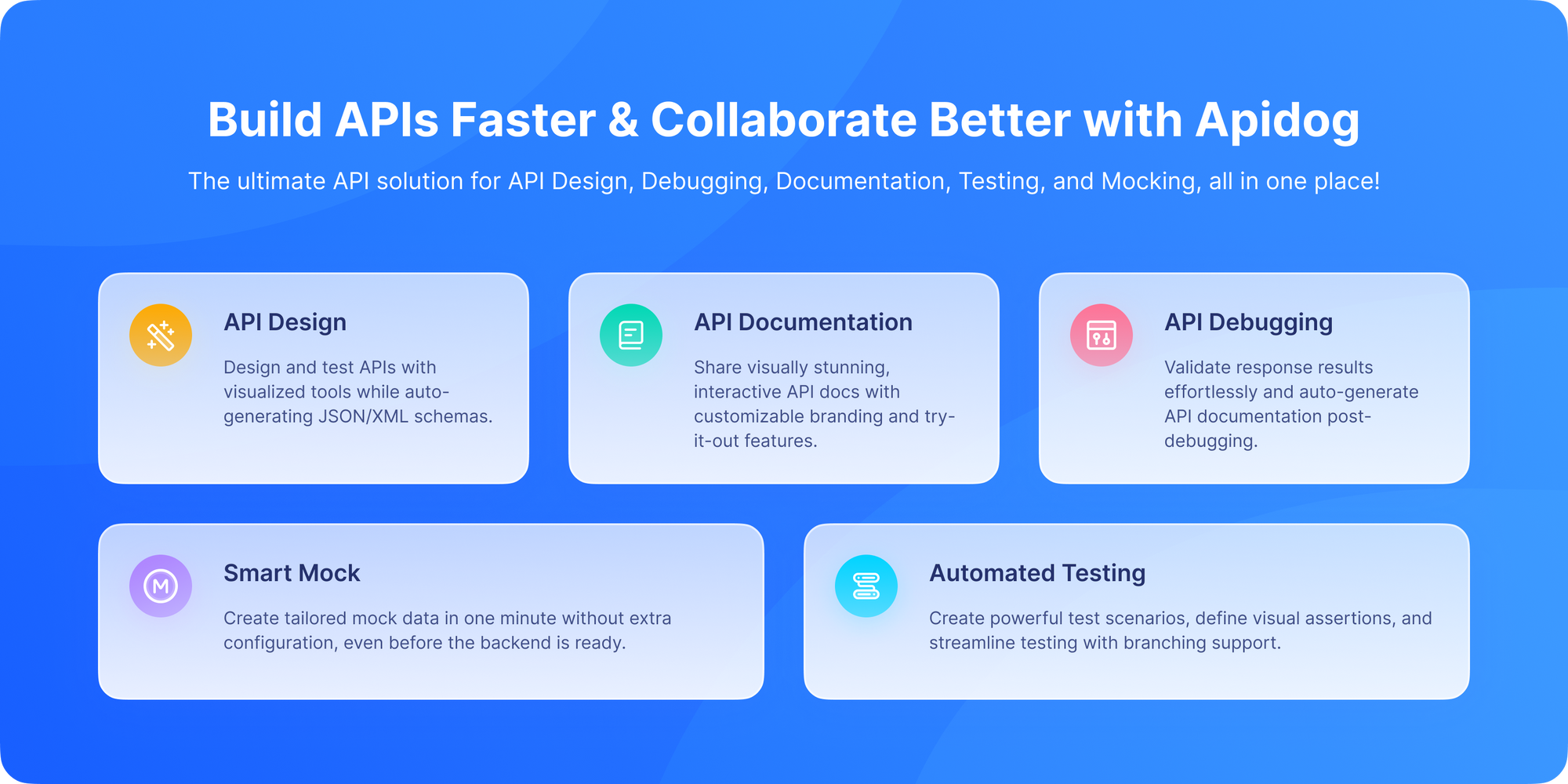
Here’s the exciting part: Apidog isn’t just an API testing or documentation tool it’s a full API lifecycle management platform with strong security features baked in.
With Apidog, you can:
- Secure your APIs with authentication and authorization options.
- Run automated tests to validate endpoints against best practices.
- Generate live documentation that enforces correct request/response handling.
- Collaborate with your team so everyone follows the same security policies.
Instead of juggling multiple tools, Apidog gives you a one-stop shop for secure API management. By consolidating security features into one platform, Apidog helps teams reduce risks without slowing innovation.
Real-World Example: When API Security Fails
Remember when Facebook’s API flaw exposed millions of user accounts? Or when Twitter’s(now X) API bug leaked private data?
These breaches weren’t just technical hiccups they were failures of API management security. If proper authentication, rate limiting, and monitoring had been enforced, the damage could have been reduced or even prevented.
Future Trends in API Management Security
Looking ahead, API management security will increasingly rely on AI and machine learning. Here’s where API security is headed:
- Zero Trust APIs: Assume no request is safe until verified.
- AI-Powered Threat Detection: Machine learning will spot anomalies faster.
- Stronger Compliance Automation: APIs will self-enforce privacy policies.
- Decentralized Security Models: Especially with blockchain-based systems.
It’s an exciting evolution that promises both stronger security and greater developer productivity. Businesses that adopt these trends early will stay ahead of attackers.
Final Thoughts
So, what is API management security? In short: it’s the guardrail that protects your digital ecosystem from today’s biggest cyber risks. API management security isn’t just a technical checkbox anymore it’s a foundational ingredient of business resilience and digital trust.
Embracing comprehensive security practices protects your data, your customers, and your reputation while fostering innovation. Without it, APIs can expose sensitive data, damage your brand, and leave you vulnerable. With it, you gain confidence, compliance, and control.
If you’re ready to elevate your API security game, download Apidog for free and experience the power of integrated design, testing, and monitoring in one collaborative platform.