
The G2 Spring 2026 Grid for API Management is out. Two Leaders (Apidog, viaSocket), three High Performers (Traefik Labs, Rasayel, Backendless), and two Niche players (Moesif/WSO2, Thunder Client). Seven products, three quadrants, and a lot of marketing overlap that doesn’t survive a side-by-side look at what each tool was built for.
TL;DR
Apidog and viaSocket lead G2’s Spring 2026 API Management Grid. Apidog wins for teams that need design, testing, mocking, and docs in one workspace. viaSocket wins for no-code workflow automation with API hooks. The other five tools, Traefik Labs, Rasayel, Backendless, Moesif (WSO2), and Thunder Client, solve narrower problems. The right pick depends on what “API management” means in your stack.
What G2’s Spring 2026 Grid signals
G2’s Spring 2026 reports shipped 27,019 reports on March 17, 2026, a 1.72% quarterly increase. Only 3% of products on G2 receive a Leader badge across all categories, per VP Marketing Palmer Houchins. That makes Leader placement a meaningful third-party signal in a category where most vendors claim “industry-leading” status without evidence.
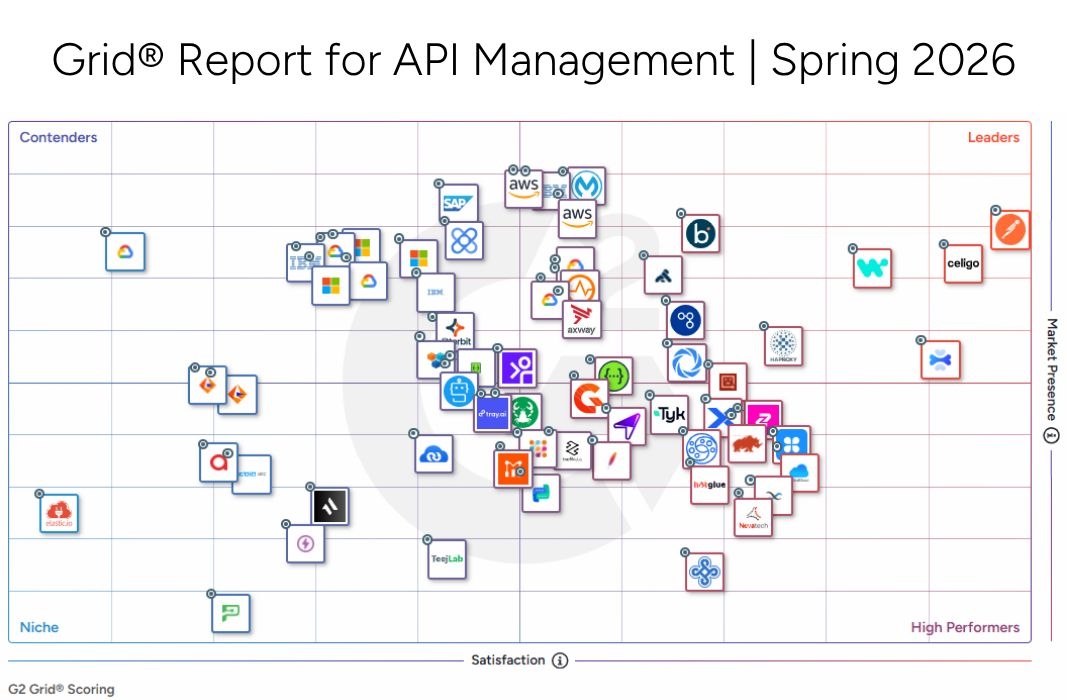
The Grid uses two axes: customer satisfaction (review-based) and market presence (size, reach, review volume). Spring 2026’s API Management category lands Apidog and viaSocket in Leaders. Traefik Labs, Rasayel, and Backendless sit as High Performers. Moesif (now a WSO2 company) and Thunder Client fall into Niche; strong reviews, narrower spread.
Quadrant matters less than fit. A Niche tool can be right if its scope matches yours; a Leader can be wrong if it solves the problem you don’t have. This guide walks through all seven, what each is for, where each is weak, and a decision framework at the end. Download Apidog if you want to follow along.
The seven tools at a glance
| Tool | G2 quadrant | Best fit | Open source? | Pricing model |
|---|---|---|---|---|
| Apidog | Leader | All-in-one API design, test, mock, docs | Free tier + paid | Per-user SaaS |
| viaSocket | Leader | No-code workflow automation with API hooks | No | $50/mo entry plan |
| Traefik Labs | High Performer | Cloud-native API gateway + GitOps governance | Yes (Proxy OSS) | Free OSS, paid Hub |
| Rasayel | High Performer | WhatsApp Business messaging + REST API | No | Per-seat SaaS |
| Backendless | High Performer | BaaS with auto-generated REST and GraphQL | No | Free tier + paid |
| Moesif (WSO2) | Niche | API analytics, observability, monetization | No | Usage-based |
| Thunder Client | Niche | VS Code REST client (single-user testing) | No | Free + Pro paywall |
G2’s category lumps lifecycle platforms, iPaaS automation, gateways, analytics, and IDE extensions into the same Grid. That’s why reading placements without context misleads buyers.
Apidog: the Leader for end-to-end API workflows
Apidog earned its Leader spot by collapsing four tools into one workspace: design, test, mock, and docs. Most API management products sit at one phase of the lifecycle and force you to glue the others on. Apidog covers all four, which is why most G2 reviewers cite “no more tool switching” as the standout benefit.
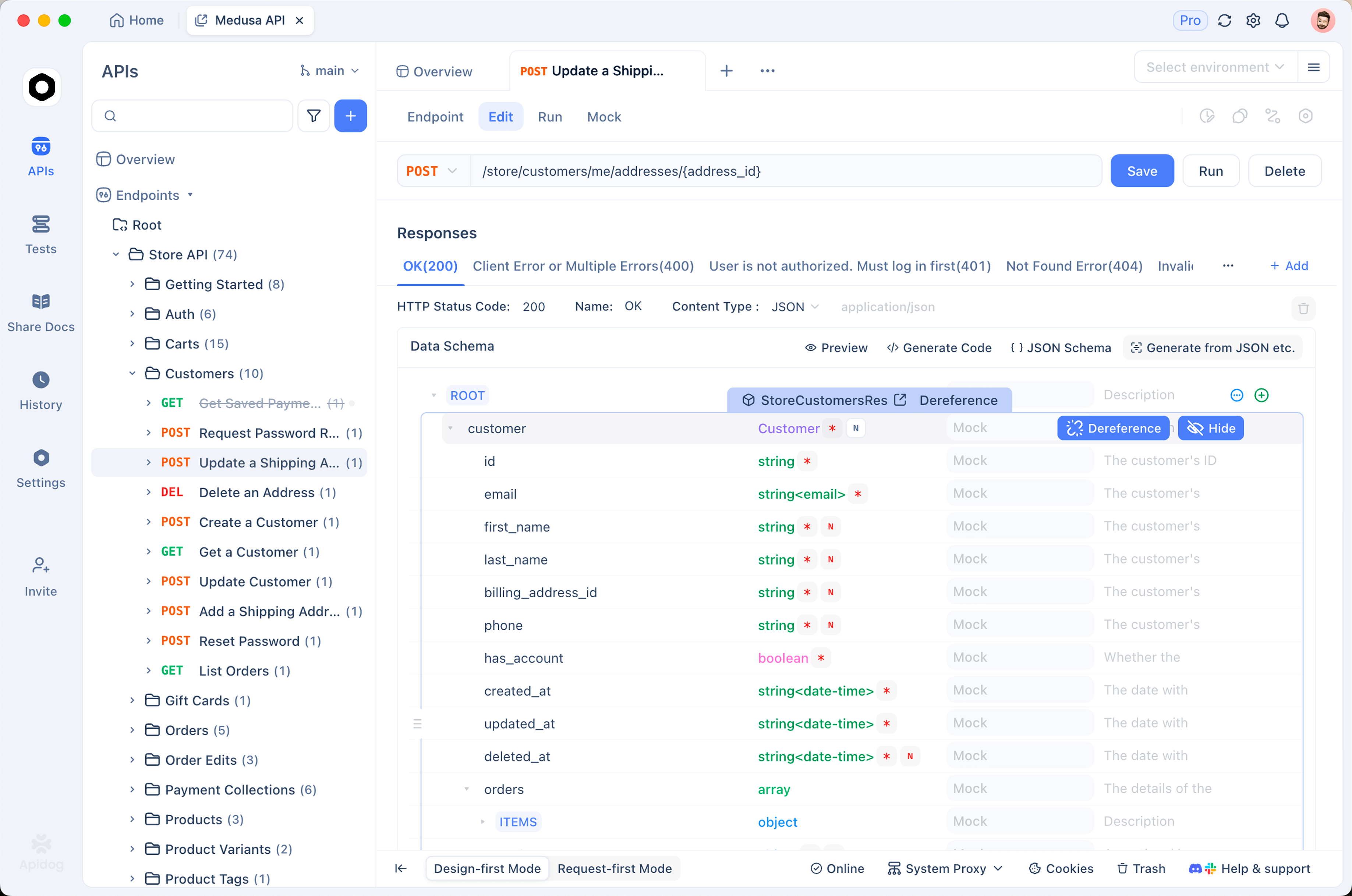
What you get:
- Visual API design: schema-first OpenAPI 3.0/3.1 editor with branch support
- Automated testing: visual test builder, CI/CD integration, no scripting required for most cases
- Smart mocking: dynamic responses generated from your schema
- Auto-generated docs: published to a public or private URL with custom domain support
- Team collaboration: real-time sync, version control, role-based access
Where it wins: teams of 100 engineers or fewer who want one source of truth for API specs. Backend devs design endpoints in the same workspace where QA writes test scenarios; frontends pull mocks the moment a schema lands. Teams report 50–60% reductions in time from spec to first integration test. Spring 2026 G2 reviewers also call out branch-based design review and the OpenAPI 3.1 editor as differentiators vs Stoplight and SwaggerHub.
Download Apidog and import your Postman collection in one click. No credit card; the free tier covers most small teams.
viaSocket: Leader for no-code integration teams
viaSocket is the other Leader, and the placement makes sense once you see who reviews it. It’s an AI workflow automation platform closer to Zapier or Make than to a traditional API gateway. The pitch: connect SaaS apps with webhooks, conditional logic, and custom JavaScript, no engineering team required.
Strengths: large integration catalog, custom API calls and webhooks for off-catalog cases, low setup overhead for non-developers.
Weak fit: it’s not an API gateway. No rate limiting, OAuth flows, or contract testing. Pricing starts at $50/mo for accounts created after September 2025, out of reach for cheap solo experiments. If your APIs are internal microservices, the integration catalog doesn’t help.
Pick viaSocket if ops, marketing, or revenue teams need to wire SaaS tools together. Engineering teams shipping public APIs should look elsewhere.
Traefik Labs: open-source gateway with API management on top
Traefik Proxy is the open-source cloud-native application proxy used by hundreds of thousands of teams. Traefik Hub is the commercial layer that adds API management: developer portals, lifecycle controls, GitOps governance. The combination earned a High Performer slot on satisfaction; market presence drag is mostly OSS users who don’t show up in G2 reviews.
What it does well: cloud-native by design (Kubernetes Ingress, service discovery, dynamic config, automatic Let’s Encrypt). GitOps governance with APIs, routes, and policies in Git. AI Gateway features added in 2026, including support for OpenAI’s Responses API as a managed endpoint.
Where it’s harder: steep ramp if you’re not already on Kubernetes. Design and testing are out of scope, so pair with Apidog upstream. Enterprise features (LDAP, advanced portals, RBAC) live in Hub, not OSS Proxy.
For more, see our roundup of open-source API management tools and top API management platforms for enterprise teams.
Rasayel: WhatsApp Business API platform with a twist
Rasayel’s placement surprised the category because Rasayel is, at its core, a WhatsApp Business platform with a team inbox, chatbots, and bulk messaging. The G2 slot traces to its REST and GraphQL APIs (rate-limited at 200 req/min on REST) and an API key management UI with scoped read/write authorization.
Pick Rasayel if you run customer support or sales on WhatsApp and need programmatic access, want a shared team inbox connected to HubSpot or Pipedrive, or integrate WhatsApp via webhooks instead of Twilio directly.
Skip it if you’re managing internal microservice APIs, need an edge gateway, or don’t have WhatsApp in your stack. It’s a strong product with a narrow use case; not the starting point for most API platform decisions.
Backendless: BaaS with auto-generated APIs
Backendless is a backend-as-a-service platform that auto-generates REST and GraphQL endpoints from your data model. Define a table, get an API; define a service, get tracked invocations grouped by method, client type, and success/error.
Strengths: low-code backend with SDKs for Android, iOS, JavaScript, and .NET. Per-operation security roles let you grant access to one method and deny another. Service-level tracking records every API call.
Weak fit: you already have a backend stack and want to manage APIs in front of it. You need contract-first design (Backendless is data-model-first). You want on-premises deployment with no vendor coupling.
Backendless suits startups and small teams that don’t want to stand up a backend at all. If your problem starts with “I have services and need a gateway,” Backendless is the wrong layer.
Moesif (a WSO2 company): API analytics and monetization
Moesif occupies Niche by design, not by weakness. It’s deep observability and monetization for APIs you already run, not a gateway or design tool. WSO2 acquired Moesif in May 2025 and is integrating it as the analytics layer for WSO2’s Choreo platform. Moesif still operates as an independent subsidiary with its own roadmap.
What Moesif does: API usage analytics with per-user, per-endpoint, per-region breakdowns. Anomaly detection on traffic patterns (the AI-driven piece). Monetization workflows including usage-based billing, plan management, and customer dashboards. Funnel and retention analytics on API consumers.
It fits when you ship a public API and want to know who uses what and when, or when you’re moving to usage-based pricing and need metered billing. It doesn’t fit if you haven’t shipped a public API yet, if you need a gateway (Moesif sits beside one, not in place of one), or if you’re a solo developer.
Thunder Client: VS Code’s REST client extension
Thunder Client is the other Niche entry, and the smallest tool in the category by scope. It’s a VS Code extension for sending HTTP requests, similar to Postman or Insomnia but inside the editor. G2 placement reflects strong solo-developer satisfaction (lightweight, fast, no separate app), offset by limited team and enterprise scope.
Good at: single-developer REST testing without leaving VS Code. Collections stored as JSON in your repo (Git-friendly). Environment variables, scripting, and basic test assertions.
Not: a team collaboration tool (Pro paywalls on collaboration features have been a friction point; see Thunder Client for teams: collaboration limitations). Not a design platform, gateway, mock server, or doc generator.
Thunder Client fits if your “API management” is “testing my endpoints while I code.” Right for one developer; wrong for a team. Apidog handles the same testing workflow with team-grade collaboration baked in, plus design, mocking, and docs alongside.
How to pick the right tool for your team
What does “API management” mean in your stack? Design, test, mock, docs → Apidog. Gateway, rate limiting, JWT → Traefik (or Kong, not on this Grid). Analytics on a shipped API → Moesif. Connect SaaS apps via webhooks → viaSocket. Backend from scratch → Backendless. WhatsApp Business → Rasayel. Solo REST testing in VS Code → Thunder Client.
How many people will use it? Solo developers can ride Thunder Client or the Apidog free tier. Teams of 5–50 should look at Apidog or Backendless for end-to-end coverage, or Traefik Hub for gateway-led shops. Enterprises with 100+ developers usually layer Traefik or Kong at the edge, Moesif behind for analytics, and Apidog upstream for design.
What’s your starting constraint: money, time, or governance? Money: Apidog free tier, Traefik Proxy OSS, Backendless free tier. Time: Apidog (fastest setup for design + test in one place), viaSocket (fastest no-code wiring). Governance: Traefik Hub (GitOps), Apidog (branch-based design review), Moesif (audit-ready analytics).
For more, see API testing tool for a team of 50 engineers and our design-first API platform comparison pitting Apidog against Stoplight and SwaggerHub.
What the Spring 2026 Grid teaches you
The seven tools in G2’s Spring 2026 API Management Grid don’t compete with each other. They compete with the tool you’d pick if you didn’t know they existed.
Takeaways before you choose:
- Two Leaders, two different problems. Apidog wins full-lifecycle workflow; viaSocket wins no-code integration.
- High Performers solve niche problems well (Traefik for gateways, Rasayel for WhatsApp, Backendless for BaaS).
- Niche isn’t weakness; it’s scope. Moesif and Thunder Client are strong inside their lanes.
- The cheapest end-to-end stack is free: Apidog free tier + Traefik Proxy OSS + Moesif free tier.
If your team handles design, test, mock, and docs, start with Apidog. It’s the Leader because it covers the workflow most teams spend time on. Download Apidog and you’ll have a working API design imported from Postman in under five minutes. For the gateway side of the stack, see our top 10 API gateways for developers in 2026.