In today's hyperconnected software landscape, the demand for seamless integrations across countless third-party services is at an all-time high. As businesses strive to deliver more value and automation to their users, the complexity of managing multiple APIs quickly becomes overwhelming. Enter unified API platforms—a transformative solution that provides a single, standardized interface to interact with a wide array of external APIs within a given category.
A unified API platform abstracts away the unique quirks, authentication protocols, and data models of each provider. Instead of building and maintaining dozens (or hundreds!) of separate integrations, developers can connect to the unified API and access multiple services through a consistent, normalized interface. This drastically reduces engineering effort, accelerates time-to-market, and ensures a smoother experience for both developers and end-users.
How Unified API Platforms Work: Under the Hood
Unified API platforms function as intelligent middleware. Here’s how the architecture typically operates:
- Standardized Endpoints: The platform exposes endpoints that represent common entities (e.g.,
GET /contacts,POST /companies) across a software category (like CRM, HRIS, or accounting). - Normalization Layer: Incoming requests are mapped to a universal data model. The platform translates these into the specific formats, authentication schemes, and endpoints required by each underlying provider.
- Connector Logic: Each integration (or "connector") handles the nuances of the target API, including rate limits, batching, pagination, and error handling.
- Authentication Management: The platform manages various auth flows—OAuth, API keys, custom tokens—so developers have one consistent auth experience.
- Real-Time & Cached Data: Some platforms fetch data in real time; others synchronize data at intervals, storing it for quick retrieval.
Unified API Platforms vs. Traditional Integrations
| Approach | Traditional Integrations | Unified API Platforms |
|---|---|---|
| Integration Method | Custom code for each API | Single connection for many APIs |
| Maintenance Overhead | High (per provider) | Low (managed by platform) |
| Time to Market | Slow | Fast |
| Data Model Consistency | Inconsistent, provider-specific | Unified, normalized |
| Scalability | Difficult as APIs grow | Scales easily across new providers |
The Business Value of Unified API Platforms
1. Accelerated Integration Roadmaps
By integrating once with a unified API platform, your product gains access to dozens or even hundreds of third-party services. This enables faster launches into new markets, deeper feature sets, and a competitive edge.
2. Reduced Engineering Burden
Maintaining direct integrations with multiple external APIs demands constant updates as providers change endpoints, authentication, or data models. Unified API platforms absorb these changes, freeing up your team to focus on core product development.
3. Consistent Developer Experience
Unified API platforms provide a standard way to authenticate, fetch, write, and sync data, making onboarding and long-term maintenance much simpler for developers.
4. Improved Reliability and Security
These platforms centralize error handling, retries, and security protocols. Advanced platforms even offer managed authentication and granular permission controls.
5. Enhanced User Experience
Because data flows smoothly between your product and many external tools, users enjoy seamless workflows, less manual data entry, and more automation.
Key Features of Modern Unified API Platforms
Data Model Normalization
Unified API platforms map multiple provider-specific schemas into a common data model. For example, "contacts" from Salesforce, HubSpot, and Pipedrive are all standardized. This enables developers to build once and deploy across all supported systems.
Authentication Abstraction
Instead of juggling OAuth, API keys, or custom token flows for each integration, unified API platforms manage these complexities, often providing secure credential storage and refresh mechanisms.
Webhooks & Event Handling
Many unified API platforms offer webhook support, allowing real-time data sync or event-driven automations across providers.
Custom Field Mapping
Advanced platforms allow custom mappings for fields that don’t fit the standard model, supporting more complex or edge-case integrations.
Error Handling & Monitoring
Centralized dashboards let developers monitor integration health, troubleshoot errors, and gain insights into API usage.
When Should You Use a Unified API Platform?
Unified API platforms are ideal when:
- You need to support many similar integrations (e.g., multiple CRMs, HR systems, email providers).
- Your product’s value increases with the breadth of integrations offered.
- Engineering resources are limited, and you want to accelerate development.
- Consistent data models and developer experience are a priority.
However, for highly specialized or deep, custom integrations with a single provider, a direct integration may still be preferable.
Real-World Applications of Unified API Platforms
SaaS Products Expanding Integration Libraries
Suppose you're building a SaaS platform that needs to connect to user calendars, CRMs, or HRIS systems. Instead of building and maintaining dozens of direct integrations, unified API platforms allow you to launch with broad coverage from the start.
AI Agents and Automation Tools
Modern AI agents and workflow automation tools need to interact with a wide range of external systems. Unified API platforms provide these tools with a scalable foundation, handling authentication, data normalization, and event triggers.
Fintech and HR Tech
Platforms serving the financial or HR space often need to aggregate data from various banking, payroll, or benefits providers. Unified API platforms streamline this data aggregation and ensure consistent reporting.
Enterprise Integration Hubs
Large organizations with complex tech stacks use unified API platforms as integration hubs, enabling faster digital transformation without massive custom development.
Unified API Platforms in Action: Practical Example
Let’s walk through a simplified example: integrating multiple CRM systems via a unified API platform.
Scenario
Your product wants to sync customer contacts across Salesforce, HubSpot, and Pipedrive.
Without a Unified API Platform
- Write custom integration code for each CRM.
- Handle three different authentication flows (OAuth, API keys, etc.).
- Map each provider’s fields to your internal model.
- Maintain and update code as each provider changes.
With a Unified API Platform
- Integrate once via the platform’s
/contactsendpoint:
  POST /contacts
  {
    "name": "Jane Doe",
    "email": "jane@example.com",
    "company": "Acme Corp"
  }
- The platform automatically:
- Maps fields to each CRM’s schema.
- Handles all authentication.
- Manages errors and data consistency.
Result
You’ve reduced months of work to a single integration and future-proofed your product against changes in the underlying APIs.
Popular Unified API Platform Providers
Several platforms lead the unified API space, each with unique strengths:
- Merge: Focuses on categories like HRIS, ATS, CRM, and accounting, with robust data syncing features.
- Nango: Specializes in custom unified APIs with deep field mapping flexibility.
- Deck: Expands beyond traditional APIs, connecting even to non-API web systems.
- CoinStats: A unified API for the crypto vertical, aggregating wallet, portfolio, DeFi, and market data across 120+ blockchains and 200+ exchanges, with an MCP server for AI agents.
- Unified.to & Apideck: Offer broad integration libraries across many SaaS categories.
Unified API Platforms for Crypto and Wallet Data
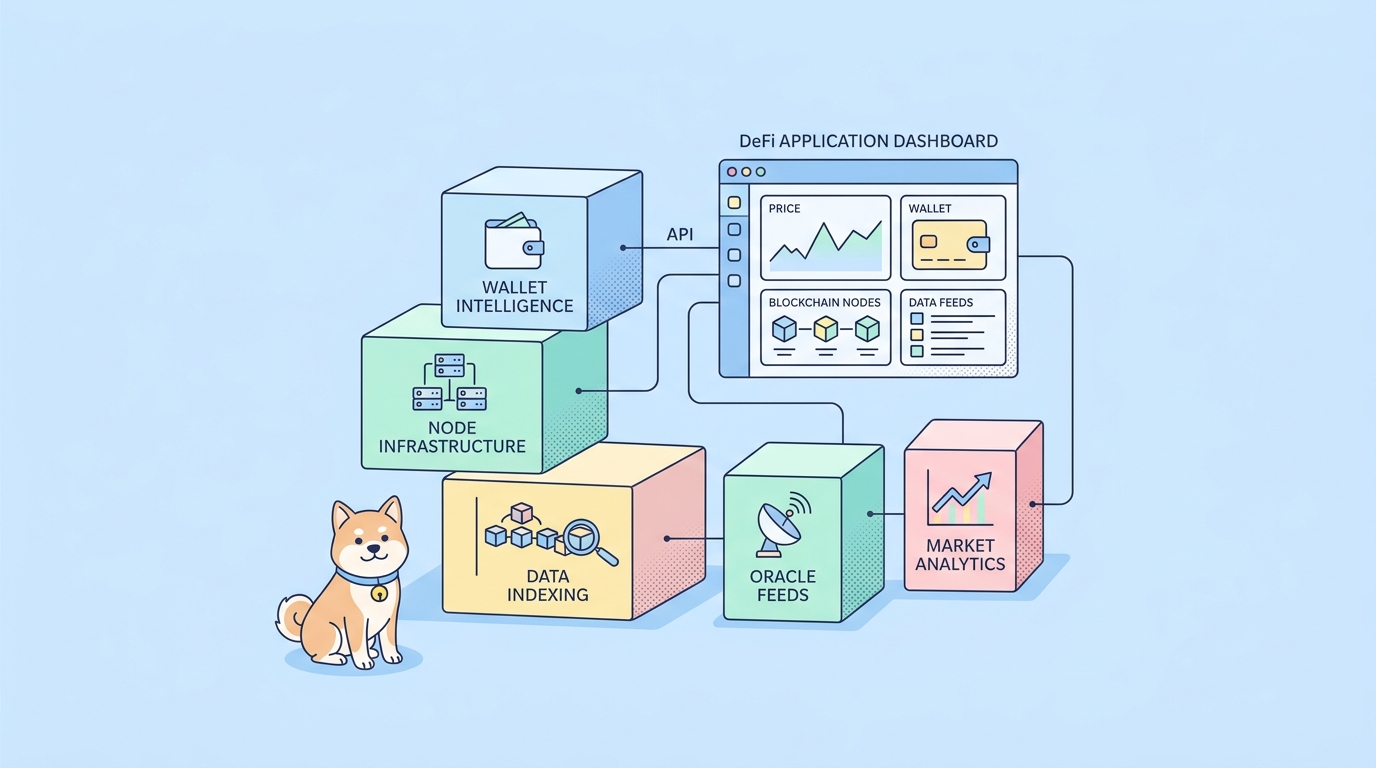
Most unified API examples live in SaaS categories like CRM, HRIS, or accounting. The same pattern solves an equally painful problem in crypto. Building a portfolio tracker, trading app, or wallet dashboard means pulling data from many blockchains, dozens of exchanges, and several wallet types, each with its own data source, format, and quirks. A unified crypto data API hides that fragmentation behind one consistent interface, exactly as a unified CRM API does for sales tools.
CoinStats API is a clear example of this model applied to the crypto vertical. It provides unified access to on-chain and off-chain data, wallet balances and transactions, portfolio analytics, and market coverage across 120+ blockchains and 200+ exchanges through a single, consistent interface.
How It Maps to the Unified API Model
The same ideas that define unified API platforms apply directly to crypto data:
- Normalized data model: Wallet balances and transactions come back in the same shape whether the address sits on Solana, an EVM chain, or Bitcoin. Teams build once instead of maintaining a separate integration per chain.
- One point of access: A single account reaches every supported network and exchange, instead of stitching together a market-data vendor, a node provider, and a DeFi source.
- Breadth behind one connection: A single integration covers 120+ blockchains, 200+ exchanges, and 10,000+ DeFi protocols, spanning on-chain tokens and exchange-listed assets alike.
What You Can Access Through One Interface
- Wallet data: Balances and transaction history across Solana, EVM chains, and Bitcoin, including HD wallets (xpub / ypub / zpub).
- Portfolio: Value, holdings, allocation, and profit and loss for a connected portfolio.
- DeFi: Staking, lending, and liquidity positions detected automatically across thousands of protocols.
- Market data: Prices, market caps, volumes, and historical charts for 100,000+ coins.
Built for AI Agents
In line with the agent-based and AI-optimized trends shaping unified APIs, CoinStats also offers an MCP (Model Context Protocol) server. It exposes the same crypto data as ready-made tools for assistants such as Claude, Cursor, and custom agents, so an agent reads wallet, portfolio, and market data through one connection rather than a separate integration per source.
Unified API Platforms and Apidog: The Perfect Match
A powerful API development platform like Apidog complements unified API platforms perfectly. Here’s how:
- API Design & Documentation: Apidog enables teams to design and document unified API interfaces, ensuring clarity and consistency across all endpoints.
- Mocking & Testing: Before connecting to live unified API platforms, Apidog’s mocking and testing features let you simulate requests and validate responses, accelerating development cycles.
- Import & Export: With Apidog, you can easily import unified API schemas (e.g., OpenAPI/Swagger) and generate interactive documentation for your team or clients.
By combining Apidog’s robust API development tools with the scale and efficiency of unified API platforms, you streamline every stage of your integration journey.
How to Evaluate and Build with Unified API Platforms
When considering a unified API platform, ask:
1. Does it cover your required integration categories?
2. How deep is the data model? (Shallow for basic CRUD, or deep for complex workflows)
3. How frequently is data synced? (Real-time vs. periodic/cached)
4. Does it support custom field mappings?
5. What are the security and compliance standards?
6. How is monitoring and error handling managed?
7. Can you easily prototype and document APIs? (Apidog can help here!)
Unified API Platforms: Future Trends
- Agent-Based Integrations: Some next-generation platforms use agents to connect even to systems without official APIs.
- AI-Optimized APIs: Platforms are evolving to support AI agents by providing event-driven triggers and autonomous action layers.
- Universal Access Models: The definition of "API" is expanding, with platforms bridging traditional APIs, web portals, and legacy systems.
Conclusion: Unified API Platforms Are the Future of Integration
Unified API platforms have revolutionized how modern software connects to the world. By abstracting the complexity of integrations into a single, manageable layer, they empower businesses to move faster, innovate more freely, and deliver seamless experiences.
For teams looking to maximize the value of unified API platforms, leveraging tools like Apidog for API design, testing, and documentation is a best practice that ensures clarity, speed, and collaboration.