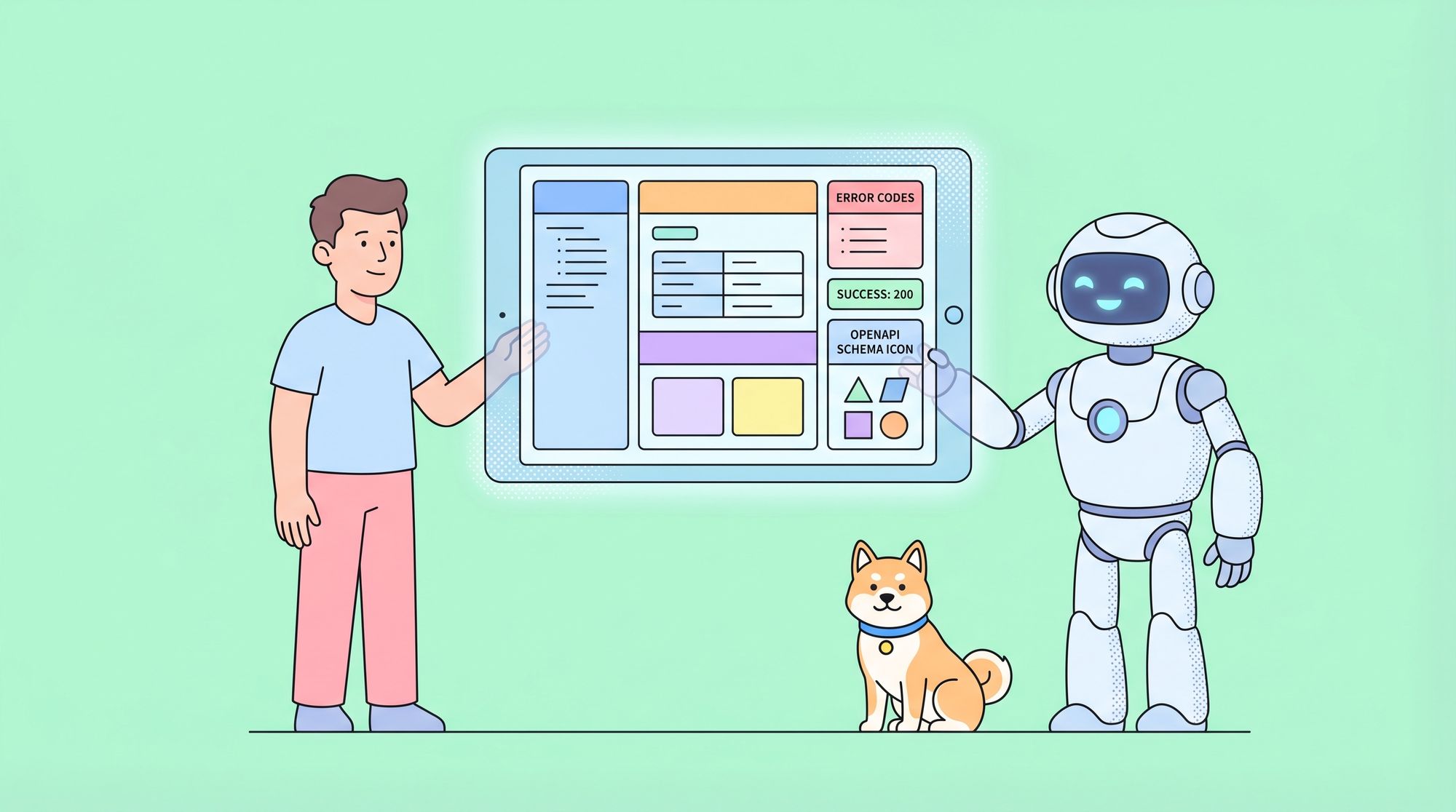
APIs are no longer just a bridge between software and human developers. With the rise of AI agents—think LLM-powered coding assistants, autonomous bots, and agentic workflows—your API might be "read" and used more by machines than by people. So, how do you design APIs for AI agents, not just human users? This guide will show you why this shift matters, what new challenges arise, and how to make your APIs truly agent-grade.
The Paradigm Shift: From Human-Centric to Agent-First API Design
For years, API design best practices focused on human developers—clear API documentation, intuitive endpoints, and helpful error messages. Now, AI agents are consuming APIs at scale, often acting like tireless junior developers: reading docs, making requests, parsing errors, and adjusting code until things work.
But here’s the catch—AI agents don’t have intuition or context. They rely on patterns, explicit cues, and predictable behaviors. If your API is even slightly ambiguous or inconsistent, an agent will stall, and that’s bad news for everyone.
Why does this matter?
- AI agents can automate integration, QA, and even development.
- Friction points for agents usually signal pain points for humans, too.
- Well-designed, agent-friendly APIs unlock new possibilities for automation and scale.
How AI Agents Use APIs Differently from Humans
Let’s compare:
| Aspect | Human Developers | AI Agents |
|---|---|---|
| Reads Documentation | Yes | Sometimes (if structured/parsible) |
| Infers Conventions | Often | Rarely |
| Handles Ambiguity | With Intuition | Struggles (needs explicitness) |
| Error Recovery | Creative, tries workarounds | Needs clear, actionable feedback |
| Adapts to Changes | Can learn/adapt | Relies on explicit versioning/introspection |
Bottom line: AI agents are brilliant at pattern recognition but terrible at guessing your intent. They need APIs that are explicit, consistent, and machine-readable at every level.
Key Challenges When Designing APIs for AI Agents
Designing APIs for AI agents, not just human developers, surfaces unique hurdles:
1. Ambiguity and Implicit Behavior:
Agents can’t “guess” what an undocumented parameter or ambiguous error means. Humans might infer, but agents will get stuck.
2. Inconsistent Naming and Structure:
Non-standard naming or mixed data types trip up agents relying on pattern-based code generation.
3. Lack of Introspection:
Without built-in ways to discover available endpoints, parameters, or data schemas, agents can’t adapt on the fly.
4. Poor Error Context:
Vague or unstructured error messages prevent agents from correcting mistakes.
5. Authentication & Rate-Limiting:
Human-centric flows (like CAPTCHA, email confirmations, or interactive OAuth) break agent workflows.
6. Versioning and Deprecation:
Agents often don’t handle silent changes or deprecated endpoints gracefully.
Let’s dive into how to solve these.
9 Principles for Designing Agent-Ready APIs
Here’s a practical checklist for designing APIs for AI agents, not just human developers:
1. Be Explicit with Schemas and Types
- Use strict, machine-readable specifications like OpenAPI or Swagger.
- Define data types, allowed values, and required fields unambiguously.
- Example (OpenAPI schema):
  components:
    schemas:
      User:
        type: object
        required: [id, name, email]
        properties:
          id:
            type: string
          name:
            type: string
          email:
            type: string
Tip: Apidog's spec-first design tools help you enforce explicitness at every API level.
2. Standardize Naming and Structure
- Consistent naming patterns (e.g., snake_case or camelCase) across endpoints and payloads.
- Predictable URL structures make endpoint discovery easier for agents.
  // Good:
  {
    "user_id": "123",
    "user_name": "alex"
  }
  // Bad:
  {
    "UID": "123",
    "Name": "alex"
  }
3. Provide Rich, Structured Error Responses
- Always return errors in a structured format, not just free text.
- Include codes, descriptions, and actionable next steps.
  {
    "error": {
      "code": "USER_NOT_FOUND",
      "message": "No user exists for ID 123.",
      "suggestion": "Check if the user ID is correct."
    }
  }
4. Enable API Introspection and Discovery
- Implement endpoints or metadata that allow agents to list or discover available endpoints, supported operations, and parameter requirements.
- Use OpenAPI’s
/swagger.jsonor similar schemas.
5. Document Everything—For Machines, Too
- Machine-readable docs (e.g., OpenAPI/Swagger, JSON Schema) are as important as human-friendly guides.
- Consider including JSON examples, sample requests, and response templates.
Tip: Apidog auto-generates and validates API docs, making this process seamless.
6. Explicit Versioning
- Use URL-based or header-based versioning (
/v1/resourceorX-API-Version). - Never make breaking changes without incrementing the version and updating machine-readable docs.
7. Design for Idempotency and Predictability
- Agents thrive on predictable, repeatable operations.
- Use idempotency keys for safe retries (especially for POST/PUT endpoints).
8. Simplify Authentication and Authorization
- Prefer OAuth2 Client Credentials or API keys over human-based flows.
- Minimize interactive steps; use token-based flows that agents can automate.
9. Monitor and Rate-Limit Intelligently
- Separate rate limits for human and agent traffic, with clear quota exhaustion errors.
- Provide structured feedback if an agent is being throttled.
Agent-first design also surfaces in voice-driven companions, where the API contract has to hold up under conversational pressure — see our walkthrough of How to Use Grok Companion Mode and Talk with Ani for a worked example.
Real-World Example: Before and After API Redesign for AI Agents
Let's see a concrete case.
Original (Human-Oriented) API Error Response
// POST /register
{
  "error": "Oops, something went wrong!"
}
- Vague, no error code or suggestion.
Redesigned (Agent-Ready) API Error Response
{
  "error": {
    "code": "EMAIL_ALREADY_REGISTERED",
    "message": "This email is already registered.",
    "suggestion": "Use the /login endpoint if this is your account."
  }
}
Result:
- An AI agent can detect the error, switch to
/login, and continue autonomously.
Case Study: An Agentic Integration Journey
Scenario: An LLM-powered agent is tasked with onboarding users to a SaaS platform via API.
Original API Friction Points:
- Inconsistent field names (
userIdvs.user_id) - Human-readable but non-structured error messages
- No way to enumerate all possible error types or required parameters
Agent Behavior:
- Fails on unexpected field names
- Loops on vague “Invalid input” errors
- Cannot recover without detailed API docs
Redesign Steps:
1. Strict OpenAPI spec with enforced naming and schema.
2. Structured errors with codes and suggestions.
3. /meta/errors endpoint listing all possible error codes.
4. Machine-readable documentation with live examples.
Outcome:
- Agent finished onboarding flow without human help—reduced support tickets and errors.
How Apidog Helped:
- Used Apidog’s spec-first mode to enforce schema and naming rules.
- Generated automated test suites to simulate agent workflows.
- Employed Apidog MCP Server for better AI-powered development.
Advanced Considerations: Security, Versioning, and Monitoring
Designing APIs for AI agents, not just human users, means rethinking operational concerns:
Security
- Ensure API keys and tokens can be managed programmatically.
- Avoid CAPTCHA or email-based confirmations for agent flows.
- Log and monitor agent access separately.
Versioning
- Deprecate endpoints with clear, structured warnings.
- Allow agents to query supported versions via introspection.
Monitoring & Analytics
- Track agent usage patterns and common errors.
- Use feedback loops (structured error reports) to refine API quality.
Pro-tip: Apidog’s performance testing and automated validation help ensure your API remains robust, even as agent usage scales.
Tutorial: Creating an Agent-Ready API Endpoint
Let’s walk through designing an agent-friendly endpoint with OpenAPI and Apidog.
1. Define the endpoint in OpenAPI:
   paths:
     /users:
       post:
         summary: Create a new user
         requestBody:
           required: true
           content:
             application/json:
               schema:
                 $ref: '#/components/schemas/User'
         responses:
           '201':
             description: User created
             content:
               application/json:
                 schema:
                   $ref: '#/components/schemas/User'
           '400':
             description: Bad Request
             content:
               application/json:
                 schema:
                   $ref: '#/components/schemas/Error'
2. Add structured error schema:
   components:
     schemas:
       Error:
         type: object
         required: [code, message]
         properties:
           code:
             type: string
           message:
             type: string
           suggestion:
             type: string
3. Test with Apidog:
- Generate example requests and responses.
- Use Apidog's MCP client to simulate agent interactions.
- Validate that all errors and edge cases are handled in a machine-readable way.
The Agent-First Future: Benefits for All
Designing APIs for AI agents, not just human developers, isn’t just about machines. Every improvement—clearer errors, better docs, stricter schema—makes your API more robust and developer-friendly for everyone.
Think of it this way:
If your API is clear and consistent enough for an agent to use autonomously, it’s almost certainly better for human developers, too.
Designing for machine consumers demands contract clarity that human-facing APIs often paper over, which is why grounding that work inthe foundational principles of API-first development helps teams avoid the schema drift and versioning inconsistencies that break agent integrations.
Conclusion: Start Designing APIs for AI Agents, Not Just Humans
AI agents are transforming how APIs are used and tested. Shifting your mindset—and your API design practices—to serve agents as first-class users is the key to future-proof, scalable, and robust platforms.
Ready to level up your API design?
Try spec-driven tools like Apidog to enforce best practices, automate testing, and ensure your APIs are agent-grade from day one.