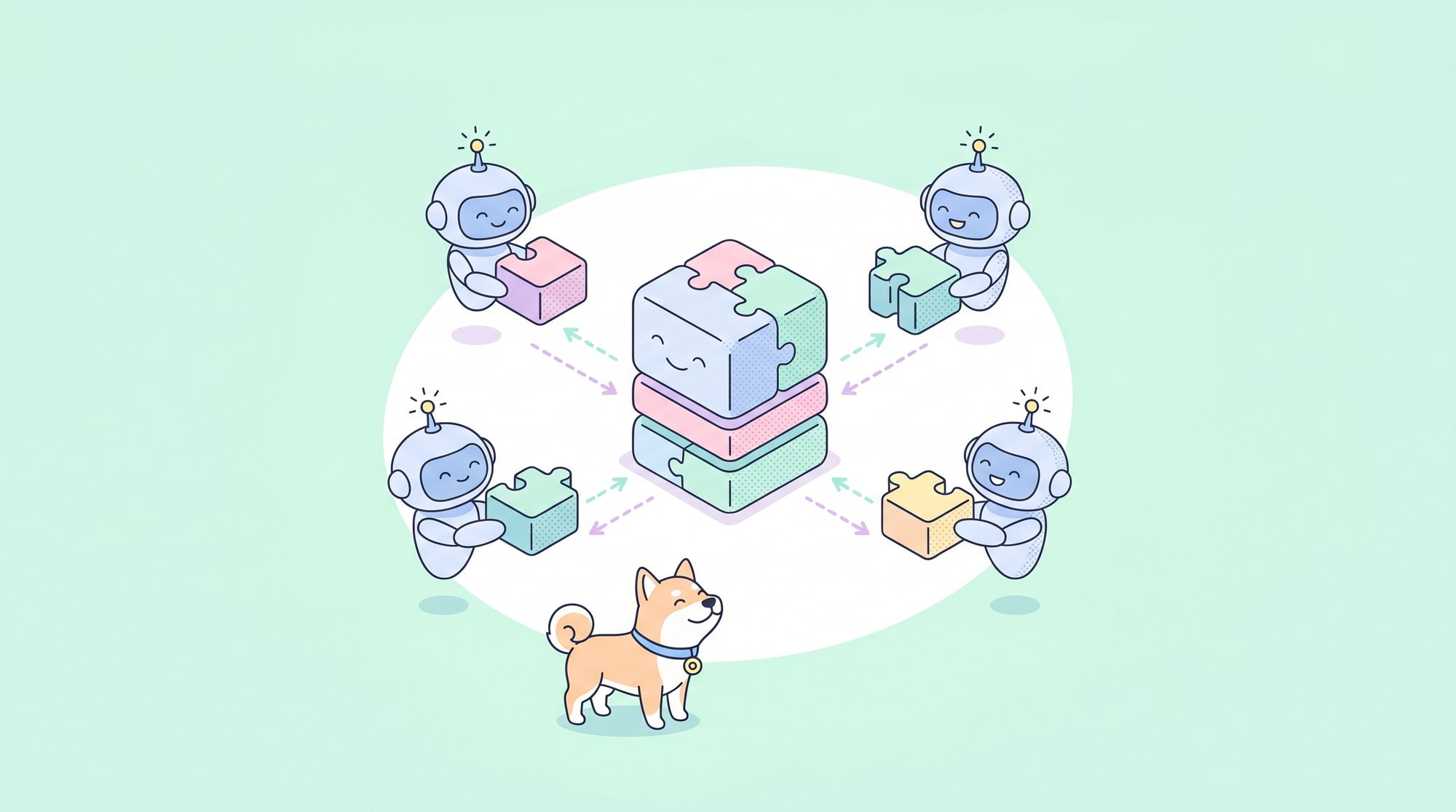
APIs have long been the connective tissue of digital ecosystems, built for human developers to integrate, automate, and innovate. But the landscape has shifted. AI agents are the new API consumers—and they're changing the rules for how APIs must be designed, documented, tested, and governed.
In this practical guide, we’ll break down what this shift really means, explore the technical and strategic implications, and provide actionable steps (with real examples) to build APIs ready for the age of AI agents.
What Does It Mean That AI Agents Are the New API Consumers?
Traditionally, API consumers were human developers or partner teams. Their needs shaped API design: clear docs, consistent conventions, and test sandboxes. But now, autonomous AI agents—ranging from personal assistants to business process bots—are consuming APIs directly, often without human mediation.
How does this change the game? Let’s compare:
| Aspect | Human Developer | AI Agent |
|---|---|---|
| Reads docs? | Yes | Rarely—relies on specs |
| Handles ambiguity? | Sometimes, via support | No—needs strict clarity |
| Workflow | Manually composed | Dynamically planned |
| Security | Governed by user | Needs automated enforcement |
| Consumption style | Predictable, slower | Fast, high-volume, autonomous |
Key takeaway: Designing for AI agents means treating APIs not as human-facing products, but as machine-facing contracts. The margin for error narrows—and the need for automation explodes.
Why Are AI Agents Becoming the Dominant API Consumers?
Several trends are converging:
- Explosion of agent-based automation: Businesses deploy AI agents for customer support, onboarding, payment, risk analysis, and more.
- Personal AI agents: Consumers increasingly use bots and assistants that connect directly to services—often negotiating on their behalf.
- Agent-to-agent ecosystems: Platforms connect and transact with minimal or no human input, driving a need for APIs that can be safely and reliably consumed by software.
Rhetorical question: If your APIs are built for humans only, will your business be invisible to the new wave of agent-driven workflows?
Key Requirements for APIs Consumed by AI Agents
Designing APIs for AI agents is not just about technical tweaks—it’s a paradigm shift. Here’s what agent-centric APIs demand:
1. Machine-Readable, Intent-Rich API Specifications
AI agents don’t browse online docs or “figure things out.” They rely on machine-readable specifications like OpenAPI or Swagger — down to every detail.
- Explicit schemas: Every field, data type, and response must be defined.
- Workflow metadata: Agents need to understand not just endpoints, but the intent and sequence of calls. Can you encode business rules or workflows in your specs?
- Consistent naming and error codes: Remove ambiguity. Human guesswork is not an option.
Example: OpenAPI for Agent Consumption
openapi: 3.1.0
info:
  title: Order Processing API
  version: 1.0.0
paths:
  /orders:
    post:
      summary: Create a new order
      description: |
        AI agents can use this endpoint to submit customer orders.
      requestBody:
        content:
          application/json:
            schema:
              $ref: '#/components/schemas/OrderRequest'
      responses:
        '201':
          description: Order created
          content:
            application/json:
              schema:
                $ref: '#/components/schemas/OrderResponse'
components:
  schemas:
    OrderRequest:
      type: object
      properties:
        productId:
          type: string
        quantity:
          type: integer
        aiAgentId:
          type: string
      required: [productId, quantity, aiAgentId]
Tip: Tools like Apidog make it easy to design, validate, and export OpenAPI specs that are agent-friendly.
2. Automated Testing and Validation for Agent-Driven Use Cases
AI agents consume APIs at speed and scale—often chaining calls, handling edge cases, and retrying rapidly. Manual testing isn't enough.
Strategies:
- Automated test generation: Simulate agent workflows, not just single calls.
- Scenario-based validation: Test common and edge-case sequences an agent might execute.
- Performance under load: Can your API handle a surge of parallel, autonomous requests?
How Apidog helps: Use Apidog’s automated test suites to create, run, and validate complex agent scenarios—before agents ever hit production.
3. Robust API Security and Governance for Autonomous Access
AI agents can be relentless. Without strong controls, APIs are vulnerable to:
- Overconsumption or scraping
- Abuse via automated attack patterns
- Unintended data exposure or business rule bypass
What to implement:
- Fine-grained authentication (OAuth2, API keys tied to agent identity)
- Rate limiting and throttling at the client/agent level
- AI-aware anomaly detection: Monitor for patterns unique to bots/agents vs. humans
Example: Agent-Specific API Key Assignment
{
  "agent_id": "agent-12345",
  "api_key": "abcd-efgh-ijkl-5678",
  "permissions": ["order:create", "order:read"],
  "rate_limit": {
    "requests_per_minute": 100
  }
}
Governance tip: Regularly audit which agents have access—and revoke or adjust keys as needed. Apidog's MCP testing tools make it easy to simulate different agent credentials and access patterns.
4. Mocking and Simulation: How to Build APIs for Agents Without Waiting for Agents
When you’re building APIs for a new generation of AI agents, you often don’t have the actual agent code yet. So how do you test and develop confidently?
Solution: Mock APIs and Mock Data
- Mock API endpoints: Simulate agent calls and workflows to test logic and error handling.
- Mock data: Feed your API realistic agent-generated payloads to validate parsing and edge cases.
Using Apidog: Apidog’s mock server lets you spin up agent-style API consumers, so you can develop, test, and refine your API before a single real agent integrates.
Agent-Centric API Design: A Step-By-Step Example
Let’s walk through a simplified, hands-on workflow for building an agent-friendly API.
Step 1: Define a Machine-Readable Contract
Use OpenAPI or Swagger to specify every endpoint, parameter, and workflow—including agent-specific metadata.
Step 2: Create Automated Test Scenarios
Test not just single calls, but multi-step agent workflows. For example, submitting an order, checking status, then updating delivery.
Step 3: Mock Agent Behavior
Use a tool like Apidog to simulate agent requests: randomize payloads, chain calls, and inject errors to test resilience.
Step 4: Secure for Agent Access
Implement strict authentication, rate limits, and logging—tuned for autonomous consumption patterns.
Step 5: Publish Machine-Readable Documentation
Make sure your API portal exposes the latest OpenAPI/Swagger docs, so agents (and their developers) can integrate seamlessly.
Real-World Case Studies: Agent API Consumption in Action
Banking: AI agents are now directly consuming APIs for real-time fraud detection and loan underwriting—requiring APIs with strict schemas and programmable workflows.
E-commerce: Personal AI shopping assistants interact with multiple retailer APIs, performing searches, price comparisons, and checkouts—all without human involvement.
Healthcare: Bots automate patient intake, insurance checks, and appointment scheduling via APIs with sensitive data—making robust security and error handling critical.
Developer Workflow: How API Teams Must Adapt
With AI agents as the new API consumers, developer experience is transformed:
- Design-first approach: Start with OpenAPI or Swagger, not just code.
- Automated CI/CD for APIs: Every spec change triggers new tests, mock deployments, and security scans.
- Continuous contract validation: Ensure every change is backward-compatible and machine-consumable.
- API lifecycle management: Use platforms (like Apidog) that support spec-driven design, mocking, automated testing, and collaborative documentation.
Actionable Checklist: Preparing Your APIs for AI Agent Consumption
1. Adopt machine-readable specs: Use OpenAPI or Swagger as your API’s source of truth.
2. Automate testing: Cover agent workflows, edge cases, and performance scenarios.
3. Strengthen security: Fine-grained auth, rate limits, and AI-specific monitoring.
4. Mock early, mock often: Simulate agent consumption before real agents connect.
5. Iterate collaboratively: Use platforms (such as Apidog) that unify design, testing, and documentation for both humans and agents.
The Business Impact: Data Ownership, Power Dynamics, and New Opportunities
When AI agents are the new API consumers, the power dynamic shifts:
- Customers (and their agents) own their data and terms.
- Businesses must provide value through services, not just data hoarding.
- Transparent, intent-rich APIs become a competitive differentiator.
Are you ready for a world where your API’s primary audience is autonomous—and can walk away in milliseconds if your interface isn’t up to par?
Conclusion: AI Agents Are Here—Will Your APIs Keep Up?
The rise of AI agents as API consumers marks a fundamental shift. To thrive, organizations must design, test, and secure APIs with autonomous, machine-first consumers in mind.
Apidog and similar platforms offer the tools to make this transition seamless—letting you validate every aspect of your API lifecycle, from design to testing to documentation, for the new era of agent-driven integration.
The future of APIs is intent-rich, machine-readable, and automation-ready. The question isn’t whether AI agents will consume your APIs—but whether your APIs are ready for them.