
Developers and fintech innovators constantly seek robust solutions to issue virtual cards programmatically. A virtual card issuing API enables businesses to create, manage, and control digital payment cards through code, streamlining expenses and enhancing security. As demand grows for flexible payment systems, these APIs stand out for their technical capabilities.
This article examines the leading options, focusing on their technical architectures, integration methods, and real-world applications. First, we define the core concepts. Then, we detail each API, highlighting strengths and pricing. Finally, we discuss selection criteria to guide your choice.
What Is a Virtual Card Issuing API?
A virtual card issuing API serves as a programmatic interface that allows software applications to generate and manage virtual payment cards. These cards function like traditional credit or debit cards but exist digitally, often tied to a master account for controlled spending. Businesses use them for employee expenses, vendor payments, or subscription management.
Technically, the API exposes endpoints for card creation, funding, transaction authorization, and reporting. For instance, developers send HTTP requests to create a card with parameters like expiration date, spending limits, and merchant restrictions. The system responds with card details, including a 16-digit number, CVV, and expiry. Security protocols, such as tokenization and PCI DSS compliance, protect sensitive data.
Furthermore, these APIs integrate with payment networks like Visa or Mastercard, enabling seamless global transactions. They reduce fraud risks by allowing single-use or limited-scope cards. In essence, a virtual card issuing API transforms payment infrastructure into a scalable, API-driven service.
How Do Virtual Card Issuing APIs Work Technically?
Virtual card issuing APIs operate through RESTful or GraphQL interfaces, handling requests in JSON format. Developers authenticate via API keys or OAuth tokens. A typical workflow starts with onboarding: The API verifies user identity through KYC endpoints.
Next, card issuance occurs via a POST request to an endpoint like /cards. Parameters include card type (virtual or physical), currency, and limits. The backend interacts with issuing banks or processors to generate card data. Real-time webhooks notify applications of events like transactions or disputes.
Additionally, APIs support just-in-time (JIT) funding, where funds load only upon authorization. This minimizes exposure. Monitoring tools provide dashboards for analytics, using SQL-like queries for custom reports. Integration with tools like Apidog accelerates testing by mocking responses and automating scripts.
Now, let's examine the top providers. We selected these based on developer adoption, feature depth, and scalability in 2025.
1. Stripe Issuing: How Does This API Simplify Card Creation for Developers?
Stripe Issuing leads the pack with its developer-centric approach. The API enables businesses to issue virtual and physical cards programmatically, integrating with Stripe's broader payment ecosystem. Developers create cards using simple REST calls, specifying attributes like spending categories or velocity controls.
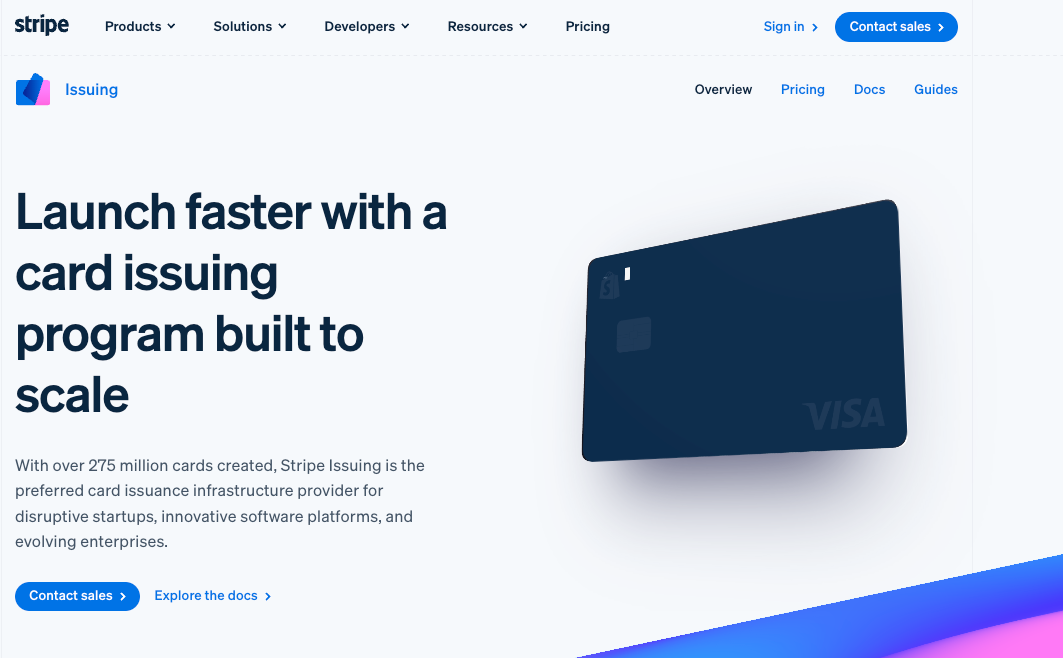
Key technical features include real-time authorization hooks, where your server decides approvals via webhooks. Stripe handles PCI compliance, tokenizing card data to avoid direct storage. It supports multi-currency issuance and integrates with Apple Pay or Google Pay for mobile wallets.
Moreover, Stripe's SDKs in languages like Python and Node.js reduce boilerplate code. For example, a card creation call looks like this:
import stripe
stripe.api_key = "your_key"
card = stripe.issuing.Card.create(
  cardholder="holder_id",
  type="virtual",
  spending_controls={"allowed_categories": ["ac_refrigeration_repair"]}
)
This flexibility suits fintech apps needing custom controls. However, high-volume users benefit from its scalability.
Pricing: Stripe charges $0.10 per virtual card created and $3 per physical card. No setup or monthly fees apply, but transaction processing incurs 2.9% + $0.30 per successful charge. Users earn a share of interchange revenue, typically 0.5-1.5% depending on volume. Custom enterprise pricing starts at $10,000 monthly minimum for advanced features.
Pros include seamless integration with Stripe Payments, while cons note limited customization compared to dedicated issuers.
2. Marqeta: What Makes Marqeta's API Ideal for Custom Card Programs?
Marqeta excels in open API architecture, allowing deep customization for virtual card issuance. The platform supports JIT funding, where transactions trigger real-time fund transfers. Developers define rules via the /cards endpoint, setting parameters for merchant locks or amount thresholds.
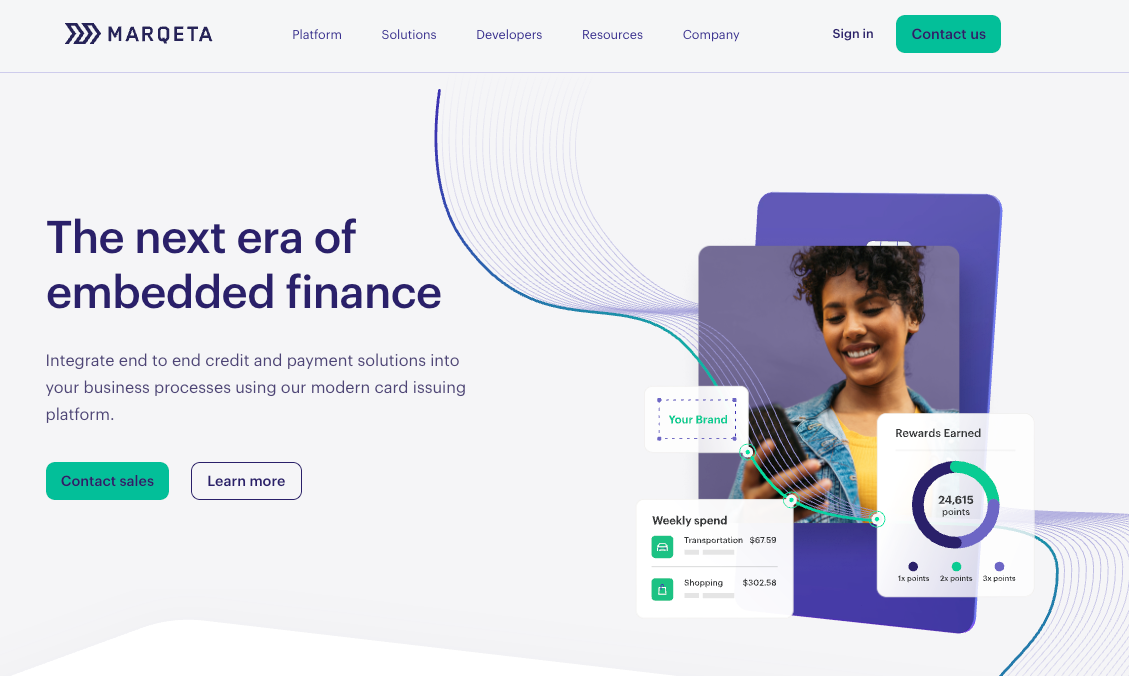
Technically, Marqeta's event-driven system uses webhooks for notifications, integrating with AWS Lambda for serverless processing. It complies with PCI DSS Level 1 and offers tokenization for secure data handling. Global reach spans 40+ countries, with multi-currency support.
For instance, creating a virtual card involves:
POST /v3/cards
{
  "card_product_token": "your_product",
  "user_token": "user_id",
  "fulfillment": {"card_type": "VIRTUAL"}
}
This API suits ride-sharing or delivery apps requiring dynamic cards. Additionally, fraud tools use machine learning for anomaly detection.
Pricing: Marqeta employs a custom model based on volume. Card issuance fees start at $0.50 per virtual card, with transaction fees at 0.5-1% of volume plus interchange. Setup costs range from $5,000-$50,000, and monthly minimums apply for enterprise plans. Contact sales for tailored quotes.
Strengths lie in flexibility, but integration complexity may challenge smaller teams.
3. Adyen Issuing: How Does Adyen's Unified API Handle Global Card Issuance?
Adyen combines issuing, acquiring, and processing in one API, streamlining virtual card programs. Developers issue cards via the /issuing/cards endpoint, configuring limits and currencies. The platform supports 3D Secure for enhanced authentication.
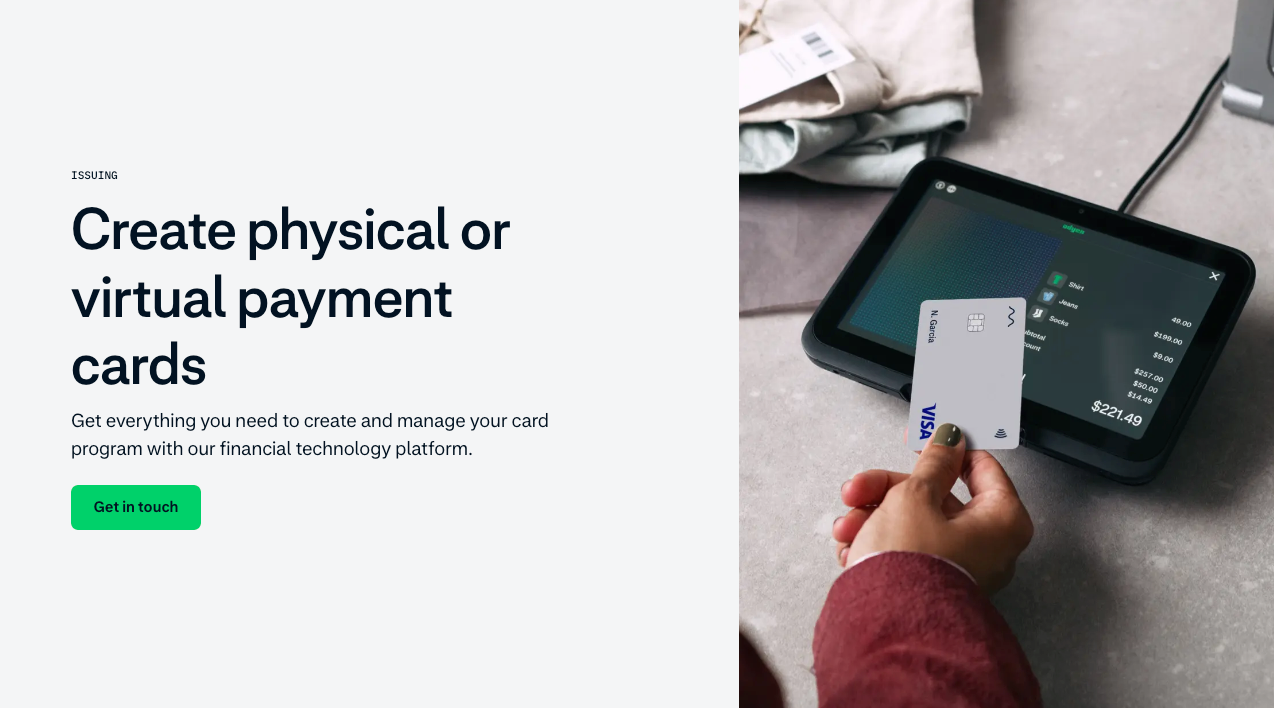
Key features include real-time reporting via dashboards and API queries. Adyen's global compliance covers GDPR and PSD2, with tokenization ensuring data security. Integration uses SDKs for Java, .NET, and more.
A sample request:
Card card = new Card();
card.setType(Card.TypeEnum.VIRTUAL);
issuingService.createCard(card);
This setup benefits e-commerce platforms needing end-to-end control. Furthermore, it handles multi-entity management for international operations.
Pricing: Adyen uses an interchange ++ model, adding 0.1-0.5% markup to network fees. Virtual card issuance costs €0.10-€0.50 per card, with no setup fees. Transaction processing starts at 1.2% + €0.12 for EU cards. Enterprise pricing requires negotiation, often including volume discounts.
Advantages include transparency, though higher costs for low-volume users persist.
4. Galileo Financial Technologies: What Technical Edges Does Galileo's API Offer?
Galileo provides a modular API for virtual card issuance, emphasizing customization. Developers use endpoints like /createCard to generate cards with embedded KYC checks. The platform supports real-time fraud monitoring via AI-driven rules.

Technically, Galileo's open APIs integrate with core banking systems, allowing hybrid setups. It offers SDKs and sandboxes for testing. Multi-currency and digital wallet support enhance usability.
Example code:
from galileo import Client
client = Client(api_key="key")
card = client.create_card(account_id="acc_id", card_type="virtual")
This API fits neobanks building full-stack solutions. Additionally, compliance tools automate regulatory reporting.
Pricing: Galileo offers custom pricing, typically $0.25-$1 per virtual card issuance. Transaction fees range from 0.3-0.8% plus interchange. Monthly platform fees start at $1,000, with volume-based tiers. No public list; quotes via sales.
Pros feature scalability, but documentation gaps may slow onboarding.
5. Thredd (Formerly GPS): How Does Thredd's API Support Multi-Currency Issuance?
Thredd focuses on end-to-end issuing with APIs for virtual cards. Developers configure products via /cardproducts, then issue cards with spending rules. The system handles 3D Secure and dynamic CVV for security.

Key aspects include back-office analytics and real-time processing. Global coverage spans multiple regions, with API-driven compliance.
Sample integration:
POST /api/cards/issue
{
  "product_id": "prod_id",
  "type": "virtual",
  "currency": "USD"
}
Ideal for challengers like Revolut, it offers robust reporting.
Pricing: Custom, with issuance fees around $0.20-$0.60 per virtual card. Transaction costs include 0.4-1% markup. Setup fees vary; contact for details.
Strengths in reliability, cons in limited free tiers.
6. Wallester: What Makes Wallester's API Affordable for Startups?
Wallester provides a white-label API for virtual card issuance, supporting up to 18,000 cards. Developers use REST endpoints for creation and management, with easy accounting integrations.
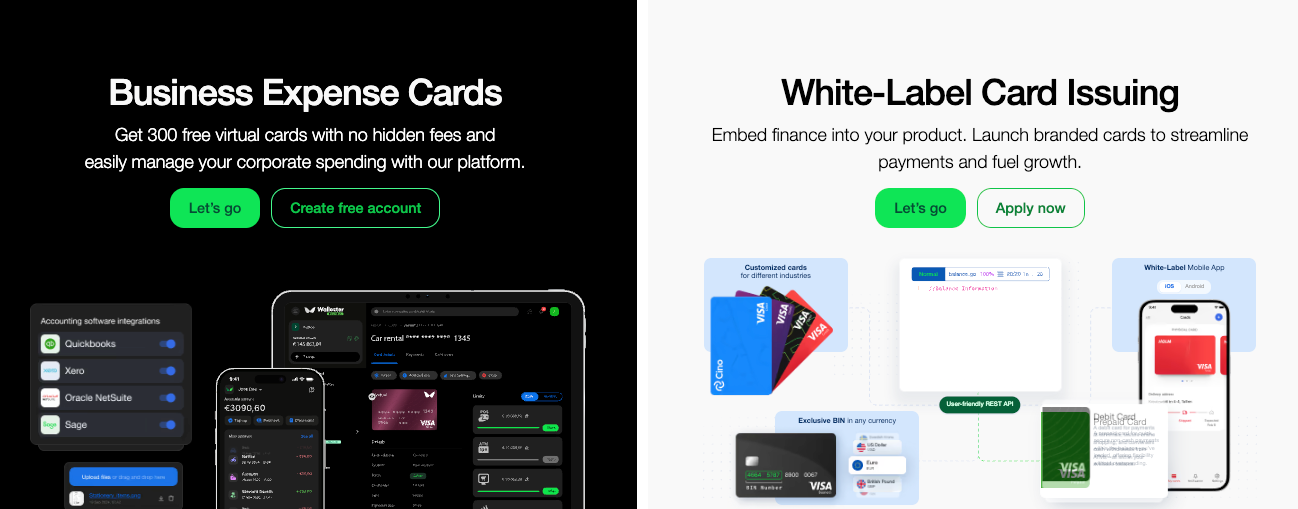
Features include real-time controls and EU-focused compliance. SDKs simplify setup.
Code example:
fetch('/api/cards', {
  method: 'POST',
  body: JSON.stringify({ type: 'virtual', limit: 1000 })
});
Suits expense management tools.
Pricing: Free plan: €0/mo for 300 virtual cards, €0.35/card/mo beyond. Premium: €199/mo for 3,000 cards (€0.066/card). Platinum: €999/mo for 18,000 (€0.055/card). Enterprise custom.
Affordable entry, but regional limits.
7. Extend: How Does Extend's API Enhance Spend Management?
Extend's API issues virtual cards linked to existing credit lines. Endpoints like /virtualcards allow custom budgets and automations.

Technical highlights: Integration with ERPs, tokenization for security.
Example:
import extend
card = extend.create_virtual_card(budget=500, expiration="2026-12")
Great for SMBs.
Pricing: Free startup, API access via custom quotes. Per-card fees ~$0.10-$0.50, transaction 0.5%. No monthly minimums initially.
Flexible, but bank partnerships required.
8. NIUM: What Global Capabilities Does NIUM's API Provide?
NIUM issues virtual cards in 30+ markets via API. Developers use /cards/issue for multi-currency setup.

Features: FX margins, compliance APIs.
Code:
POST /v1/cards
{
  "type": "virtual",
  "currency": "EUR"
}
For cross-border payments.
Pricing: Custom fees, $0.15-$0.50 per card. Transaction 0.5-1% + FX. Rebates on volume.
Strong internationally, complex setup.
9. Bond: How Does Bond's API Accelerate Card Programs?
Bond offers universal APIs for virtual issuance, with KYC built-in.
Endpoint example:
bond.cards.create({ type: 'virtual' });
Supports wallets.
Pricing: Custom, ~$0.20 per card. Platform fees $500+/mo.
Fast launch, higher costs.
10. Lithic: What Developer Tools Make Lithic Stand Out?
Lithic provides flexible APIs for debit/credit virtual cards.
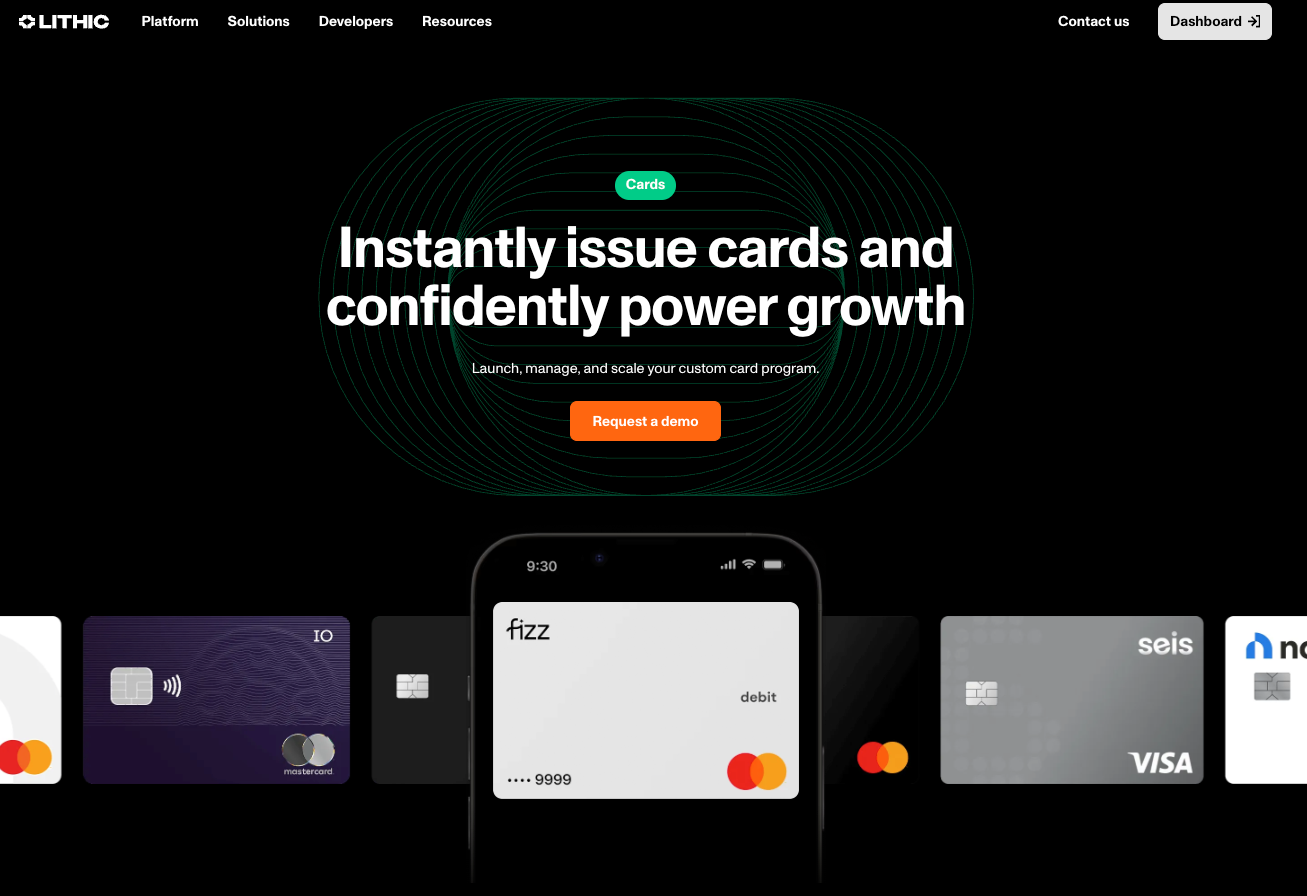
Features: Dispute management, auth streams.
Example:
import lithic
card = lithic.cards.create(type='virtual')
Pricing: Few cents per card (e.g., $0.05), no monthly fees. Interchange share.
Developer-friendly, scalable.
How to Choose the Best Virtual Card Issuing API for Your Needs?
Evaluate based on scale, integration, and cost. For global ops, pick Adyen or NIUM. Startups favor Wallester's free tier. Test with Apidog to ensure compatibility.
In summary, these APIs drive fintech innovation. Stripe and Marqeta top for versatility, while others niche down. Implement one today to elevate your payments.