Payment processing systems handle sensitive financial transactions where reliability remains critical. Network failures, timeouts, or client retries often trigger duplicate requests. These issues can lead to unintended double charges if not managed properly. Developers implement payment API idempotency to address this challenge effectively.
This guide explains idempotency in depth, focuses on its application in payment APIs, and provides practical insights for implementation.
What Is Idempotency in APIs?
Idempotency describes a property of operations where repeating the same action multiple times produces the identical result as performing it once. Developers apply this concept extensively in RESTful APIs to ensure predictable behavior.
In HTTP methods, certain verbs exhibit idempotency naturally. For example, GET requests retrieve data without altering server state, so multiple identical calls yield the same response. Similarly, PUT updates a resource completely, and repeating the request leaves the resource unchanged after the first successful update. DELETE removes a resource, and subsequent calls confirm its absence without further side effects.
However, POST requests lack idempotency by default. Each POST typically creates a new resource or triggers a unique action, such as processing a payment. Consequently, resending the same POST can generate duplicates unless developers enforce safeguards.
Furthermore, PATCH operations may or may not demonstrate idempotency, depending on implementation. Developers design relative updates carefully to avoid unintended cumulative effects.
Idempotency proves essential in distributed systems. Clients retry failed requests automatically to handle transient errors. Without idempotency, these retries risk inconsistent states or duplicated actions.
Why Payment API Idempotency Matters
Payment gateways process transactions involving real money, so errors carry high costs. A customer initiates a payment, but a network timeout occurs before the confirmation arrives. The client retries the request, potentially charging the customer twice if the server processes both calls.
Major providers recognize this risk and prioritize idempotency. Stripe, Adyen, PayPal, and Square all incorporate mechanisms to prevent duplicate processing.
Additionally, idempotency enhances fault tolerance. Servers return cached responses for recognized retries, reducing load and improving reliability. This approach also simplifies client-side logic, as developers implement retries confidently without custom deduplication.
Moreover, regulatory compliance in financial systems demands accurate transaction records. Idempotency helps maintain audit trails by ensuring actions execute exactly once.
In essence, payment API idempotency transforms potentially chaotic retry scenarios into controlled, predictable operations.
How Idempotency Keys Work in Payment APIs
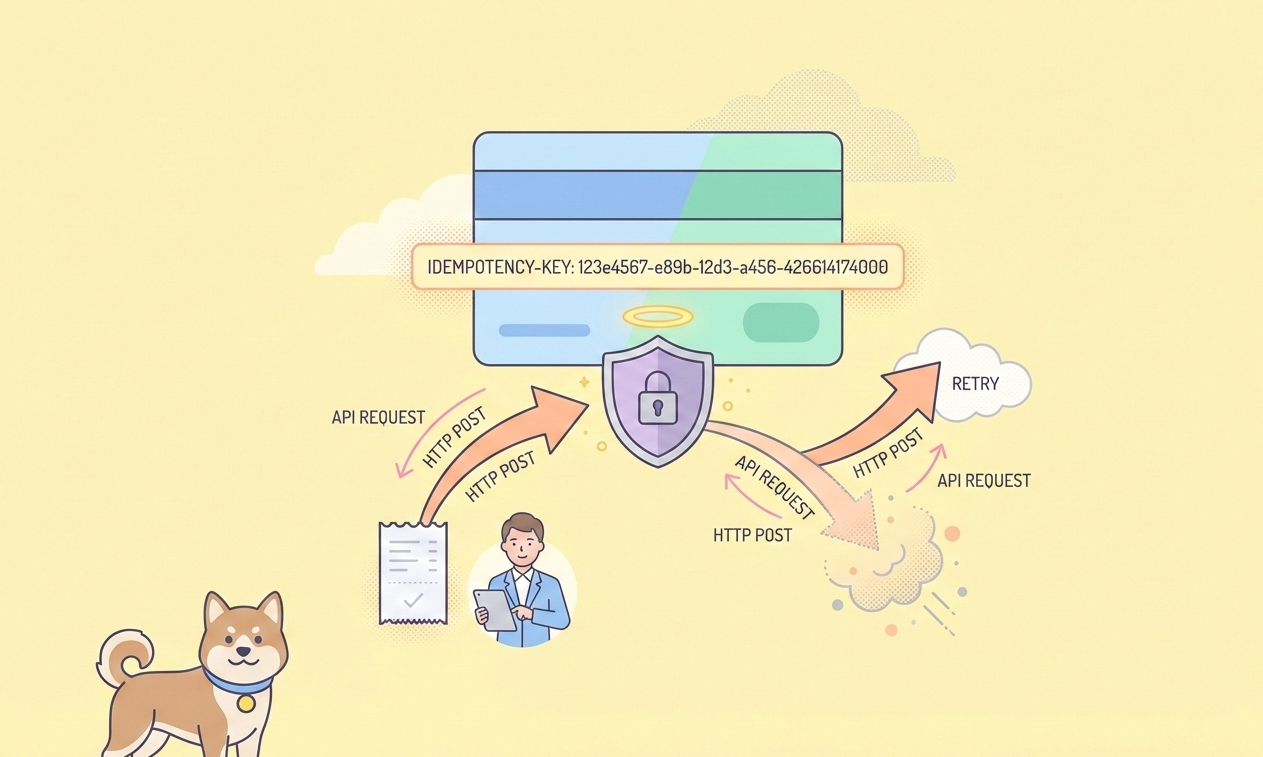
Providers implement idempotency primarily through idempotency keys. Clients generate a unique identifier—typically a UUID v4—and include it in the request header.
The server checks for the key upon receipt:
- If absent or new, the server processes the request normally and stores the key with the response and payload fingerprint.
- If present and previously seen, the server verifies the payload matches the original. Matching payloads trigger return of the stored response without reprocessing. Mismatches result in an error to prevent misuse.
Common header names include Idempotency-Key (Stripe, Adyen), PayPal-Request-Id (PayPal), or custom variants.
Keys expire after a period—often 24 hours—to limit storage needs while covering typical retry windows.
For instance, Stripe requires idempotency keys for all POST requests creating charges. Clients generate random strings with high entropy to avoid collisions. The system compares parameters strictly, erroring on discrepancies.
Adyen limits keys to 64 characters and recommends UUIDs. Concurrent identical requests may trigger transient errors, signaling safe retries.
PayPal enforces uniqueness per API call type, processing only the first and rejecting simultaneous duplicates.
Square returns errors if the payload changes with a reused key.
These patterns ensure servers detect and handle duplicates efficiently.
Real-World Examples from Leading Payment Gateways
Stripe pioneered robust idempotency support. Developers send Idempotency-Key headers with POST requests. The platform stores results post-validation, returning them for retries—even preserving error codes like 500s for consistency.
Adyen processes payments idempotently, returning original responses on retries. Transient errors indicate race conditions, allowing later retries with the same key.
PayPal correlates requests via PayPal-Request-Id, enabling safe retries for unclear responses.
Square protects against accidental duplicates in operations like CreatePayment, erroring on payload changes.
Modern Treasury combines internal state machines with external keys, retaining them for 24 hours.
These implementations demonstrate how providers tailor idempotency to payment-specific needs, preventing financial discrepancies.
Implementing Idempotency in Your Payment API
Server-side implementation requires careful design. Developers store keys in a fast-access database or cache like Redis, associating them with responses, statuses, and payload hashes.
A typical flow proceeds as follows:
- Clients extract the idempotency key from headers.
- Servers query storage for the key.
- New keys proceed to normal processing; existing keys return cached results if payloads match.
- Servers enforce atomicity to handle concurrent requests, often using locks or database transactions.
Additionally, developers set reasonable expiration policies and scope keys per client or account to prevent interference.
Clients generate keys reliably—UUID v4 ensures uniqueness—and retry with exponential backoff on failures.
Furthermore, servers validate payloads rigorously to block malicious reuse with altered data.
Edge cases demand attention: partial failures require staged job processing to commit side effects atomically.
Best Practices for Payment API Idempotency
Follow these guidelines to achieve effective implementation:
- Clients always use Version 4 UUIDs for keys to maximize uniqueness.
- Servers store keys for 24-72 hours, balancing coverage and storage.
- Developers document requirements clearly, specifying headers and behaviors.
- Servers log replays for auditing and rate-limit per-key to deter abuse.
- Clients avoid key reuse for different intents, generating new ones per operation.
Moreover, teams test thoroughly for concurrency and mismatches.
These practices build trust and resilience in payment systems.
Testing Idempotency in Payment APIs
Thorough testing verifies idempotency under real conditions. Developers send identical requests sequentially and concurrently, checking for single executions.
They simulate timeouts by delaying responses, then retrying to confirm cached returns.
Additionally, teams test payload mismatches to ensure errors trigger appropriately.
Manual testing proves cumbersome for complex scenarios. Automated tools streamline the process significantly.
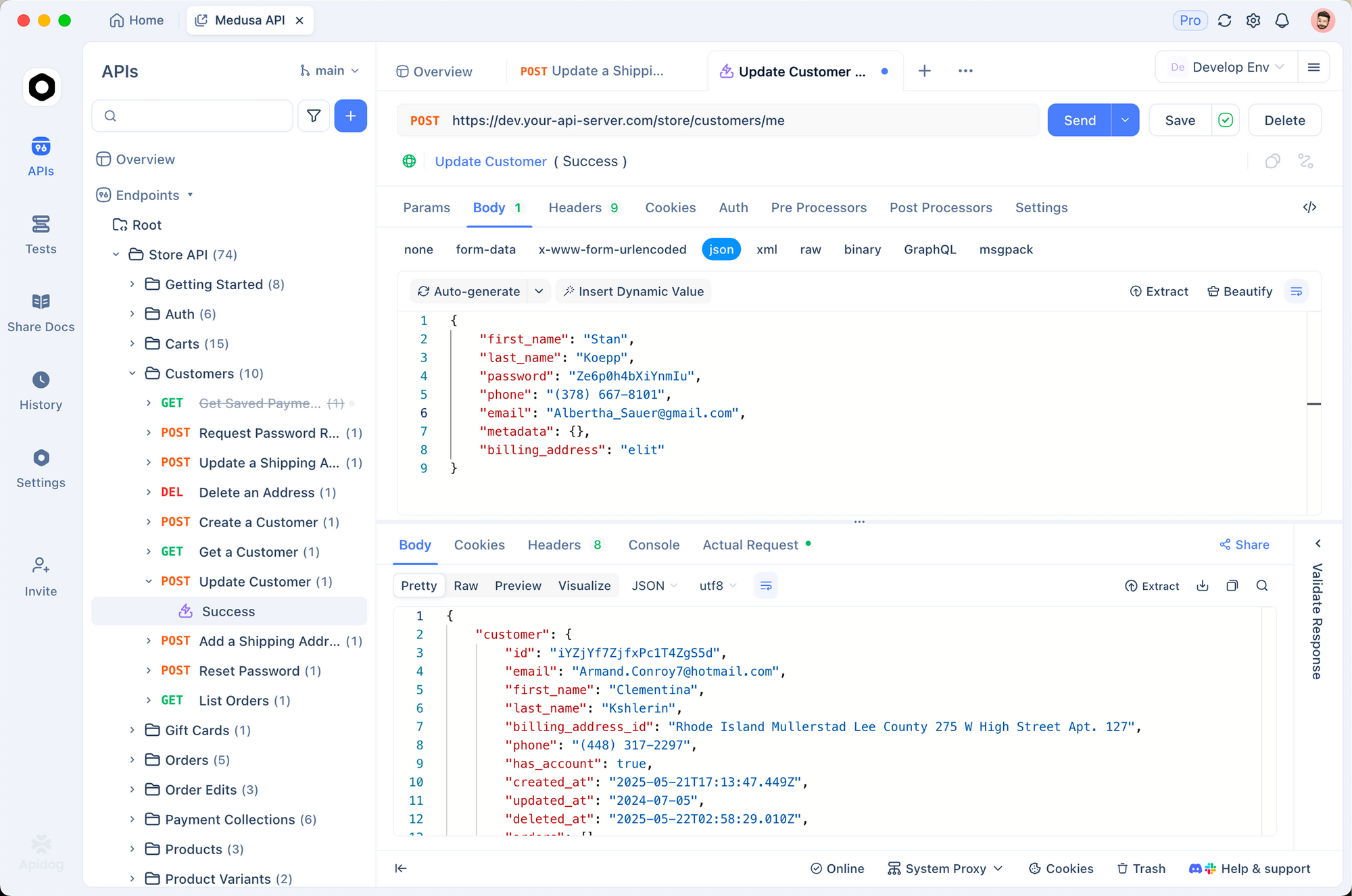
Apidog excels here as a comprehensive API platform. Users design endpoints with idempotency requirements, generate documentation automatically, and create test scenarios.
Apidog supports sending requests with custom headers like Idempotency-Key. Developers duplicate requests easily to validate server behavior.
Moreover, Apidog's mocking features simulate gateway responses, enabling offline idempotency testing.
Teams run automated collections, asserting consistent results across retries. Collaboration tools share tests seamlessly.
Apidog transforms idempotency validation from error-prone manual efforts into efficient, repeatable processes.
Common Pitfalls and How to Avoid Them
Developers often overlook concurrency, leading to race conditions where duplicates slip through. Mitigation involves atomic checks and locks.
Insufficient key entropy risks collisions in high-volume systems—always prioritize random UUIDs.
Additionally, indefinite storage bloats databases; implement expiration rigorously.
Poor documentation confuses integrators, causing incorrect usage. Clear specs prevent this.
Furthermore, ignoring payload validation allows attacks with modified requests.
Proactive design addresses these issues upfront.
Conclusion
Payment API idempotency forms a cornerstone of reliable financial systems. Providers like Stripe and Adyen demonstrate its value in preventing duplicates while enabling safe retries.
Developers implement keys thoughtfully, follow best practices, and test extensively to create robust integrations.
Tools enhance this process dramatically. Apidog provides an integrated environment for designing, testing, and documenting idempotent APIs efficiently.
Teams adopting these principles deliver seamless payment experiences, even amid network uncertainties. Small enhancements in retry handling yield substantial improvements in trustworthiness and user satisfaction.
Start applying idempotency today—your payment system will benefit immediately.