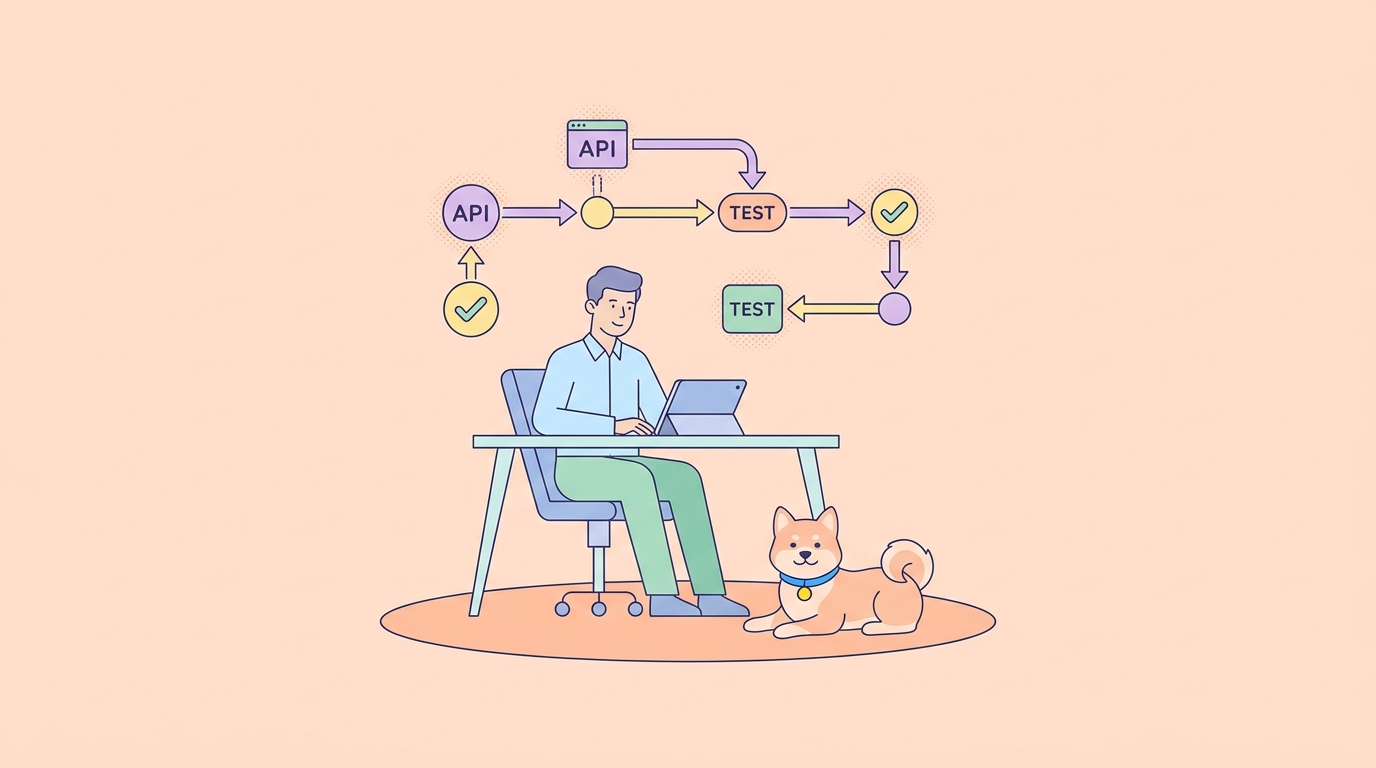
Large Language Models (LLMs) have revolutionized how APIs and intelligent systems are built, but ensuring their reliability in production remains a major challenge for developers and QA teams. Traditional testing methods often fall short because LLMs are probabilistic and complex, introducing risks when scaling AI-powered applications.
Seeking a way to streamline your API and LLM testing workflows? Apidog offers a robust platform for API testing, making it easy to validate your LLM-powered endpoints and ensure smooth integration with your backend systems.
What Is Opik? A Modern Foundation for LLM Evaluation
Opik is an open-source platform designed to address the unique needs of LLM application testing and monitoring. By offering detailed tracing, flexible evaluation frameworks, and features like Agent Optimizer and Guardrails, Opik empowers teams to build, test, and deploy LLM applications with confidence.
Opik structures LLM evaluation using reproducible methodologies, helping technical teams gain deep insight into model behavior, performance, and reliability throughout the development lifecycle.
Opik Core Architecture: How It Works
Tracing System for Full Visibility
Opik’s advanced tracing logs every call and span within your LLM application, computes evaluation metrics, and benchmarks output quality across versions. This traceability is crucial for diagnosing issues in complex agent workflows and Retrieval-Augmented Generation (RAG) pipelines.

With Opik, developers can:
- Track detailed execution flows
- Measure latency and pinpoint bottlenecks
- Visualize agent decisions and tool usage
Multi-Level Evaluation Framework
Opik supports both automated and human-in-the-loop evaluation, allowing you to test prompts and models against datasets using diverse metrics. Pre-built evaluation metrics cover common tasks, and you can extend them for custom requirements.

Seamless integration with CI/CD pipelines means you can automate quality checks as part of your standard development process.
Key Features: Monitoring, Metrics, and Workflow Integration
Real-Time Monitoring & Dashboards
Opik enables real-time logging and tracing of LLM interactions, providing dashboards that visualize system health, performance trends, and anomalies. This observability is vital for catching regressions before they impact users.
Advanced Evaluation Metrics
Beyond accuracy, Opik supports domain-specific metrics—such as relevance, coherence, and safety—to surface hallucinations or unexpected behaviors.

Automatically flagging anomalous outputs helps maintain quality and ensure your LLMs behave as intended.
Seamless Development Workflow Integration
Opik integrates natively with Pytest and other popular testing frameworks, making it easy for developers to add LLM evaluation to existing test suites. It supports local and cloud deployments, so you can maintain consistent practices across dev, staging, and production environments.
Implementation: Installation, APIs, and Scaling
Flexible Deployment Options
Choose between a local open-source setup or a hosted solution via Comet.com. Local installs offer maximum data control, while hosted options simplify scaling and maintenance.
Comprehensive API Access
Opik’s RESTful APIs enable integration with your favorite developer tools. Access evaluation results, query monitoring data, and manage configurations directly from your CI/CD or monitoring stack. Documentation and multi-language support make integration straightforward.
Production-Ready: Performance, Security, and Compliance
Optimizing for Scale
Opik’s efficient data processing pipelines support high-throughput evaluation without slowing down your production systems.

Monitor model performance on real-world data, identify drifts, and make data-driven improvements.
Security and Compliance
Opik offers enterprise-grade security with:
- Role-based access control
- Audit logging
- Data encryption
These features help teams meet regulatory requirements and protect sensitive information, making Opik suitable for regulated industries.
Advanced Use Cases: RAG and Agentic Systems
Evaluating Retrieval-Augmented Generation (RAG) Systems
Opik’s tracing and evaluation tools excel at monitoring chatbots, code assistants, and other RAG workflows. Assess retrieval accuracy, generation quality, and overall system performance to optimize your LLM knowledge base.
Monitoring Agentic Workflows
Complex, multi-step agents require robust monitoring. Opik gives visibility into every agent action, decision tree, and tool interaction.

Understand and optimize agent behavior in production—crucial for building reliable, adaptive AI systems.
Collaboration and Data Management
Team-Based Evaluation
Opik features an intuitive UI for collecting and annotating LLM outputs, enabling distributed teams to accelerate feedback cycles and drive continuous improvement.
Data Annotation Tools
Build comprehensive, high-quality test datasets with flexible annotation tools—supporting binary and multi-dimensional assessments to cover all your use cases.
Opik vs. Alternatives: Open-Source Strength and API Testing Synergy
Open-Source Flexibility
Opik’s open-source approach means:
- Full transparency and customizability
- Community-driven enhancements
- Easy integration with proprietary or legacy systems
Working Alongside API Testing Platforms Like Apidog
While Opik specializes in LLM evaluation, pairing it with a dedicated API testing tool such as Apidog covers your entire testing spectrum—from API contract validation to model output quality.
Apidog supports:
- Automated API and contract testing
- Mocking and documentation generation
- Seamless integration with Opik for comprehensive test coverage
Roadmap: Future Features and Community Growth
Evolving Capabilities
Opik is actively expanding support for multimodal evaluations and deeper integrations with machine learning frameworks, ensuring alignment with emerging LLM architectures and best practices.
Community Contributions
Open-source development encourages global contributions—ranging from new metrics to improved integrations—making Opik a robust and future-proof choice for LLM teams.
Best Practices: Implementation and Monitoring
Defining Your Evaluation Strategy
Success starts with a clear evaluation plan:
- Set measurable metrics aligned with business goals
- Build comprehensive test datasets
- Incorporate both automated and human review
Regularly review and evolve your strategy to keep up with changing requirements.
Configuring Monitoring & Alerts
Set up real-time alerts for anomalies or degradations using Opik’s flexible notification system.

Define escalation and response workflows to minimize production risks and downtime.
Conclusion
Opik delivers the architecture, metrics, and workflow integrations needed for robust LLM evaluation and monitoring. For API-focused teams, combining Opik with Apidog ensures that both your APIs and LLM-powered applications remain reliable, scalable, and production-ready.