TL;DR
An agent-ready API lets AI agents discover, authenticate, and consume your services without you holding their hand. The secret sauce? Comprehensive OpenAPI specs, MCP protocol support, consistent response formats, and documentation a machine can read. (Apidog handles most of this automatically, so your AI documentation will write itself.)
Introduction
Here's an uncomfortable truth no one talks about at conferences: most APIs are invisible to AI.
Think about it. The developers on your team using Claude, Cursor, or Copilot aren't manually clicking through your documentation anymore. They're saying things like "hey, check our API for user endpoints" or "create a new customer via our API." The AI makes the call, and if your API isn't designed for machine consumption, it fails. Quietly. Without anyone noticing until a user complains.
About 67% of developers use AI assistants daily. Yet the vast majority of APIs out there still assume a human will read the docs, mentally fill in the gaps, and figure out auth on their own. That's a pretty big assumption when the actual consumer is code, not a person.
So let's fix that.
What Makes an API Agent-Ready?
Traditional APIs are built for humans. Agent-ready APIs? They're built for code.
The difference comes down to a few key priorities:
Machine-readable metadata. Complete OpenAPI specs with detailed schemas: not just "here's what the endpoint does" but "here's exactly what fields are required, what types they expect, and what validation rules apply."
Explicit state management. No guesswork about which parameters are optional versus required. Just clear validation rules spelled out in the spec.
Consistent response patterns. Your 200 responses should look like your 200 responses. Your errors should follow the same structure everywhere. AI agents can handle inconsistent formats if they have to, but they shouldn't have to.
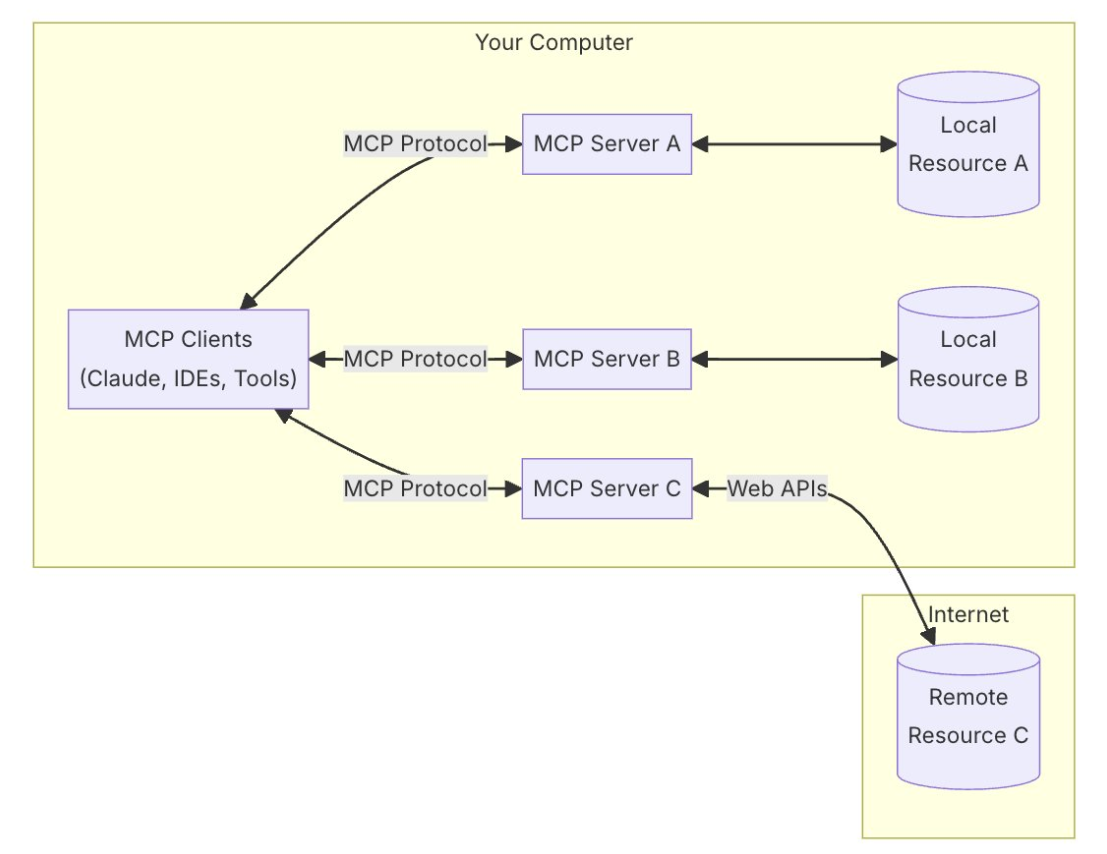
Protocol support. MCP (Model Context Protocol) is quickly becoming the standard for AI-tool communication. APIs that speak MCP get discovered and consumed automatically by compatible AI agents. No custom glue code needed.
Why AI Agents Need Special API Design
The Parsing Problem
When you and I look at an endpoint like this:
POST /users
{
  "name": "John",
  "email": "john@example.com"
}
We instinctively know things the AI doesn't: that name is a string, that email needs validation, that the response will probably include an ID. We can fill in the gaps without thinking. The AI? It sees raw JSON and has no framework for these assumptions.
Here's what the AI actually needs:
{
  "type": "object",
  "required": ["name", "email"],
  "properties": {
    "name": {
      "type": "string",
      "minLength": 1,
      "description": "User's full name"
    },
    "email": {
      "type": "string",
      "format": "email",
      "description": "Valid email address"
    }
  }
}
Without this, the agent is guessing. And guessing means failed requests, frustrated users, and abandoned integrations. Not great.
The Discovery Bottleneck
Here's how we find API endpoints: we read the docs, search for what we need, maybe check some examples. Worst case, we ping the API team on Slack. Easy.
AI agents? They can't do any of that. They need the API to spell it out for them, no shortcuts, no Slack messages:
- What endpoints exist
- What parameters each endpoint accepts
- What the response looks like
- How to authenticate
Comprehensive OpenAPI specs solve this. MCP integration goes even further: exposing your API as a set of tools the AI can literally "see" and call directly. No human translation required.
5 Principles for Agent-Ready API Design
Here's the meat of what we're talking about. These are the five things that actually matter when you're building APIs for the AI age:
1. Complete Schema-First Specification
Don't half-measure your OpenAPI spec. A bare-bones definition like this tells the AI nothing:
paths:
  /users:
    post:
      summary: Create user
      requestBody:
        content:
          application/json:
            schema:
              type: object
Instead, spell everything out:
paths:
  /users:
    post:
      summary: Create a new user
      operationId: createUser
      tags:
        - Users
      requestBody:
        required: true
        content:
          application/json:
            schema:
              $ref: '#/components/schemas/CreateUserRequest'
            examples:
              minimal:
                value:
                  name: "John Doe"
                  email: "john@example.com"
      responses:
        '201':
          description: User created successfully
          content:
            application/json:
              schema:
                $ref: '#/components/schemas/UserResponse'
        '400':
          description: Validation error
          content:
            application/json:
              schema:
                $ref: '#/components/schemas/ErrorResponse'
Every endpoint needs request schemas, response schemas for every status code, clear parameter definitions, and real examples. Yeah, it takes a bit of effort. But the payoff is an API that actually works for AI consumers.
2. Standardized Response Formats
Pick a response structure and use it everywhere. Here's a solid pattern:
{
  "success": true,
  "data": { ... },
  "meta": {
    "requestId": "req_abc123",
    "timestamp": "2026-03-03T12:00:00Z"
  }
}
Errors follow the same envelope:
{
  "success": false,
  "error": {
    "code": "VALIDATION_ERROR",
    "message": "Email format is invalid",
    "details": [
      {
        "field": "email",
        "message": "Must be a valid email address"
      }
    ]
  }
}
When every endpoint plays by the same rules, AI agents can write generic parsing logic once and reuse it everywhere. That's the real difference between an API that actually works with AI and one that happens to be used by AI sometimes.
3. MCP Protocol Support
MCP is gaining serious traction as the standard way AI models interact with external tools. The idea is simple: instead of writing custom integration code for every API, you wrap it as an MCP server. AI agents that support MCP can then discover and use your API automatically. It's a clean approach that works.
Here's what the implementation looks like:
import { MCPServer } from '@modelcontextprotocol/server';

const server = new MCPServer({
  name: 'MyAPI',
  version: '1.0.0',
  tools: [
    {
      name: 'create_user',
      description: 'Create a new user in the system',
      inputSchema: {
        type: 'object',
        properties: {
          name: { type: 'string', description: 'User full name' },
          email: { type: 'string', description: 'Valid email address' }
        },
        required: ['name', 'email']
      }
    }
  ]
});

server.start();
Each endpoint becomes a "tool" the AI can see and invoke. The protocol handles parameter passing, error handling, and authentication. You write the integration once, and every MCP-compatible AI can use it.
4. Rich Semantic Metadata
Your spec shouldn't just define types; it should explain things. Good metadata includes:
- Descriptions that tell the AI why a parameter exists, not just what it is
- Deprecation notices with clear migration paths
- Links between related endpoints
- Version information front-and-center
- Rate limits so agents know when to back off
The more context you give the AI, the better decisions it makes about how to use your API. It's that simple.
5. Clear Authentication Documentation
This one seems obvious, but a lot of APIs gloss over auth details in their specs. Be explicit about:
- Every auth method you support (API key, OAuth 2.0, JWT, etc.)
- How to obtain credentials
- Token refresh procedures
- Permission scopes
- Working examples of auth headers
components:
  securitySchemes:
    bearerAuth:
      type: http
      scheme: bearer
      bearerFormat: JWT
    apiKey:
      type: apiKey
      in: header
      name: X-API-Key

security:
  - bearerAuth: []
  - apiKey: []
Document this in your spec, not just your docs site. The AI should be able to figure out auth by reading the spec alone. If it can't, you've got a problem.
How Apidog Helps
Look, building agent-ready APIs from scratch is a lot of work. The good news? Apidog bakes most of this into the platform so you don't have to do it all manually.
MCP Server
One-click MCP server deployment. Point it at your API, and Apidog generates the MCP tool definitions automatically. Changes to your API sync to MCP in real time. No manual maintenance required. No accidentally breaking things at 2am.
Auto-Generated OpenAPI
Every endpoint you define in Apidog gets a complete, valid OpenAPI spec. Request schemas, response schemas, validation rules, examples, all generated from your API definitions. No more writing specs by hand. Your future self will thank you.
AI Documentation
Apidog's AI features don't just generate specs, they actually make them better. Smart descriptions, schema optimization suggestions, and test case generation that validates your API actually works for AI consumers. It's like having a senior API architect reviewing your work, but faster.
CLI and CI/CD
Since agent-ready APIs need to be verifiable, Apidog's got your back with:
apidog validate --spec openapi.yaml— catch spec issues earlyapidog test --env production— run integration tests in your pipeline- GitHub Actions integration for automated validation on every commit
Real-World Examples
Fintech payments API. A company needed their payment endpoints accessible to AI accounting assistants. They added OpenAPI 3.1 specs, MCP server integration, and webhook support for async operations. The result: AI assistants now process payments, reconcile transactions, and generate reports autonomously. Their finance team never has to touch a spreadsheet again.
Internal developer platform. A team built a cloud resource management API. Using Apidog's auto-generation and MCP features, developers now provision infrastructure through natural language, like "ask the API to spin up a staging environment." It's Infrastructure-as-Code but you talk to it.
E-commerce platform. Third-party AI agents needed product data access. With consistent schemas, OAuth scopes, and webhook events, partner AIs can now list inventory, check stock, and process orders without any manual intervention. The integration practically runs itself.
Common Mistakes
- Partial schemas — "I'll just document the main fields." Yeah, don't do that. Incomplete specs force AI to guess, and guessing breaks things. It's like handing someone half a recipe and expecting a perfect cake.
- Inconsistent errors — Returning different error structures per endpoint makes generic error handling impossible. Pick a format and stick with it everywhere.
- Vague auth docs — "Use API key authentication" isn't enough. The AI needs to know header names, formats, where to get keys. Spell it out like you'd explain it to a new developer on the team.
- No versioning — When you change your API, AI integrations break silently. Version in the spec. Your future self will thank you.
- Ignoring MCP — MCP is quickly becoming the standard. If you're not on board, you're making AI integration harder than it needs to be. It's worth the upfront investment.
Conclusion
Building for AI isn't a nice-to-have anymore, it's becoming table stakes. The developers using AI assistants will naturally gravitate toward APIs that just work with their tools. Everyone else? They become invisible. It's simple economics: why would someone use your API when there's one down the street that plays nice with their AI?
The good news: agent-ready API design isn't that different from good API design. Complete specs, consistent patterns, clear documentation. The difference is you're designing for a consumer that can't improvise when things are unclear. It either knows how to use your API, or it doesn't. No fuzzy logic, no intuition to fall back on.
Apidog handles the heavy lifting for you: MCP server generation, OpenAPI auto-creation, AI-powered docs. Your job is just to care about machine readability the same way you already care about human usability. That's not a huge leap. It's just extending what good API designers already do.
FAQ
What's the simplest way to make my API agent-ready?
Start with a complete OpenAPI spec. Every endpoint needs request/response schemas, parameter definitions, and examples. Then add MCP server support if your AI tools support it. That's all there is to it.
Does Apidog handle MCP automatically?
Yep. The MCP Server feature in Apidog generates MCP-compatible tool definitions from your API automatically. Just enable it in your project settings and you're good to go. It couldn't be easier.
Do I need to redesign my whole API?
Nope. Most agent-ready improvements are additive: better specs, consistent error formats, MCP wrapper. You can layer these onto existing APIs without breaking anything. No big rewrites required.
How do I know if my API works with AI?
Test it. Seriously. Feed your OpenAPI spec to an AI assistant and ask it to use your API. If it can discover endpoints, understand parameters, and make successful calls, you're there. If it struggles, you'll know exactly what needs fixing.
What if my API uses GraphQL?
GraphQL has its own introspection system, which AI agents can use. But adding MCP on top still helps with standardized tool definitions and cross-platform compatibility. Worth considering if you're serious about AI integration and want maximum flexibility.
Can agent-ready APIs improve human developer experience too?
Absolutely. Complete specs, consistent responses, and clear documentation help human developers just as much as AI. The difference is AI won't complain when docs are missing, it fails silently. (Which can be harder to debug than a grumpy developer.)