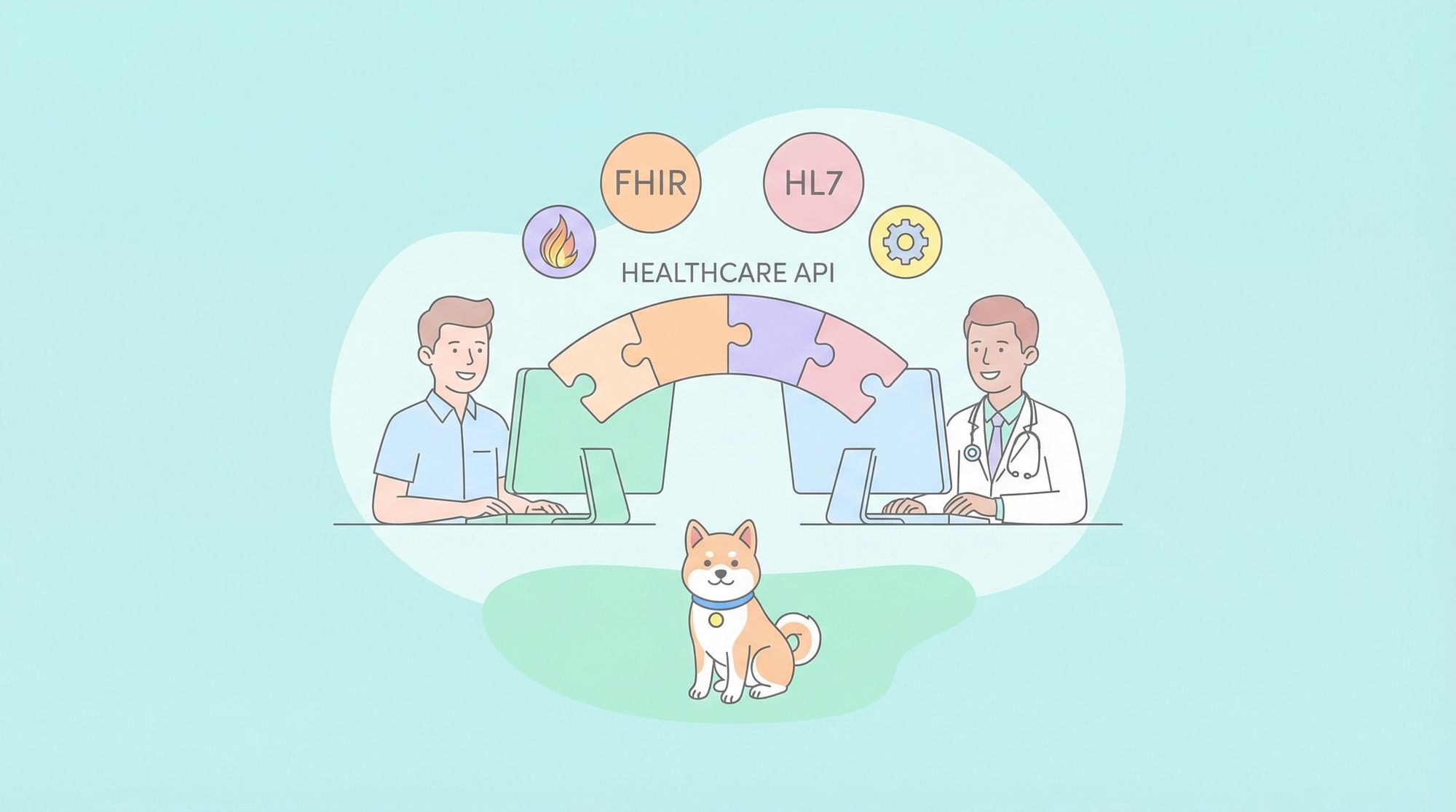
A healthcare API (Application Programming Interface) is a set of protocols and tools that enables seamless, secure, and standardized communication between various healthcare software systems. In the complex world of healthcare IT, a healthcare API acts as a digital bridge—allowing electronic health records (EHRs), hospital management systems, laboratory information systems, mobile health apps, and even wearable devices to exchange data reliably and compliantly.
Healthcare APIs are essential because healthcare organizations rely on a web of disconnected software. Without interoperability, patient data gets trapped in silos, leading to inefficiencies, delays, and data errors. By implementing healthcare APIs, organizations can break down these barriers, ensuring the right data reaches the right hands at the right time—whether for patient care, billing, compliance, or analytics.
Why Healthcare APIs Matter
The significance of healthcare APIs goes far beyond technical convenience. Here’s why healthcare APIs are critical in today’s medical ecosystem:
- Interoperability: They enable different healthcare systems to communicate, even if they were built using different technologies or standards.
- Patient-Centric Care: Healthcare APIs empower patients to access, share, and manage their health data across providers and devices.
- Regulatory Compliance: APIs help organizations meet legal requirements like HIPAA (in the US) and GDPR (in Europe) by supporting secure data sharing and access controls.
- Innovation: Developers can create new digital health solutions—such as telemedicine apps or AI-powered diagnostic tools—by leveraging healthcare APIs.
- Efficiency: Automating data exchange reduces administrative overhead, minimizes manual errors, and speeds up care delivery.
Core Components of a Healthcare API
To understand how healthcare APIs function, let’s break down their main components:
- Endpoints: URLs or interfaces that allow external systems to request or send healthcare data (e.g.,
/patients,/appointments). - Data Models/Standards: Healthcare APIs usually conform to standardized data formats such as FHIR (Fast Healthcare Interoperability Resources), HL7, or DICOM for imaging data.
- Authentication & Authorization: Secure access is enforced through protocols like OAuth2, API keys, or JWT to ensure only authorized users or systems can access sensitive data.
- Documentation: Clear API documentation ensures developers can implement the healthcare API correctly. Tools like Apidog make creating, testing, and sharing API docs easier and more collaborative.
- Versioning: Ensures backward compatibility and smooth upgrades as APIs evolve.
Healthcare API Standards: FHIR, HL7, and DICOM
Healthcare APIs often rely on widely-adopted standards to ensure data consistency and interoperability:
FHIR (Fast Healthcare Interoperability Resources)
FHIR is a modern, RESTful standard for exchanging healthcare information electronically. It uses JSON or XML for data formatting and is designed for web-based communication, making it a popular choice for healthcare APIs.
Example FHIR API Request:
GET /Patient/12345
Host: api.healthcareprovider.com
Authorization: Bearer {access_token}
This request fetches patient data in a standardized, machine-readable format.
HL7 (Health Level Seven)
HL7 v2 and v3 are older but still widespread standards for structured clinical and administrative data exchange, often using pipe-separated data formats.
DICOM (Digital Imaging and Communications in Medicine)
DICOM APIs are specialized for medical images (like X-rays or MRIs), enabling the secure exchange of imaging data between systems.
How Do Healthcare APIs Work?
A healthcare API typically acts as an intermediary between multiple healthcare systems. Here’s a simplified workflow:
1. Request: An authorized user or application sends a request to the healthcare API (e.g., fetch a patient’s lab results).
2. Validation: The API authenticates the requester, checks permissions, and validates the request format.
3. Processing: The API queries the underlying data source—such as an EHR database or imaging repository.
4. Response: The API returns the requested data in a standardized format (e.g., FHIR JSON), ready for integration with the requesting app or service.
5. Logging & Auditing: Actions are logged for compliance and traceability.
Modern API development platforms like Apidog streamline the design, documentation, and testing of healthcare APIs, ensuring faster and safer integration cycles.
Key Benefits of Healthcare APIs
Healthcare APIs offer a range of tangible benefits:
- Improved Data Access: Authorized clinicians, patients, and apps can retrieve up-to-date health information from different systems.
- Enhanced Patient Engagement: Patients can directly access their records, connect wearables, and use third-party health apps.
- Greater Efficiency: Automated data exchange reduces paperwork and administrative delays.
- Scalability: APIs scale easily as organizations grow, supporting new integrations and digital health initiatives.
- Data Security: APIs enable fine-grained access controls, auditing, and encryption—critical for protecting sensitive medical data.
Practical Examples: Real-World Healthcare API Use Cases
Let’s explore how healthcare APIs are transforming real-world scenarios:
1. Patient Health Records Access
A primary healthcare API use case is consolidating patient records from multiple sources. For example, a patient portal app might use a healthcare API to pull data from hospital EHRs, specialty clinics, and wearable devices, giving patients a unified view of their health.
2. Telemedicine Integration
Telehealth platforms use healthcare APIs to schedule appointments, exchange patient notes, and update EHRs in real time. For instance, after a video consultation, a telemedicine app posts the provider’s notes directly to the hospital’s EHR via an API.
3. e-Prescribing and Pharmacy Coordination
Pharmacies and clinics use healthcare APIs to process e-prescriptions, check drug interactions, and update medication records securely, improving prescription accuracy and reducing manual entry.
4. Medical Imaging Exchange
Radiology systems use DICOM APIs to send, receive, and view medical images across healthcare networks, enabling remote consultations and quicker diagnosis.
5. Healthcare Analytics and Research
Healthcare APIs provide de-identified, aggregated data to analytics platforms for population health studies, AI diagnostics, and operational optimization—always with strong privacy controls.
6. Insurance and Billing Automation
Billing systems connect with hospital management software through healthcare APIs to verify coverage, submit claims, and track payments automatically.
How to Build and Test a Healthcare API
Building a robust healthcare API requires careful planning, secure development practices, and comprehensive testing. Here’s a step-by-step overview:
1. Define API Requirements and Standards
- Choose the right data standards (FHIR, HL7, DICOM) for your use case.
- Identify necessary endpoints (e.g.,
/patients,/appointments,/medications).
2. Design the API Specification
- Use an API design platform like Apidog to draft and visualize your API endpoints, data models, and authentication flows.
- Generate interactive documentation to improve team collaboration and developer onboarding.
3. Implement Security Controls
- Enforce authentication and authorization (e.g., OAuth2).
- Encrypt all data in transit (HTTPS) and at rest.
- Implement logging and auditing for compliance (HIPAA, GDPR).
4. Mock and Test API Endpoints
- Use Apidog’s mocking features to simulate API responses for front-end development and QA testing.
- Test API endpoints for expected responses, error handling, and performance.
5. Deploy and Monitor
- Deploy the API to a secure, scalable environment (e.g., cloud infrastructure).
- Set up monitoring for uptime, error rates, and suspicious activity.
6. Maintain and Evolve
- Use API versioning for backward compatibility.
- Regularly update documentation and security protocols.
Healthcare API Security and Compliance
Because healthcare APIs handle sensitive patient data, security and compliance are non-negotiable. Here’s what to consider:
- Access Controls: Only authorized users and apps should access healthcare APIs.
- Audit Trails: Every API call should be logged for traceability and compliance audits.
- Data Minimization: APIs should expose only the data necessary for each use case.
- De-Identification: For research and analytics, healthcare APIs should support data anonymization.
- Regulatory Compliance: Ensure your healthcare API aligns with HIPAA, GDPR, and other relevant regulations.
Apidog offers integrated tools for documenting and testing security requirements in your healthcare API projects, making compliance easier to achieve.
Challenges in Healthcare API Development
While healthcare APIs offer immense benefits, they come with unique challenges:
- Legacy System Integration: Many healthcare providers still use outdated systems that lack modern API support.
- Standardization: Not all vendors implement standards like FHIR consistently, leading to interoperability gaps.
- Data Privacy Risks: APIs must be secured against breaches and misuse, as unauthorized access could compromise sensitive health data.
- Change Management: Introducing APIs into healthcare workflows requires training, process changes, and stakeholder buy-in.
Best Practices for Healthcare API Implementation
To maximize the value and safety of your healthcare API initiatives, follow these best practices:
- Adopt Industry Standards: Use FHIR, HL7, or DICOM wherever possible for compatibility.
- Prioritize Security from Day One: Bake security into your API design, not as an afterthought.
- Invest in API Documentation: Clear, up-to-date docs reduce integration errors and speed up third-party adoption. Tools like Apidog can automate this process.
- Version Your APIs: Make backward-compatible changes, and communicate updates to all stakeholders.
- Monitor and Audit Continuously: Use automated monitoring to detect and respond to anomalies or breaches quickly.
Conclusion: The Future of Healthcare APIs
Healthcare APIs are rapidly becoming the backbone of modern digital healthcare. By enabling secure, interoperable, and patient-centric data exchange, they unlock new possibilities for care delivery, innovation, and efficiency.
Whether you’re a healthcare provider, software vendor, or developer, mastering healthcare APIs will be key to thriving in the evolving medical landscape. Platforms like Apidog can accelerate your journey from API design to deployment, ensuring your healthcare APIs are robust, secure, and ready for the future.