Every development team wants to ship reliable software faster. CI/CD tools automate the tedious parts: running tests, building packages, deploying to production. This lets developers focus on writing code.

This guide compares the best free CI/CD tools available in 2026, from battle-tested open-source giants to modern cloud platforms. Whether you need a flexible Jenkins setup or a GitHub-native pipeline, we have you covered.
What Is CI/CD
CI/CD breaks down into two connected practices:
- Continuous Integration (CI) automatically tests and merges code changes into a shared repository multiple times per day. Each commit triggers a build that runs your test suite, catching bugs before they spread.
- Continuous Deployment (CD) takes the CI process further by automating releases to staging and production environments. When code passes all tests, it reaches users without manual intervention.
Together, these practices reduce deployment friction, improve code quality, and give teams confidence to ship multiple times per day.
Key Features to Look For
When selecting a CI/CD tool, prioritize these capabilities:
- Version Control Integration: The tool should connect seamlessly with GitHub, GitLab, or Bitbucket
- Automated Testing: Built-in support for running your test suite on every commit
- Deployment Automation: Push to staging or production automatically after tests pass
- Scalability: Handle increased build frequency and team size without slowdown
- Pipeline Visibility: Clear logs and dashboards help teams diagnose failures quickly
Tool | Key Features | Integrations | Best For |
|---|---|---|---|
Apidog | API design, testing, documentation, pipeline integration | GitHub, GitLab, CI/CD pipelines | API development and testing |
Jenkins | Plugin ecosystem, distributed builds, customization | GitHub, GitLab, Bitbucket, 1,800+ plugins | Flexible, customizable CI/CD |
GitHub Actions | YAML workflows, native GitHub integration | GitHub, external APIs | GitHub-native projects |
GitLab CI/CD | Auto DevOps, container/K8s support | GitLab, Kubernetes | Full DevOps lifecycle |
CircleCI | Pre-built configs, parallelism | GitHub, Bitbucket, AWS, GCP | Fast cloud CI/CD |
Travis CI | Simple .travis.yml config | GitHub | Open-source projects |
Semaphore | Visual pipelines, compliance audits | GitHub, GitLab | Speed-focused teams |
Spinnaker | Multi-cloud, blue/green deployments | Jenkins, Travis, AWS, GCP, Azure | Enterprise multi-cloud |
Argo CD | GitOps, Kubernetes-native | Git, Jenkins, GitHub Actions | Kubernetes deployments |
TestDino (Bonus) | Playwright cloud execution, visual reports | GitHub Actions, GitLab CI | Playwright test automation |
Popular Free CI/CD Tools
Apidog
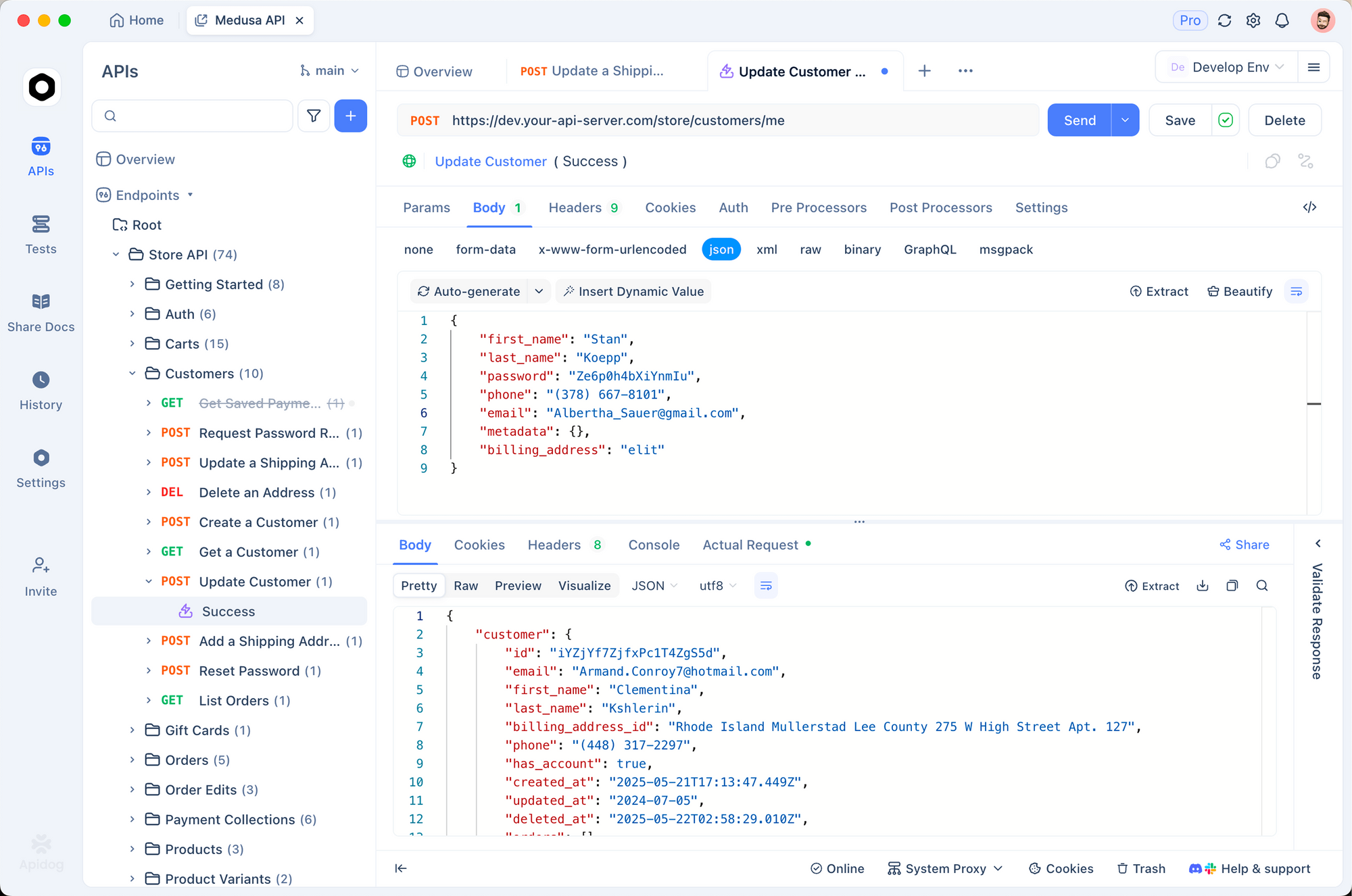
Apidog takes a different approach, focusing specifically on the API development lifecycle. It combines design, testing, documentation, and CI/CD capabilities in one platform.
Key Features:
- API design and mock servers
- Automated API testing in CI/CD pipelines
- Real-time documentation that stays in sync with your code
- Contract testing for API reliability
If your project exposes APIs, Apidog bridges the gap between API development and CI/CD. Teams get a single tool for building and testing the interfaces that connect their systems.
Jenkins
Jenkins has powered CI/CD for over 15 years. It remains the most customizable open-source option, with thousands of plugins covering virtually every tool and platform.
Key Features:
- 1,800+ plugins for integrations with GitHub, GitLab, Docker, Kubernetes, and more
- Distributed builds across multiple agents
- Pipeline as Code with Jenkinsfile
- Strong community support and documentation
Jenkins runs on your own infrastructure, giving you full control over security and data. The tradeoff is that you manage updates and plugins yourself.
GitHub Actions
GitHub Actions brings CI/CD directly into the platform where most developers already work. If your code lives on GitHub, this is the simplest path to automation.
Key Features:
- Native integration with GitHub repositories
- Workflows defined in YAML
- Matrix strategies for testing across multiple environments
- Thousands of pre-built actions in the GitHub Marketplace
GitHub Actions works well for teams already invested in the GitHub ecosystem. The learning curve is low, and you pay for compute time only when workflows run.
GitLab CI/CD
GitLab bakes CI/CD into a single platform that covers the entire DevOps lifecycle, from code repository to monitoring.
Key Features:
- Integrated with GitLab's version control
- Auto DevOps automatically detects and runs appropriate pipelines
- Built-in container registry and Kubernetes integration
- Visual pipeline editor for those who prefer GUI over YAML
If you want one tool for source control, CI/CD, and project management, GitLab delivers.
CircleCI
CircleCI focuses on speed. Its cloud-first architecture spins up fresh environments for each build, eliminating the "works on my machine" problem.
Key Features:
- Pre-built Docker images for popular languages and frameworks
- Parallel execution dramatically reduces build times
- SSH debug access for troubleshooting failing builds
- Extensive third-party integrations
CircleCI suits teams that value fast feedback loops and do not want to manage infrastructure.
Travis CI
Travis CI built its reputation serving open-source projects. Its simple configuration and GitHub integration made it a go-to choice for public repositories.
Key Features:
- Single-file configuration (.travis.yml)
- Free for open-source projects
- Support for 30+ languages out of the box
- Deploy directly to cloud providers after tests pass
Travis CI works well for open-source maintainers. For private repositories, pricing can climb quickly compared to alternatives.
Semaphore
Semaphore combines visual feedback with performance optimization. Its pipeline interface makes complex workflows easier to understand and manage.
Key Features:
- Visual pipeline builder with real-time status
- Smart caching reduces build times significantly
- Self-hosted agents for teams needing isolation
- Compliance checks and audit trails for regulated industries
Semaphore appeals to teams that want visual clarity without sacrificing power.
Spinnaker
Spinnaker, originally built by Netflix, handles enterprise-scale deployments across multiple cloud providers.
Key Features:
- Blue-green and canary deployments built in
- Multi-cloud support (AWS, GCP, Azure, Kubernetes)
- Pipeline management with manual approval gates
- Integration with Jenkins, Travis CI, and other CI tools
Spinnaker requires significant setup and expertise. It shines for organizations running across multiple clouds or needing advanced deployment strategies.
Argo CD
Argo CD brings GitOps principles to Kubernetes. Your Git repository becomes the single source of truth for application state.
Key Features:
- Declarative application definitions
- Automatic synchronization between Git and clusters
- Multi-cluster deployment from a single control plane
- Rollbacks with a single click
Argo CD fits teams running production workloads on Kubernetes who want to automate and standardize deployments.
TestDino (Bonus)
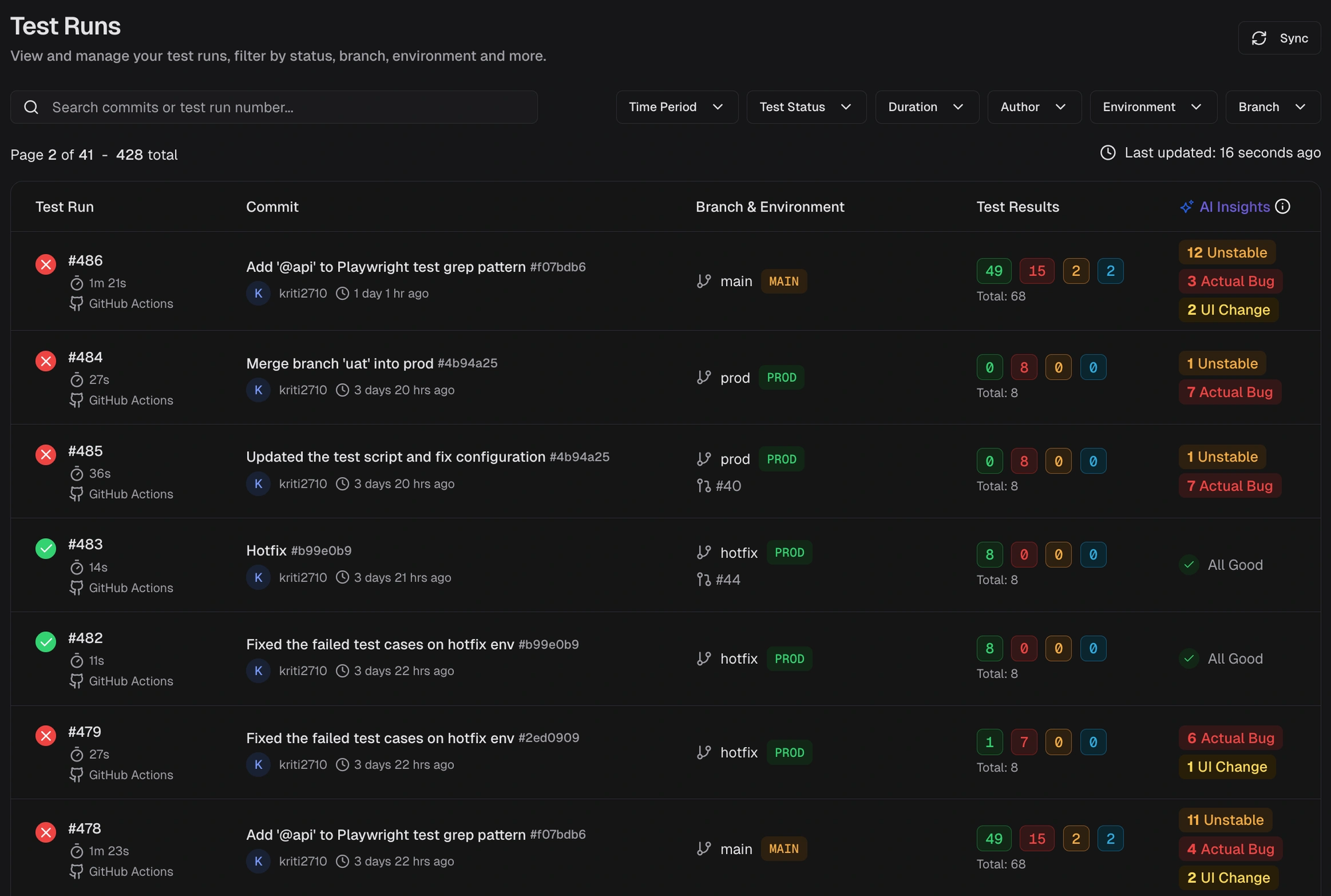
TestDino is not a full CI/CD platform. Instead, it enhances existing pipelines with cloud-based Playwright test execution. If your team uses Playwright for end-to-end testing, this tool removes infrastructure headaches.
Key Features:
- Cloud-based Playwright execution without managing servers
- Parallel test runs for faster feedback
- Visual reports with screenshots and videos on failures
- Automatic retry logic for flaky tests
- Simple integration with GitHub Actions or GitLab CI
Teams using Playwright get faster builds and simpler maintenance. TestDino handles the execution infrastructure while your CI pipeline orchestrates the workflow.
Best Practices
Get the most from your CI/CD setup with these habits:
- Run tests on every commit — Catch bugs within minutes, not days
- Keep pipelines fast — Parallelize tests, cache dependencies, and optimize Docker layers
- Fail fast — Order tests so failures surface early in the pipeline
- Monitor pipeline health — Track build times and failure rates to spot trends
- Automate deployments consistently — Use the same process for staging and production
Conclusion
The right CI/CD tool depends on your stack, team size, and infrastructure preferences. Jenkins and GitHub Actions dominate for general-purpose automation. GitLab CI/CD excels when you want an all-in-one platform. Apidog stands out for API-focused teams needing design, testing, and documentation in one place.
TestDino fills a specific niche: teams running Playwright tests who want cloud execution without infrastructure management.
Start with the tool that fits your current stack. You can always evolve as your needs change. The important thing is building the habit of shipping small changes frequently rather than large batches infrequently.