
Financial transactions demand unwavering reliability. Even brief network glitches or server hiccups can disrupt payments, transfers, or data syncs in fintech applications. Developers implement fintech API retry logic to address these transient failures automatically. This mechanism retries failed requests intelligently, ensuring higher success rates without manual intervention.
This guide explores proven approaches to fintech API retry logic. You will learn when to retry, how to avoid common pitfalls, and strategies to combine with other resilience patterns.
Why Does Fintech API Retry Logic Matter?
Fintech APIs connect to payment gateways, banking systems, compliance checks, and data providers. These external services experience intermittent issues due to network latency, overloads, or maintenance.
Without retry logic, a single transient error cascades into failed transactions, frustrated users, and lost revenue. For example, Stripe reports that automated retries can recover up to 10-20% of declined payments from temporary issues.
Moreover, regulations like PCI-DSS and GDPR emphasize system availability and data integrity. Robust retry mechanisms help meet these standards by reducing failure rates.
However, poorly designed retries amplify problems. Aggressive retries during outages overload servers further. Developers balance persistence with caution.
What Transient Errors Should Trigger Retries in Fintech APIs?
Not all failures warrant retries. Developers distinguish between transient and permanent errors.
Retry these common transient issues:
- Network timeouts or connection errors
- HTTP 5xx server errors (e.g., 500 Internal Server Error, 502 Bad Gateway, 503 Service Unavailable, 504 Gateway Timeout)
- HTTP 429 Too Many Requests (rate limiting)
- Specific provider codes indicating temporary unavailability
Avoid retrying permanent errors:
- HTTP 4xx client errors (e.g., 400 Bad Request, 401 Unauthorized, 403 Forbidden, 404 Not Found)—these indicate issues in the request itself
Many fintech providers, like Stripe or Plaid, document retry-safe codes. Developers always consult provider guidelines.
Additionally, respect headers like Retry-After for 429 or 503 responses. These specify wait times.
How Do You Implement Exponential Backoff for Safe Retries?
Immediate retries risk thundering herd problems, where multiple clients overwhelm a recovering service.
Exponential backoff solves this. Developers increase delay between retries exponentially.
A typical formula:
Delay = initial_interval × (multiplier ^ (attempt - 1))
For example:
- Initial interval: 1 second
- Multiplier: 2
- Attempts: 1s, 2s, 4s, 8s, etc.
Add jitter—random variation—to prevent synchronized retries.
Pseudocode example:
import time
import random
import math

def retry_with_backoff(func, max_attempts=5, initial_delay=1, multiplier=2):
    attempt = 0
    while attempt < max_attempts:
        try:
            return func()
        except TransientError:
            attempt += 1
            if attempt == max_attempts:
                raise
            delay = initial_delay * (multiplier ** (attempt - 1))
            jitter = random.uniform(0, delay * 0.1)
            time.sleep(delay + jitter)
In fintech, cap maximum delay (e.g., 30-60 seconds) and attempts (3-5) to avoid indefinite waits during outages.
Libraries like Resilience4j (Java) or Polly (.NET) handle this natively.
Why Is Idempotency Essential in Fintech API Retry Logic?
Retries introduce duplication risks for non-idempotent operations like POST requests creating payments.
Idempotency keys prevent this. Clients send a unique key (e.g., UUID) in headers. Servers cache responses and replay them for duplicate keys without re-executing.
Stripe mandates idempotency keys for all mutating requests.
Implement idempotency:
- Generate client-side keys per logical operation
- Store server-side with expiration (e.g., 24 hours)
- Return cached result on match
This ensures safe retries without double charges or duplicate transfers—critical in fintech.
When Should You Combine Retry Logic with Circuit Breakers?
Retries handle transient failures, but persistent issues require escalation.
Circuit breakers monitor failure rates. When thresholds exceed (e.g., 50% failures in 10 requests), the breaker "opens" and fast-fails subsequent calls.
States:
- Closed: Normal operation with monitoring
- Open: Fail fast, optionally fallback
- Half-Open: Test recovery with limited requests
In fintech, circuit breakers protect against downstream outages, like a payment processor downtime.
Libraries: Hystrix (legacy), Resilience4j, or Polly.
Combine: Retry within closed state; open triggers fallback (e.g., queue transaction for later).
How Do You Handle Rate Limiting in Fintech APIs?
Many providers enforce rate limits to prevent abuse.
HTTP 429 responses signal this. Developers honor Retry-After headers.
Smart retry logic:
- Backoff on 429
- Track usage windows
- Implement client-side throttling
For bursty traffic, like payroll processing, pre-warm limits or use multiple keys.
What Testing Strategies Ensure Reliable Fintech API Retry Logic?
Testing retry behavior proves challenging without controlled failures.
Best practices:
- Mock servers to simulate errors (5xx, 429, timeouts)
- Automate scenarios: Success on nth retry, permanent failure
- Validate idempotency: Duplicate requests yield single effect
- Load test with failures to check system resilience
Apidog excels here. Developers create mock APIs returning specific errors. Then, run automated tests observing client retries. Apidog's assertions verify delays, attempt counts, and final outcomes.
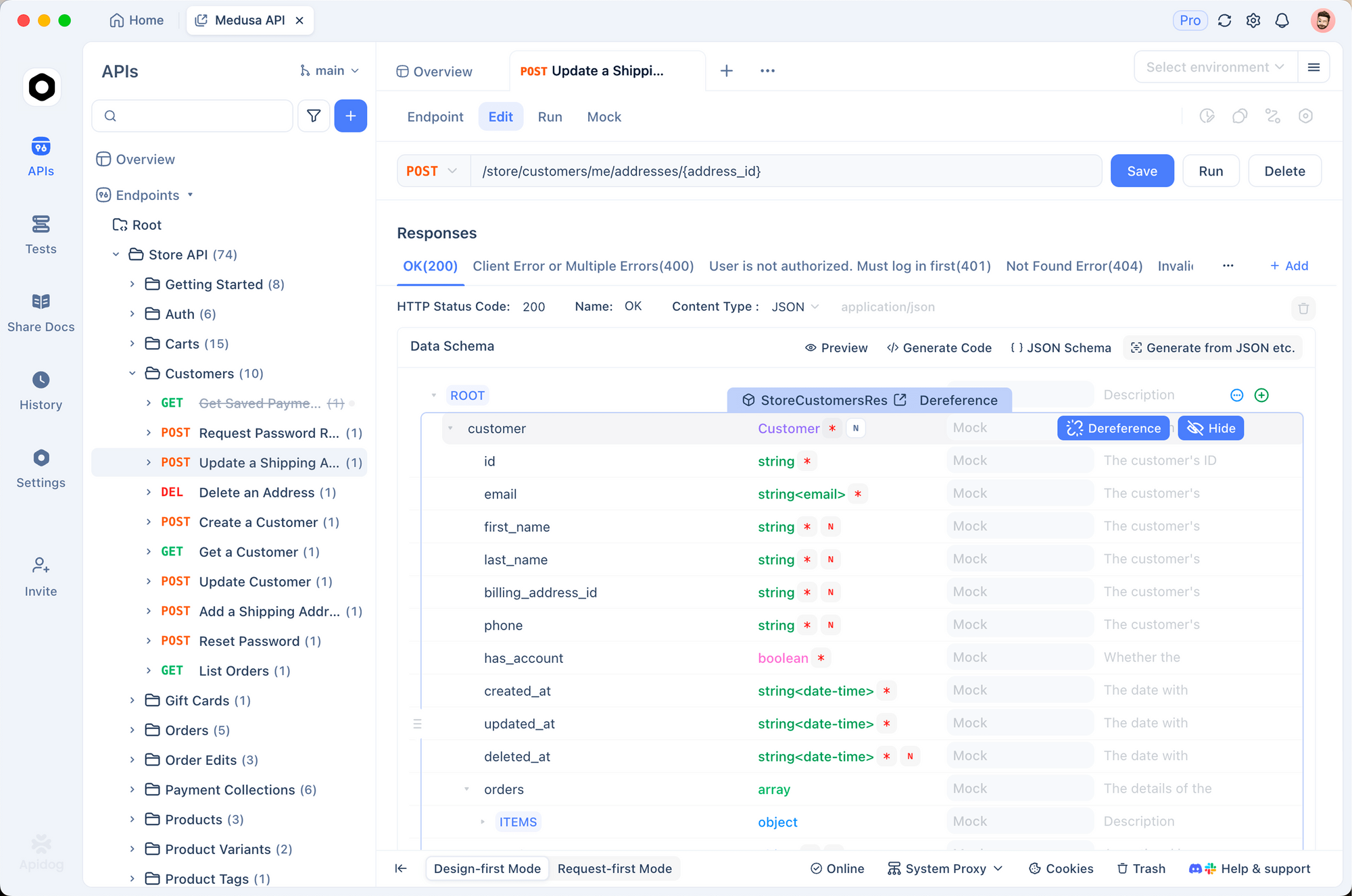
Additionally, Apidog supports contract testing and security scans, ensuring holistic resilience.
How Many Retries Should You Configure, and Other Best Practices?
Common configurations:
- 3-5 attempts
- Exponential backoff with jitter
- Max delay: 30-60 seconds
Other tips:
- Log retry attempts for monitoring
- Alert on high retry rates—indicate upstream issues
- Use fallback for critical paths (e.g., display cached data)
- Monitor provider status pages for known outages
In regulated fintech, document retry policies for audits.
Common Pitfalls in Fintech API Retry Logic and How to Avoid Them
- Retrying non-idempotent requests → Use keys
- No jitter → Add randomness
- Unlimited retries → Cap attempts
- Ignoring headers → Respect Retry-After
- Over-retrying permanent errors → Classify accurately
Conclusion: Building Resilient Fintech Integrations
Effective fintech API retry logic transforms fragile integrations into robust systems. Developers combine selective retries, exponential backoff, idempotency, and circuit breakers to handle real-world variability.
Small refinements—like proper jitter or accurate error classification—prevent major outages.
Start implementing these patterns today. For thorough testing of your retry strategies, Apidog provides the tools you need: mocking for failure simulation, automated testing for validation, and debugging for insights.
Strong retry logic not only boosts success rates but also builds user trust in your financial application.