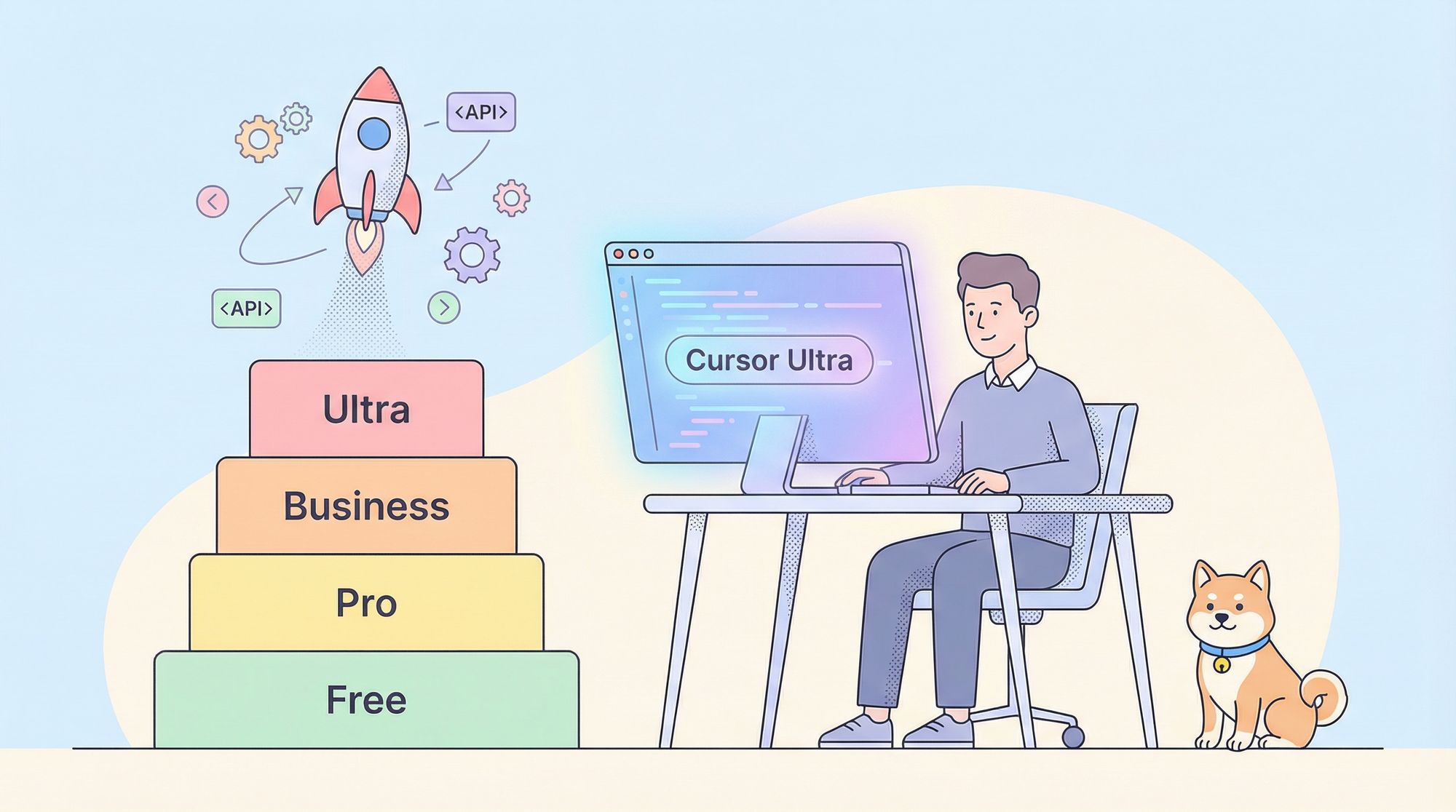
Cursor, the AI-powered code editor, has launched its Ultra Plan at $200 per month, promising 20x the usage limits of its Pro tier. For developers handling large-scale projects or intensive API work, is this steep upgrade justified—or are lower tiers or alternatives a better fit? Dive in as we compare Cursor’s plans, highlight real-world use cases, and explore how combining Cursor with tools like Apidog can streamline your development workflow.
Understanding Cursor’s Pricing: Which Plan Fits Your Workflow?
Before choosing a plan, it’s crucial to match Cursor’s pricing tiers to your development needs—whether you’re coding solo, deploying APIs, or leading a collaborative team.
Free Tier: For Light Coding & Experimentation
- Best for: Individual developers, students, or those new to AI coding tools.
- Monthly limits: 2,000 completions, 50 slow premium requests.
- Limitations: No guaranteed fast access to premium models like Claude 3.7 Sonnet; lower response priority can lead to delays.
- Good for: Learning, experimenting, or automating basic tasks.
Pro Tier: Power Users & Consistent AI Access
- Price: $20/month (or $16/month billed annually)
- Features: 500 fast premium requests per month, unlimited completions (subject to rate limits).
- Recent update: Now offers “unlimited-with-rate-limits,” reducing the likelihood of being throttled mid-session.
- Ideal for: Developers needing reliable AI assistance for regular coding, debugging, or API integration.
Business Tier: Collaboration & Team Controls
- Price: $40/month per user (or $32/month annually)
- Added value: Team features like centralized billing, admin controls, and privacy modes.
- Usage: Same as Pro per user, but with cost management for multiple developers.
- Best for: Startups or small teams balancing shared access with admin oversight.
Ultra Tier: High-Volume, No-Throttle AI Assistance
- Price: $200/month (flat rate)
- Usage: 20x Pro’s fast usage (~10,000 fast premium requests monthly).
- Audience: Developers or teams with heavy, uninterrupted AI requirements—think enterprise-scale apps, refactoring huge codebases, or rapid iteration cycles.
What Sets Cursor Ultra Plan Apart?
For API developers or backend engineers who routinely hit rate limits, Ultra brings several unique benefits:
1. Massive Usage Bump
- 20x Pro Tier: Perfect for large-scale projects needing frequent, high-speed code completions or multi-file AI tasks.
- Practical example: Refactoring an enterprise monolith, generating boilerplate across hundreds of endpoints, or batch-updating API documentation.
2. Exclusive Access to Top AI Models
- Supported models: Claude 3.7 Sonnet, OpenAI GPT-4.1, Gemini 2.5 Pro, and more.
- Why it matters: These advanced models excel at multi-file context, complex reasoning, and can automate tedious coding chores (e.g., mass dependency updates, API contract generation).
3. Advanced Agent Mode
- What it does: The Agent (formerly “Composer”) analyzes your entire project, generates cross-file changes, and can even execute shell commands.
- Use case: Automate repetitive API endpoint generation or dependency upgrades—without manual file selection.
4. Multi-Tabbing & Context Management
- Feature: Reference specific code elements (e.g.,
@Files,@Code) to guide AI suggestions. - Benefit: Keeps context precise across large codebases, reducing errors and improving suggestion accuracy—crucial for API versioning and multi-service projects.
5. Integrated Web Search
- Unique to Ultra: Fetches up-to-date documentation and examples from the web in real time.
- Developer value: Cuts research time for unfamiliar frameworks or libraries—especially relevant for API developers juggling new integrations.
Cursor Ultra, Pro, and Competitors: Side-by-Side Comparison
Cursor Subscription Plan Comparison
| Plan | Price | Requests/Month | Max Mode | Premium Models | Team Features |
|---|---|---|---|---|---|
| Hobby | Free | 50 slow requests | No | Limited access | None |
| Pro | $20/mo ($16/yr) | 500 fast; unlimited slow (rate-limited) | Yes (token-based) | Full (GPT-4o, Claude 3.5, Gemini, Grok) | None |
| Business | $40/user/mo | 500 fast; unlimited slow (rate-limited) | Yes (token-based) | Full (GPT-4o, Claude 3.7, Gemini, Grok) | Centralized billing, admin dashboard |
| Ultra | $200/mo | ~10,000 fast | Yes (flat rate) | Full (GPT-4o, Claude 3.7, Gemini, Grok) | PR indexing, priority feature access |
Cursor Ultra vs. Pro: Who Should Upgrade?
-
Choose Ultra if:
- You consistently hit Pro’s rate limits (e.g., frequent batch codegen, multi-repo refactors)
- You work with massive codebases or need AI for heavy-duty API documentation/testing cycles
- Your workflow requires zero interruption—no waiting for “slow” completions
-
Stick with Pro if:
- Your usage is moderate and you rarely encounter throttling
- You mostly work on small- to mid-sized projects or personal APIs
Cursor vs. Copilot, Windsurf, and Others
- GitHub Copilot: $10–$19/month; best for inline suggestions in editors, but lacks project-wide context and agentic automation features.
- Windsurf: $15/month; Cascade agent is simpler but UI is cleaner and cost is lower.
- Cursor Ultra’s edge: Project-wide changes, web search integration, and advanced multi-tabbing—major wins for complex API or backend projects.
- Consideration: Ultra’s price is 10x Copilot’s, so assess whether your usage justifies the premium features.
Is Cursor Ultra Plan Worth $200 per Month?
Ideal for:
- Enterprise Developers: Managing sprawling SaaS apps, microservice APIs, or ML pipelines needing non-stop AI support.
- Freelancers with Demanding Clients: Handling simultaneous large projects or frequent context switching.
- AI-Driven Workflows: Heavy users who rely on AI for refactoring, codegen, API test scaffolding, or documentation.
Better Alternatives for:
- Students, Hobbyists: Free or Pro tiers are sufficient for learning or occasional coding.
- Small Teams with Limited Usage: Business tier offers collaboration at a lower per-user price.
- Cost-Sensitive Users: Copilot or Windsurf deliver strong value at a fraction of Ultra’s cost.
Potential Drawbacks of Cursor Ultra
- High Price: $200/month is a significant investment—comparable to direct subscriptions for Claude or OpenAI’s premium tiers.
- Flat-Rate Model: If your usage is inconsistent, you might overpay versus token-based (usage) billing models like Cline or OpenRouter.
- Learning Curve: Features like Agent mode and advanced context require time to master. Some users note UI quirks (e.g., multiple “Accept” buttons) that can slow adoption.
Practical Tips: Getting the Most from Cursor Ultra
- Automate with Agent Mode: Batch-generate code, update dependencies, or create unit tests across your API projects.
- Master Context Management: Use
@Filesand@Codesymbols to guide AI, especially when updating multiple API endpoints or services. - Combine with Apidog: While Cursor accelerates code and automation, Apidog offers free, all-in-one API design, testing, and documentation—perfect for developers who want seamless API workflows without switching tools. Download Apidog for free to round out your toolset.
- Monitor Usage: Regularly check your request dashboard to avoid surprises, even with higher Ultra limits.
- Experiment with Models: Try Claude 3.7 and GPT-4.1 for different tasks—some excel at reasoning, others at code completion.

Before committing to either paid tier, Cursor's free student program is worth checking — it covers full Pro access for verified academic accounts at no cost.
Conclusion: Ultra Plan for Power Users, Pro for Most
Cursor Ultra is a powerhouse for high-volume developers who need non-stop, advanced AI coding across large projects. For most backend engineers, QA teams, or API developers, the Pro tier or business alternatives may be more cost-effective—especially when paired with tools like Apidog to handle the full API lifecycle. Weigh your workflow, project scale, and budget carefully before committing to Ultra.