Most testing strategies aim to prevent failure. Their aim is to verify that systems work correctly under expected conditions. Chaos Testing takes the opposite approach; it deliberately introduces failures to prove your system can withstand them. This counterintuitive method has become essential for building resilient cloud-native applications that can survive real-world turbulence.
What Exactly is Chaos Testing?
Chaos Testing is the practice of intentionally injecting faults into a system to validate its ability to maintain service availability and data integrity during unexpected disruptions. Rather than asking "Does this feature work?" it asks "Can our system survive when a database node crashes, network latency spikes, or an entire region goes offline?"
The concept originated at Netflix in 2010 with Chaos Monkey, a tool that randomly terminated production servers. The philosophy was simple: if you regularly break things on purpose, you’ll discover weaknesses before they become outages. Today, Chaos Testing has evolved into a sophisticated discipline with dedicated platforms, controlled experiments, and measurable resilience metrics.
The Critical Importance of Chaos Testing
Traditional testing assumes a perfect world—stable networks, healthy servers, and predictable loads. Production reality is messy. Chaos Testing exposes the gaps between our assumptions and reality:
- Prevents Cascade Failures: A single microservice failure can trigger a domino effect. Chaos experiments reveal these dependencies before they cause outages.
- Validates Monitoring and Alerting: If your alerting system doesn’t notice a chaos experiment, it won’t notice a real failure either.
- Builds Confidence: Teams that regularly practice failure respond calmly during real incidents instead of panicking.
- Improves Recovery Time: Repeated failure practice reduces mean time to recovery (MTTR) from hours to minutes.
- Cost Savings: An hour of planned chaos testing prevents days of unplanned outage costs.
How Chaos Testing Is Performed: The Scientific Method
Effective Chaos Testing follows a structured approach, not random destruction:
Step 1: Define Steady State
Identify normal system behavior metrics: response time, error rate, throughput. This baseline proves the system is healthy before you inject chaos.
Step 2: Formulate a Hypothesis
State what you expect: "If we kill a database replica, latency will increase by less than 10% and no data will be lost."
Step 3: Inject Faults
Introduce controlled failures:
- Terminate server instances
- Introduce network latency
- Fill disk space
- Corrupt DNS responses
- Simulate high CPU load
Step 4: Monitor and Measure
Observe system behavior in real-time. Does it degrade gracefully or catastrophically?
Step 5: Analyze and Improve
Document findings, fix weaknesses, and repeat experiments to validate improvements.
Chaos Testing Tools and Frameworks
Modern Chaos Testing platforms provide controlled, safe fault injection:
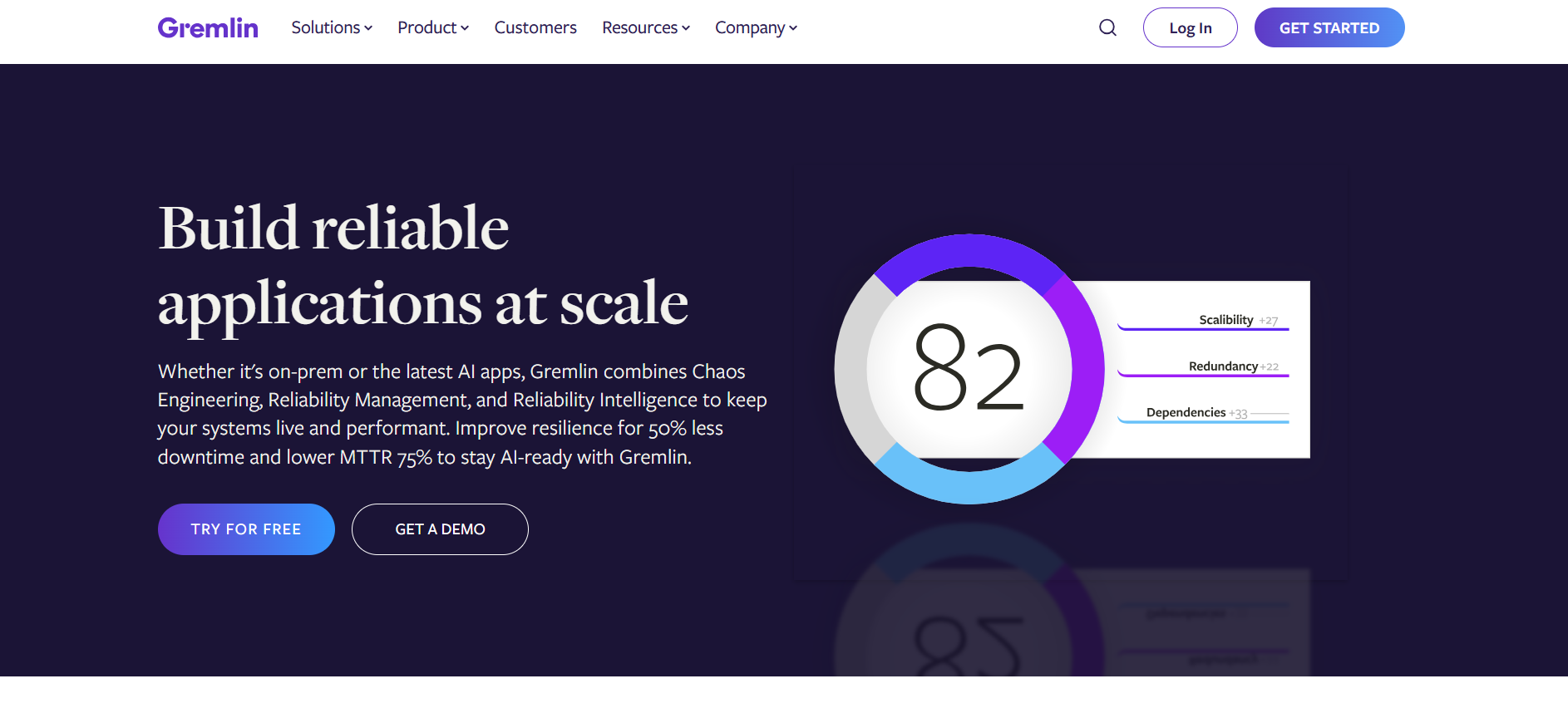
Gremlin
Enterprise-grade chaos engineering platform with a web UI and API. Inject CPU spikes, network latency, disk failures, and more across cloud infrastructure.
# Gremlin CLI example: Add 100ms latency to API calls
gremlin attack latency --delay 100 --duration 60s --targets api-server
Chaos Monkey
The original tool for randomly terminating AWS instances. Now part of the Simian Army suite.
Litmus
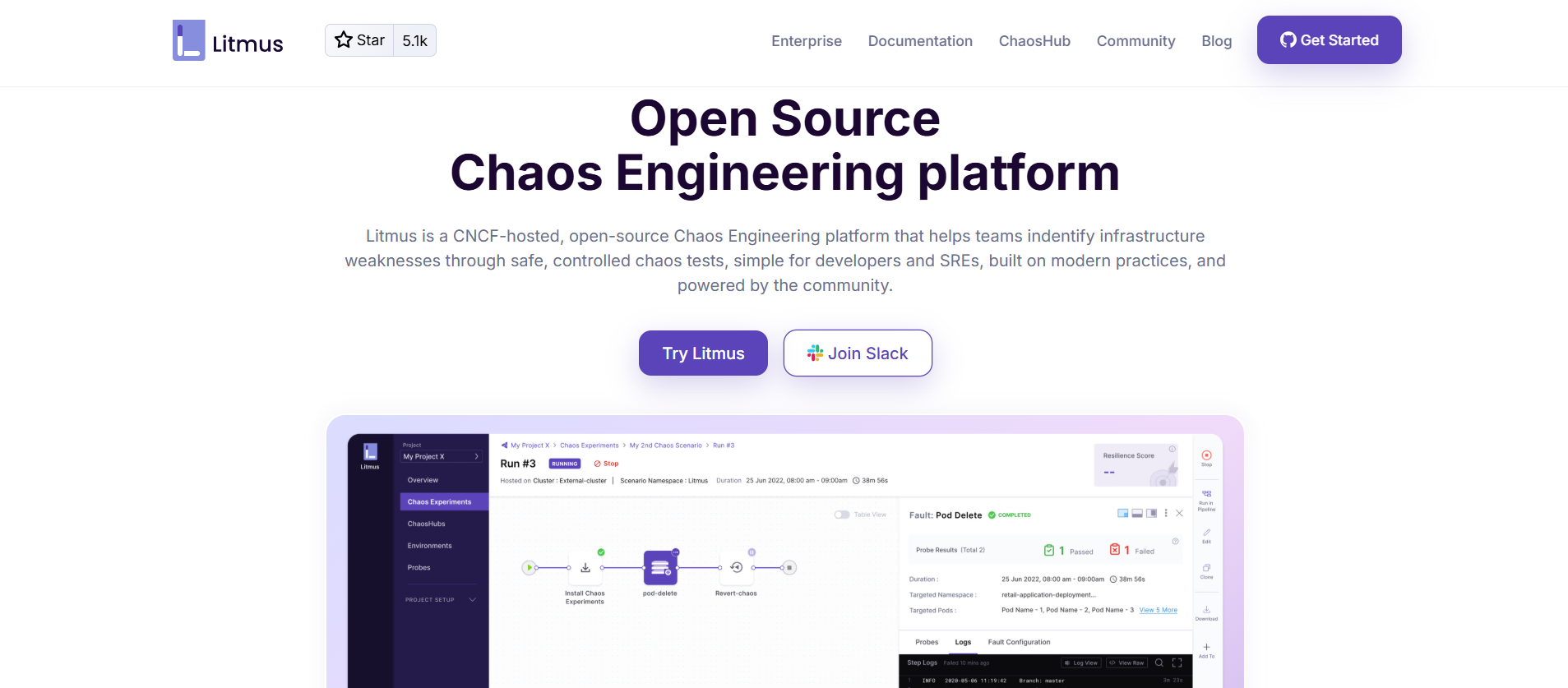
Kubernetes-native chaos engineering with pre-built experiments for pods, nodes, and network policies.
# Litmus chaos experiment for pod deletion
apiVersion: litmuschaos.io/v1alpha1
kind: ChaosEngine
metadata:
  name: pod-delete-chaos
spec:
  appinfo:
    appns: default
    applabel: app=api-server
  chaosServiceAccount: pod-delete-sa
  experiments:
  - name: pod-delete
    spec:
      components:
        env:
        - name: TOTAL_CHAOS_DURATION
          value: '30'
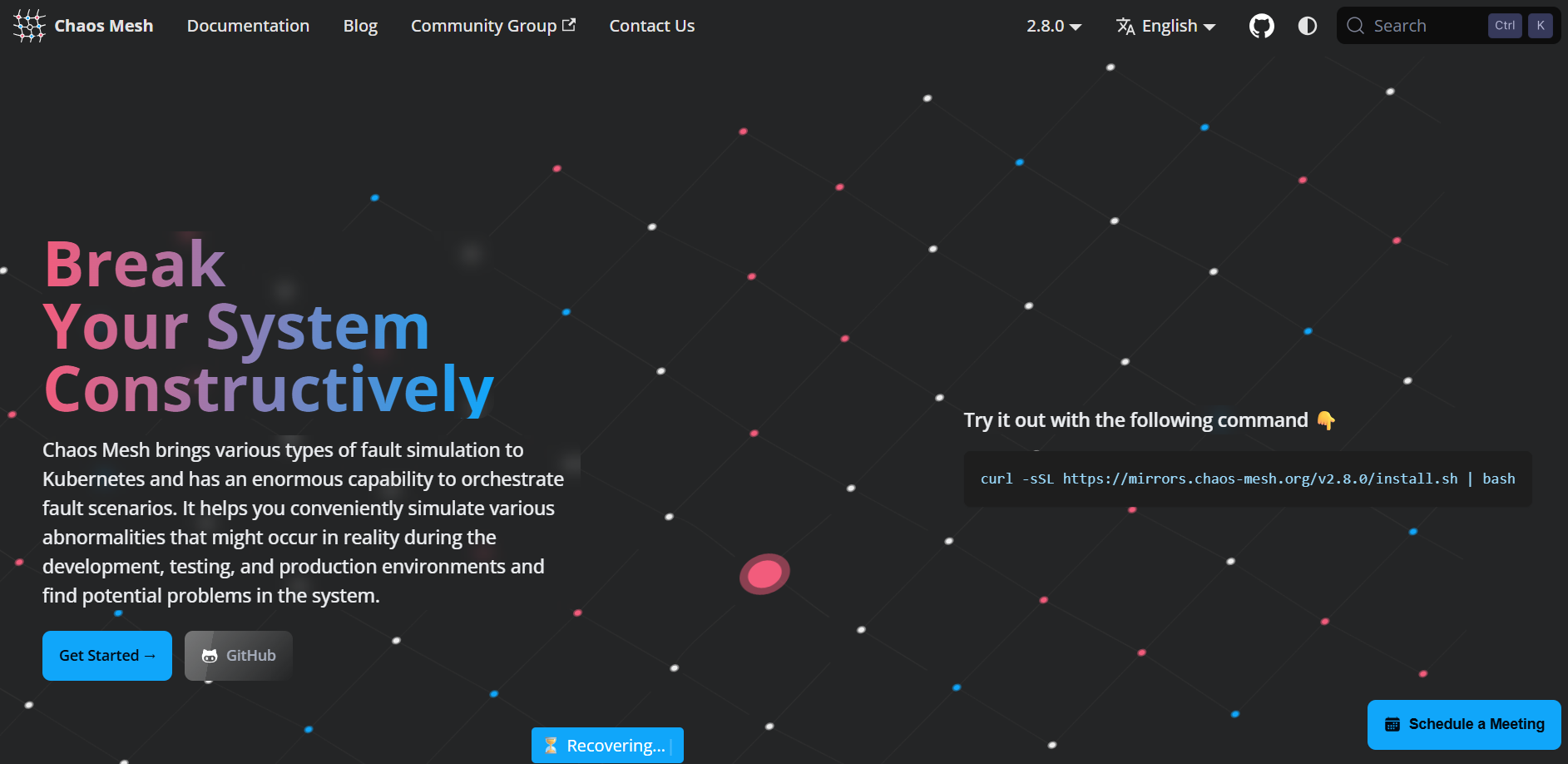
Chaos Mesh
Another Kubernetes-focused tool that injects faults at the platform level.
Apidog for API-Level Chaos Testing
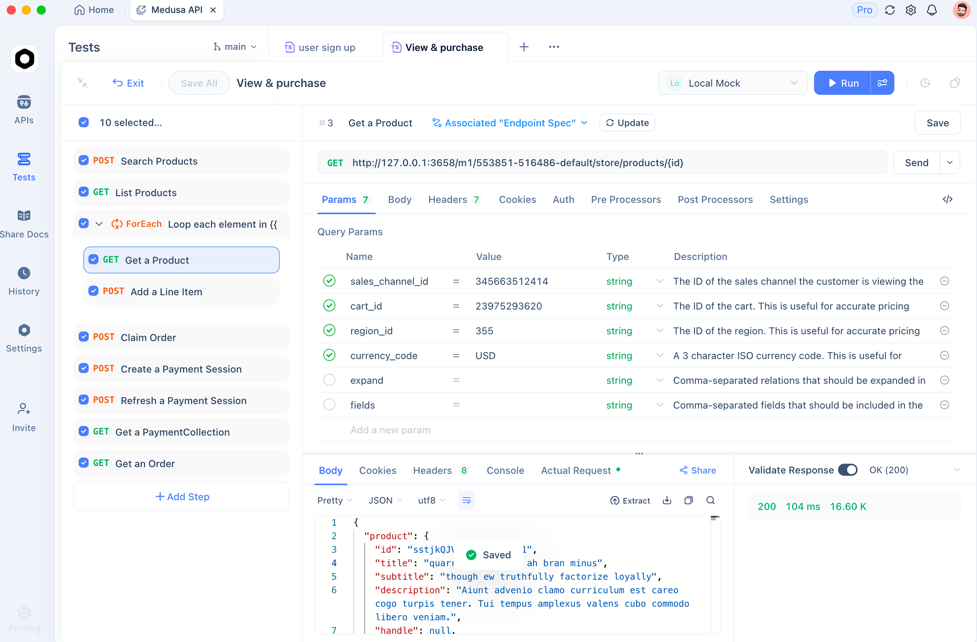
While infrastructure chaos tools target servers and networks, Apidog handles API-level chaos—critical for blockchain and microservices applications:
API Response Chaos:
// Apidog test: Simulate API returning 500 errors randomly
Test: GET /api/balance - Chaos Mode
When: Send request
Oracle 1: If response is 500, retry should succeed within 3 attempts
Oracle 2: System should log error and alert
Oracle 3: UI should show user-friendly message
Performance Chaos:
// Apidog: Test API behavior under latency
Test: POST /api/transactions - Slow Network
When: Request sent with 2000ms delay simulation
Oracle 1: Timeout should trigger after 5 seconds
Oracle 2: Transaction should not duplicate
Oracle 3: User should see "retry" prompt
Data Chaos:
// Apidog: Test API with malformed blockchain data
Test: API handles invalid transaction hash
When: Send hash with wrong format (0x123 instead of 0x123...64)
Oracle 1: Status 400 with specific validation error
Oracle 2: Error message explains correct format
Oracle 3: System logs attempt but doesn't crash
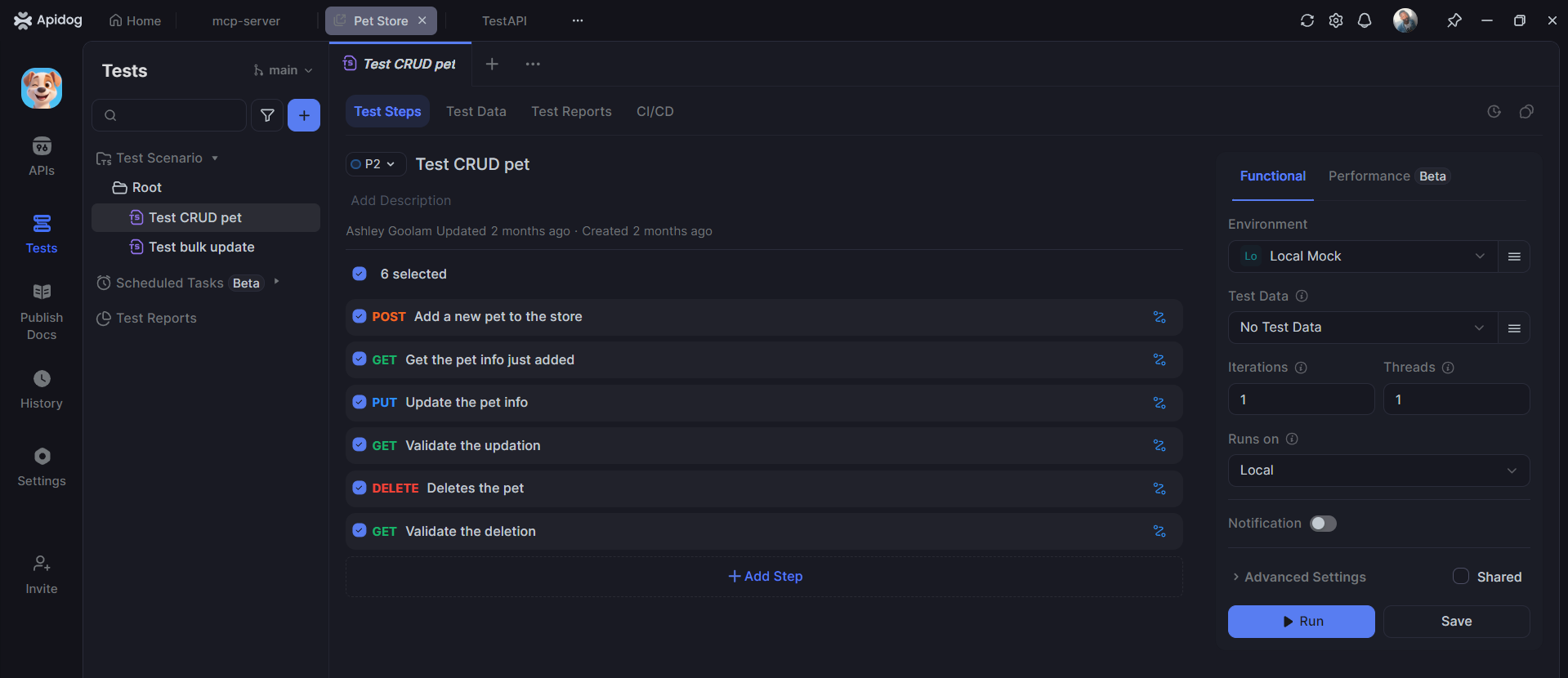
Apidog’s advantage is generating these chaos test cases automatically from your OpenAPI spec, then executing them in parallel to find breaking points quickly.
Chaos Testing vs Other Testing Types
| Testing Type | Focus | Trigger | Goal | Frequency |
|---|---|---|---|---|
| Load Testing | Normal load patterns | Simulated users | Find capacity limits | Pre-release |
| Stress Testing | Extreme load | Max out resources | Find breaking point | Pre-release |
| Failover Testing | Single component failure | Manual shutdown | Verify backup works | Quarterly |
| Chaos Testing | Random, real-world failures | Automated injection | Build resilience | Continuous |
Chaos Testing differs because it’s continuous and unpredictable. While load testing verifies you can handle Black Friday traffic, chaos testing ensures you survive when your payment processor’s database crashes during Black Friday.
Best Practices for Chaos Testing
Start in Staging: Never begin chaos experiments in production. Prove resilience in non-production first.
- Start Small: Begin with single-instance failures before simulating entire region outages.
- Have a Kill Switch: Every experiment must be reversible instantly. Practice aborting experiments.
- Measure Everything: Collect metrics on latency, error rates, recovery time, and data integrity.
- Game Days: Schedule regular "chaos game days" where teams run coordinated experiments and practice incident response.
- Blameless Culture: When chaos experiments find weaknesses, treat them as learning opportunities, not failures.
Frequently Asked Questions
Q1: Is Chaos Testing dangerous? Could it break production?
Ans: Only if done recklessly. Start in staging, use blast radius limits, and always have a kill switch. Chaos engineering is controlled experimentation, not random destruction.
Q2: How is Chaos Testing different from just breaking things?
Ans: Chaos Testing is scientific. You start with a hypothesis, inject specific faults, measure concrete results, and use findings to improve. Random failures teach nothing without measurement and analysis.
Q3: Do I need special tools to start Chaos Testing?
Ans: Not initially. You can simulate failures manually (stop a service, introduce network lag). But at scale, tools like Gremlin or Litmus provide safety controls, automation, and measurement that manual chaos can’t match.
Q4: Can Chaos Testing replace traditional QA?
Ans: No. Chaos Testing complements functional testing. You need both: functional tests verify features work; chaos tests verify features survive failure.
Q5: How does Apidog help with Chaos Testing?
Ans: Apidog automates API-level chaos testing by generating test cases that validate how your APIs handle slow responses, errors, and malformed data. This is crucial for microservices that depend on blockchain nodes or external services.
Conclusion
Chaos Testing has evolved from Netflix’s aggressive server-killing into a disciplined engineering practice that builds confidence through controlled failure. By systematically proving your system can survive turbulent conditions, you prevent the 3 AM pages that destroy weekends and reputations.
The key is starting small, measuring everything, and treating every failed experiment as a gift that reveals a weakness before it becomes an outage. Tools like Gremlin and Litmus handle infrastructure chaos, while Apidog automates API-level resilience testing—especially valuable for blockchain and microservices architectures where API dependencies create cascading failure risks.
Begin your chaos journey today. Pick one non-critical service. Define its steady state. Inject one small fault. Observe. Learn. Improve. Repeat. That’s how to test blockchain apps and any distributed system for real-world resilience.