TL;DR
Postman's 2026 pricing changes left many teams searching for alternatives. The good news: several excellent free API tools offer more generous features than Postman's paid tiers. Apidog leads with up to 4 users and full collaboration features on its free plan. Bruno and Insomnia provide strong open-source options. Thunder Client integrates directly into VS Code for developers who prefer minimal setups. Here's the complete breakdown of the best free Postman alternatives.
Why Look for Postman Alternatives
Postman's 2026 pricing update changed the game. The Free plan now targets solo developers only with 50 AI credits. The Solo plan costs $9 per month for individuals who want AI features. The Team plan starts at $19 per user monthly for anyone who needs collaboration. Hidden costs around AI credits and add-ons can increase your bill significantly.
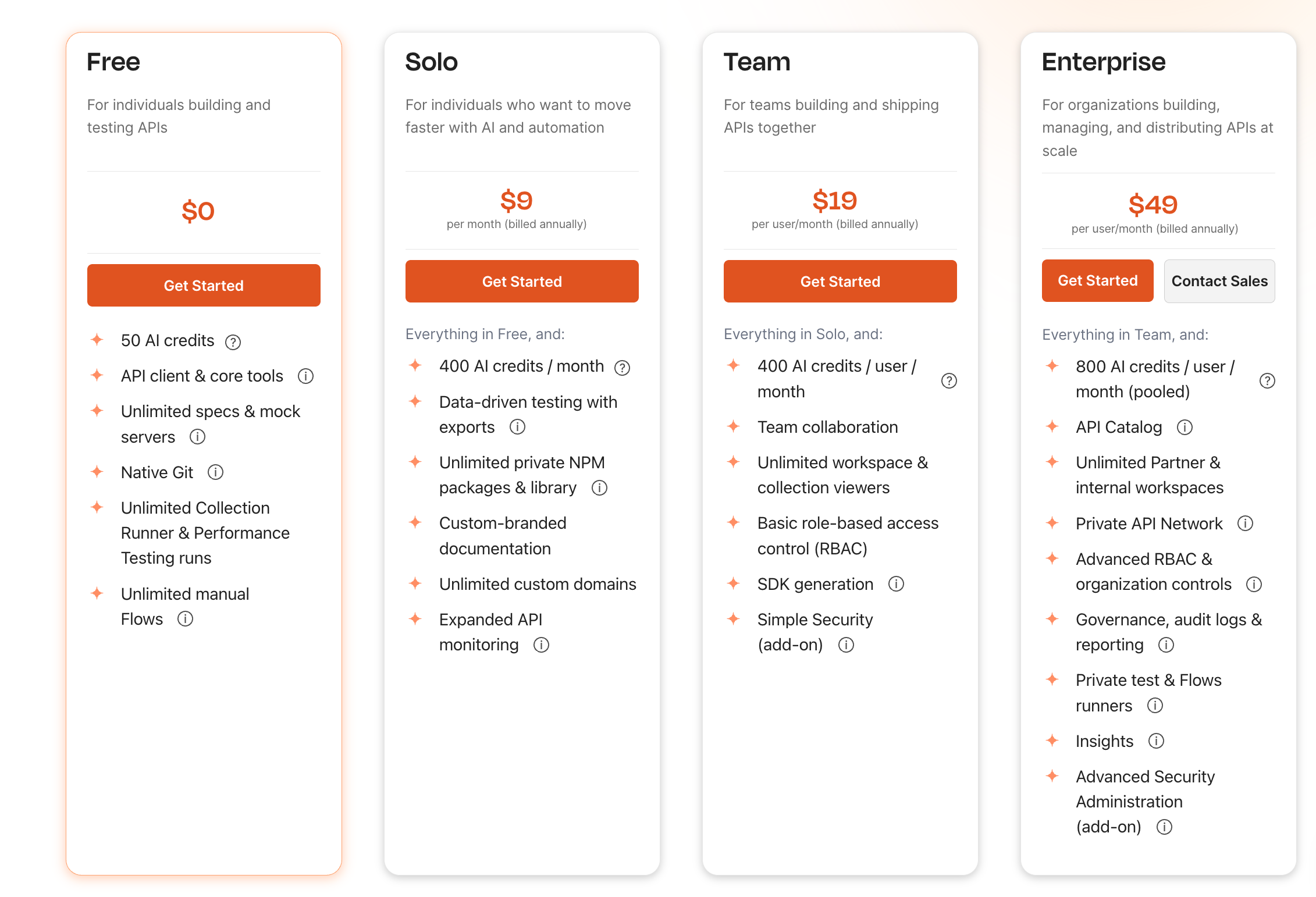
Teams that previously used Postman for free team collaboration suddenly face a choice: pay up or switch tools. For many teams, the answer is clear: find an alternative that offers what they need without the price tag.
The market has responded with strong alternatives. Some are open-source projects built by developers frustrated with Postman's direction. Others are commercial products that compete on value rather than market dominance. All of them offer free tiers that Postman's new pricing makes attractive.
This guide evaluates the best free Postman alternatives based on features, team collaboration capabilities, and real-world usability.
1. Apidog: Best Overall Alternative
Apidog has emerged as the strongest Postman alternative for teams that need full-featured API tooling without the enterprise price tag.
What Makes Apidog Stand Out
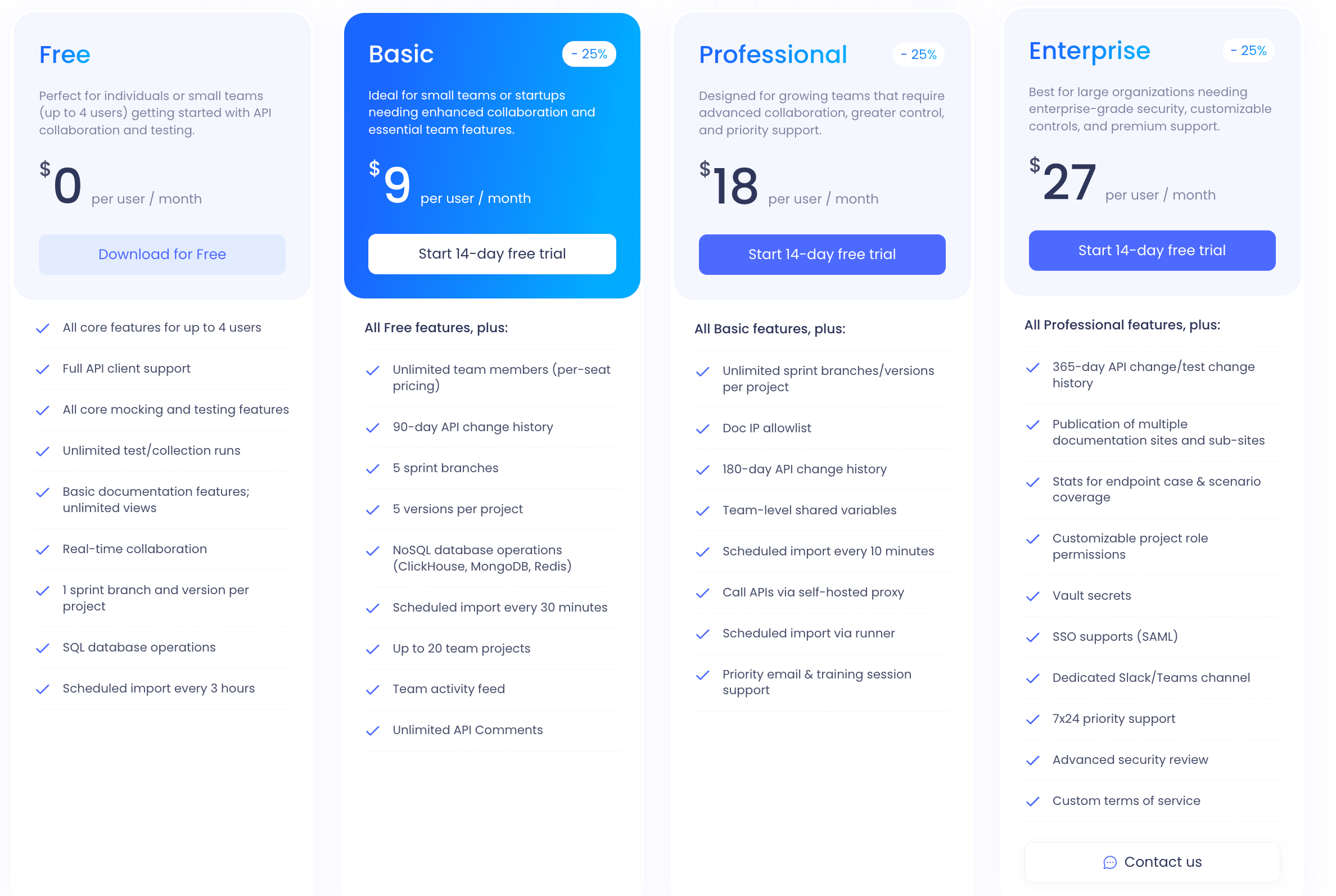
The free plan supports up to 4 users with full collaboration features. This alone makes Apidog worth trying. Postman's Free plan is solo-only. To get team collaboration in Postman, you need the Team plan at $19 per user monthly.
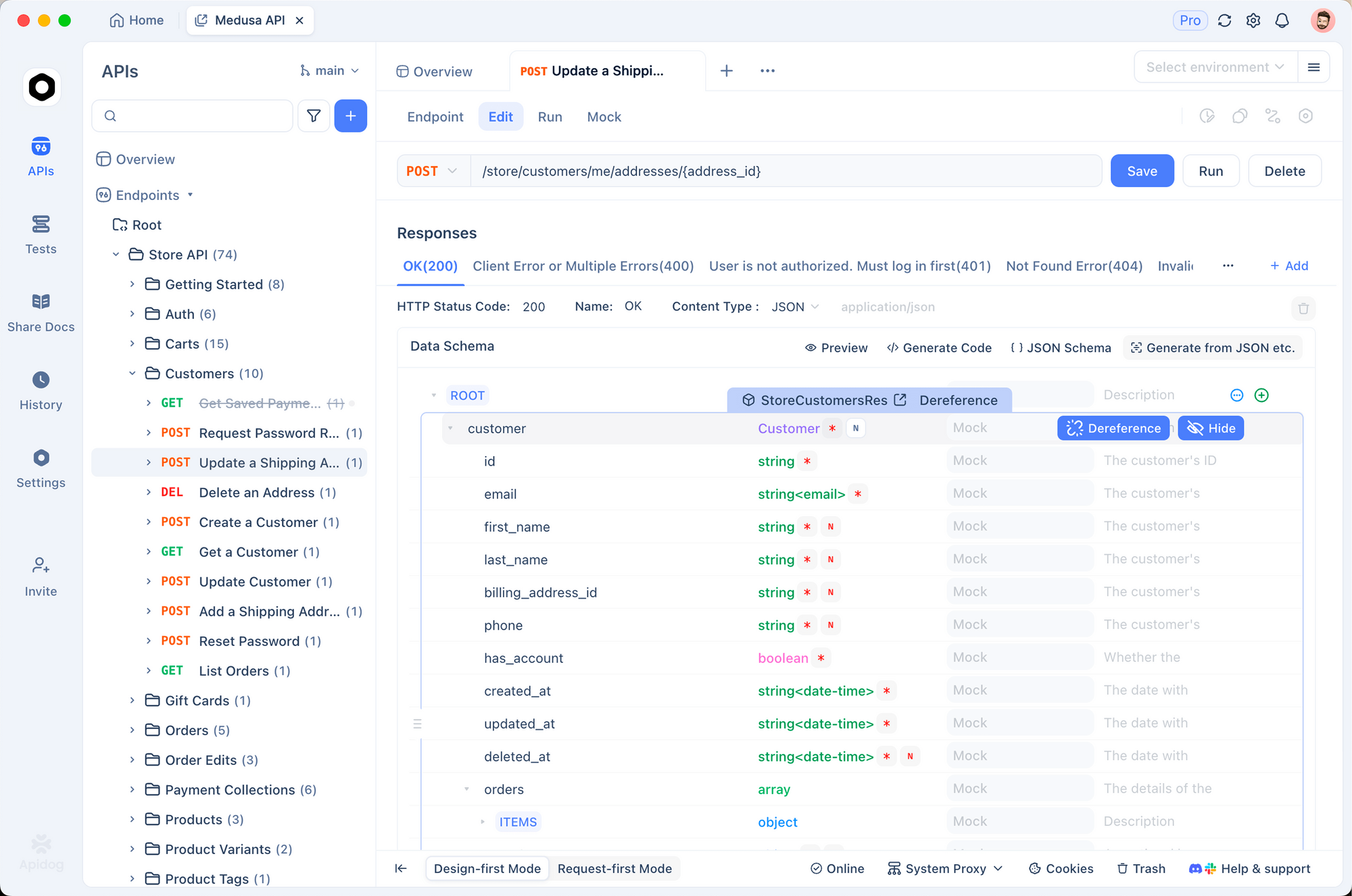
Apidog's free tier includes unlimited collection runs, unlimited mock servers, and unlimited monitors. There's no meter on features, no add-on required for automation, and no surprise overage bills.
Features
- API Design: Design APIs from scratch or import from OpenAPI, Swagger, or RAML specifications. The visual editor makes it easy to define endpoints, parameters, and responses.
- API Testing: Build comprehensive test suites with assertions, variables, and pre-request scripts. Run tests individually or as part of CI/CD pipelines.
- Documentation: Auto-generate beautiful API documentation from your specifications. Share internally or publicly with customizable themes.
- Mock Servers: Create mock servers instantly from your API definitions. No coding required.
- Collaboration: Up to 4 users on the free plan with full collaboration features. Shared workspaces, environments, and collections keep everyone aligned.
- CI/CD Integration: Integrate with GitHub Actions, GitLab CI, Jenkins, and other CI platforms for automated testing.
Who It's For
Apidog works best for teams of up to 4 people that want a full-featured Postman replacement without the cost. The interface feels familiar if you've used Postman, but the workflow encourages API design-first thinking that many teams prefer.
Pricing
The Free plan supports up to 4 users with all core features. The Basic plan at $9 per user monthly adds unlimited team members, 90-day change history, 5 sprint branches, and more. Most teams can use Apidog Free indefinitely and never need to upgrade.
Strengths
- Up to 4 users with full collaboration on free tier
- API design-first workflow reduces errors
- Excellent documentation generation
- Fast mock server creation
- Unlimited collection runs and monitors
Considerations
- Newer product with smaller ecosystem than Postman
- Community resources growing but not as extensive
- Some enterprise features only in paid plans
2. Bruno: Best Open-Source Option
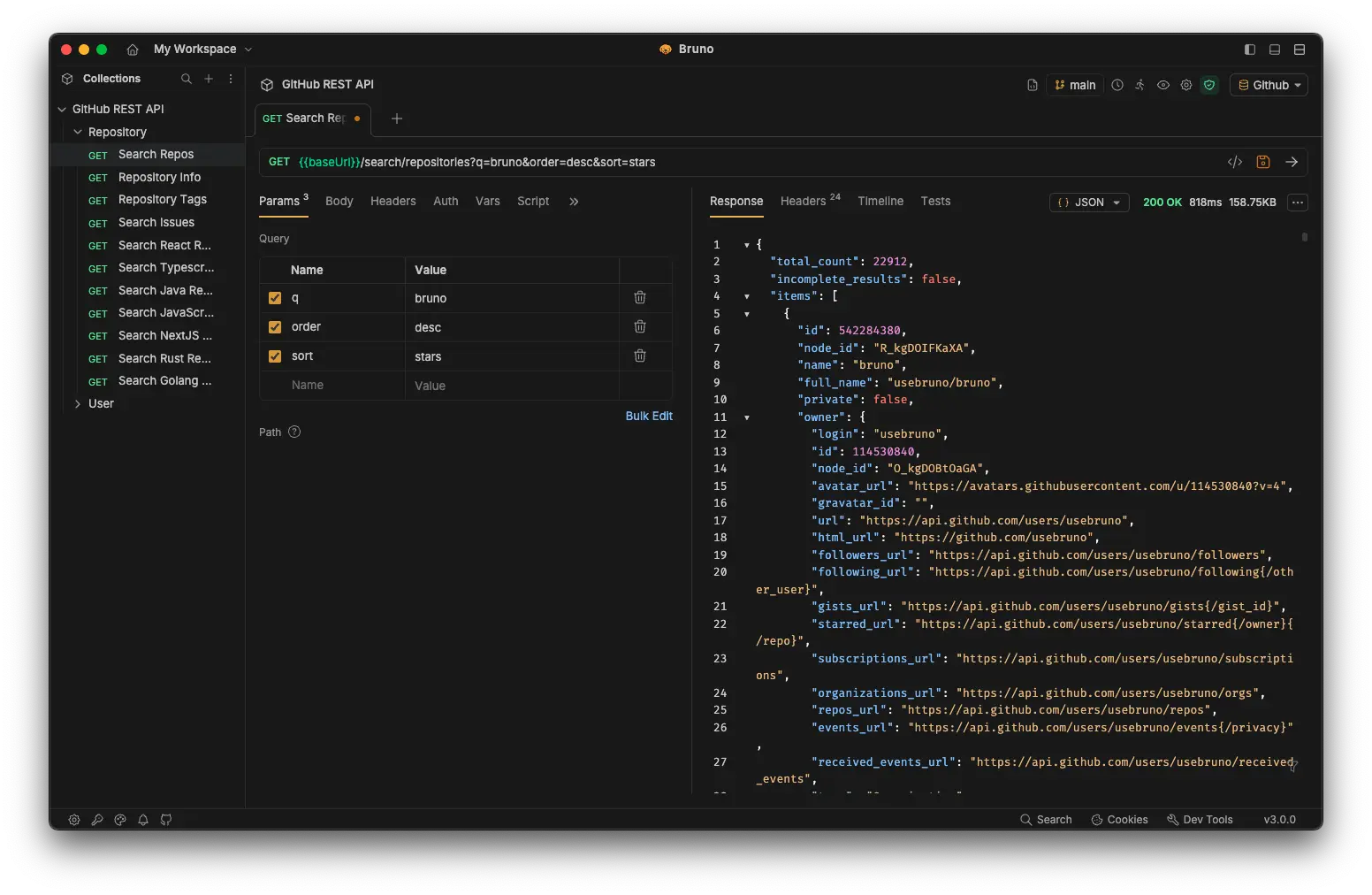
Bruno is an open-source API client that has gained significant popularity as a privacy-focused Postman alternative.
What Makes Bruno Stand Out
Bruno stores all your data locally in plain text files. Your API collections live on your filesystem, not in the cloud. This approach appeals to developers who prefer owning their data and teams with strict data residency requirements.
The desktop app works offline and syncs through Git if you want version control. No account required to start using it.
Features
- Local Storage: Collections stored as flat files on your filesystem. Version control works naturally with Git.
- Request Building: Support for REST, GraphQL, and gRPC. Build requests with visual editors or write raw HTTP.
- Environments: Define variables and environments for different contexts (development, staging, production).
- Tests: Write assertions and test scripts to validate API responses.
- CLI: Run collections from command line for CI/CD integration.
Who It's For
Bruno works well for developers who want full control over their data and prefer storing collections in their own repositories. The privacy-focused approach attracts teams in regulated industries.
Pricing
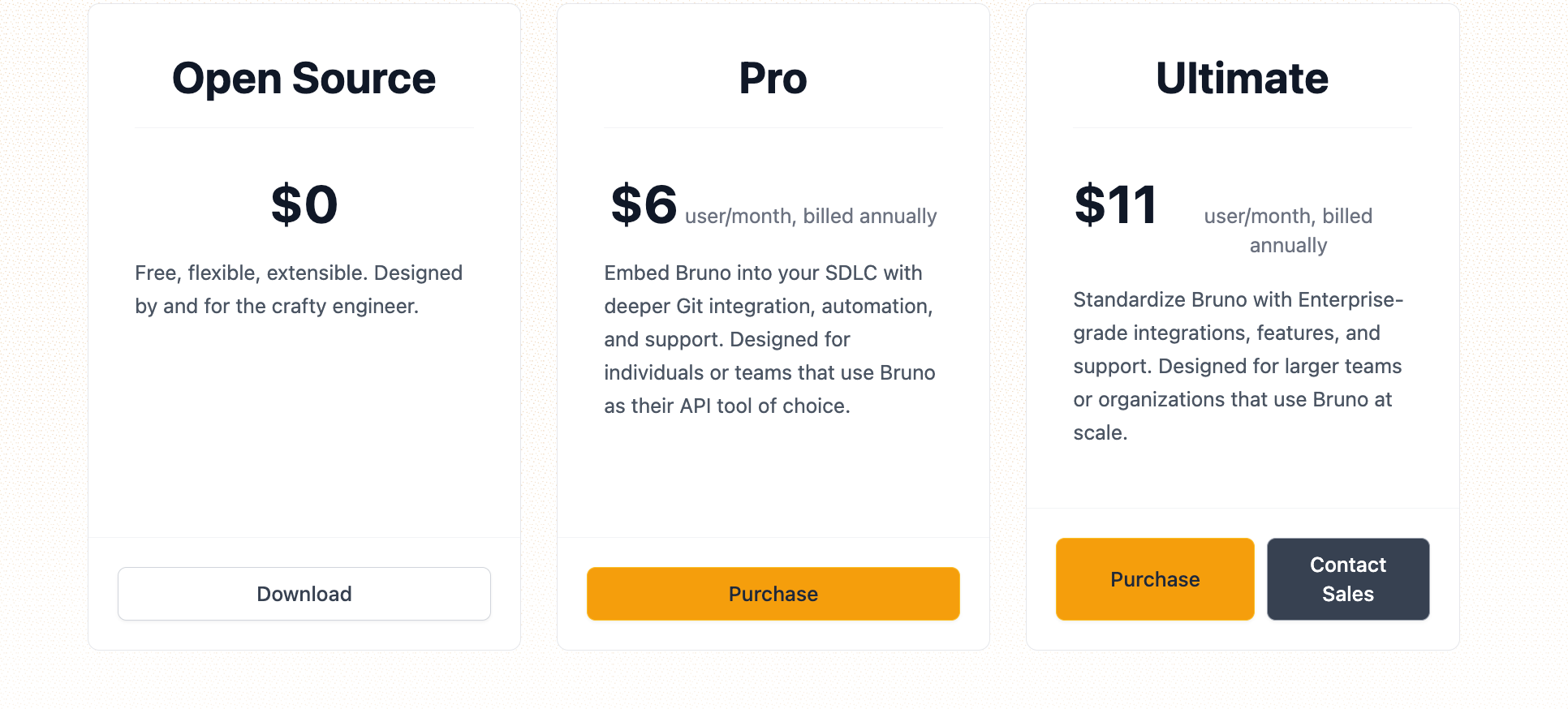
Bruno is free and open source under the MIT license with paid tier.
Strengths
- Local storage means no cloud dependency
- Git-native workflow for version control
- Active open-source community
Considerations
- No built-in mock servers (requires external tools)
- Limited team collaboration features compared to cloud tools
- Smaller feature set than Postman or Apidog
3. Insomnia: Best for Complex Workflows
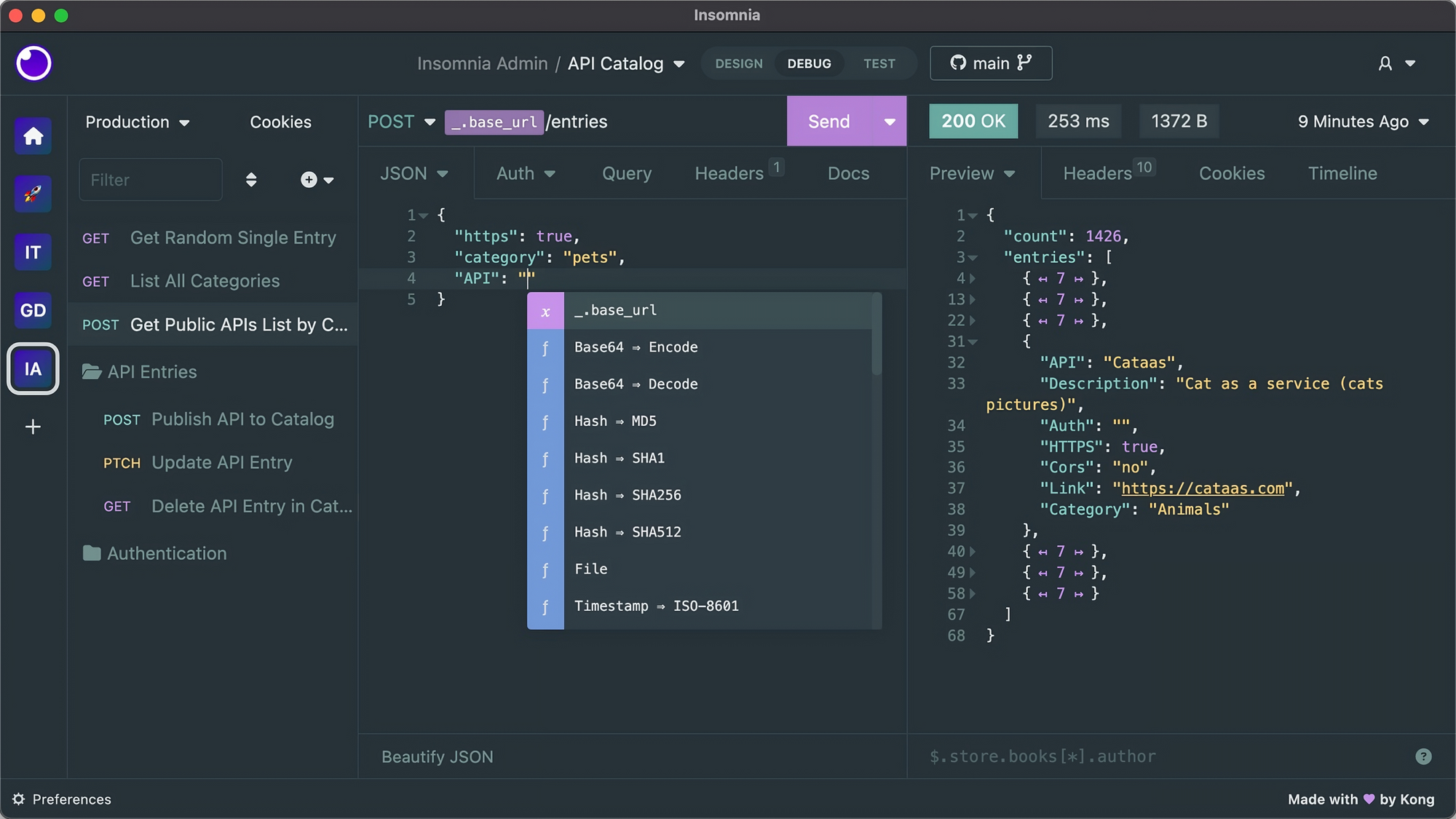
Insomnia has been around longer than most Postman alternatives. It started as an Electron-based desktop app and evolved into a sophisticated API design platform.
What Makes Insomnia Stand Out
Insomnia excels at complex API workflows. It handles REST, GraphQL, gRPC, and WebSockets from a single interface. The design feels tailored for developers who work with multiple API types.
Recent versions added design capabilities that compete with dedicated API design tools. You can design, test, and document APIs all in one place.
Features
- Multi-Protocol Support: Work with REST, GraphQL, gRPC, WebSockets, and tRPC from one application.
- Design Tools: Design APIs using OpenAPI specifications with visual editors.
- Plugins: Extend functionality with a plugin ecosystem. Add code generators, security scanners, and more.
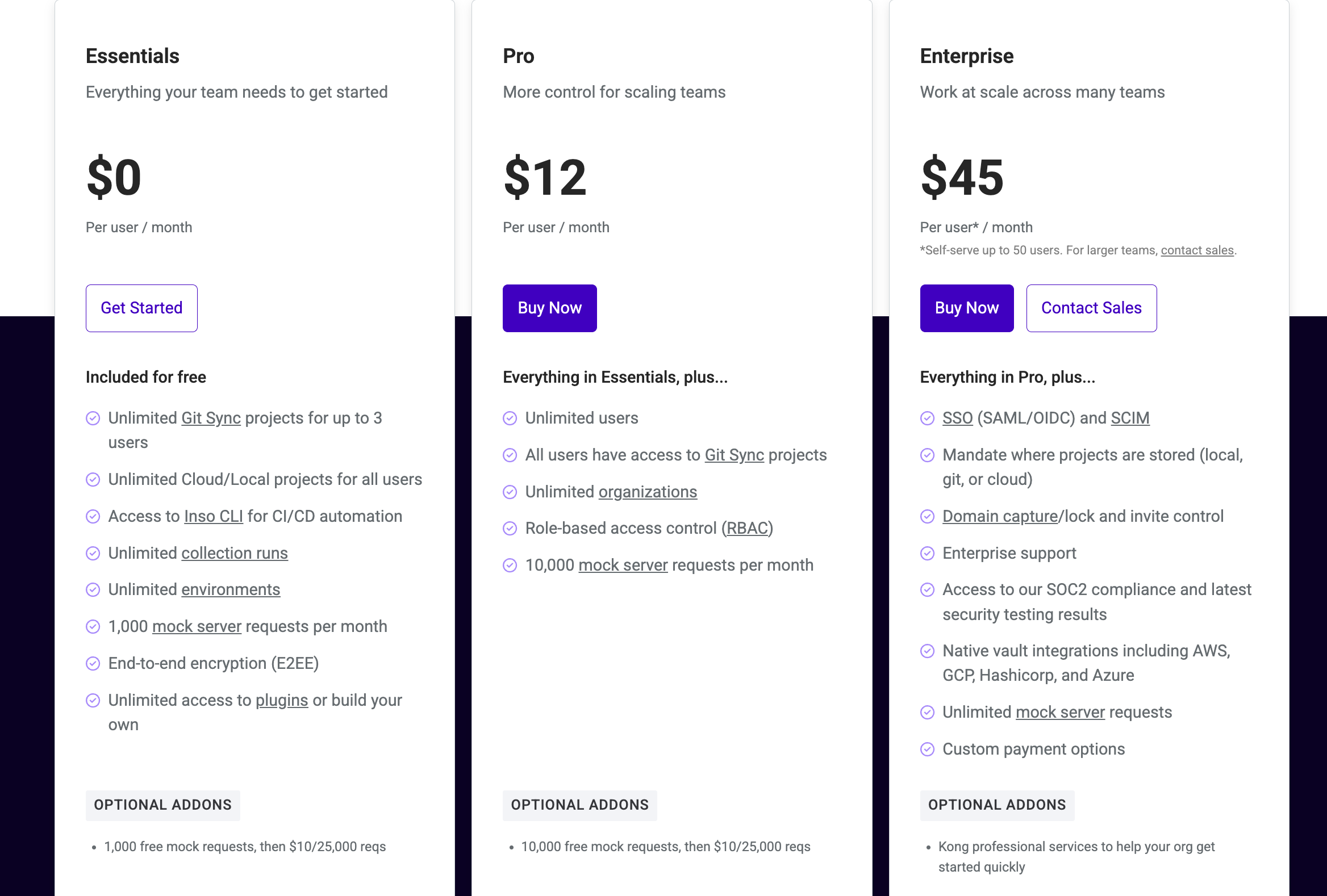
- Git Sync: Store configurations in Git repositories for team collaboration and version control.
- Enterprise Features: Paid plans include SSO, audit logs, and team management.
Who It's For
Insomnia works well for developers and teams working with multiple API types. If your project involves GraphQL APIs alongside REST endpoints, Insomnia handles both without switching tools.
Pricing
The free tier includes core features with limitations on team size. Paid plans start at $12/month for team features. The paid plans are reasonable compared to Postman.
Strengths
- Handles multiple API protocols
- Strong design capabilities
- Plugin ecosystem extends functionality
- Git-native collaboration
Considerations
- Free tier has team limitations
- Mock servers limited on free plan
- Interface has a learning curve
4. Thunder Client: Best VS Code Integration
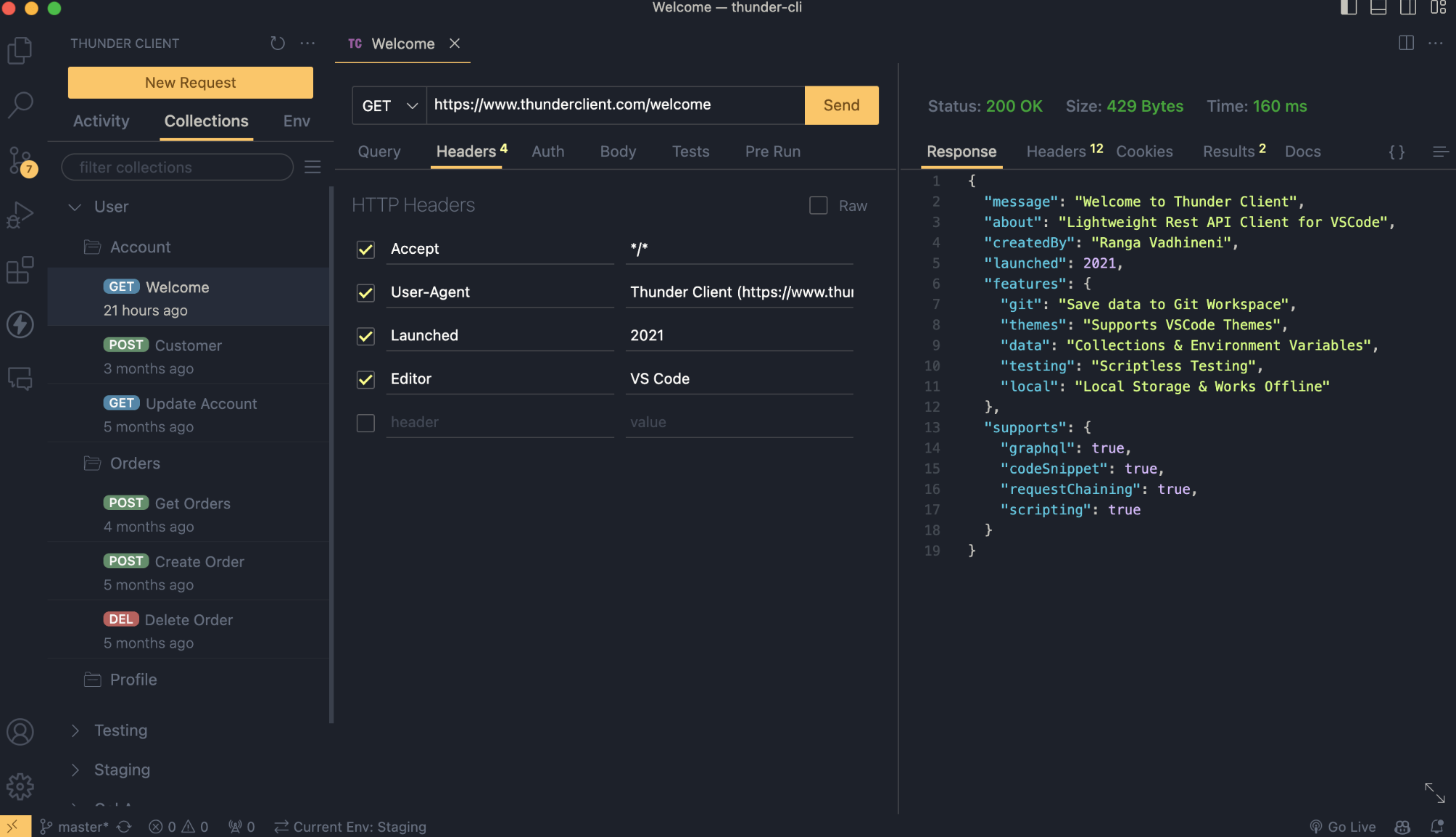
Thunder Client is a lightweight API client built directly into VS Code. If you already work in VS Code, Thunder Client fits naturally into your workflow.
What Makes Thunder Client Stand Out
You never leave your editor. Request building, testing, and response viewing happen inside VS Code. No context switching between applications. The minimal UI feels like part of your development environment.
Features
- VS Code Integration: All functionality lives inside VS Code. Use keyboard shortcuts and commands you already know.
- Collections: Organize requests into collections with folders and environment variables.
- Test Scripts: Write JavaScript tests to validate responses.
- Visual UI: Clean interface that matches VS Code themes.
- CLI: Run collections from terminal for automation.
Who It's For
Thunder Client works best for developers who live in VS Code. If you debug in Chrome DevTools, write code in VS Code, and prefer minimal tool switching, this fits your workflow.
Pricing
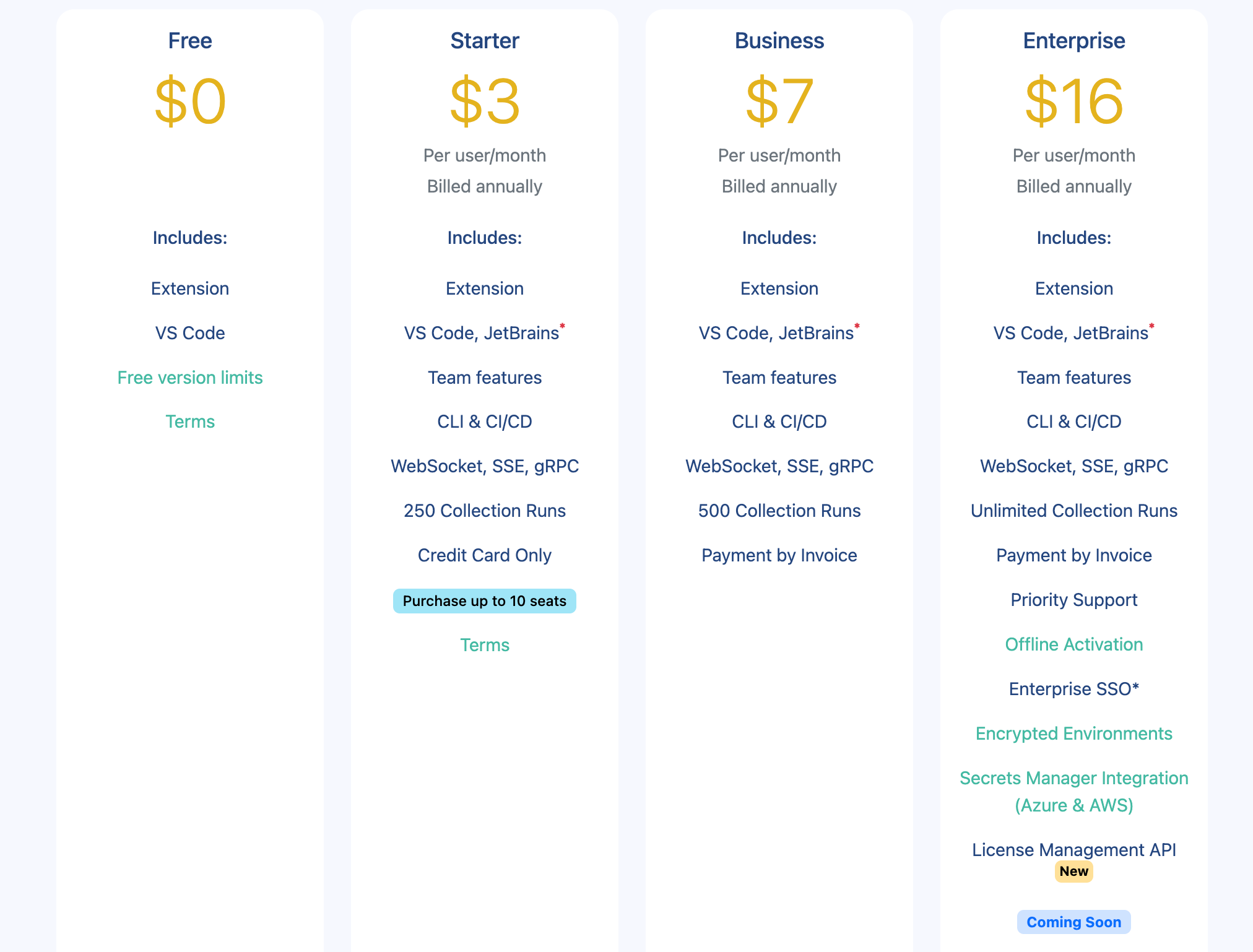
The core extension is free. A paid "Pro" version adds team sync and additional features . The pricing is minimal compared to Postman.
Strengths
- Zero context switching between coding and API testing
- Lightweight and fast
- Familiar VS Code interface
- Very affordable Pro version
Considerations
- No built-in mock servers
- Limited to VS Code users
- Fewer enterprise features
5. Hoppscotch: Best Web-Based Option
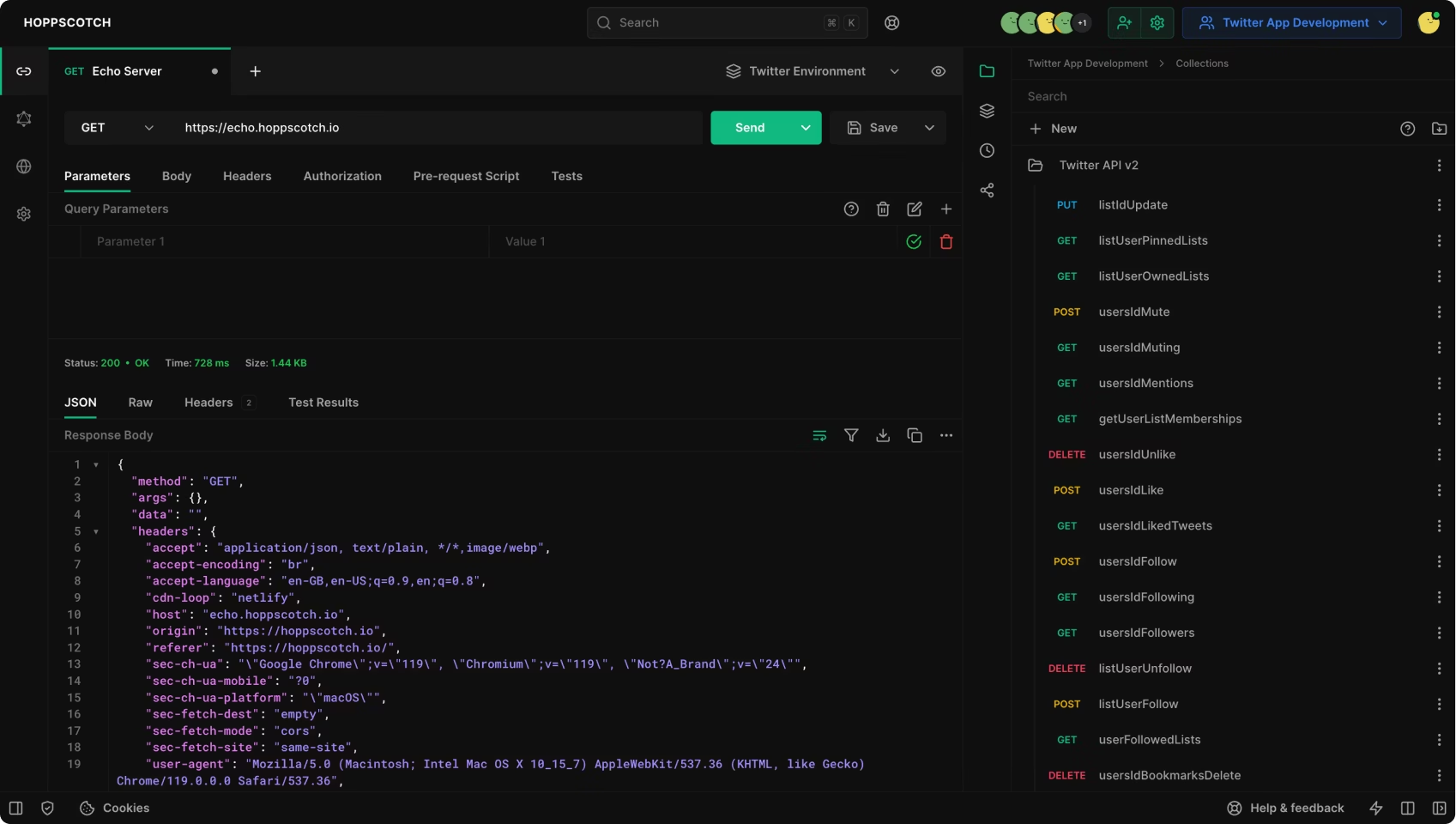
Hoppscotch started as Postwoman, a lighter-weight web alternative to Postman. It evolved into a full-featured platform that runs entirely in your browser.
What Makes Hoppscotch Stand Out
No installation required. You open the website and start making requests. Your data syncs to your account (or stays local if you prefer). This makes Hoppscotch excellent for quick testing and sharing tools with non-technical team members.
Features
- Browser-Based: Works in any modern browser. No desktop app required.
- Real-Time: See responses as they arrive with WebSocket and SSE support.
- Collections: Organize requests and sync across devices.
- Environments: Define variables for different contexts.
- CLI: Use the command-line tool for automation.
Who It's For
Hoppscotch works well for quick API testing, sharing with team members who don't install desktop apps, and situations where you need to test APIs from different computers without carrying your tools.
Pricing
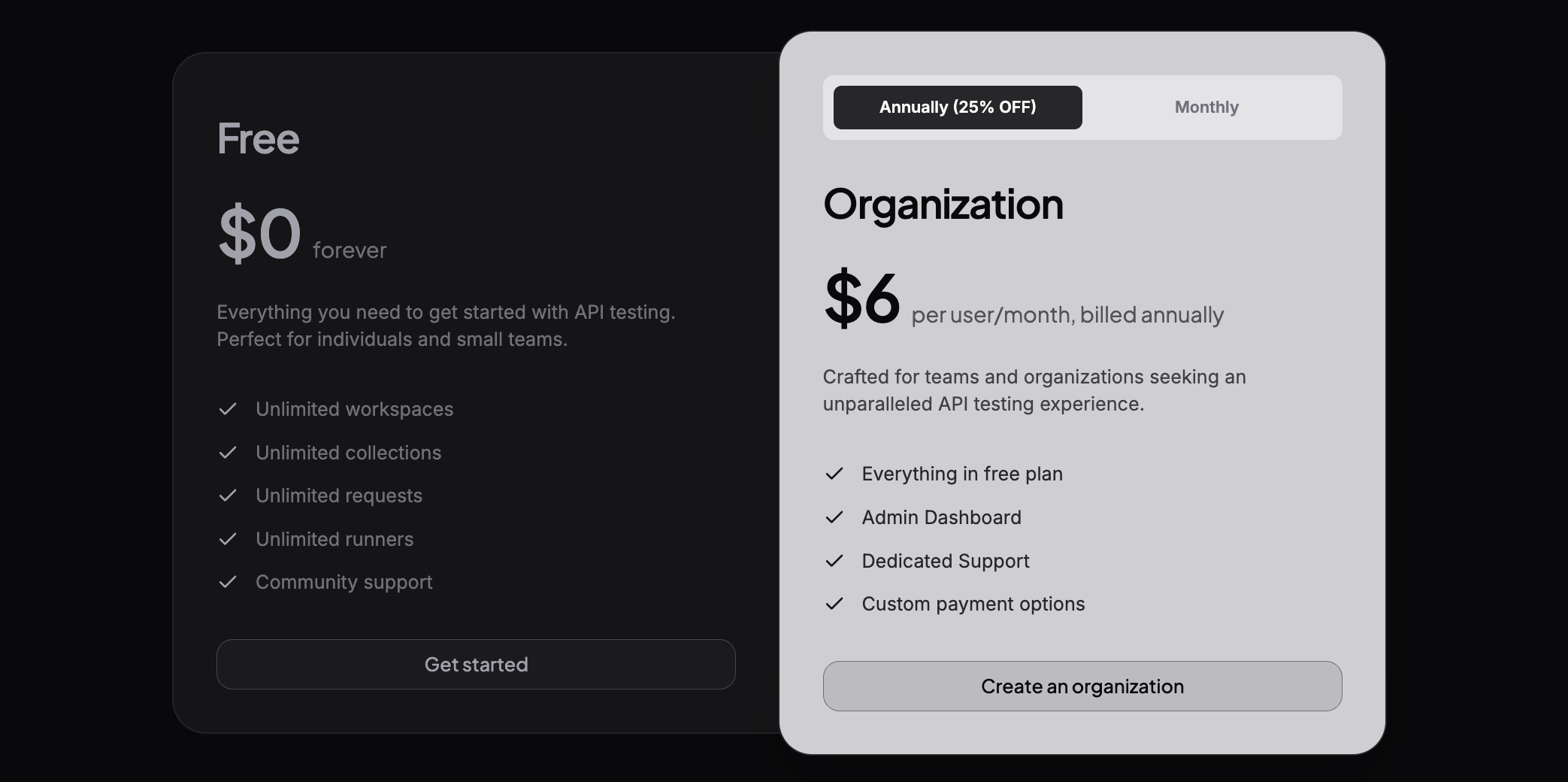
Hoppscotch is free and open source. A cloud service offers team features for $6/month per member. Most features are free.
Strengths
- No installation needed
- Works on any computer with a browser
- Great for quick testing
- Fully open source
Considerations
- Browser limitations apply (some features work better in desktop apps)
- Less suitable for complex workflows
- Cloud sync requires account
How to Choose the Right Alternative
With so many options, picking the right one requires understanding your team's specific needs.
Consider Team Size
If you have up to 4 team members, Apidog's free tier covers everything you need with full collaboration. For larger teams, Apidog's paid plans are still more affordable than Postman.
Bruno, Insomnia, and Thunder Client work well for smaller teams or individual developers who don't need built-in collaboration.
Consider Workflow
Design-first workflows benefit from Apidog or Insomnia. Both let you design APIs before implementing them, generating tests and documentation automatically.
Testing-focused workflows work well with Bruno, Thunder Client, or REST Client. These tools focus on executing requests rather than designing APIs.
Consider Integration Needs
If you need CI/CD integration, check each tool's capabilities. Apidog, Insomnia, and Bruno all offer CLI tools for automation.
If you need mock servers, Apidog offers the most generous free tier. Bruno requires external tools for mocking.
Consider Budget
If budget is the primary concern, Bruno and REST Client are completely free with no paid tier. Apidog's free tier covers what most teams need indefinitely.
Conclusion
Postman's 2026 pricing changes opened the door for alternatives that offer more value without the enterprise cost. Apidog leads the pack with up to 4 users and full collaboration on its free tier. Bruno offers a privacy-focused open-source option. Thunder Client integrates seamlessly into VS Code for developers who prefer minimal tool switching.
The best choice depends on your team's specific needs. Teams of up to 4 members will find Apidog covers everything they need on the free tier. Teams with specific requirements around open-source software, VS Code integration, or web-based access will find suitable alternatives in this list.
The era of paying premium prices for basic API tooling is ending. These alternatives prove you don't need enterprise budgets to build great APIs.
FAQ
What is the best free Postman alternative in 2026?
Apidog offers the most comprehensive free tier with up to 4 users, full team collaboration, unlimited collection runs, and unlimited mock servers. Bruno is the best open-source option. Thunder Client works best for VS Code users.
Is there a truly free alternative to Postman?
Yes. Apidog, Bruno, Thunder Client, Hoppscotch, REST Client, and Httpie CLI all have free tiers that cover what most teams need.
Can I import my Postman collections into alternatives?
Yes. Most Postman alternatives support importing Postman collections. Apidog and Insomnia handle imports seamlessly.
Are these alternatives suitable for teams?
Apidog, Insomnia, and Hoppscotch work well for teams with collaboration features. Bruno works for teams using Git-based workflows. Thunder Client Pro adds team sync features.
Which Postman alternative has the best free team plan?
Apidog's free plan is the most generous with up to 4 users, full team collaboration, unlimited collection runs, unlimited mock servers, and unlimited monitors. No other tool matches this combination of features on a free tier.