TL;DR
Postman’s forced cloud accounts, rising pricing, and dependence on npm packages like Axios (which was compromised in March 2026) are pushing teams toward alternatives. This guide compares Bruno, Hoppscotch, Insomnia, Yaak, and Apidog on features, pricing, Git support, and supply chain security, with step-by-step migration instructions.
Introduction
Something shifted in the API testing landscape in 2026, and it wasn’t a new feature release. It was a security breach.
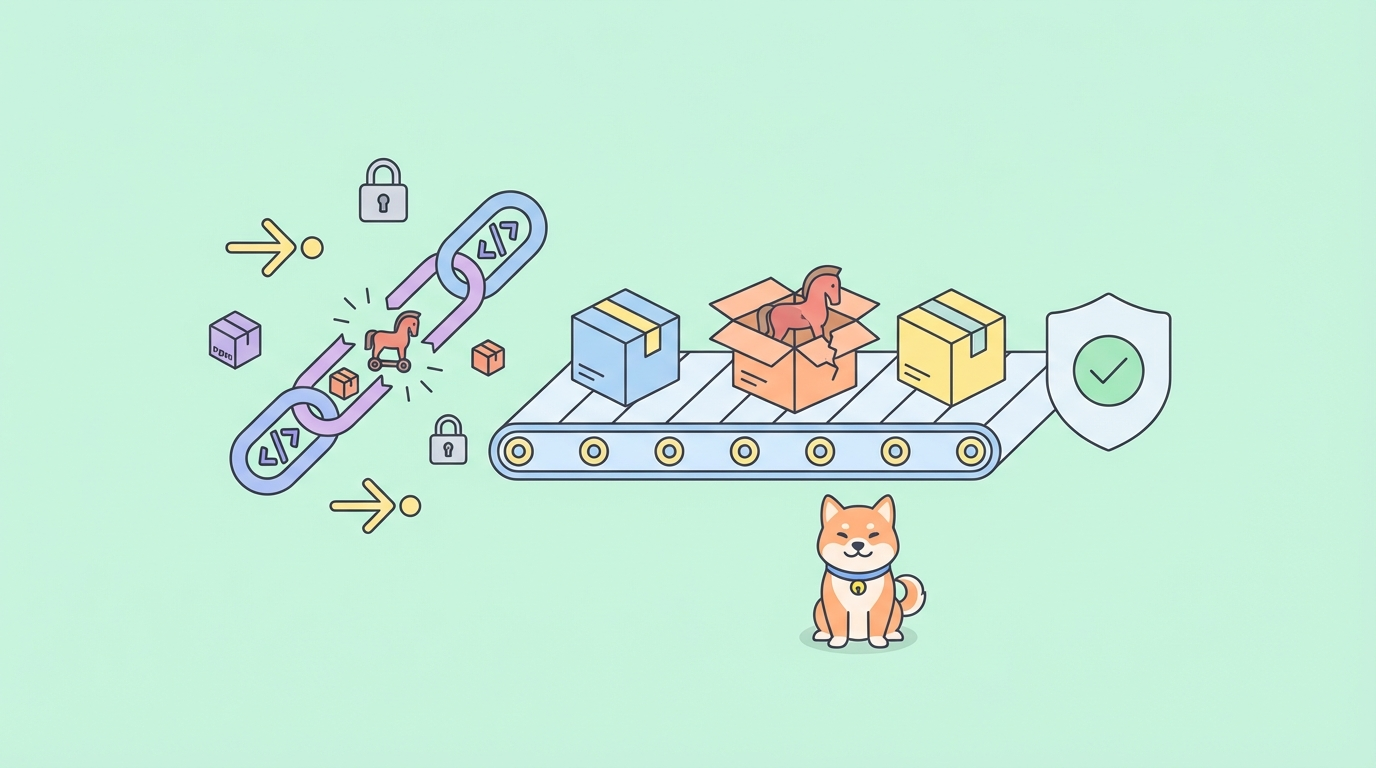
On March 31, 2026, Axios, the HTTP client library that powers millions of API testing scripts, was compromised through a stolen npm maintainer account. A cross-platform RAT was deployed to developers running npm install. The attack lasted roughly three hours across 83 million weekly downloads.
If your API testing workflow depends on npm packages for HTTP requests, you were in the blast radius. That includes Postman-based workflows that use Axios in pre-request scripts, test scripts, or Newman (Postman’s CLI runner) integrations.
This isn’t the first reason teams are leaving Postman. Pricing increases, forced cloud accounts, and the removal of local-only Scratch Pad mode have been pushing developers toward alternatives since 2023. But the supply chain security angle is new, and it changes how you should evaluate your next API testing platform.
This guide compares the top five Postman alternatives on the criteria that matter in 2026: features, Git integration, pricing, and supply chain security.
Why teams are leaving Postman
The pricing problem
Postman’s free tier once covered most solo developer needs. That’s no longer the case. The free plan now restricts collection runs, monitoring, and collaboration features. The Basic plan starts at $12/user/month. The Professional plan runs $23/user/month.
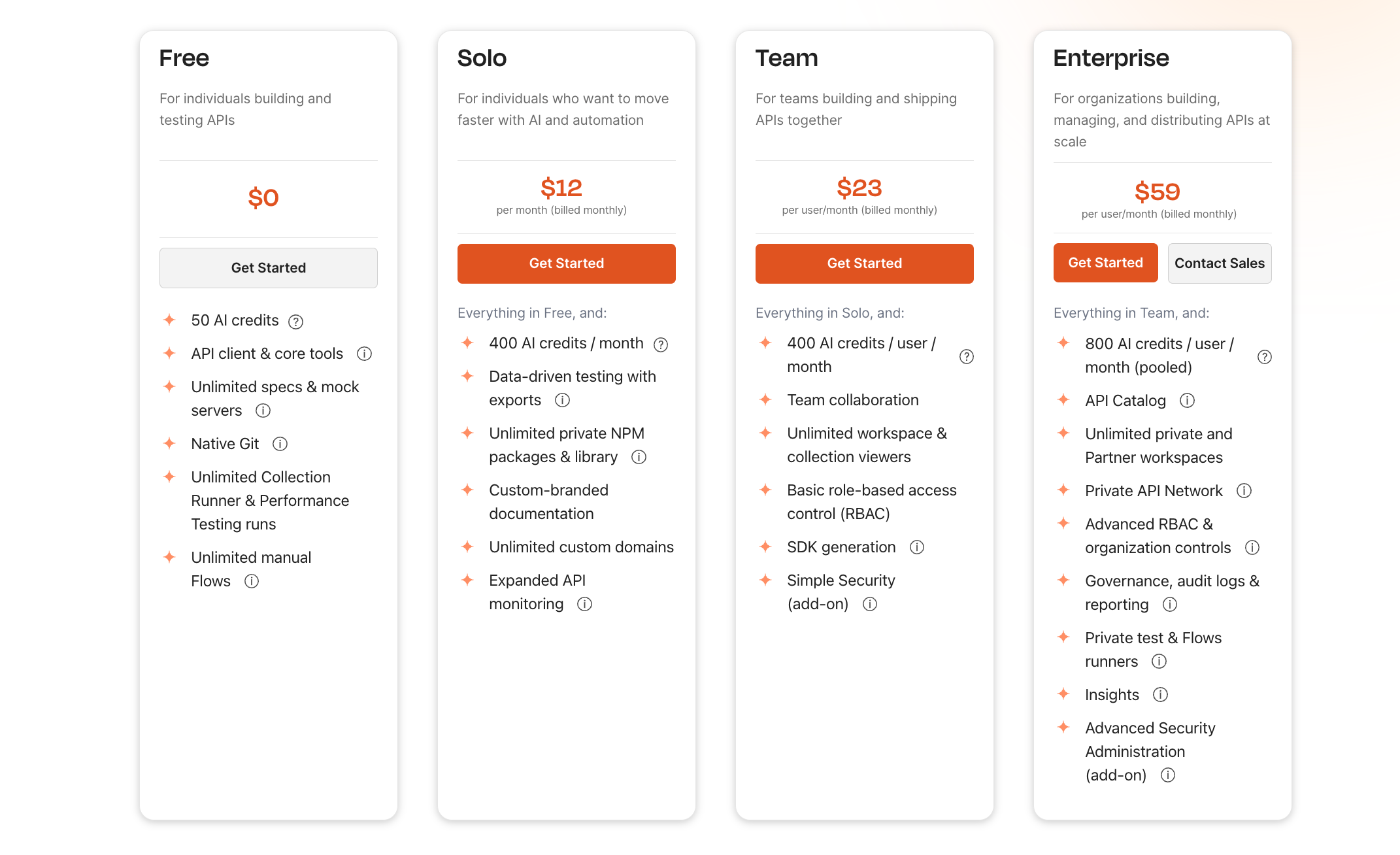
For many teams, the math doesn’t work. API testing is a core workflow, not a premium feature.
The cloud account requirement
In 2023, Postman removed the Scratch Pad, their local-only mode. Every user now needs a Postman account, and collections sync to Postman’s cloud by default. For teams working with sensitive APIs (healthcare, fintech, government), sending API request data to a third-party cloud raises compliance concerns.
You can use Postman’s Vault for local secrets, but the architectural default is cloud-first. Teams that need air-gapped or offline API testing have limited options within Postman.
The supply chain problem (new in 2026)
Postman’s ecosystem depends on npm packages. Newman, the CLI collection runner, pulls from npm. Pre-request scripts and test scripts can import npm packages. Custom visualizers use npm dependencies.
The Axios compromise exposed a structural risk: any tool that depends on npm packages for HTTP communication inherits the supply chain risk of the entire npm ecosystem. A compromised HTTP client library can intercept, modify, or exfiltrate API request data, including authentication tokens, request bodies, and response payloads.
This doesn’t mean Postman is insecure. It means the evaluation criteria for API testing tools should now include: how many third-party dependencies does this tool introduce into my security perimeter?
The five Postman alternatives compared
Apidog
Philosophy: All-in-one API lifecycle platform. Design, test, debug, mock, and document in one tool.
Apidog takes a different approach from the tools above. Instead of being an API client that also does testing, it’s a complete API development platform that includes an HTTP client as one component of a larger workflow.
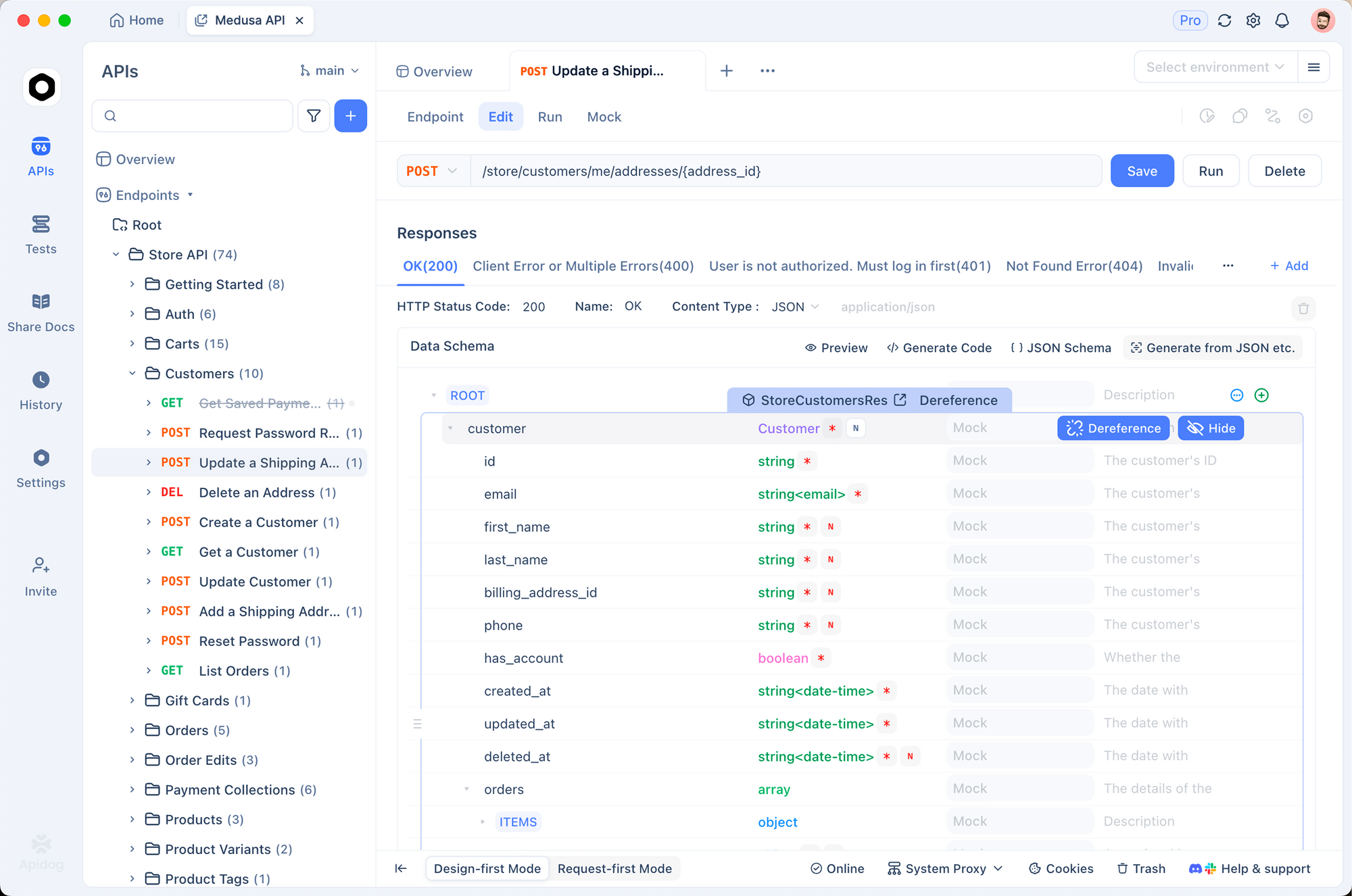
Strengths:
- Built-in HTTP client with zero npm dependencies
- Visual test builder with no-code assertions
- Smart mock server with dynamic responses
- Auto-generated documentation from API specs
- Full OpenAPI/Swagger support with visual designer
- Team collaboration with real-time sync
- CI/CD integration via Apidog CLI
- Import from Postman, Swagger, OpenAPI, cURL, and HAR
- Branch support for API versioning
- Offline desktop app available
Weaknesses:
- Full platform has a learning curve if you only need a simple HTTP client
- Cloud sync is default (offline mode available)
- Less established open-source community than Bruno or Hoppscotch
Pricing: Free tier with generous limits. Team plans for advanced collaboration.
Supply chain profile: Self-contained platform. HTTP client is built-in, not sourced from npm. Apidog CLI is the only npm-distributed component, and it doesn’t handle HTTP requests through third-party libraries.
Bruno
Philosophy: Offline-first, Git-native, no cloud.
Bruno stores API collections as plain text files (.bru format) directly on your filesystem. Collections live alongside your code and commit to Git naturally.
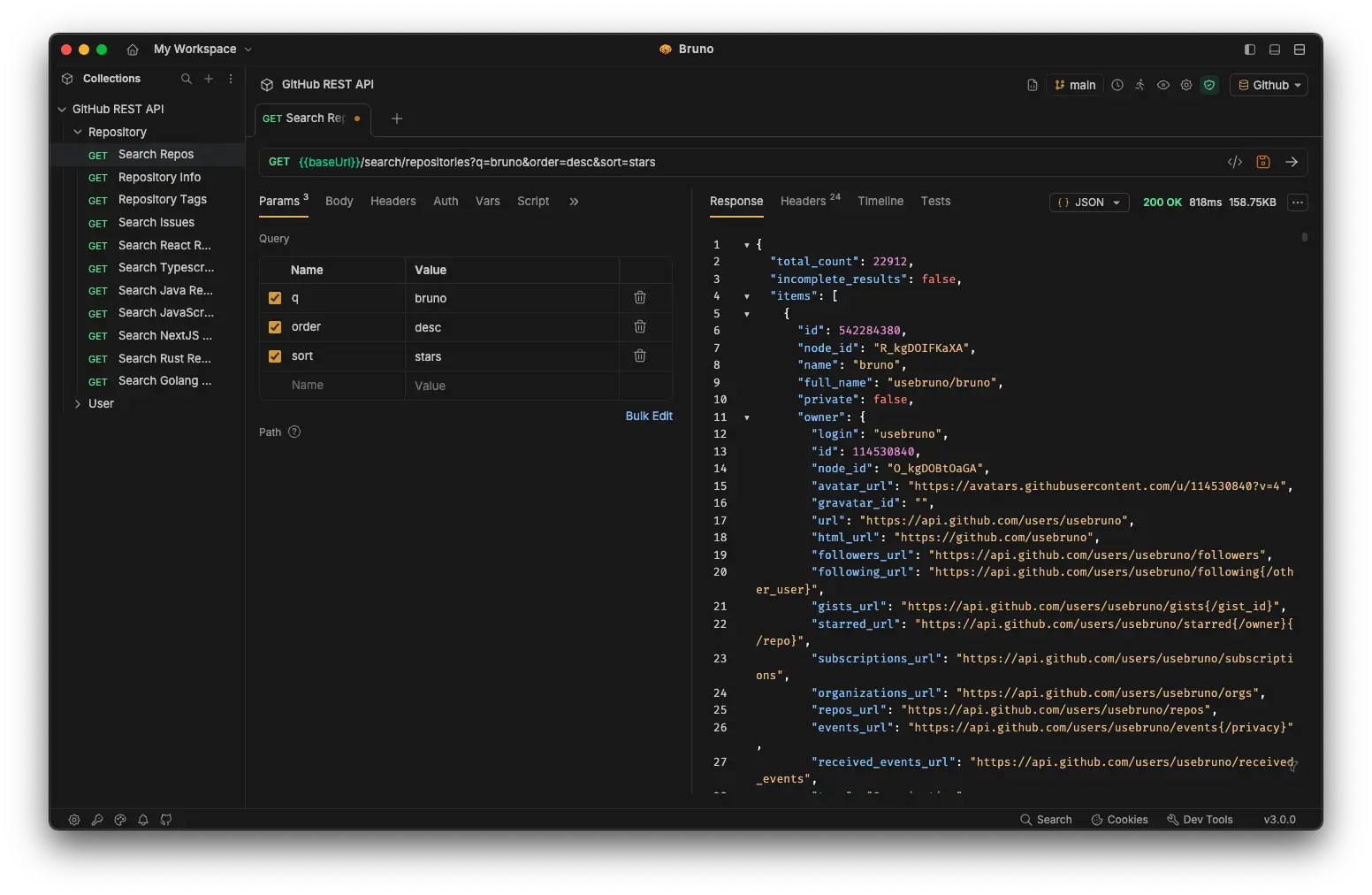
Strengths:
- Collections are human-readable files in Git
- No cloud account needed, ever
- Open-source core (MIT license)
- One-time purchase for advanced features (Golden Edition)
- Supports REST, GraphQL, and WebSocket
- Import from Postman, Insomnia, and OpenAPI
Weaknesses:
- Desktop-only (no web or mobile)
- No built-in encryption for secrets in Git (Golden Edition adds this)
- Smaller ecosystem than Postman
- Performance can lag on large collections
- No built-in mock server
Pricing: Free (open-source core). Golden Edition: one-time purchase for secret management, performance testing, and advanced features.
GitHub stars: 30,000+
Supply chain profile: Desktop app, no npm dependency chain for core HTTP functionality. Collections stored locally.
Hoppscotch
Philosophy: Fast, browser-first, open-source.
Hoppscotch runs as a progressive web app, meaning zero installation. Open your browser, start testing APIs.
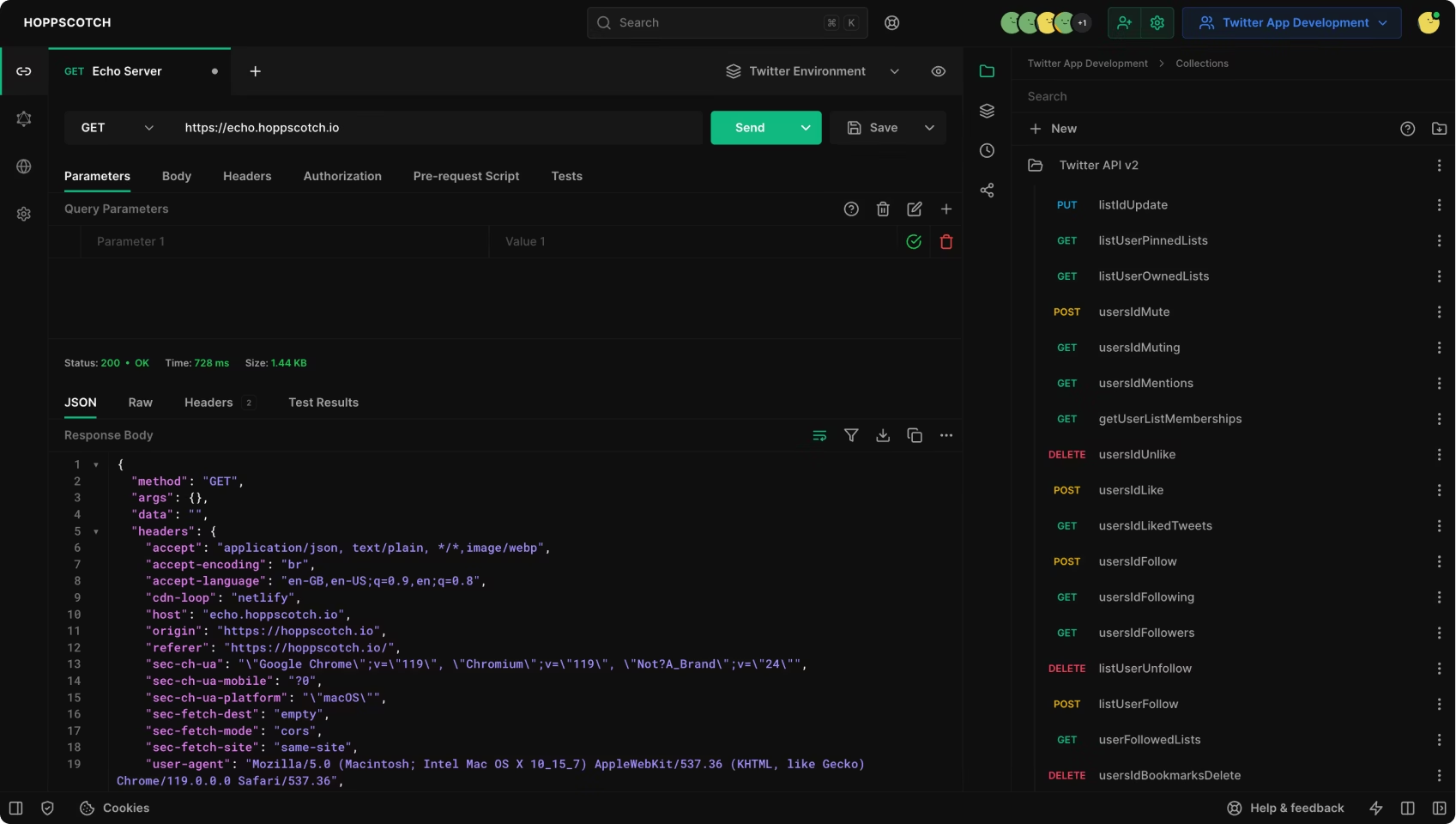
Strengths:
- Zero install, runs in browser
- Supports REST, GraphQL, WebSocket, SSE, and Socket.IO
- Generous free tier with unlimited workspaces
- Self-hostable for enterprise
- Lightweight and fast
- Open-source (MIT license)
Weaknesses:
- Browser-based means browser security model limitations
- Self-hosting requires additional infrastructure
- Fewer integrations than desktop-native tools
- Team features require Hoppscotch Cloud or self-hosted instance
- No CLI runner for CI/CD (community alternatives exist)
Pricing: Free (open-source). Enterprise self-hosting available.
GitHub stars: 67,000+
Supply chain profile: Browser-based, no local npm dependencies. Self-hosted version has server-side dependencies.
Insomnia
Philosophy: Powerful desktop client for complex API workflows.
Insomnia (by Kong) has been the most popular Postman alternative for years. It offers deep protocol support and plugin extensibility.
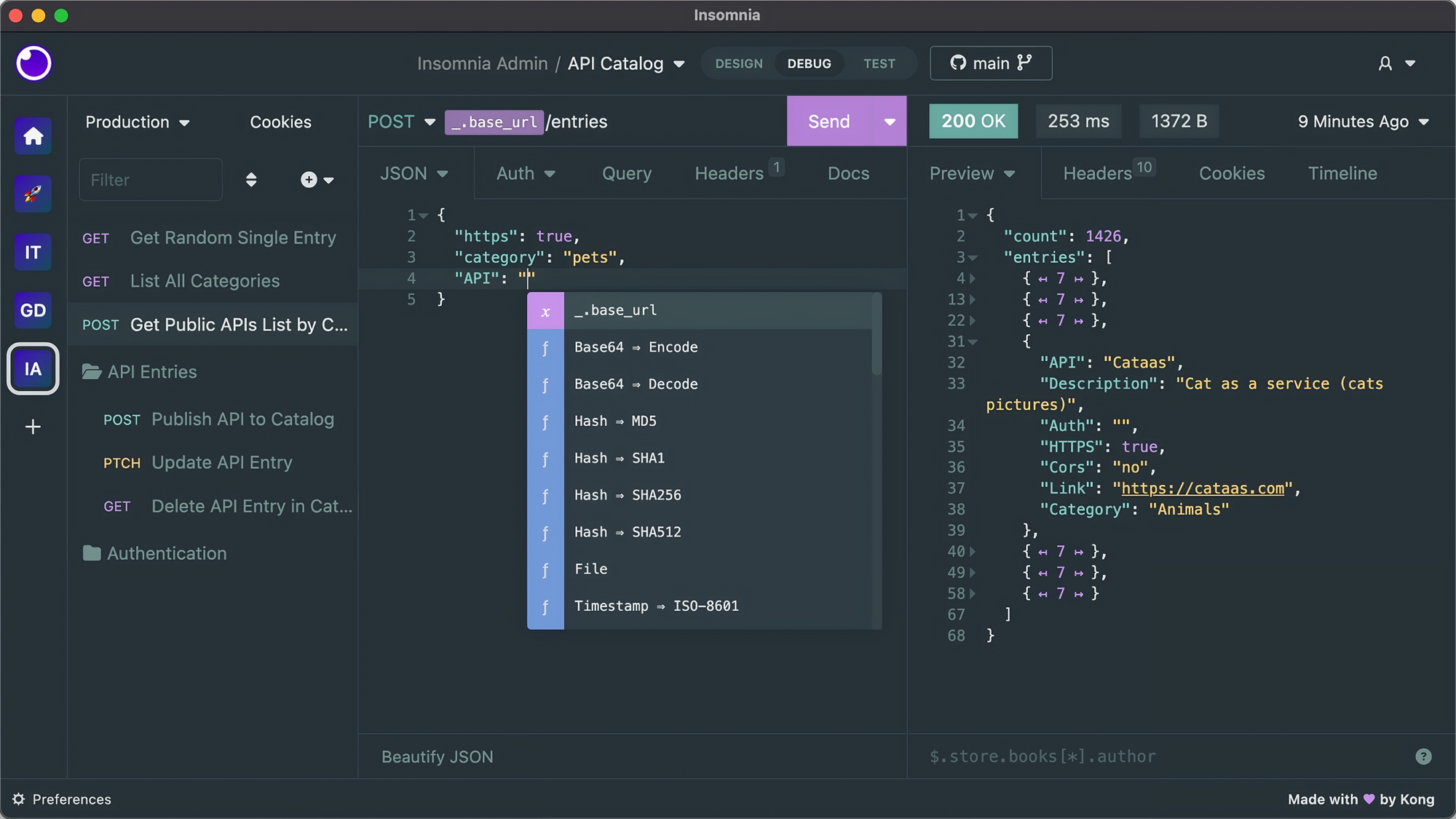
Strengths:
- Mature, feature-rich desktop client
- Git Sync for version-controlled collections
- Inso CLI for CI/CD integration
- Plugin ecosystem for extensibility
- Supports REST, GraphQL, gRPC, and WebSocket
- Design-first workflow with OpenAPI support
Weaknesses:
- Required cloud account since 2023 (the same issue as Postman)
- Owned by Kong, a commercial API gateway company
- Plugin system introduces third-party dependency risks
- Heavier resource usage than lightweight alternatives
- Community trust damaged by the cloud account change
Pricing: Free tier available. Team plans start at $12/user/month.
GitHub stars: 35,000+
Supply chain profile: Desktop app with plugin system. Plugins pull from npm. Git Sync adds a cloud dependency. Inso CLI has npm dependencies.
Yaak
Philosophy: Developer-first, no corporate bloat, built by the Insomnia creator.
Yaak was created by Gregory Schier, the original founder of Insomnia, after Kong’s cloud-first pivot. It’s a return to the principles that made Insomnia popular in the first place.
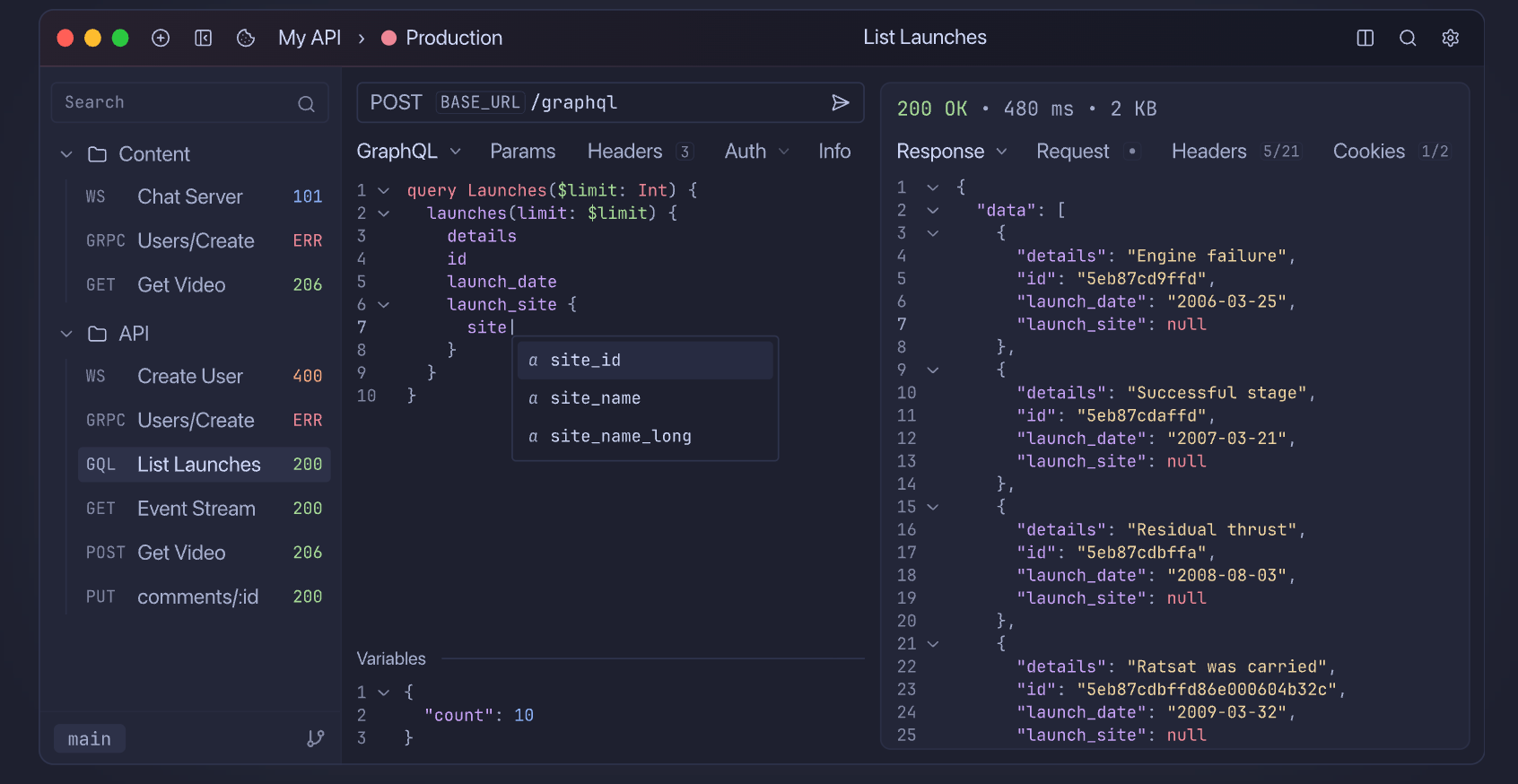
Strengths:
- Built-in encryption for secrets in Git commits
- Zero telemetry
- Supports REST, GraphQL, gRPC, and WebSocket
- Fast startup and low resource usage
- Imports from Postman, Insomnia, and OpenAPI
- Free and open-source, no paid tiers
Weaknesses:
- Newest tool on this list, smallest community
- Fewer advanced features than mature competitors
- No built-in CI/CD runner yet
- No mock server
- Limited team collaboration features
Pricing: Free. No paid tiers.
GitHub stars: Growing (newer project)
Supply chain profile: Desktop app, minimal dependencies. Local-first with encrypted Git storage.
Feature comparison table
| Feature | Postman | Bruno | Hoppscotch | Insomnia | Yaak | Apidog |
|---|---|---|---|---|---|---|
| REST | Yes | Yes | Yes | Yes | Yes | Yes |
| GraphQL | Yes | Yes | Yes | Yes | Yes | Yes |
| gRPC | Yes | No | No | Yes | Yes | Yes |
| WebSocket | Yes | Yes | Yes | Yes | Yes | Yes |
| Mock server | Yes | No | No | Plugin | No | Yes |
| Auto docs | Yes | No | No | No | No | Yes |
| Visual test builder | Yes | No | No | No | No | Yes |
| Git-native storage | No | Yes | No | Git Sync | Yes | Branch support |
| Offline mode | Limited | Yes | No | Limited | Yes | Yes |
| CI/CD runner | Newman | No | Community | Inso | No | Apidog CLI |
| Open source | No | Yes | Yes | Partial | Yes | No |
| No cloud account | No | Yes | Self-host | No | Yes | Free tier works offline |
| No npm HTTP deps | No | Yes | Yes (browser) | No | Yes | Yes |
| Secret encryption | Vault | Golden Ed. | N/A | No | Built-in | Built-in |
The supply chain security angle
This is the new evaluation criterion for 2026. Here’s how each tool’s dependency model affects your security posture:
Dependency exposure by tool
| Tool | Core HTTP engine | npm dependencies in workflow | CI/CD npm exposure |
|---|---|---|---|
| Postman | Built-in | Scripts can import npm packages | Newman (npm) |
| Bruno | Built-in | Minimal | None |
| Hoppscotch | Browser fetch | None (browser-based) | Community runners |
| Insomnia | Built-in | Plugins (npm) | Inso (npm) |
| Yaak | Built-in | Minimal | None |
| Apidog | Built-in | None for core workflow | Apidog CLI (self-contained) |
What the Axios attack means for each tool
Postman: If your test scripts use require('axios') or any npm HTTP library, the Axios compromise could have executed in your Postman runner. Newman pulls from npm, so CI/CD runs during the attack window were exposed.
Bruno: Not affected. Bruno’s HTTP client is built into the desktop app. No npm packages involved in request execution.
Hoppscotch: Not affected for browser usage. The browser’s native fetch handles HTTP requests. Self-hosted deployments have server-side dependencies to audit.
Insomnia: Partially exposed through plugins and Inso CLI. Core HTTP requests use the built-in client, but plugins can introduce npm dependencies.
Yaak: Not affected. Self-contained desktop app with minimal dependencies.
Apidog: Not affected. Built-in HTTP client with no npm dependency chain for request execution. The Apidog CLI is the only npm-distributed component, and it handles orchestration, not HTTP request execution.
How to migrate from Postman
Step 1: Export your Postman collections
In Postman, go to your collection, click the three dots, and select “Export.” Choose Collection v2.1 format (JSON).
For bulk export:
# Using Postman API
curl -X GET "https://api.getpostman.com/collections" \
  -H "X-Api-Key: YOUR_POSTMAN_API_KEY" | jq '.collections[].uid'
Step 2: Import into your chosen alternative
Bruno:File > Import Collection > Postman Collection. Bruno converts Postman’s JSON format to .bru files on your filesystem.
Hoppscotch:Settings > Import > Postman. Upload the exported JSON file.
Insomnia:Application > Preferences > Data > Import Data > From File.
Yaak:File > Import > select your Postman export file.
Apidog:Project Settings > Import > Postman Collection. Apidog preserves environments, variables, and test scripts during import. You can also import directly from OpenAPI specs, Swagger files, cURL commands, and HAR files.
Step 3: Convert test scripts
Postman test scripts use the pm.* API. Each alternative has its own scripting approach:
Postman:
pm.test("Status code is 200", () => {
  pm.response.to.have.status(200);
});

pm.test("Response has user data", () => {
  const json = pm.response.json();
  pm.expect(json.name).to.exist;
});
Apidog (visual assertions):No scripting needed for common assertions. Use the visual test builder to add assertions:
- Response status = 200
- JSON path
$.nameexists - Response time < 500ms
For complex logic, Apidog supports custom scripts with a similar API.
Step 4: Set up environments
Export Postman environments and import them into your new tool. Most alternatives support environment variables with the same concepts (global, environment, collection variables).
Apidog adds branch support, letting you maintain different API versions with separate environment configurations.
Step 5: Update CI/CD pipelines
Replace Newman with your new tool’s CLI runner:
Postman (Newman):
newman run collection.json -e environment.json
Apidog CLI:
apidog run --test-scenario-id YOUR_SCENARIO_ID
Insomnia (Inso):
inso run test "My Test Suite" --env "Production"
Which alternative is right for your team?
Choose Apidog if:
- You want the complete API lifecycle in one platform
- You need mock servers, auto-generated docs, and visual testing
- Supply chain security matters (no npm HTTP dependencies)
- You’re migrating a team from Postman and want feature parity
- You need branch support for API versioning
Choose Bruno if:
- You want Git-native collections with zero cloud dependency
- Your team values open-source and file-based workflows
- You don’t need mock servers or auto-generated docs
- Budget is a concern (free forever for core features)
Choose Hoppscotch if:
- You want zero installation and browser-based access
- Your team is distributed and needs instant access
- You’re comfortable self-hosting for team features
- You prefer a lightweight tool over a full platform
Choose Insomnia if:
- You need gRPC support alongside REST and GraphQL
- Git Sync is important for your team workflow
- You’re already in the Kong ecosystem (Kong Gateway, etc.)
- You need plugin extensibility
Choose Yaak if:
- Privacy is your top priority (zero telemetry)
- You want built-in secret encryption for Git
- You prefer minimal, fast tools over feature-rich platforms
- You trust the Insomnia creator’s design philosophy
Download Apidog free to test the migration with your existing Postman collections.
FAQ
Can I use Postman collections in other tools?
Yes. All five alternatives listed here support importing Postman Collection v2.1 format. Environments, variables, and basic test scripts transfer with varying degrees of fidelity. Complex Postman scripts using the pm.* API may need manual conversion.
Is Postman still a good tool?
Postman remains feature-rich and well-documented. For solo developers who don’t mind cloud accounts and can afford the pricing, it’s still capable. The concerns are about pricing trajectory, cloud dependency, and npm supply chain exposure; not core functionality.
Does the Axios attack affect Postman directly?
The Axios compromise doesn’t affect Postman’s built-in HTTP client. But if your Postman test scripts, pre-request scripts, or Newman-based CI/CD pipelines import Axios or other npm packages, those components were exposed during the attack window.
Which alternative has the best CI/CD integration?
Apidog CLI and Insomnia’s Inso both offer mature CI/CD integration. Apidog CLI is self-contained and doesn’t rely on npm packages for HTTP execution. Inso has npm dependencies. Bruno and Yaak don’t have official CLI runners yet.
Can I self-host any of these tools?
Hoppscotch offers self-hosting for team deployments. Apidog offers on-premise deployment for enterprise customers. Bruno, Yaak, and Insomnia are desktop-first with optional cloud features.
How long does migration from Postman take?
For a small team (under 50 collections), expect 1-2 hours for import and basic verification. Complex test scripts with heavy pm.* API usage may take longer to convert. Environment and variable migration is typically straightforward across all tools.
Is open-source always more secure than proprietary?
Not automatically. Open-source tools benefit from community code review, but they also expose their attack surface publicly. Proprietary tools benefit from controlled access but lack transparency (as the Claude Code source leak demonstrated). The best security posture combines transparent tooling with minimal dependency surfaces, regardless of licensing model.
Key takeaways
- Postman’s pricing, cloud requirements, and npm ecosystem exposure are driving teams toward alternatives in 2026
- The Axios supply chain attack adds a new evaluation criterion: how many third-party dependencies does your API testing tool introduce?
- Bruno and Yaak offer the strongest offline-first, Git-native workflows
- Hoppscotch provides the lowest barrier to entry with zero installation
- Apidog offers the most complete feature parity with Postman while eliminating npm HTTP dependencies
- Migration from Postman is straightforward for all five alternatives, with collection import supported across the board
Your API testing tool shouldn’t add risk to your security perimeter. Evaluate the dependency chain, not the feature list, and choose the tool that gives you control over your own infrastructure.