You're leading a development team, and APIs are the lifeblood of your product. But your current process feels... fragmented. The frontend team is waiting on mockups, the backend team is writing specs in a Google Doc, QA is testing with a collection of random cURL commands, and documentation is an afterthought stored in a Wiki nobody updates.
This chaos isn't just frustrating; it's costly. It leads to miscommunication, bugs, delayed releases, and unhappy developers. What you need isn't just a better tool you need a stack. A cohesive set of tools designed to manage the entire API lifecycle, from the first sketch to sunsetting an old endpoint.
Building this stack from scratch can feel overwhelming. But what if you could start with a lean, powerful foundation that grows with you? A starter stack that brings order to the chaos and makes your entire team more productive?
Here's the good news: you don't need a massive budget or a team of DevOps engineers to get started. You just need the right combination of tools focused on the key phases of the API lifecycle.
In this guide, we’ll walk through a starter stack for API lifecycle management for teams, explain why each stage matters, and show you how to build a clean, scalable workflow from the very beginning.
The API Lifecycle: Understanding the Journey
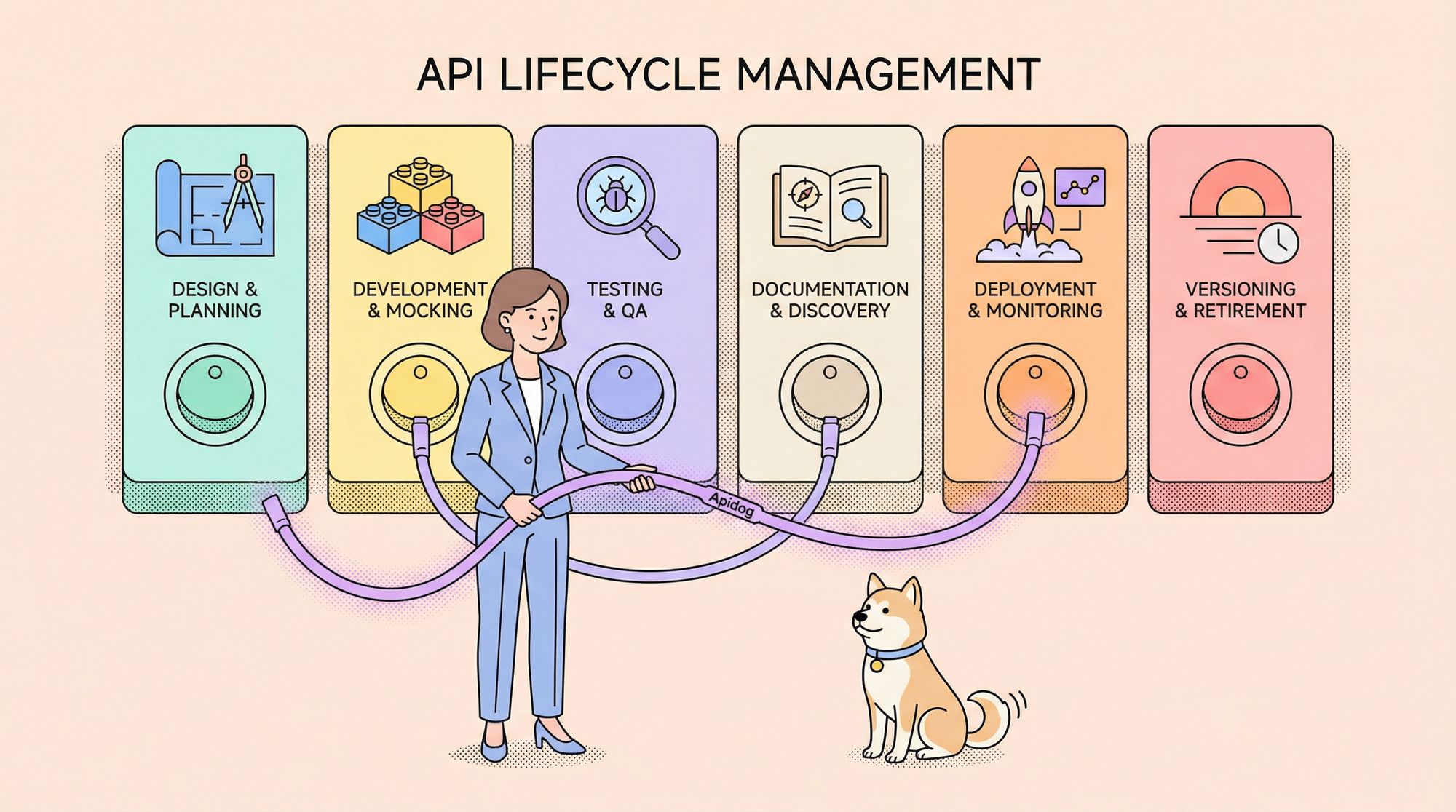
Before we pick tools, let's map the journey of an API within your team. Every endpoint goes through these core phases:
- Design & Planning: What will the API do? Defining the contract.
- Development & Mocking: Building the backend and unblocking the frontend with fake data.
- Testing & Quality Assurance: Ensuring it works correctly, securely, and reliably.
- Documentation & Discovery: Telling the world (and your own team) how to use it.
- Deployment & Monitoring: Releasing it and watching it perform in the wild.
- Versioning & Retirement: Managing change and sunsetting old versions.
A "stack" is simply a set of tools that helps your team navigate each of these phases effectively.
Why a "Starter Stack" Matters (Even for Small Teams)
It’s tempting to think API lifecycle management is only for large enterprises. However, that’s a costly misconception.
In reality:
- Small teams move faster and mistakes spread faster
- Early API decisions tend to stick
- Technical debt grows quietly
- Fixing broken workflows later is far more expensive
A well-chosen starter stack gives you:
- Structure without bureaucracy
- Speed without chaos
- Flexibility without fragmentation
And most importantly, it scales with your team, instead of forcing a painful migration later.
The Philosophy: Integrated vs. Best-of-Breed
You have two main approaches:
- Best-of-Breed: Pick the absolute best specialist tool for each phase. (e.g., Stoplight for design, Postman for testing, Swagger UI for docs). This gives you maximum power in each area but creates integration headaches and context switching.
- Integrated Platform: Choose a platform that covers multiple phases well. This drastically reduces friction and improves collaboration but may have trade-offs in specialized features.
For a starter stack, especially for small to medium teams, the integrated approach is vastly superior. You want to move fast and collaborate easily, not manage a zoo of different tools.
The Core Starter Stack for API Management
Here’s a lean, powerful stack that will cover 90% of your needs and set you up for success.
Tier 1: The Central Hub - API Design & Collaboration Platform
This is the most critical choice. This tool will be the single source of truth for your API contracts.
The Goal: A collaborative space where product managers, backend, and frontend developers can define the API before code is written.
The Tool: Apidog
Apidog excels here as the cornerstone of your stack. It provides:
- Visual API Designer: Create endpoints, define request/response schemas, and models in a user-friendly interface. This generates a clean OpenAPI spec under the hood.
- Real-Time Collaboration: Team members can comment on endpoints, suggest changes, and review designs together, eliminating messy email threads or doc comments.
- Version Control for APIs: Track changes to your API design over time, just like you do with code.
- Centralized Workspace: Everyone works from the same playbook, eliminating the "which version of the spec are you using?" problem.
Why start here? Getting the API design right and agreed upon upfront prevents countless hours of rework later. It's the blueprint for everything that follows.
Tier 2: The Development Accelerator - Mock Server
The moment your API design is stable, you need to generate data from it.
The Goal: Instantly create a fake version of your API so frontend and mobile developers can start building their UIs immediately, in parallel with backend development.
The Tool: Apidog (Built-in Mock Server)
This is where an integrated platform shines. Within Apidog:
- Zero-Configuration Mocking: With one click, generate a live mock server URL from your API design.
- Dynamic Response Generation: Define example responses in your design, and the mock server will return them. It can even generate realistic fake data (names, emails, etc.).
- Parallel Development: Frontend and backend teams no longer block each other. This can cut development cycles by weeks.
Tier 3: The Quality Gatekeeper - API Testing & Automation
You can't ship what you haven't tested. API testing needs to be robust and repeatable.
The Goal: Create, automate, and run tests against your APIs to ensure functionality, security, and performance.
The Tool: Apidog (Integrated Testing Suite)
Again, integration pays off. Instead of exporting your spec to a separate testing tool, test directly within Apidog:
- Design-to-Test Continuity: Your API definitions are already there. Just add test cases to them.
- Environment Management: Easily switch between testing against your
localhost,staging, andproductionenvironments with variable management. - Automated Test Suites: Build collections of tests and run them on a schedule or as part of your CI/CD pipeline (Apidog offers CLI tools for this).
- Validation Against Contract: Easily verify that your implementation matches the original design (your OpenAPI spec).
Tier 4: The User Manual - API Documentation Portal
Great APIs are useless if people don't know how to use them. API documentation must be automatic and always up-to-date.
The Goal: Generate beautiful, interactive, and always-accurate documentation for both internal and external consumers.
The Tool: Apidog (Auto-Generated Docs)
Since your design is the source of truth, documentation is just a view of that design:
- Always in Sync: No more "wiki drift." The docs update automatically when the design changes.
- Interactive Console: Consumers can try real API calls directly from the documentation, which is a game-changer for developer experience.
- Easy Sharing: Publish your docs with a single click to a shareable URL.
Putting It All Together: A Simple Starter Stack for Teams
Instead of managing:
- Design tool
- Testing tool
- Mocking tool
- Documentation tool
- Collaboration tool
Teams can start with:
- Apidog as the core API lifecycle platform
This keeps:
- Workflows simple
- Knowledge centralized
- Onboarding easy
Extending Your Stack: Specialized Add-Ons
Once your core is solid with an integrated platform like Apidog, you can consider adding specialized tools for advanced needs.
For Advanced Monitoring & Observability:
- Datadog / New Relic: For real-time performance metrics, error tracking, and APM (Application Performance Monitoring). They specialize in visualizing what happens after your API is live.
For Gateway & Traffic Management:
- Kong / Apache APISIX / AWS API Gateway: For rate limiting, authentication, request transformation, and routing when you're ready to manage API traffic at scale.
For CI/CD Pipeline Integration:
- GitHub Actions / GitLab CI / Jenkins: Use Apidog's CLI or similar tools to run your API test suites automatically on every pull request or deployment.
For Contract Testing & Governance:
- Spectral: A powerful linting tool for OpenAPI specs. You can add it to your pipeline to enforce API style guides and standards (e.g., "all endpoints must have a
description").
Why Start with an All-in-One API Platform Like Apidog?
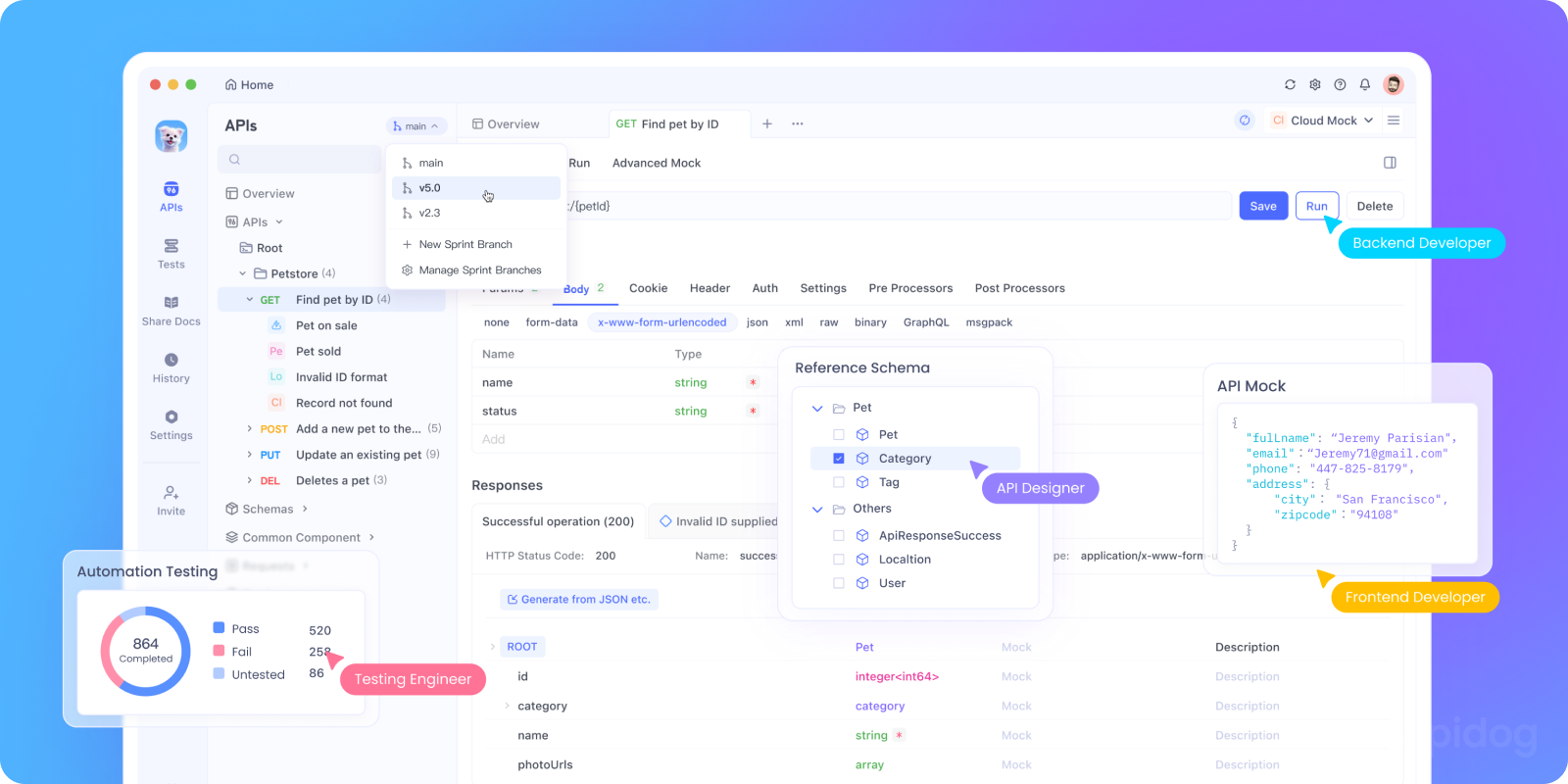
For your starter stack, an integrated platform like Apidog offers compelling advantages:
- Reduced Context Switching: Your team lives in one tool for design, testing, mocks, and docs. This is a huge productivity booster.
- Eliminated Integration Debt: You don't need to build fragile pipelines to sync your OpenAPI spec from a design tool to a testing tool to a docs generator. It's all connected.
- Lower Learning Curve: Your team learns one interface deeply instead of five tools superficially.
- Built-in Collaboration: Comments, version history, and roles are native, designed for the API workflow.
- Cost Effective: One platform subscription is often cheaper than licensing 3-4 separate best-of-breed tools.
Conclusion: Stack for Speed and Quality
Building a starter stack for API lifecycle management isn't about chasing the shiniest tools. It's about intentionally removing friction from your team's most critical workflows.
By starting with a strong, integrated foundation that covers design, mocking, testing, and documentation, you empower your team to build better APIs, faster, and with fewer errors. You shift from a culture of "throwing specs over the wall" to one of continuous collaboration around a living API contract.
This investment pays dividends in accelerated feature delivery, improved developer satisfaction, and higher-quality products. Ready to build your stack? Start with the hub. Download Apidog today and give your team the unified platform they need to master the API lifecycle from day one.