When your development team is spread out — different time zones, locations, varying roles — coordinating changes to APIs can become a challenge. Without a clear process, it’s easy to end up with inconsistent documentation, broken endpoint contracts, or unexpected regressions. A structured API review process ensures that every change is reviewed, discussed, tested, and agreed upon before merging. This reduces misunderstandings between backend, frontend, QA, and other stakeholders — a must for distributed teams seeking reliability and quality.
That’s why treating the API review process seriously — with version control, collaboration, feedback loops, and controlled merging — is essential.
Want an integrated, All-in-One platform for your Developer Team to work together with maximum productivity?
Apidog delivers all your demands, and replaces Postman at a much more affordable price!
Typical Challenges for Distributed API Teams
- Multiple developers editing API definitions simultaneously → conflicting changes.
- Poor or outdated documentation leading to misunderstanding by frontend or third-party users.
- Lack of visibility: team members not aware when APIs change.
- Difficulty coordinating updates, testing, or rollbacks across multiple versions.
- No clear review or approval workflow, leading to mistakes or inconsistencies.
To address these, teams need a shared platform that supports collaboration, versioning, review, and merge control.
How Apidog Enables Robust API Review & Collaboration
Apidog was built with team collaboration in mind. It provides real-time collaboration, branching, versioning, review workflows, comments and merge requests — all of which make API review with distributed teams manageable. Below is how Apidog supports each stage of the process.
Real-Time Collaboration & Shared Editing
- Apidog supports multi-user collaboration with real-time sync — when one person edits an API definition or documentation, others see live updates.
- The editor shows avatars of who are currently editing. Field-level collaboration avoids content conflicts.
- Real-time sync reduces communication overhead — no need to constantly share snapshots or ask who changed what.
Branching and Isolated Development with Sprint Branches
- With Apidog's Sprint Branch feature, each development iteration or team can work on APIs in an isolated branch without affecting the main (production) APIs.
- Developers can update existing endpoints or add new ones in their branch safely. Meanwhile, the main branch remains stable.
- This isolation helps prevent accidental disruption of working APIs while new changes are being designed and reviewed.
Merge Requests and Controlled Integration
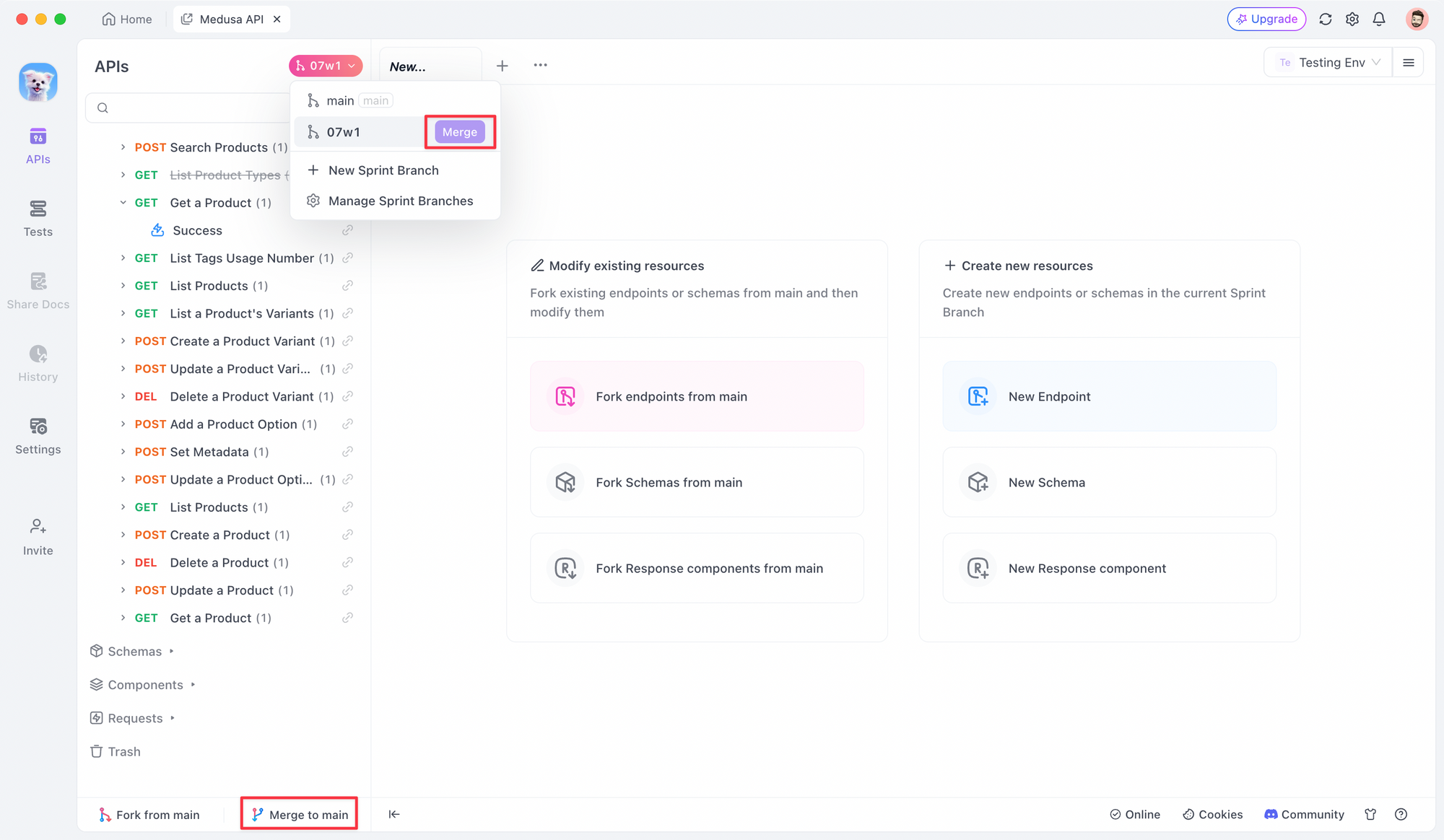
- Once changes in a sprint branch are ready and reviewed, Apidog enables you to merge branch changes to the main branch.
- If the main branch is marked as protected, merges require a Merge Request (MR) and administrator approval before integration — adding a safety gate.
- Merge requests let reviewers inspect all changes (endpoint definitions, schemas, documentation) before accepting them.
API Versioning for Public/Internal Consumers
- Beyond branches, Apidog supports API versioning, enabling teams to maintain different published versions for external or internal users.
- Each version is independent, so changes in one version don't affect others — which is useful for maintaining backward compatibility while working on new versions.
- Users of the API (e.g. third-party integrators, frontend teams) can switch between versions easily, avoiding disruptions when newer versions are introduced.
Documentation, Comments & Feedback
- Apidog supports built-in comments and discussion on API definitions and docs — team members can leave feedback, suggest changes, or ask questions directly where the API is defined.
- These comments provide a traceable review history — ideal for asynchronous teams, where not everyone works at the same time.
- Combined with version history and branch workflows, comments ensure transparency and traceability across changes.
Testing & Mocking — Supporting QA and Frontend in Parallel
- Teams can test APIs defined in a sprint branch without interfering with main APIs — because the branch is isolated.
- Frontend developers can use automatically generated mock data from Apidog to start development immediately, even before the backend is fully implemented.
- QA engineers (or backend devs) can run test cases against branch API definitions, allowing validation and feedback before merge.
In this way, Apidog helps distributed teams collaborate efficiently — from design to review to merge, with documentation, versioning, and feedback built-in.
Recommended API Review Workflow with Apidog (for Distributed Teams)
Here's a practical workflow you can adopt when working in a distributed team:
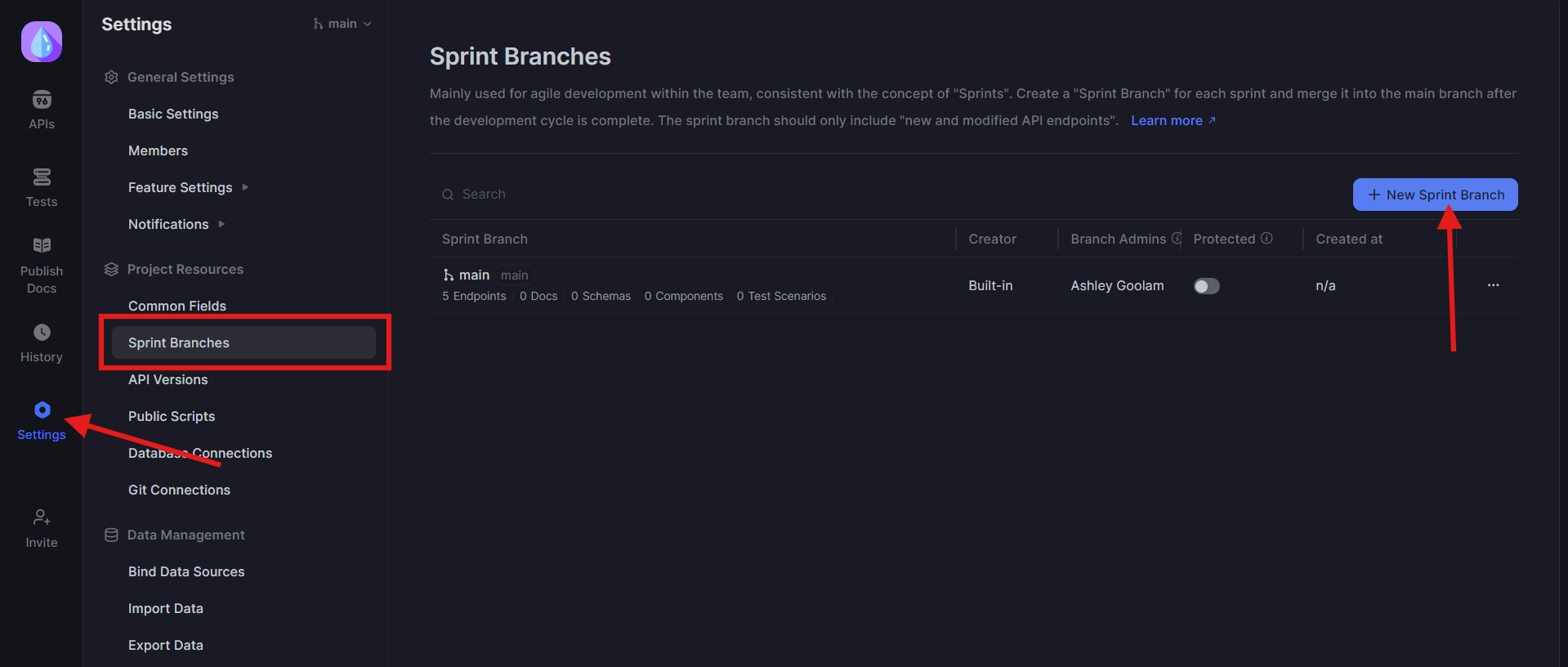
1) Design or propose API changes in a Sprint Branch
- Branch name should reflect feature or ticket (e.g.
feature/cart-v2). - Update or add endpoints, schemas, responses, docs.
2) Team members review & comment
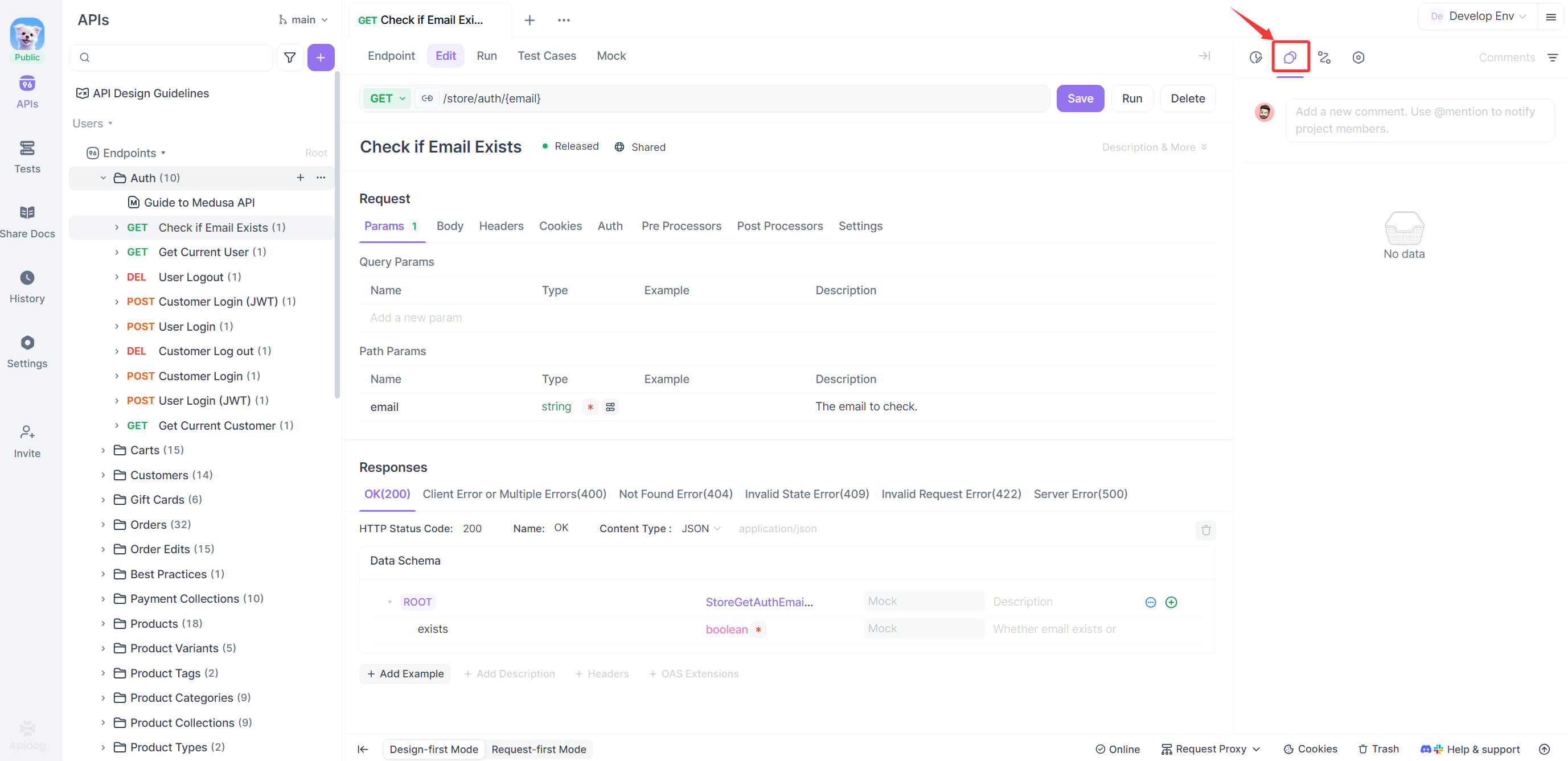
- Use Apidog comments to ask questions, suggest improvements, point out breaking changes or inconsistencies.
- Collaboratively refine documentation and API definitions.
3) Run mock data / test scenarios
- Frontend starts with mock data; QA or backend runs tests against branch definitions.
- Ensure endpoints behave correctly and docs match behaviour.
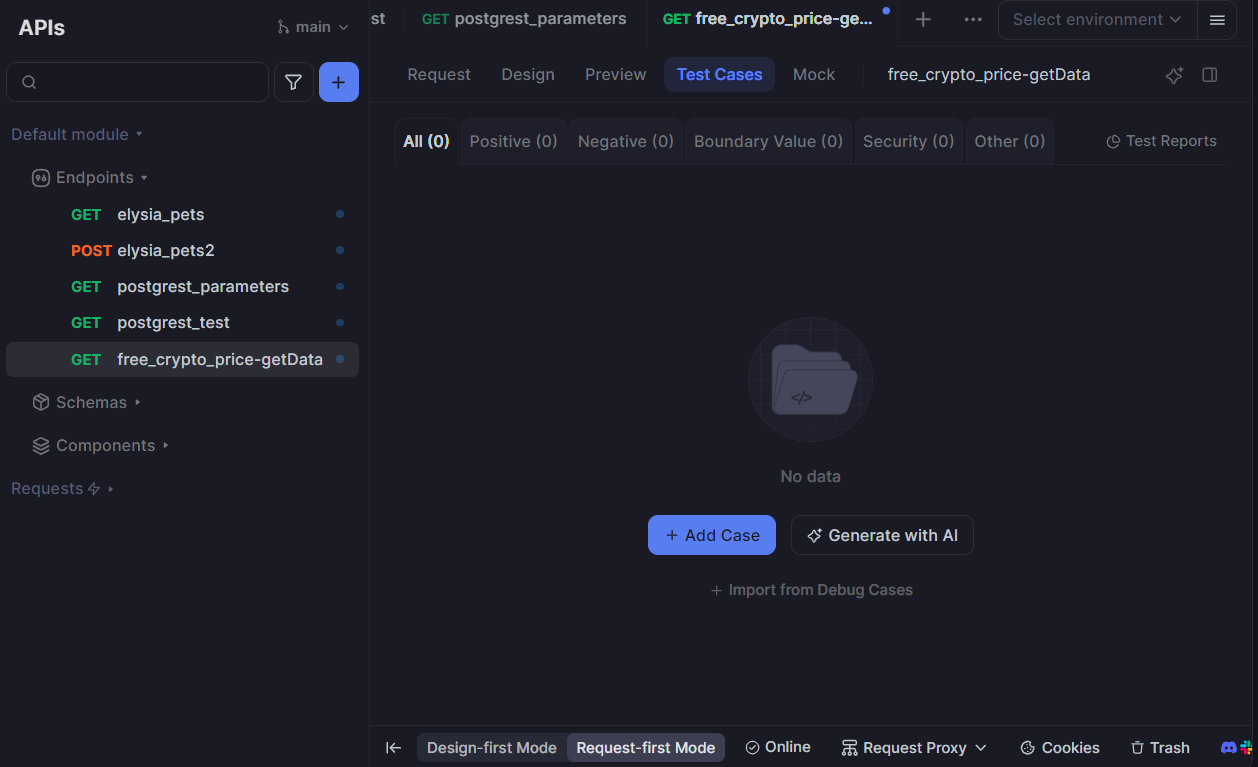
4) When ready — create a Merge Request
- Review diffs between branch and main branch.
- Verify changes are correct, docs are updated, tests pass.
5) Merge into main branch (or publish new version)
- If main is protected → merge after admin approval.
- Optionally, create a new API version if changes are breaking, so external/internal consumers are not disrupted.
6) Announce changes, monitor feedback, and deprecate older versions if needed
- This workflow helps coordinate distributed teams, maintain API stability, and gradually roll out safe changes.
Frequently Asked Questions
Q1. Can multiple team members edit the same API definition simultaneously?
Yes. Apidog supports real-time collaboration with live sync. You will see who is editing, and changes are merged live — minimizing edit conflicts.
Q2. What is the difference between a Sprint Branch and an API Version?
- Sprint Branch — an internal development branch for working on changes or new endpoints before merging to main. Contains only modified or new endpoints.
- API Version — a full snapshot of an API release intended for external or broader consumption. It contains the full set of endpoints at that version, used when backwards compatibility must be maintained.
Q3. Who can approve and merge changes in Apidog?
If the main branch is protected, only project administrators (or those with merge permissions) can approve merge requests. Regular contributors must submit an MR which requires approval before merging.
Q4. Can frontend developers start working before backend is implemented?
Yes — Apidog can auto-generate mock data based on API documentation. Frontend developers can use this mock data while backend development is ongoing, improving parallel workflow.
Q5. What if a change breaks existing consumers — how do we maintain stability?
Use API versioning: after major breaking changes, publish a new API version. Existing consumers can continue using the older version, while new clients adopt the updated one. This ensures stability and backward compatibility.
Conclusion
Managing API review — especially with a distributed team — requires collaboration, versioning, documentation, controlled merging, and clear communication. A tool like Apidog provides precisely the features that distributed teams need: real-time editing, sprint branches for isolated development, merge-request workflows, comment threads for feedback, versioning for external compatibility, and built-in test & mock support for parallel development.
By adopting a structured API review process using Apidog, teams can significantly reduce miscommunication, avoid breaking changes, and ensure that APIs remain stable, well-documented, and easy to consume. For any team working across locations or time zones, this kind of setup is not just convenient — it becomes essential for reliability and scalability.
Want an integrated, All-in-One platform for your Developer Team to work together with maximum productivity?
Apidog delivers all your demands, and replaces Postman at a much more affordable price!