In modern software development, APIs are often the backbone of communication between services, client apps, and external partners. But unless they're well-designed and standardized, APIs can become inconsistent, hard to integrate, and difficult to maintain. That's where the idea of treating your API design as a specification — rather than ad-hoc endpoints — becomes vital. By ensuring your APIs follow the OpenAPI Specification (OAS) standards automatically, you guarantee consistency, clarity, and future-proof interoperability. With tools like Apidog, this process becomes streamlined and largely automated.
In this article, we explore why OpenAPI compliance matters — and how to leverage Apidog’s built-in automation to enforce standards across your API surface and your team.
Want an integrated, All-in-One platform for your Developer Team to work together with maximum productivity?
Apidog delivers all your demands, and replaces Postman at a much more affordable price!
Why OpenAPI Compliance Matters
Using the OpenAPI Specification brings a set of concrete benefits to API providers and consumers alike:
- Consistency and clarity: OpenAPI defines a uniform structure for endpoints, parameters, request/response schemas, and error handling. This consistency reduces ambiguity and makes it easy for developers and teams to understand and rely on the API.
- Automatic documentation & tooling support: From a valid OpenAPI spec, you can auto-generate interactive documentation (In case you don't know: Apidog is good at generating interactive documentation), client SDKs in multiple languages, server stubs, and even test suites — saving significant manual work.
- Improved collaboration and onboarding: With a clear contract defined in OpenAPI, different teams (backend, frontend, QA, product) share the same understanding. New developers can ramp up quickly without combing through code or hidden docs.
- Maintainability and scalability: As your product grows, you may add or update endpoints. With a formal API specification, versioning, backwards-compatibility, and maintenance become easier, reducing risk of breaking clients.
- Faster delivery & less error-prone development: Automated generation of clients, tests, and docs cut down on repetitive boilerplate coding — decreasing human error and speeding up development cycles.
Given these advantages, it's clear why many teams aim for OpenAPI compliance. The key challenge, however, is ensuring that every new or modified endpoint stays compliant — and that's where automation and tooling matter most.
Automating OpenAPI Compliance with Apidog
To make OpenAPI compliance sustainable and frictionless, manual checking isn’t enough. You need tools that bake compliance into the design and release process. Apidog does exactly that. Here is how you can use Apidog to ensure your APIs follow OpenAPI standards automatically:
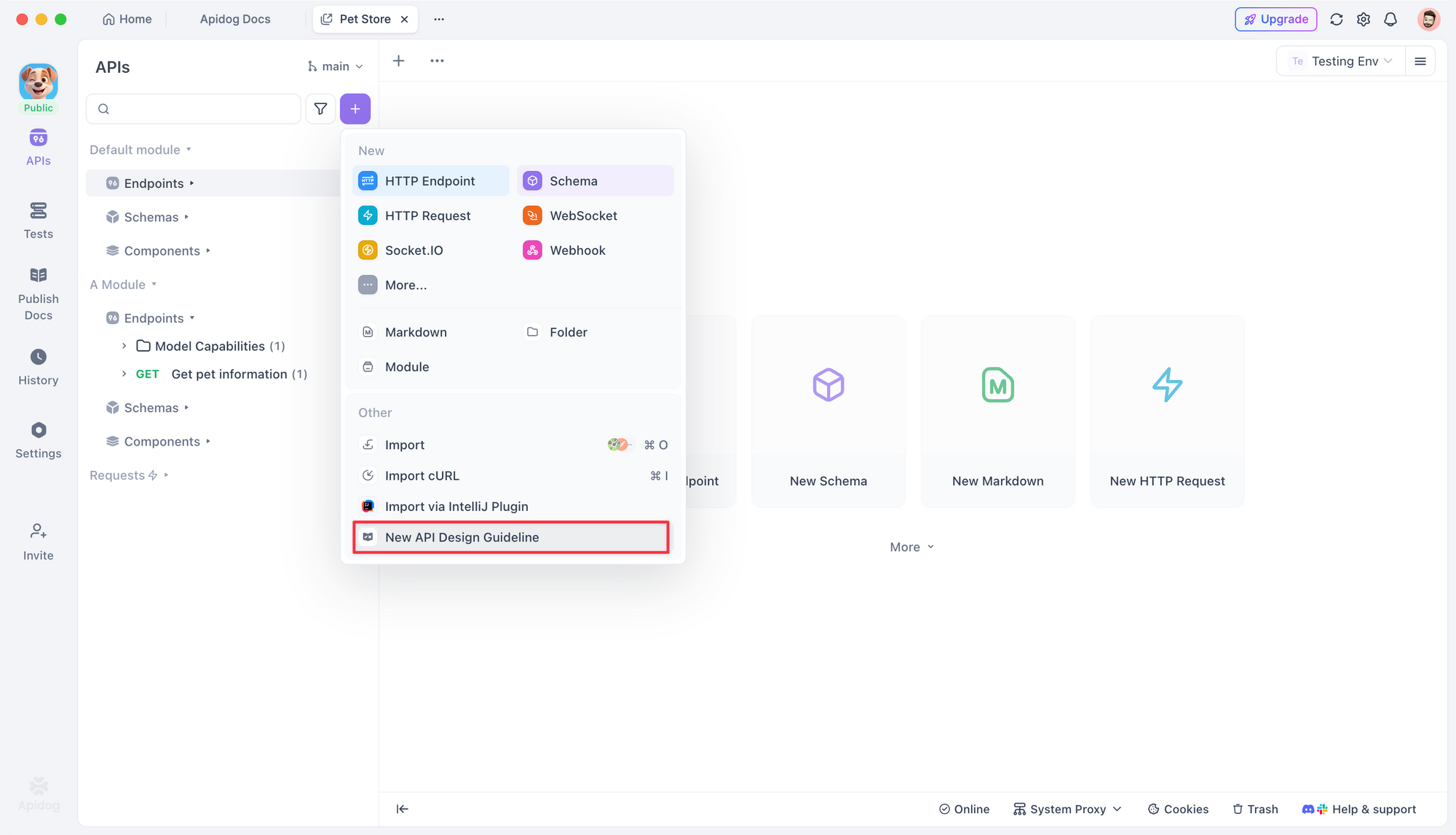
Step 1: Create API Design Guidelines in Your Project
In Apidog, you can create a project-level API design guideline that serves as your team’s standard for API structure and style.
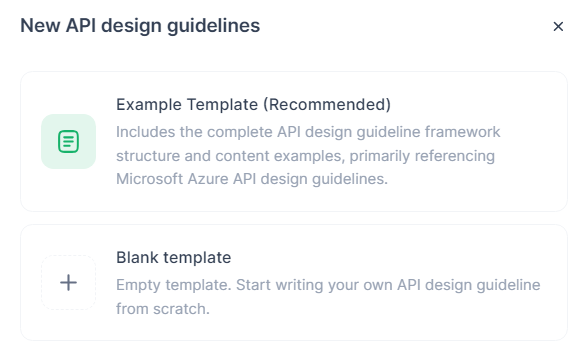
- Use the "Example template", which is based on OpenAPI and built following industry best practices (including recommendations derived from Microsoft’s guidelines).
- Or start with a blank template if your team already has custom conventions — then fill in your preferred naming rules, structure conventions, authentication schemes, response formats, etc.
- Once added, this guideline sits at the top of your project's folder tree, reminding all team members of the standard and serving as a base for automated verification.
With the guideline in place, every subsequent design will follow the same blueprint — providing consistency across the board.
Step 2: Design APIs Using Apidog’s Visual Editor
Using Apidog's design-first workflow, you define endpoints, request methods, parameters, request/response schemas, and metadata — all in a way compliant with OpenAPI principles.
- Paths should begin with a slash (
/), and resource naming should follow a clear, hierarchical structure (e.g./users,/users/{id},/orders/{orderId}/items). This aligns with RESTful and OpenAPI-compliant design.
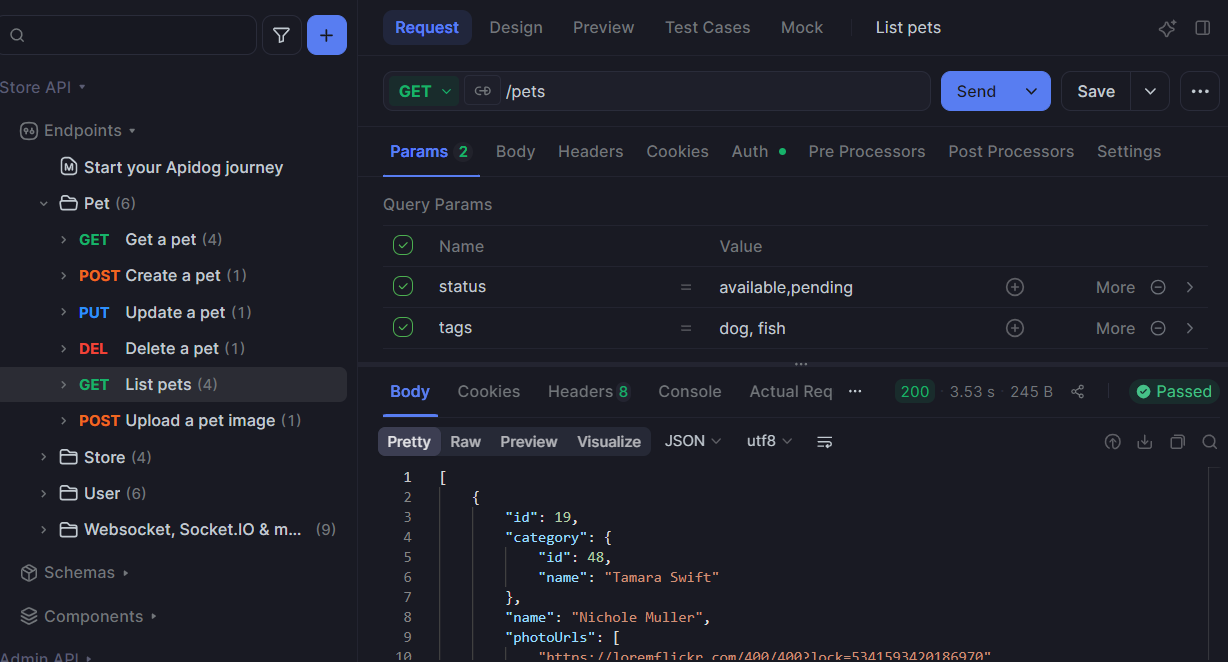
- Define request/response schemas carefully, using JSON schema or Apidog's schema editor for clarity, correctness, and type safety.
- Use reusable components for parameters, response bodies, and error schemas — reducing duplication and ensuring consistency across endpoints.
Because you design first, then implement, you catch structural and specification issues early — before code is written or deployed.
Step 3: Enable Automatic Endpoint Compliance Checking
Once your design guideline is defined and endpoints are created, Apidog's AI-powered endpoint compliance check continuously monitors your API definitions against the guideline and standard OpenAPI rules.
- As you add or modify endpoints, the system validates path structure, method usage, parameter definitions, schema correctness, naming convention and more.
- If any deviation is detected (e.g. path not starting with slash, missing response schema, inconsistent parameter naming), Apidog flags it and often suggests corrective changes.
- This check can occur in real-time if you click on the "AI compliance check" button once you finish designing the APIs — meaning compliance is enforced during design time, rather than relying on post-hoc manual audits.
This automation drastically reduces the risk of mis-designed endpoints slipping into production.
Step 4: Use AI Naming Automation for Consistent Naming
Naming is often a source of inconsistency in APIs (e.g. /get_user, /fetchUser, /userGet). Apidog's AI naming automation helps standardize endpoint names, parameter names, and other identifiers — based on your guideline's naming rules.
This consistency helps in multiple ways: predictable code, easier client generation, fewer misunderstandings — especially in larger teams or public-facing APIs.
Step 5: Generate Documentation, Clients, and Mock Servers Automatically
Once your API definitions are compliant and finalized, you can publish documentation, generate client SDKs/test cases, or even auto-mock APIs for testing or frontend development — all from the same OpenAPI-based spec. Apidog supports a variety of API types (REST, GraphQL, gRPC, WebSocket, etc.).
- For documentation: human-readable & machine-readable docs, interactive request testers, example payloads help users quickly understand and integrate.
- For client code: using the spec to auto–generate SDKs ensures consistency across platforms and reduces boilerplate.
- For testing/mocking: clients can test against a mock server generated from the spec, even before backend implementation is complete — enabling parallel frontend/back-end development.
Because everything originates from a single source (the compliant spec), documentation, client SDKs, tests, and mocks stay synchronized — avoiding divergence and maintenance burden.
Implementing the Workflow — Recommended Best Practices
To make the most of Apidog’s automation and OpenAPI compliance:
- Enable your design guidelines from project start. Compliance works best before endpoints accumulate.
- Use design-first approach. Rather than coding first and documenting later, define specification first, then implement — this reduces mismatches.
- Keep schemas and components DRY. Reuse parameter definitions, error response schemas, reusable objects; avoid duplication and inconsistencies.
- Leverage AI automation features. Let Apidog suggest naming, flag compliance issues, auto-generate docs and client stubs — this saves time and enforces consistency.
- Treat the spec as the source of truth. Whenever API behavior changes, reflect it in the spec first; this ensures docs, clients, and tests stay accurate.
- Use versioning. When making breaking changes, version your API so existing consumers are not broken — and consumers can migrate at their own pace.
Frequently Asked Questions
Q1. What exactly happens if I don't follow OpenAPI standards?
Without OpenAPI-compliant definitions, you lose many automated benefits: documentation may break, client generation may fail, API consumers may misunderstand endpoints, and maintenance or versioning becomes error-prone. Teams often end up with inconsistent APIs, duplication, and manual overhead.
Q2. Can Apidog import existing APIs that aren't documented yet and convert them to valid OpenAPI specs?
Yes. Apidog supports importing existing API definitions (e.g. from OpenAPI-style JSON/YAML, Postman collections, etc.) and converting them into standardized API docs with spec compliance.
Q3. Is OpenAPI relevant beyond REST?
Definitely. While OpenAPI is most commonly used for REST, many teams use it (or similar spec-driven documentation) for GraphQL, gRPC, WebSocket, or other protocols — and Apidog supports multiple API technologies including REST, GraphQL, gRPC, WebSocket, SSE, and more.
Q4. How does OpenAPI compliance affect collaboration across teams?
Because the spec is machine-readable and human-readable, every stakeholder — backend devs, frontend devs, QA, product — can reference the same contract. This reduces misunderstandings, aligns expectations, and allows teams to work in parallel (e.g. frontend against a mock server while backend completes implementation).
Q5. What if I need custom rules or style guides beyond standard OpenAPI conventions?
Apidog's design guidelines feature is flexible: you can start with the example template based on OpenAPI standards, or use a blank template to create your team’s own custom conventions (naming rules, parameter styles, required metadata, etc.). Compliance checks and AI naming will then enforce those custom rules automatically.
Conclusion
Ensuring your APIs follow OpenAPI standards isn’t just about compliance — it’s about reliability, scalability, maintainability, and developer experience. A well-designed, standard-compliant API becomes easier to document, test, integrate, and evolve.
With Apidog, you don’t need to treat compliance as a manual, error-prone chore. Its automation features — design-first workflow, built-in guidelines, real-time compliance checks, AI naming, documentation generation, and client SDK support — transform compliance into a seamless, integrated part of your development process.
If your team builds APIs — whether for internal services, public consumption, or a product platform — adopting OpenAPI standards and using a tool like Apidog can make the difference between a chaotic API ecosystem and a well-organized, maintainable, and developer-friendly API platform.
Want an integrated, All-in-One platform for your Developer Team to work together with maximum productivity?
Apidog delivers all your demands, and replaces Postman at a much more affordable price!