Your development team just shipped three new APIs. One uses camelCase, another prefers snake_case, and the third? Nobody's quite sure what naming convention it follows. Sound familiar?
This scenario plays out daily in organizations worldwide. According to the recent API Report, inconsistent API design remains one of the top three challenges facing development teams, directly impacting integration speed and developer experience.
When APIs lack consistency, the consequences ripple across your entire organization. Integration times double. Documentation becomes confusing. New developers struggle to understand patterns. Technical debt accumulates faster than you can address it.
But here's the good news: leading companies have cracked the code on API design consistency. They've moved beyond hoping developers "just follow the rules" to implementing systematic approaches that guarantee uniformity across hundreds or thousands of endpoints.
How Top Companies Achieve API Design Consistency
The Foundation: Comprehensive API Design Guidelines
Major tech companies don't leave API design to chance. Google, Microsoft, and Stripe all maintain detailed API design guidelines that serve as the single source of truth for their engineering teams.
What makes these guidelines effective?
- Based on industry standards: Most successful guidelines build upon the OpenAPI Specification (OAS), ensuring compatibility with existing tools and frameworks
- Specific and actionable: Vague advice like "use good naming" gets replaced with concrete rules: "Use kebab-case for URL paths, camelCase for JSON properties"
- Living documents: Guidelines evolve as the organization learns, incorporating feedback from real-world usage
- Easily accessible: Teams can reference guidelines directly within their development workflow, not buried in a wiki somewhere
Microsoft's REST API Guidelines, for example, span over 100 pages of detailed specifications covering everything from URL structure to error handling patterns. This level of detail eliminates ambiguity and ensures every team member knows exactly what's expected.
The Enforcement: Automated Compliance Checking
Guidelines alone aren't enough. The most successful organizations pair their standards with automated enforcement mechanisms that catch inconsistencies before they reach production.
Key elements of automated compliance checking:
| Component | Purpose | Impact |
|---|---|---|
| Naming validation | Ensures endpoints follow established patterns | Reduces confusion for API consumers |
| Documentation checks | Verifies completeness of descriptions and examples | Improves developer experience |
| HTTP method validation | Confirms proper use of GET, POST, PUT, DELETE | Prevents semantic errors |
| Response structure analysis | Validates consistent error handling | Simplifies client-side error management |
| Security reviews | Checks authentication requirements | Reduces security vulnerabilities |
Stripe, known for its developer-friendly APIs, runs automated checks on every API change. Their system flags inconsistencies immediately, providing specific feedback about what needs correction and why. This approach has helped them maintain remarkable consistency across their extensive API surface.
The automation removes the burden from code reviewers, who no longer need to memorize every guideline detail. Instead, they can focus on business logic and architectural decisions while the tooling handles consistency enforcement.
API Design Consistency Best Practices That Scale
Start With Standards, Not Scratch
Organizations that build API design consistency from the ground up face a steep learning curve. Smart teams leverage existing standards and adapt them to their needs.
The OpenAPI Specification provides an excellent foundation. It's widely adopted, well-documented, and supported by countless tools. Starting with OAS means your APIs automatically work with popular testing tools, documentation generators, and client SDKs.
Benefits of standards-based approaches:
- Reduced learning curve for new team members familiar with industry standards
- Compatibility with existing tooling ecosystems
- Easier integration with partner organizations using similar standards
- Future-proof architecture as standards evolve
Implement Early, Enforce Consistently
Waiting until you have dozens of inconsistent APIs before establishing guidelines creates massive technical debt. The most successful organizations implement design standards early and enforce them from day one.
Progressive enforcement strategy:
- Define core guidelines covering the most critical aspects (naming, authentication, error handling)
- Apply to new APIs immediately while existing APIs continue operating
- Gradually update legacy APIs during regular maintenance cycles
- Measure compliance rates and address gaps systematically
This approach balances the need for consistency with the reality of existing systems. Teams avoid the impossible task of rewriting everything overnight while steadily improving overall API quality.
Make Compliance Checking Part of Your Workflow
The best compliance tools integrate seamlessly into existing development workflows. Developers shouldn't need to context-switch to a separate application or wait for weekly reports to discover issues.
Modern API design consistency tools provide:
- Real-time feedback as developers write API specifications
- Clear, actionable suggestions explaining what's wrong and how to fix it
- Scoring systems that quantify compliance levels
- Historical tracking showing improvement over time
When compliance checking feels like a natural part of the development process rather than an additional burden, adoption rates soar and consistency improves dramatically.
Ensure API Design Consistency With Apidog: A Step-by-Step Guide
Apidog provides a complete solution for establishing and maintaining API design consistency across your organization. Here's how to implement it effectively.
Step 1: Create Your API Design Guidelines
Navigate to your Apidog project and click the "+" button, then select "New API design guidelines" from the menu.
You'll see two options:
-
Example template (recommended): This comprehensive template is based on the OpenAPI Specification and incorporates Microsoft's API design best practices. It covers naming conventions, HTTP methods, response structures, error handling, and security requirements. For most teams, this template provides an excellent starting point that you can customize as needed.
-
Blank template: Choose this if your organization already has established API standards. The blank template provides the basic structure, allowing you to document your existing practices without starting from scratch.
The design guideline appears at the top of your folder tree, ensuring every team member sees it immediately when opening the project. This prominent placement reinforces the importance of following established standards.
Step 2: Customize Guidelines for Your Team
While the example template covers common scenarios, every organization has unique requirements. Customize your guidelines to reflect your specific needs:
- Add industry-specific naming conventions
- Define custom error codes relevant to your domain
- Specify authentication patterns used across your services
- Document versioning strategies
- Include examples from your actual APIs
The more specific and relevant your guidelines, the more likely developers will follow them. Include rationale for important decisions so team members understand the "why" behind each rule.
Step 3: Run Endpoint Compliance Checks
Once your guidelines are established, Apidog's AI-powered compliance checking ensures every endpoint meets your standards.
From any API documentation page, click the "Endpoint compliance check" button in the upper-right corner. Apidog's AI analyzes your endpoint against your design guidelines, evaluating:
- Naming conventions: Are paths, parameters, and fields following your established patterns?
- Documentation completeness: Do descriptions, examples, and constraints provide sufficient information?
- HTTP method usage: Is each method used appropriately for its semantic meaning?
- Response structure: Does the response format match your standards?
- Security practices: Are authentication and authorization properly configured?
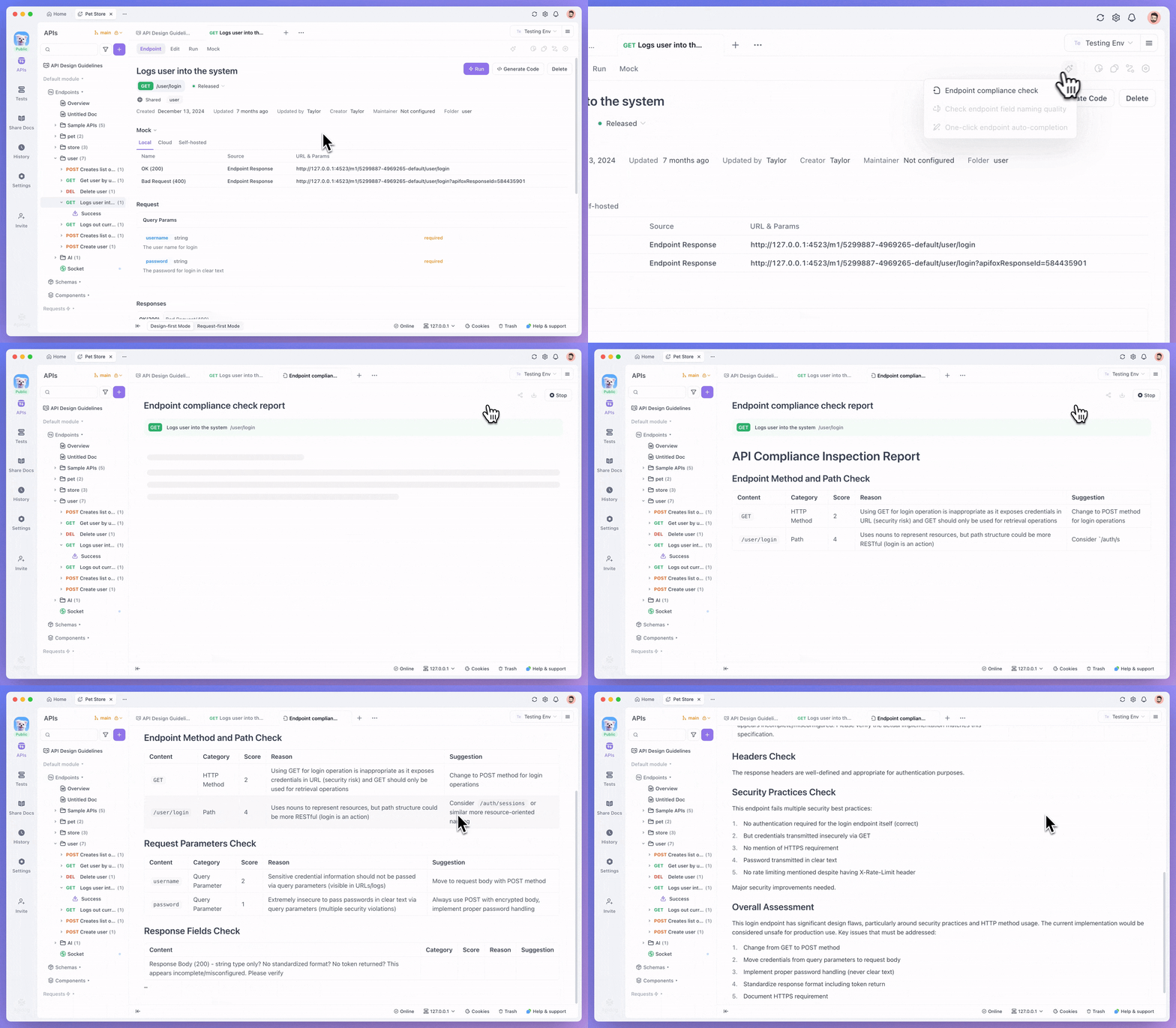
The AI generates a comprehensive report with scores for each criterion, detailed explanations of issues found, and specific suggestions for improvement. This feedback helps developers understand not just what's wrong, but how to fix it and why it matters.
Step 4: Integrate Into Your Development Process
For maximum effectiveness, make compliance checking a regular part of your workflow:
- During design: Check compliance before implementing endpoints to catch issues early
- Before code review: Ensure endpoints meet standards before requesting peer review
- Prior to release: Final compliance check as part of your release checklist
- Regular audits: Periodically review all endpoints to maintain consistency over time
Apidog requires version 2.7.22 or later for these features, ensuring you have access to the latest AI capabilities and compliance checking algorithms.
API Design Consistency Tools: Why Apidog Stands Out
The market offers various API design consistency tools, but Apidog distinguishes itself through several key advantages:
-
AI-powered intelligence: Rather than simple rule matching, Apidog's AI understands context and provides nuanced feedback that considers your specific guidelines and industry best practices.
-
Integrated workflow: Compliance checking happens within the same platform where you design, document, and test APIs. No context switching or separate tools to manage.
-
Customizable standards: Unlike rigid tools that enforce a single approach, Apidog adapts to your organization's specific needs while providing excellent defaults based on industry standards.
-
Actionable feedback: Reports don't just identify problems—they explain why something matters and suggest specific improvements, helping developers learn and improve over time.
-
Team collaboration: Guidelines and compliance reports are shared across your team, ensuring everyone works from the same standards and can see progress toward consistency goals.
The Business Impact of API Design Consistency
Implementing systematic API design consistency delivers measurable business value:
-
Faster integration: Developers spend less time deciphering inconsistent patterns and more time building features. Integration times can drop by 40% or more when APIs follow predictable patterns.
-
Reduced support burden: Consistent APIs are easier to understand and use correctly, leading to fewer support tickets and questions from internal teams and external partners.
-
Improved developer experience: Whether serving internal teams or external developers, consistent APIs create positive experiences that drive adoption and satisfaction.
-
Lower maintenance costs: Standardized patterns make it easier to update, refactor, and maintain APIs over time. Technical debt accumulates more slowly when consistency is enforced from the start.
-
Accelerated onboarding: New team members become productive faster when they can learn one set of patterns that apply across all APIs rather than memorizing dozens of different approaches.
Conclusion
API design consistency isn't a luxury—it's a necessity for modern development teams. As organizations scale and API portfolios grow, the cost of inconsistency compounds rapidly. What starts as minor naming differences evolves into integration nightmares, documentation confusion, and mounting technical debt.
The good news? You don't need to solve this problem alone. Leading companies have proven that combining comprehensive design guidelines with automated compliance checking creates sustainable consistency that scales across hundreds of teams and thousands of endpoints.
Apidog brings enterprise-grade API design consistency within reach of every development team. Whether you're managing five APIs or five hundred, the platform provides the guidelines, automation, and AI-powered insights needed to maintain professional standards across your entire API portfolio.
Start with the comprehensive template based on OpenAPI Specification and Microsoft's best practices. Customize it to match your team's needs. Then let AI-powered compliance checking catch issues before they reach production. Your future self—and your API consumers—will thank you.
Ready to transform your API design process? Try Apidog free and experience the difference that true consistency makes.