If you've ever worked on an API project with more than one person, you know the pain. Someone updates an endpoint and forgets to tell the team. The frontend team is testing against yesterday's API spec while the backend team has already moved on. Documentation is scattered across emails, Slack messages, and Google Docs. And when it's time to release v2 of your API? Absolute chaos.
The problem isn't a lack of tools it's a lack of integration. You need a solution that handles both collaboration and evolution seamlessly. A place where your API can live, grow, and be shared without breaking everything (and everyone's sanity).
That solution is Apidog.
Think of Apidog not just as an API testing tool, but as a collaborative workspace for your entire API lifecycle. It's where design, testing, documentation, and crucially sharing and versioning come together in one intuitive platform.
Now, let's dive into exactly how Apidog handles the two biggest challenges in API development: sharing collections with your team and managing multiple versions without headaches.
Shared API Collections: Breaking Down the Silos
Before we talk about the how, let's talk about the why. Why is sharing API collections so painfully difficult with traditional tools?
The Old Way (The Problem):
- Backend Dev, Alice, creates a Postman collection.
- She exports it as a JSON file.
- She emails it to Frontend Dev, Bob (or worse, uploads it to a random Slack channel).
- Bob imports it. Alice makes a change.
- The cycle repeats. Soon, Bob is testing against an outdated schema, Alice is frustrated, and bugs creep in.
This is where Apidog's collaborative foundation changes everything.
Apidog's Solution: Workspaces and Real-Time Collaboration
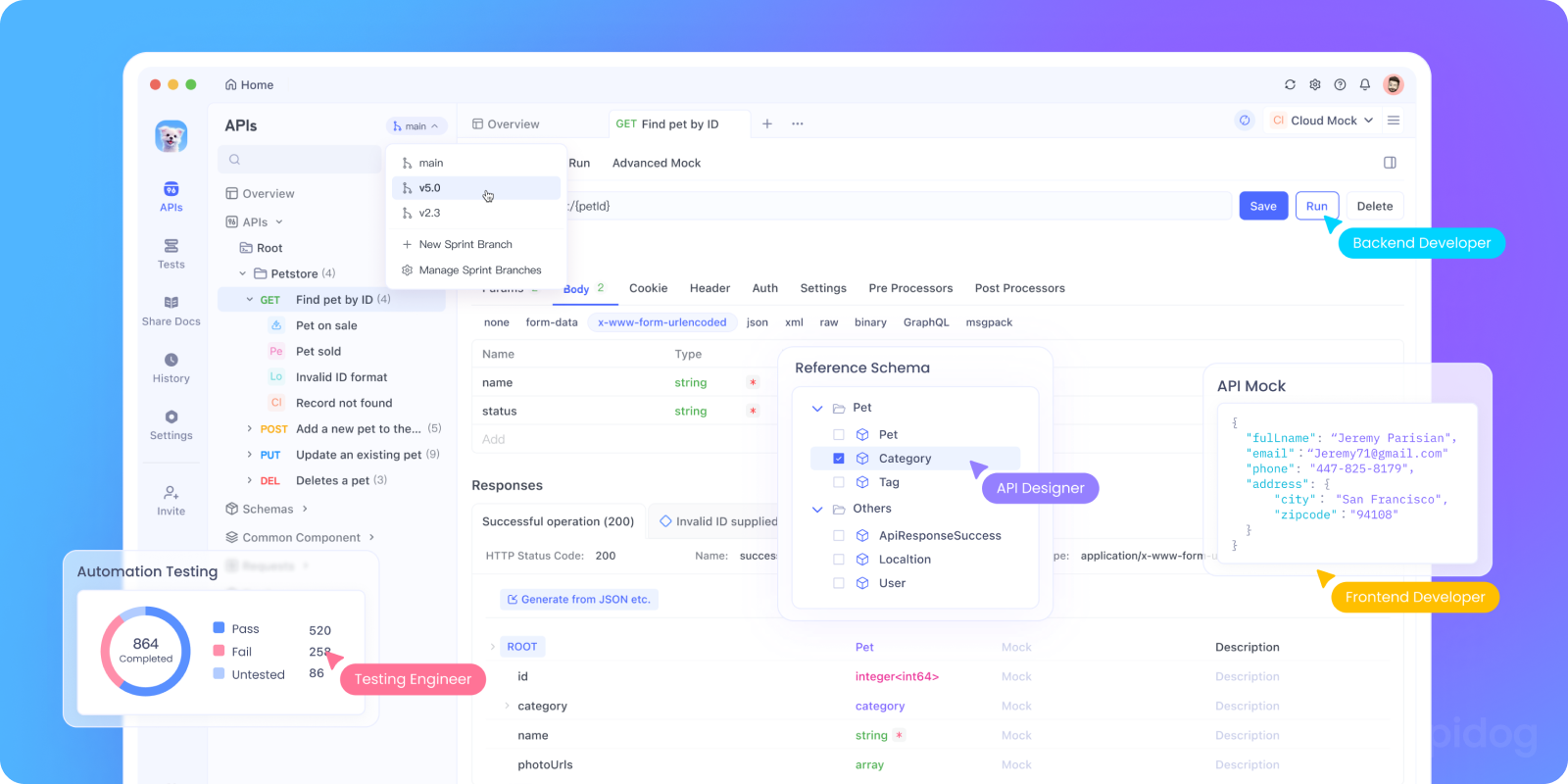
Apidog is built around the concept of Team Workspaces. When you create an API project in Apidog, it doesn't live on your local machine. It lives in a shared cloud workspace that your entire team can access.
- Single Source of Truth: There is only one, always-up-to-date definition of your API. No more "Which version of the collection do you have?"
- Role-Based Permissions: You can control who can view, edit, or manage the API designs. Junior developers can view and test, leads can edit, and architects can manage the overall structure.
- Real-Time Updates: When a team member adds a new endpoint or updates a parameter, the change is reflected for everyone instantly.
This foundational approach eliminates the basic friction of "getting everyone on the same page."
The Game-Changer: Quick Share for Instant Collaboration
But what about external collaborators? Contractors, clients, or partner teams that aren't in your main workspace? This is where one of Apidog's most powerful features shines: Quick Share.
The Quick Share feature is designed for low-friction, secure sharing outside your core team. Imagine you need to get feedback on a specific API endpoint from a product manager or show a potential integration to a partner. Instead of granting them full workspace access, you can generate a shareable link.
How it works:
- You select the endpoints or entire folders you want to share.
- Apidog generates a unique, secure URL.
- You send this link to the external party.
- They can view the API documentation, examine the request/response structures, and even use the built-in "Try it out" console to make live calls (if you permit it).
The beauty of Quick Share is its precision and control. You're not sharing your entire API universe—just the relevant slice. It's perfect for:
- Getting focused feedback on new endpoints
- Onboarding new team members with specific modules
- Providing integration specs to third-party developers
- Creating public-facing documentation for specific API features
This transforms API collaboration from a cumbersome process of export-import-email into a simple, secure link.
API Versioning: Evolution Without Breaking Things

Now, let's tackle the second beast: versioning. Your API is a living contract. As your product grows, this contract must evolve. But how do you evolve it without breaking every existing mobile app, integration, and dashboard that depends on it?
The answer is disciplined API versioning, and Apidog provides a first-class system to manage it.
Why Versioning is Non-Negotiable
Without a versioning strategy, you're faced with terrible choices:
- Force everyone to update immediately (angry users, broken integrations).
- Never change your API (stagnation, technical debt).
- Make backwards-incompatible changes quietly (chaos, loss of trust).
A proper versioning strategy allows you to:
- Introduce new features without breaking old ones.
- Deprecate old functionality gracefully with clear timelines.
- Maintain multiple versions in parallel to support different client lifecycles.
Apidog's Versioning Workflow: Clarity and Control
Apidog doesn't just let you label different versions; it provides a structured workflow for creating, managing, and sharing them.
Step 1: Create API Versions
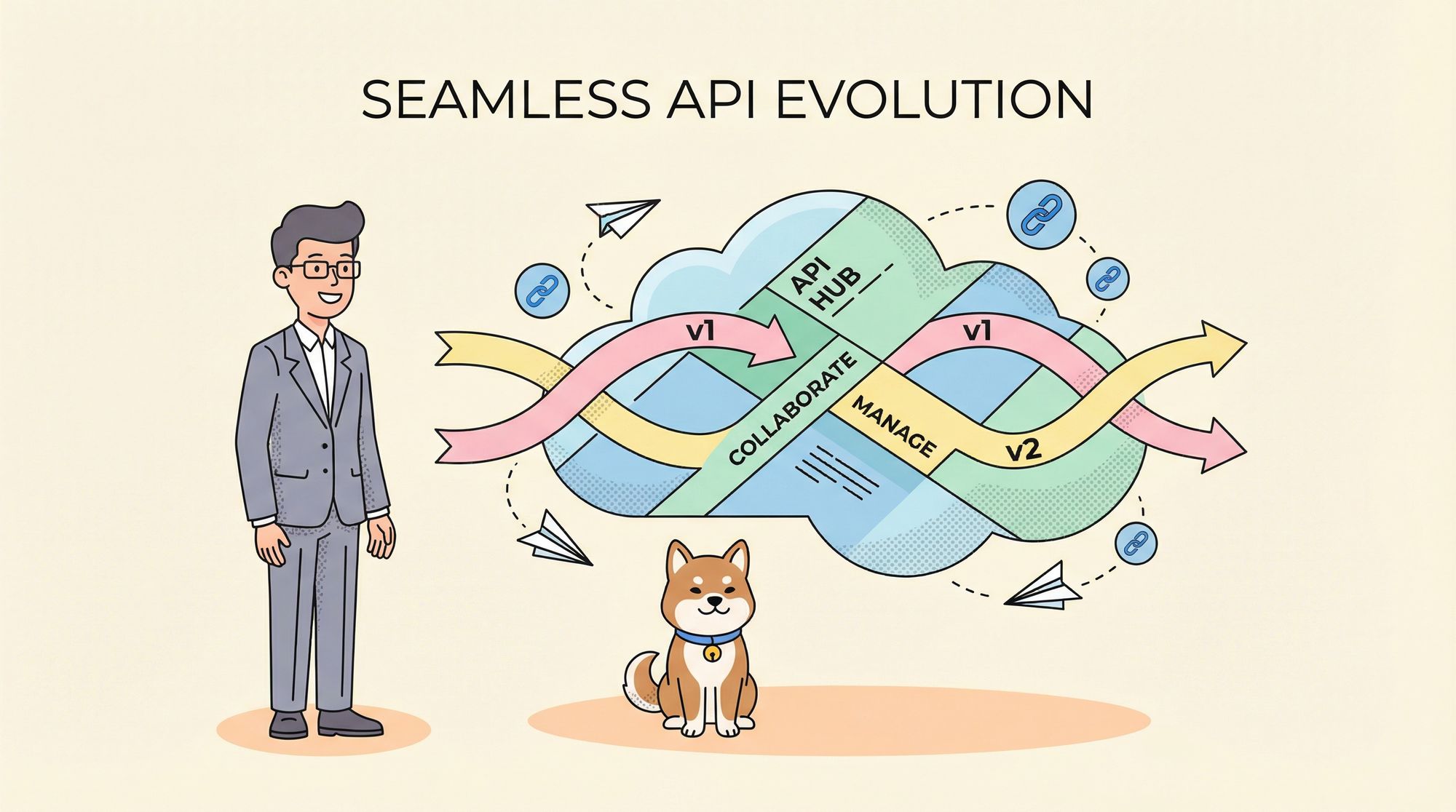
Creating a new version in Apidog is a deliberate, documented action. You don't just copy and paste. You can create a new version (e.g., v2) from an existing one (v1). Apidog intelligently manages the relationship between them. This creates a clear lineage and makes it easy to see what has changed from one version to the next.
Step 2: Develop and Refine Within the Version
Once v2 is created, your team can work within that version's context. You can:
- Add new endpoints that will only exist in
v2. - Modify existing endpoints (e.g., add a new required field, change a response structure).
- Mark
v1endpoints as deprecated directly within thev2design, adding deprecation notes and sunset dates.
All this work happens in the collaborative workspace, so everyone knows they are working on the v2 branch of the API contract.
Step 3: Publish API Versions
When your v2 API is ready for consumers, you publish the version. Publishing in Apidog does a few critical things:
- It creates a stable, snapshot-like documentation portal for that specific version (e.g.,
https://api.yourcompany.com/docs/v2). - It makes the API definition for that version available for sharing and consumption.
- It signals to your team that this version is now "live" and should be treated as the current stable target for that version branch.
You can have multiple versions published simultaneously. v1 docs remain active for your legacy users, while v2 docs serve your early adopters.
Sharing Specific API Versions
This is where Apidog's sharing and versioning features combine powerfully. Remember the Quick Share feature? It works hand-in-hand with versioning.
You can share endpoints with specific API versions.
Why is this so powerful? Let's say a partner is integrating with your service. They built against v1 a year ago. You can send them a Quick Share link that points specifically to the v1 documentation. They won't be confused by new v2 endpoints or changes. They see exactly the API surface they depend on.
Conversely, for a new partner, you can share a v2 link. They get the modern, full-featured API without any of the legacy cruft.
This precision eliminates support headaches and confusion. Everyone sees the API version that's relevant to them.
Conclusion: From Chaos to Control
API development is a team sport that stretches over time. The tools that served us for solo testing break down under the weight of collaboration and evolution.
Apidog recognizes this reality. It's built for the modern API lifecycle where sharing and versioning aren't afterthoughts they're fundamental requirements. By combining real-time collaborative workspaces, precise sharing with Quick Share, and a robust, built-in versioning system, Apidog provides the control center your API team has been missing.
Stop wrestling with disjointed tools and chaotic processes. Download Apidog for free today, and transform how your team builds, shares, and evolves APIs together.