
If you’ve ever looked at a block of code and thought, “I wonder what would happen if this condition doesn’t get tested,” then you are already thinking like a white box tester. While many Quality Assurance professionals focus on what users see, however, White Box Testing dives into what users never see: the internal structure, logic, and pathways that make the software work. It’s the difference between checking if a light turns on and verifying that every wire inside the wall is properly connected.
This guide will show you how to approach White Box Testing with confidence, even if you’re more comfortable with test cases rather than code reviews. We’ll cover the essential techniques, practical best practices, and tools that make white box testing manageable for modern development teams.
What is White Box Testing and Why It Matters
White Box Testing, also known as clear box or structural testing, examines the internal workings of an application. Unlike black box testing, where you only care about inputs and outputs, white box testing requires knowledge of the code, architecture, and data flows. You’re testing the implementation itself.
Why does this matter? Because not all bugs show up in the user interface. A function might return the correct answer but take 100 times longer than it should. An error handler might exist but never execute because the condition that triggers it is impossible to reach. A security vulnerability might lurk in a code path that normal testing never touches. White Box Testing finds these hidden defects by making the invisible visible.
The approach also improves code quality proactively. When developers know their code will undergo white box scrutiny, they write more testable, modular functions. It creates a feedback loop where testing influences design for the better.
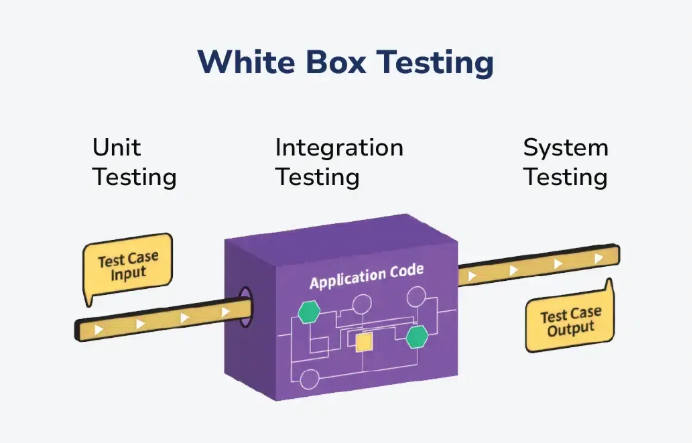
Core Techniques of White Box Testing Every Tester Should Know
Mastering White Box Testing means understanding these five fundamental techniques. Each targets a different aspect of code structure.
1. Statement Coverage
Statement coverage verifies that every executable line of code runs at least once during testing. It’s the baseline metric for white box testing—if a line never executes, you can’t claim it’s been tested.
Consider a simple function that validates passwords:
function validatePassword(password) {
    if (password.length < 8) {  // Line 2
        return false;            // Line 3
    }
    if (!/[A-Z]/.test(password)) { // Line 5
        return false;            // Line 6
    }
    return true;                 // Line 8
}
To achieve 100% statement coverage, you need test data that executes all lines:
"short"triggers line 3"longenough"triggers line 6"LongEnough"triggers line 8
While statement coverage is easy to measure, it’s deceptive. You can hit every line without testing all logical paths. That’s why you need stronger techniques.
2. Branch Coverage
Branch coverage ensures every decision point evaluates to both true and false. It answers the question: “Have we tested both sides of every if statement?”
Using the same password validator, branch coverage requires:
- A password that fails the length check (true branch of line 2)
- A password that passes length but fails the uppercase check (true branch of line 5)
- A password that passes both checks (false branches of both conditions)
Statement coverage might let you skip testing the false branch of an if statement if it contains no executable lines. Branch coverage forces you to test both paths, catching logic errors where missing else clauses cause silent failures.
3. Path Coverage
Path coverage tests every possible route through the code, including loops and nested conditions. For complex functions with multiple decision points, the number of paths grows exponentially.
Imagine a function with three consecutive if statements. Each has two outcomes, creating 2³ = 8 possible paths. White Box Testing using path coverage requires test data for each unique sequence:
- All conditions true
- First false, others true
- First true, second false, third true
- And so on...
This technique finds subtle bugs where interactions between conditions create unexpected behavior. However, achieving 100% path coverage is often impractical for complex code. You must prioritize critical paths and those with high cyclomatic complexity.
4. Modified Condition/Decision Coverage (MC/DC)
MC/DC is the gold standard for safety-critical systems like aviation and medical devices. It requires that each condition in a decision independently affects the outcome.
Consider this logic: if (A && (B || C))
MC/DC demands test cases where:
- Changing A changes the result while B and C remain fixed
- Changing B changes the result while A and C remain fixed
- Changing C changes the result while A and B remain fixed
This rigorous White Box Testing technique ensures no condition is redundant or masked by others. While overkill for most web applications, it’s essential when software failure risks lives.
5. Data Flow Testing
Data flow testing tracks how variables are defined and used throughout code. It identifies bugs like:
- Define-use anomalies: A variable is used before being assigned a value
- Dead code: A variable is defined but never used
- Incorrect definitions: A value is overwritten incorrectly
For example, if a function calculates total = price * quantity but quantity is never initialized, data flow analysis catches this before execution. Modern IDEs perform basic data flow checking, but systematic White Box Testing using this technique finds deeper issues in complex algorithms.
Best Practices for Effective White Box Testing
Techniques alone won’t guarantee success. Follow these practices to make White Box Testing sustainable and valuable:
- Start Early, Test Often: Integrate white box tests into your CI/CD pipeline. Run coverage analysis on every pull request. Catching issues during code review is 10x cheaper than finding them in QA.
- Set Realistic Coverage Goals: 100% statement coverage is achievable. 100% path coverage is usually not. Set targets based on risk: 80% statement coverage for utility code, 90% for business logic, 100% MC/DC for safety-critical modules.
- Test One Thing at a Time: Each unit test should validate one function or one method. When a test fails, you should know exactly what broke without debugging cascading effects.
- Mock External Dependencies: White Box Testing focuses on your code, not external services. Mock databases, APIs, and file systems to isolate the unit under test. This makes tests fast and reliable.
- Review Coverage Reports Critically: High coverage numbers can mislead. A function with 95% statement coverage might have zero tests for its error handling path. Always review uncovered lines to assess risk, not just percentages.
Tools That Support White Box Testing
Modern development environments make White Box Testing accessible. IntelliJ IDEA and Visual Studio provide built-in code coverage tools that highlight untested lines as you write code. JaCoCo for Java and Coverage.py for Python integrate with CI/CD to enforce coverage gates.

For API-level White Box Testing, where you examine request/response flows, headers, and payload structures, Apidog provides powerful automation. While traditional white box testing focuses on code, API testing requires examining the internal structure of your service architecture—endpoints, parameters, authentication flows, and data transformations.
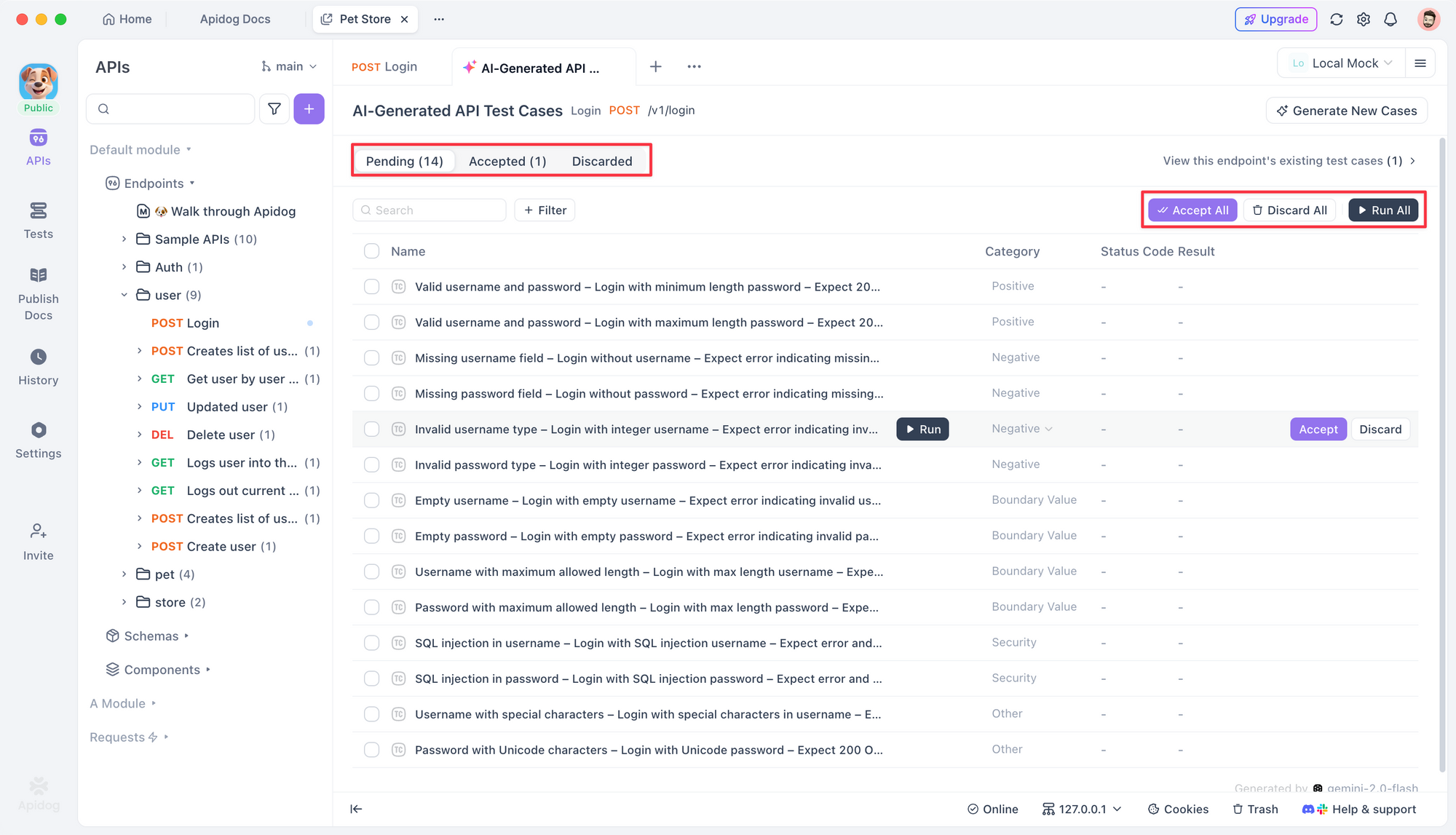
Apidog analyzes your API specifications and generates test cases that validate each component of your API’s internal logic. It checks that query parameters are correctly validated, that response schemas match definitions, and that error codes are properly returned for invalid inputs. This is White Box Testing at the API layer—you’re testing the implementation details of your service contract.
When your API changes, Apidog identifies affected tests and suggests updates, maintaining coverage without manual review. For teams building microservices, this automation ensures internal API logic remains tested as architectures grow complex.
Frequently Asked Questions
Q1: How is White Box Testing different from unit testing?
Ans: Unit testing is a type of White Box Testing. White box testing is the broader methodology that includes unit, integration, and API testing where you examine internal structure. Unit testing specifically focuses on individual functions or methods in isolation.
Q2: Can non-developers perform White Box Testing?
Ans: Not effectively. White Box Testing requires reading and understanding code, which demands programming knowledge. However, testers can learn these skills. Many QA professionals transition to automation engineering by mastering white box techniques for the APIs and services they test.
Q3: What coverage metric should we target for production code?
Ans: Aim for 80-90% statement coverage with 70-80% branch coverage for most business applications. Higher coverage yields diminishing returns. Focus on covering critical paths and error handling rather than chasing 100% for its own sake.
Q4: Does White Box Testing replace Black Box Testing?
Ans: No. They complement each other. White Box Testing ensures the code is structurally sound. Black box testing validates that it meets user needs. A function can pass all white box tests but still solve the wrong problem. Use both for comprehensive quality assurance.
Q5: How does Apidog handle white box testing for complex authentication flows?
Ans: Apidog analyzes your API’s authentication scheme—OAuth 2.0, JWT, API keys—and generates tests that validate token generation, refresh, expiration, and scope verification. It creates test cases for each authentication path, ensuring your security implementation behaves correctly under various conditions, which is a critical White Box Testing concern for APIs.
Conclusion
White Box Testing transforms testing from surface-level validation to deep quality assurance. By systematically applying statement, branch, path, MC/DC, and data flow techniques, you find defects that hide in code structure—not just in user interface behavior. The approach demands technical skill but rewards you with confidence that your software’s foundation is solid.
Modern tools lower the barrier to entry. IDE-integrated coverage tools provide instant feedback. Platforms like Apidog automate API white box testing at scale. But tools amplify technique, they don’t replace it. Master the fundamentals first, then leverage automation to extend your reach.
Start today. Pick a critical function in your codebase, write tests to achieve branch coverage, and review what you learned. That single exercise will reveal more about your code’s quality than a dozen black box test sessions. White Box Testing isn’t just for developers—it’s for anyone committed to shipping software that works correctly, not just software that appears to work.