TL;DR
Vonage SMS API pricing starts at $0.00809 per outbound message and $0.00649 per inbound message in the US. There's no monthly minimum, so you pay only for what you send and receive. International rates vary by country and can exceed $1.00 per message in some markets. If you're building or testing a Vonage SMS integration, Apidog makes it easy to send test requests, validate responses, and catch errors before your code ships.
Introduction
If you've heard of Nexmo, you already know Vonage. In 2016, Vonage acquired Nexmo, a developer-focused SMS and communications API platform. The Nexmo brand stuck around for years in developer circles, and you'll still see developer.vonage.com (formerly nexmo.com/developers) serving as the technical hub. In 2022, Ericsson completed its acquisition of Vonage, folding it into a global telecom powerhouse while keeping the Vonage brand intact for the API business.
Today, Vonage serves more than 100,000 businesses and has 1.6 million registered developers building on its APIs. It's a mature platform with a pay-as-you-go pricing model, no lock-in contracts, and coverage across 190+ countries.
Vonage SMS pricing overview
Vonage uses a pay-as-you-go model for its SMS API. You don't pay a platform fee or monthly subscription to get started. You pay per message, and rates depend on the destination country and number type.
Here's a quick overview of the key pricing tiers in the United States:
| Message type | Price per message |
|---|---|
| Outbound SMS (US LVN) | $0.00809 |
| Inbound SMS (US LVN) | $0.00649 |
| Outbound SMS (US Toll-Free) | Contact sales |
| Inbound SMS (US Toll-Free) | Free |
LVN stands for Local Virtual Number, which is Vonage's term for a standard 10-digit long code (10DLC). Rates are set per-country, and the platform calculates your bill in real time based on actual usage.
Vonage publishes a global pricing sheet in Excel format, downloadable from your Nexmo/Vonage dashboard. It covers every supported country so you can plan costs for international campaigns.
Pricing breakdown: outbound, inbound, MMS, and WhatsApp
Outbound SMS
Outbound messages are what you send from your application to end users. The US rate sits at $0.00809 per message when sending from a local virtual number. This is the base rate from the Vonage pricing page, as of early 2026.
Third-party reviews cite slightly varying figures due to when they were last updated. The official dashboard is always the authoritative source for current rates.
Inbound SMS
Inbound messages are SMS received on a Vonage number you've rented. In the US, you pay $0.00649 per inbound message. Some toll-free numbers receive inbound SMS for free, but you need to verify this on your account before relying on it.
MMS pricing
Vonage does support MMS via its Messages API. However, it doesn't publish a flat per-message rate for MMS publicly. You need to contact the sales team for MMS pricing. This is common with carriers because MMS rates depend on the carrier agreements in each market.
WhatsApp via Vonage
Vonage supports WhatsApp messaging through its Messages API. There are two fees to understand:
- WhatsApp's fee: Meta charges per delivered message. Rates differ by conversation category (marketing, utility, authentication, or service). Check Meta's WhatsApp pricing page for current rates.
- Vonage platform fee: Vonage adds its own per-message fee on top. This starts as low as $0.00015 per message and varies based on the message category and volume.
Facebook Messenger
Vonage supports Facebook Messenger messages at $0.0011 per delivered message, billed through the Messages API.
RCS (Rich Communication Services)
Vonage now supports RCS messaging with carrier-specific rates in the US:
| Carrier | RCS Rich (text-based) | RCS Rich Media |
|---|---|---|
| T-Mobile | $0.00620 | $0.01250 |
| Verizon | $0.00400 | $0.00600 |
| AT&T | $0.00450 | $0.01000 |
| US Cellular | $0.00620 | $0.01350 |
There's also a one-time country setup fee of $600 per country for RCS.
What affects your Vonage bill
Several variables drive your monthly costs up or down. Here's what matters most.
Destination country
This is the biggest cost driver. A message to the US costs fractions of a cent. A message to a low-connectivity market in Africa or Southeast Asia can cost $0.50 or more per SMS. Always check the global pricing sheet before planning a campaign.
Number type
Vonage offers three number types in the US:
- Long code (10DLC): Standard local numbers. Most affordable for P2P and application-to-person messaging.
- Toll-free numbers: Higher throughput for A2P (application-to-person) campaigns. Inbound is often free.
- Short codes: High-volume marketing. Require pre-approval and carrier registration.
Each type carries different per-message rates. Short codes typically cost the most per number rental but handle high message volumes.
Number rental fees
Renting a Vonage virtual number costs extra. US local numbers start at a few dollars per month. Toll-free numbers and short codes cost more. These fees sit on top of your per-message usage costs.
Message encoding
A standard SMS is 160 characters using GSM-7 encoding. If your message includes Unicode characters (emoji, certain accented letters), each SMS drops to 70 characters. A 200-character Unicode message counts as three messages. This can triple your messaging costs if you're not careful.
Carrier surcharges
US carriers increasingly add their own surcharges on top of CPaaS provider rates, especially for A2P messaging over 10DLC. Vonage passes these fees through. You'll see them listed on your monthly invoice.
Hidden costs to watch for
Vonage's per-message pricing is transparent, but several other costs can catch you off guard.
Support tiers
The free tier gets you community forums and documentation. Business support requires a paid plan. Premium support, which includes 24/7 phone access and a dedicated account manager, costs $3,300 per month. If your SMS flows are customer-facing and time-sensitive, this is worth budgeting for.
Add-on APIs
Several Vonage APIs charge additional monthly fees:
| Add-on | Monthly cost |
|---|---|
| Audit API | $550/month |
| Auto-redact (PII removal) | $1,100/month |
| Reports API | $495/month (or $0.00049/CDR pay-as-you-go) |
The Audit API is useful for compliance-heavy industries. Auto-redact automatically strips PII from your call and message logs.
Verify API costs
If you use Vonage's Verify API for two-factor authentication, you pay $0.0572 per successful verification (plus messaging and voice rates for the attempts). Failed verifications still generate messaging costs.
Number registration (US 10DLC)
If you send A2P SMS in the US using long codes, you must register your campaign with The Campaign Registry (TCR). Vonage passes these registration fees through:
- Brand registration: one-time fee
- Campaign registration: recurring monthly fee per campaign
These are mandated by US carriers. Failing to register will result in message filtering.
Vonage vs alternatives
Here's how Vonage compares to the main competitors on US outbound SMS pricing:
| Provider | US outbound SMS | US inbound SMS | Free trial | Support |
|---|---|---|---|---|
| Vonage | $0.00809 | $0.00649 | Yes (verified numbers only) | Paid tiers; $3,300/mo for 24/7 |
| Twilio | $0.0079 | $0.0075 | Yes ($15 credit) | Paid support from $250/mo |
| Plivo | $0.0055 | $0.0005 | Yes | Free basic; paid tiers |
| Telnyx | $0.004 | $0.002 | Yes ($5 credit) | 24/7 email free; phone with paid |
A few things to note:
- Telnyx is the cheapest option for US messaging by a wide margin, but it's a newer platform with a smaller support organization.
- Plivo offers competitive inbound pricing and has a solid developer reputation.
- Twilio has the largest ecosystem, most integrations, and the most mature documentation, but you pay a premium for that.
- Vonage sits in the middle on price, and its acquisition by Ericsson gives it carrier-level relationships that smaller providers lack.
Price per message is rarely the only factor. Consider delivery rates, regulatory compliance support, developer tooling quality, and the ability to get help when something breaks.
How to try Vonage for free
Vonage offers a free trial account. Here's what you get and what's restricted.
What you get
- A Vonage virtual number to send and receive test messages
- API credentials (API key and secret) for immediate use
- Access to the full developer documentation and SDKs
- Test credits to send a limited number of messages
What's restricted
During the trial, you can only send messages to phone numbers you've verified on your account. This is a fraud prevention measure. You can't send to arbitrary numbers until you upgrade to a paid account.
How to start
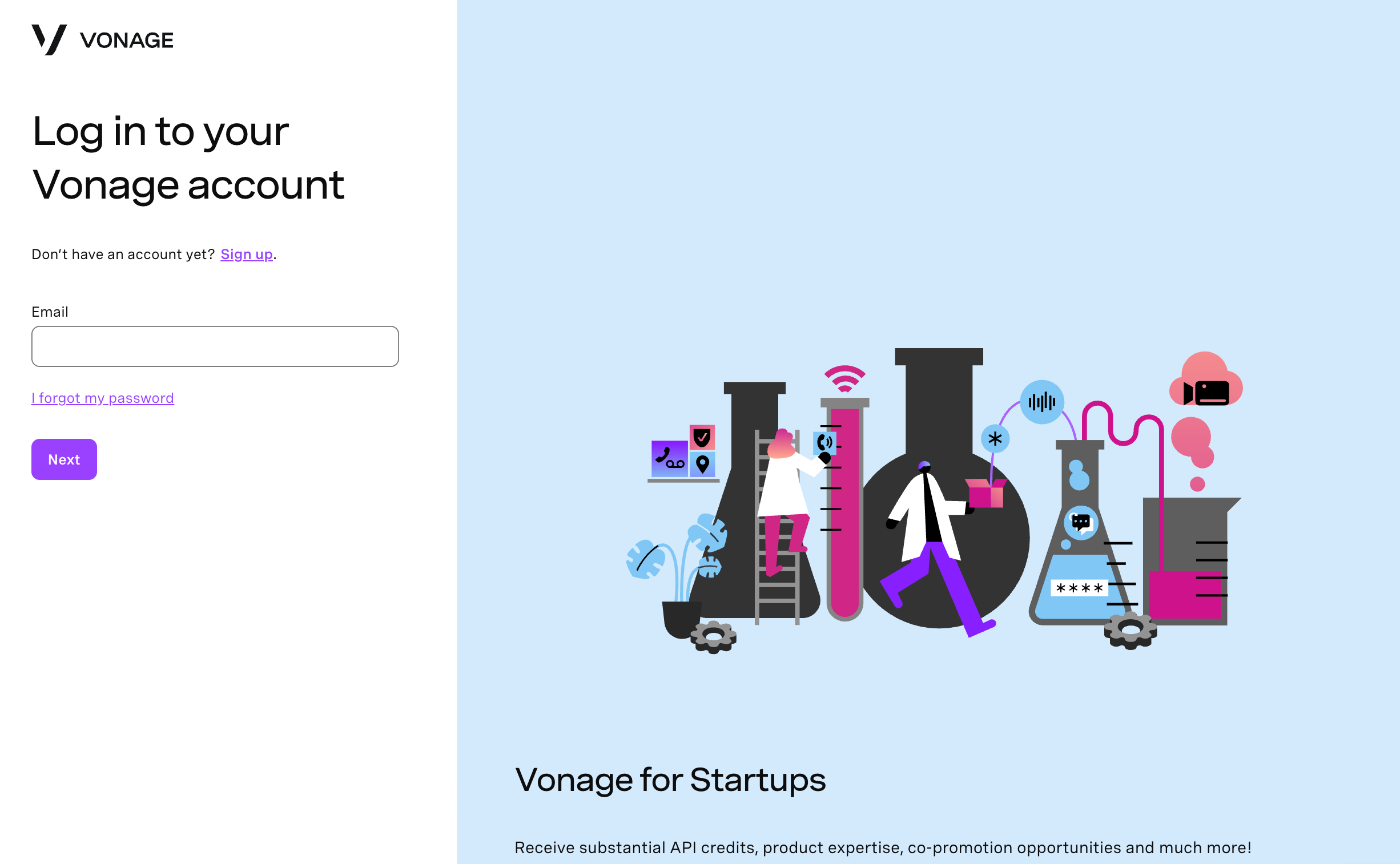
- Go to dashboard.nexmo.com or vonage.com/communications-apis
- Create a free account with your email
- Verify your phone number
- Get your API key and secret from the dashboard
- Make your first API call using the REST API or one of the official SDKs
The Vonage Server SDKs cover Node.js, Python, PHP, Ruby, Java, .NET, and Go. You can also call the REST API directly with any HTTP client.
How to test your Vonage SMS integration with Apidog
Once you have your Vonage API key and secret, you need a reliable way to test your integration before it goes live. Apidog is built for exactly this.
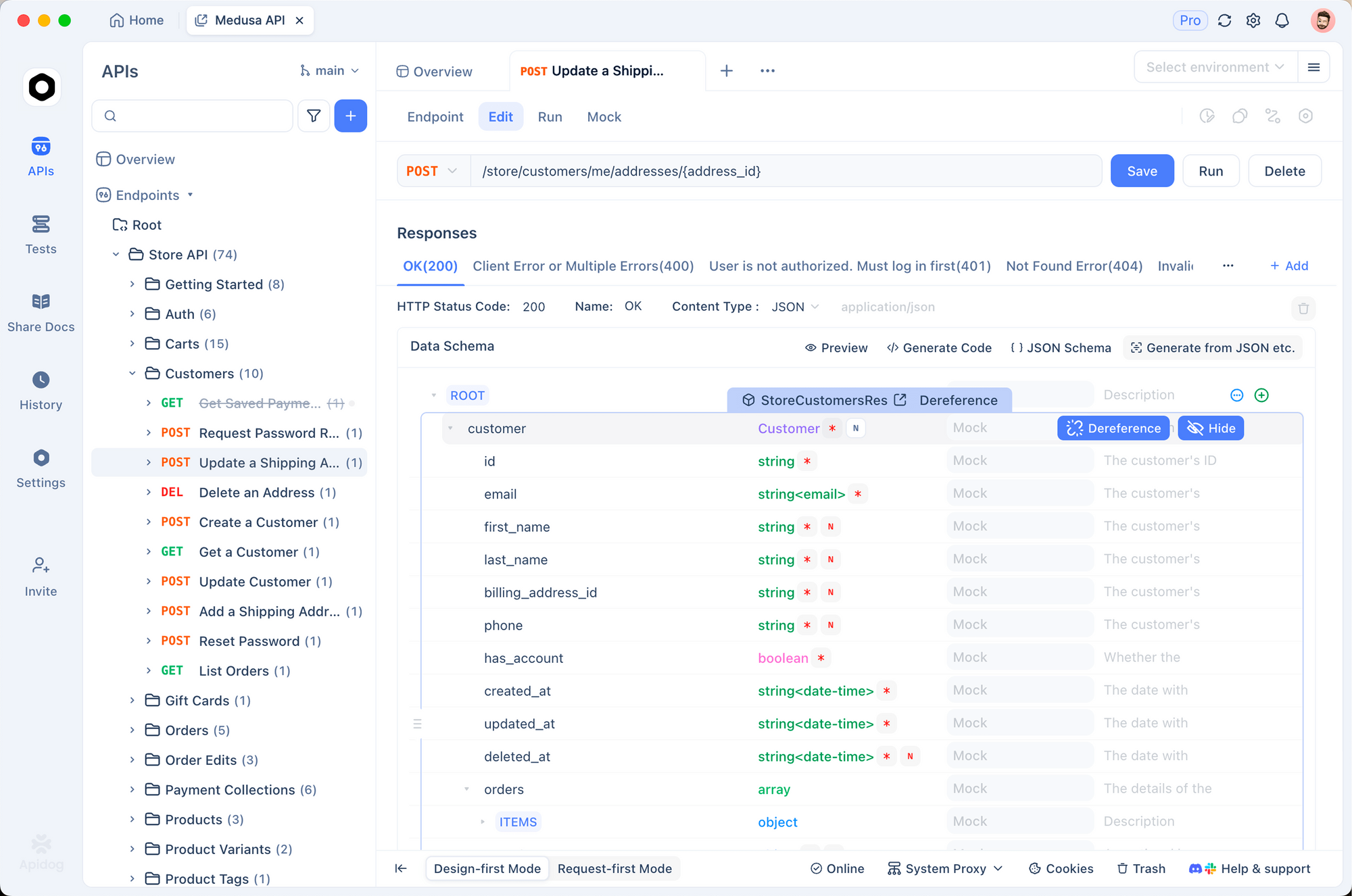
Apidog's Test Scenarios feature lets you chain multiple API requests together into a single automated test flow. This maps directly to how a real SMS workflow operates: send a message, check delivery status, handle errors.
Setting up a test scenario
In Apidog, navigate to the Tests module and create a new test scenario. You can add steps from several sources:
- Import from your API spec (if you've defined the Vonage SMS endpoint in OpenAPI format)
- Add a custom request directly using the Vonage REST API endpoint
- Import a cURL command you copied from the Vonage documentation
For a basic SMS send test, add a custom POST request to https://rest.nexmo.com/sms/json with your API key, secret, sender number, recipient, and message body as form parameters.
Validating the response
Apidog automatically validates responses against your defined schema. For the Vonage SMS API, a successful response returns a JSON object with a messages array. Each item in the array contains a status field. A status of 0 means success.
You can add an assertion step in Apidog to check:
- HTTP status code is 200
messages[0].statusequals"0"messages[0].message-idis not empty
If Vonage returns an error code (status 1, 2, 4, or higher), your assertion fails and Apidog flags the test step in red. You'll see the full response body to debug the issue immediately.
Passing data between requests
Apidog supports passing data between requests using the {{$.stepId.response.body.field}} syntax. If you want to test a two-step flow (send an SMS, then check its status), you can extract the message-id from the first response and inject it into the second request automatically.
Running tests in CI/CD
When you're ready to automate, Apidog integrates with GitHub Actions, GitLab CI, and Jenkins. Export your test scenario and run it on every pull request using the Apidog CLI. This catches SMS integration regressions before they reach production.
Try it free at apidog.com. No credit card required.
Conclusion
Vonage SMS API pricing is pay-as-you-go with no monthly platform minimum. US outbound SMS runs $0.00809 per message, inbound runs $0.00649. Costs scale with the destination country, number type, and message encoding. Premium features like the Audit API, Auto-redact, and 24/7 support add meaningful monthly costs, so plan your budget accordingly.
If you're comparing alternatives, Telnyx and Plivo undercut Vonage on price, while Twilio leads on ecosystem size. Vonage is a strong choice when you need carrier-grade reliability and global reach backed by Ericsson's network.
Before you go live, use Apidog to build test scenarios for your Vonage integration. Test every message flow, validate every response, and catch errors in development rather than production.
FAQ
Is Vonage the same as Nexmo?Yes. Vonage acquired Nexmo in 2016. The developer platform is still accessible at developer.vonage.com, and many legacy integrations still use rest.nexmo.com as the API endpoint. The two brands now refer to the same product.
Does Vonage charge a monthly fee for SMS?No monthly platform fee for the SMS API itself. You pay per message sent and received, plus any number rental fees for the virtual numbers you use. Optional add-ons like the Audit API and Auto-redact carry monthly fees.
How much does a Vonage phone number cost?US local virtual numbers (long codes) start at a few dollars per month. Toll-free numbers and short codes cost more. Check the Vonage dashboard for current number rental pricing in your country.
What countries does Vonage SMS support?Vonage supports SMS in 190+ countries. Rates vary significantly. Some countries with limited carrier relationships cost $0.50 or more per message. Download the global pricing sheet from your Vonage dashboard for a full breakdown.
Does Vonage offer volume discounts?Yes. Vonage offers custom pricing for high-volume senders. If your monthly message volume is large, contact the sales team to negotiate a custom rate. The default pay-as-you-go rates apply until you have a custom agreement.
Can I receive inbound SMS for free?US toll-free numbers often receive inbound SMS at no charge. Long code numbers charge $0.00649 per inbound message in the US. Inbound pricing varies by country, so check the pricing sheet for your target markets.
How does Vonage compare to Twilio for SMS?Vonage's US outbound rate ($0.00809) is slightly higher than Twilio's ($0.0079). Twilio has a larger developer ecosystem and more third-party integrations. Vonage differentiates on carrier-level network relationships through Ericsson and tends to have competitive pricing in certain international markets. For pure US A2P messaging, the price difference is small enough that developer experience and support quality often drive the final decision.