You've just finished drafting your OpenAPI specification. It feels like a monumental achievement — you've documented all your endpoints, parameters, and responses. But now a nagging question creeps in: "Is this specification correct? Does it follow best practices? Will it actually work when developers try to use it?"
This moment of uncertainty is where many API projects go off the rails. An invalid or poorly structured OpenAPI spec is like having architectural blueprints with measurements that don't add up. Sure, it looks impressive, but good luck building a stable structure from it.
Validating your OpenAPI specification isn't just a technical formality, but the critical quality check that separates professional, usable APIs from frustrating, buggy ones. And the good news? With the right approach and tools, it's easier than you might think.
Now, let's walk through the complete process of validating OpenAPI specifications, from basic syntax checks to advanced best practice validation.
Why OpenAPI Validation Matters More Than Ever
APIs are no longer internal-only tools.
They are:
- Public products
- Integration contracts
- Revenue enablers
And when an OpenAPI spec is wrong, the consequences multiply quickly.
What Happens without Proper Validation
Without validation:
- Client SDKs break
- Documentation becomes misleading
- Frontend and backend drift apart
- Breaking changes slip into production
As a result, teams lose trust in their own API contracts.
That’s exactly why validation should be a first-class step in your API workflow.
How to Validate OpenAPI Specs
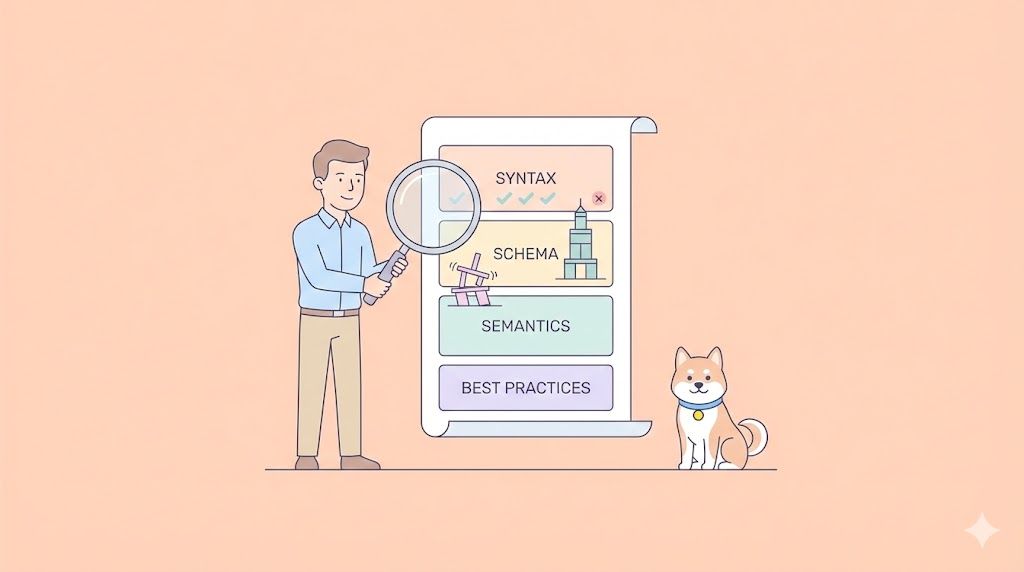
Before we dive into tools and automation, it's important to understand what validation actually means in the context of OpenAPI. Validation happens at multiple levels, each increasingly sophisticated.
Level 1: Syntax Validation "Is This Even Valid YAML/JSON?"
This is the most basic check. Before your specification can mean anything, it needs to be syntactically correct. A missing colon, an extra bracket, or improper indentation in YAML can break everything.
How to check: You can use:
- Online validators like Swagger Editor's built-in validation
- Command-line tools like
swagger-clioropenapi-validator - IDE extensions that provide real-time YAML/JSON linting
If your spec fails here, nothing else matters. Fix the syntax errors first.
Level 2: Schema Validation "Does This Follow OpenAPI Rules?"
Once your syntax is correct, the next question is: "Does this document actually comply with the OpenAPI specification?" This means checking that:
- Required fields are present (like
openapi,info,paths) - Field types are correct (e.g.,
versionis a string, not a number) - References are valid (no broken
$refpointers) - Parameters are properly defined
Tools for this: The OpenAPI Initiative provides official JSON schemas for each version (3.0, 3.1). Tools like swagger-cli validate or online validators compare your document against these schemas.
Level 3: Semantic Validation "Does This Make Sense?"
This is where things get interesting. A specification can be syntactically perfect and schema-valid but still contain logical errors. For example:
- Defining a parameter that's never used
- Declaring a response with a
200status but no content schema - Having conflicting security schemes
- Using non-standard HTTP methods
Semantic validation requires more sophisticated analysis and often involves custom rules or linters.
Level 4: OpenAPI Design Best Practices Validation "Is This a Well-Designed API?"
This is the highest level of validation. It's not about whether the spec is correct, but whether it's good. These checks include:
- Consistent naming conventions (camelCase, snake_case)
- Proper use of HTTP status codes
- Meaningful error responses
- Appropriate use of pagination, filtering, sorting
- Security scheme implementation
This level of validation bridges the gap between technical correctness and developer experience.
The Manual OpenAPI Specs Validation Process
Even with automated tools, understanding the manual validation process makes you a better API designer. Here's your checklist:
Step 1: Start with the Basics
Open your spec in a good editor and ask:
- Does it have the required
openapiandinfofields? - Are the
pathsdefined? - Are there any obvious typos or formatting issues?
Step 2: Check Each Path Individually
For every endpoint (/users, /products/{id}, etc.):
- Is the HTTP method appropriate (GET for retrieval, POST for creation)?
- Are path parameters properly defined with
in: path? - Are query parameters correctly specified?
- Do operations have at least one response defined?
Step 3: Validate Request/Response Schemas
This is often where specs break down:
- Do request bodies have content types defined?
- Are response schemas actually valid JSON Schema?
- Do error responses follow a consistent format?
- Are enums used where appropriate?
Step 4: Verify Security Schemes
- Are security schemes properly defined at the root level?
- Are they applied correctly at the operation level?
- Are there any operations that should be secured but aren't?
Step 5: Test the Documentation Output
Generate documentation (using Swagger UI or similar) and ask:
- Is the documentation readable and understandable?
- Do the examples make sense?
- Can a developer understand how to use the API just from the docs?
The Problem with Manual Validation
Here's the hard truth: manual validation is time-consuming, error-prone, and doesn't scale. As your API grows, keeping everything consistent becomes a nightmare. You might catch the syntax errors, but will you notice that:
- Endpoint A uses
pageandlimitfor pagination while Endpoint B usesoffsetandcount? - Some error responses return
{ "error": "message" }while others return{ "message": "error" }? - The authentication scheme works for GET requests but breaks for DELETE?
This is where automated validation tools become essential, and where modern platforms like Apidog are changing the game.
Enter Apidog: Validate OpenAPI Specs Using AI
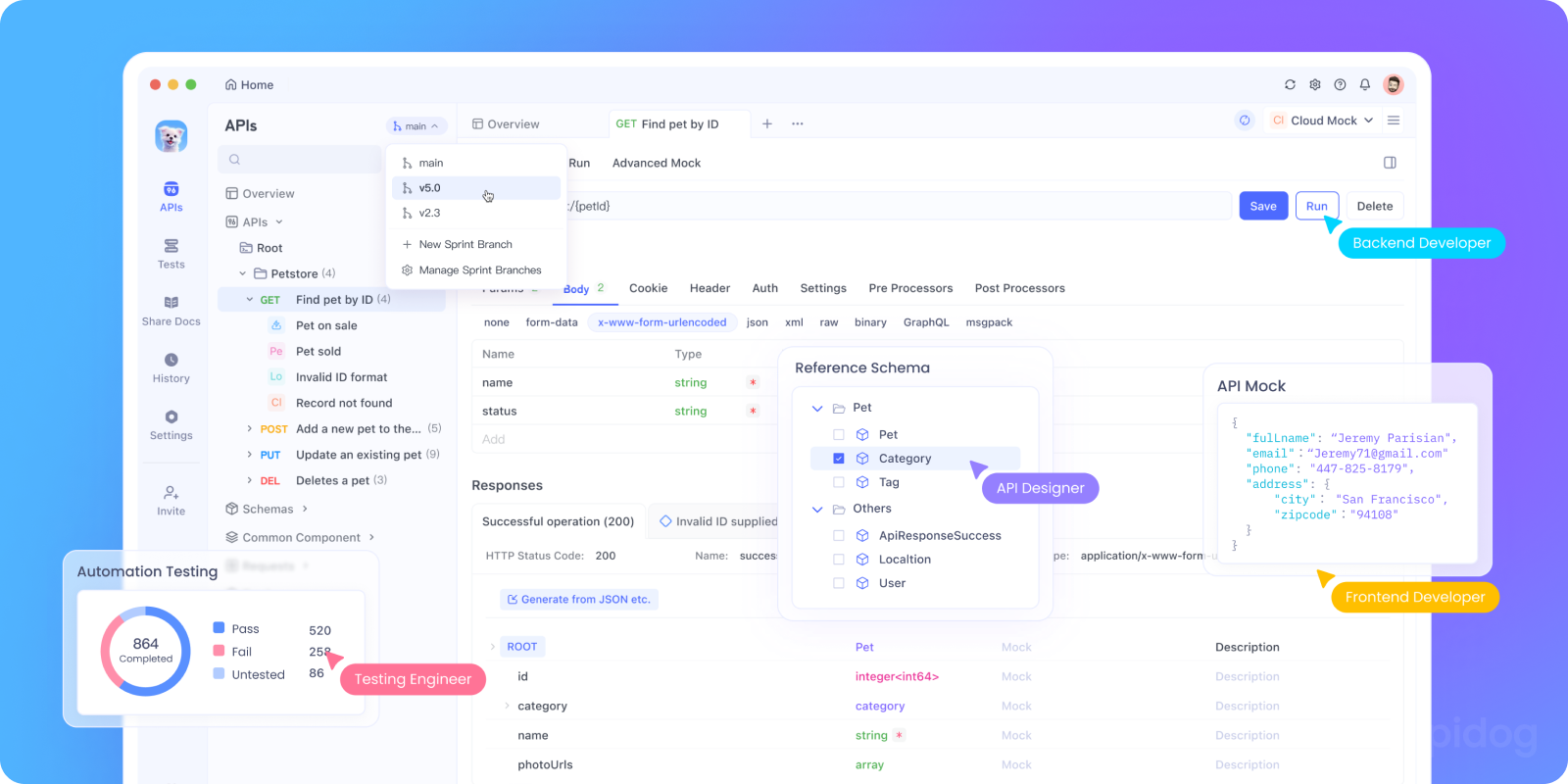
Traditional validation tools answer the question "Is this spec valid?" Apidog's AI-powered endpoint compliance check answers a much more valuable question: "Is this API well-designed according to industry best practices?"
This feature represents a paradigm shift in API validation. Instead of just checking syntax, it evaluates your API against proven design principles.
What Is Endpoint Compliance Check?

Apidog’s endpoint compliance check:
- Automatically analyzes your OpenAPI specs
- Compares endpoints against API design guidelines
- Flags violations and inconsistencies
- Provides actionable feedback
In short, it acts like a tireless API reviewer.
How the AI-Powered Compliance Check Works
Apidog's compliance check analyzes your API endpoints against a comprehensive set of design guidelines.
- Naming Convention Consistency: Checks if your endpoints, parameters, and schemas follow consistent naming patterns.
- HTTP Method Appropriateness: Validates that you're using the right HTTP methods for each operation (GET for retrieval, POST for creation, etc.).
- Response Design: Evaluates whether your responses follow RESTful principles and include appropriate status codes.
- Error Handling: Analyzes your error responses for consistency and usefulness.
- Security Implementation: Checks that security is properly implemented across endpoints.
The AI provides specific, actionable recommendations for improvement. For example, instead of just saying "parameter name is inconsistent," it might suggest: "Consider changing user_id to userId to match the camelCase pattern used in other parameters."
The Power of AI in API Validation
What makes this AI-powered approach so powerful is its ability to understand context and intent. Traditional linters work with rigid rules, but Apidog's AI can understand:
- The overall pattern of your API and suggest improvements that maintain consistency
- Industry best practices that might not be captured in simple validation rules
- The relationship between different parts of your specification
- Emerging patterns in modern API design
This is validation that actually makes you a better API designer, not just someone who can follow syntax rules.
Conclusion: Validation as a Design Partner
Validating OpenAPI specifications has evolved from a technical checkpoint to an integral part of the design process. With tools like Apidog, validation becomes less about finding what's wrong and more about discovering how to make your API better.
The combination of traditional syntax validation with AI-powered best practice analysis represents the future of API design. It's not enough for an API specification to be technically correct it needs to be well-designed, consistent, and developer-friendly.
By embracing this comprehensive approach to validation, you're not just creating specifications that pass automated checks. You're designing APIs that developers love to use, that are consistent and predictable, and that stand the test of time as your services evolve.
So don't just validate your OpenAPI specs elevate them. Use tools that help you design better from the start, catch issues early, and build APIs that represent the best of what modern API design can be. And with Apidog's free offering, you can start this journey today, transforming validation from a chore into your secret weapon for API excellence.