TL;DR
- US long code SMS (outbound and inbound): $0.0083 per message
- MMS outbound: $0.022 per message; MMS inbound: $0.0165 per message
- Toll-free SMS: $0.0083 per message plus carrier surcharges
- Short code rental: $1,000/month for a random code; $1,500/month for a vanity code
- 10DLC brand registration: $4.50 one-time fee (updated August 2025); campaigns from $1.50 to $10/month
- Phone number (long code): $1.15/month; toll-free: $2.15/month
- Carrier fees stack on top of all base prices
- Volume discounts kick in automatically at 150,000 messages per month
- Free trial available; no credit card required to start
Introduction
Twilio is the default SMS API for most developer teams. Its documentation is thorough, the uptime is reliable, and the REST API is well-designed. But once you move from a side project to a production app, the bill grows fast. You're not paying one price per message. You're paying Twilio's base rate, a carrier fee, a phone number fee, and possibly 10DLC registration costs on top.
This article breaks down every line item in Twilio's pricing. You'll understand what drives your bill, what's easy to miss, and how Twilio stacks up against alternatives.
Twilio SMS pricing overview
Twilio uses pay-as-you-go pricing. You pay per message segment, per phone number per month, and per any optional features or registrations. There are no contracts or minimum spends unless you negotiate a committed-use discount for enterprise volumes.
The base rate for US SMS on a long code is $0.0083 per message segment for both inbound and outbound. That's under a penny. But it's not the full picture. Carrier fees, number rental, and compliance registration add to that base every month.
Twilio also offers automatic volume discounts. You don't need to negotiate them. They apply automatically once you cross 150,000 messages per month across a number type.
Pricing breakdown: SMS, MMS, toll-free, and short codes
Long code SMS (10-digit numbers)
Long codes are the standard 10-digit numbers used for most A2P (application-to-person) messaging in the US.
| Message type | Price per segment |
|---|---|
| SMS outbound | $0.0083 |
| SMS inbound | $0.0083 |
| MMS outbound | $0.022 |
| MMS inbound | $0.0165 |
One important note: Twilio charges per message segment, not per message. A standard SMS segment is 160 characters for plain GSM-7 text. If your message uses Unicode (emojis, accented characters), that drops to 70 characters per segment. A 200-character plain-text message costs you two segments.
Toll-free numbers
Toll-free numbers use the same base SMS rates as long codes: $0.0083 per segment for both inbound and outbound. MMS outbound is $0.022; MMS inbound is $0.02 (slightly higher than long code inbound).
Toll-free numbers are good for high-volume one-way messaging and don't require 10DLC registration, which saves on setup costs. But they do need toll-free verification for maximum throughput.
Short codes (5-6 digit numbers)
Short codes are designed for high-throughput campaigns. The per-message SMS rate is the same at $0.0083, but the number rental cost is substantially higher.
| Short code type | Monthly cost |
|---|---|
| Random short code | $1,000/month (billed quarterly) |
| Vanity short code | $1,500/month (billed quarterly) |
| Bring-your-own vanity | $500/month (billed quarterly) |
All short codes also carry a $500 one-time fee if MMS-enabled.
Volume discounts
Twilio applies automatic tiered discounts for long code, toll-free, and short code messages:
| Monthly messages | Price per segment |
|---|---|
| 1 to 150,000 | $0.0083 |
| 150,001 to 300,000 | $0.0081 |
| 300,001 to 500,000 | $0.0079 |
| 500,001 to 750,000 | $0.0077 |
| 750,001 to 1,000,000 | $0.0075 |
| 1,000,001+ | $0.0073 |
Volumes are calculated per number type. You can't combine long code and toll-free message counts to qualify for a higher tier.
What affects your Twilio bill
Phone number type
The number you send from determines which rate table applies. Long codes, toll-free, and short codes each have separate volume tiers. If you split traffic across number types, you may not hit discount thresholds on either.
Message segments
Every message is billed in segments. If your marketing copy runs long or includes Unicode characters, your per-message cost doubles or triples even though the base rate looks cheap.
Carrier fees
This is where many developers get surprised. On top of Twilio's base rate, every major US carrier adds its own surcharge per message. These are passed through at cost.
Long code carrier fees (outbound SMS):
| Carrier | Outbound fee |
|---|---|
| AT&T | $0.0035 |
| T-Mobile | $0.0045 |
| Verizon | $0.004 |
| US Cellular | $0.005 |
| All other carriers | $0.004 |
For MMS, these fees are higher. AT&T adds $0.009 per MMS; T-Mobile adds $0.01.
So a single outbound SMS to an AT&T subscriber costs you $0.0083 (Twilio) + $0.0035 (carrier) = $0.0118 per segment. That's 42% more than the base price alone.
Destination country
International pricing varies significantly. A message to the UK costs $0.04 per message. To India it's $0.0029. To Brazil it's $0.075. You can download Twilio's full pricing CSV from their website. For global campaigns, international rates often dwarf US costs.
10DLC registration
The US A2P 10DLC system requires businesses sending A2P messages on long codes to register their brand and messaging campaigns. Unregistered traffic gets filtered by carriers.
Hidden costs and fees
10DLC registration fees
Registration fees changed in August 2025 when TCR (The Campaign Registry) updated its pricing.
Brand registration:- Sole Proprietor or Low Volume Standard brand: $4.50 one-time fee - Standard brand (includes secondary vetting): $46 one-time fee
Campaign registration:- One-time vetting fee: $15 per campaign - Monthly recurring fee per campaign: $1.50 to $10/month depending on type
| Campaign type | Monthly fee |
|---|---|
| Sole Proprietor | $2/month |
| Low-volume mixed | $1.50/month |
| Standard | $10/month |
| Charity/501(c)(3) | $3/month |
| Emergency services | $5/month |
Standard vetting costs $41.50 (up from $40 before August 2025). Vetting appeals cost $11. If your brand submission has errors, each retry of Authentication Plus costs $12.50.
Phone number fees
You pay a monthly fee to hold a phone number. Long codes cost $1.15/month. Toll-free numbers cost $2.15/month. If you provision hundreds of numbers for local presence or A/B testing, this adds up.
Failed message processing fee
Twilio charges $0.001 per message that ends in a "Failed" status. This is a small fee but one that catches teams off guard during debugging or when carrier filtering spikes.
Optional feature add-ons
Twilio's Engagement Suite (link shortening and click tracking) costs $0.015 per outbound message after the first 1,000 free per month. The Compliance Toolkit (AI-based SMS compliance review) also costs $0.015 per outbound message.
Support plans
Twilio's free developer support is limited. Paid support plans start at $250/month for the "Developer" tier. Enterprise support costs more. If your business depends on SMS delivery, you'll likely need a support contract.
How Twilio compares to alternatives
| Provider | US SMS outbound | US SMS inbound | Phone number | 10DLC required |
|---|---|---|---|---|
| Twilio | $0.0083 + carrier fees | $0.0083 + carrier fees | $1.15/month | Yes |
| Plivo | $0.005 | $0.00035 | $0.80/month | Yes |
| Telnyx | $0.004 | $0.004 | $1.00/month | Yes |
| Bird (formerly MessageBird) | ~$0.007 | ~$0.007 | Varies | Yes |
Plivo and Telnyx are meaningfully cheaper per message. Plivo's inbound rate in particular is a fraction of Twilio's. Telnyx bundles carrier fees differently, which makes comparison tricky but their all-in price is often lower.
Twilio wins on developer experience, documentation quality, global reach, and ecosystem integrations. If you're already in the Twilio ecosystem or need a feature like Messaging Services for sticky sender or smart encoding, the premium may be worth it. For pure volume at low cost, Telnyx or Plivo are worth evaluating.
How to test Twilio for free
Twilio offers a free trial account with no credit card required. Your account starts with a small credit balance you can use to send real messages.
During the trial, messages sent to unverified numbers include a prepended "Sent from your Twilio trial account" prefix. To remove that prefix, you need to upgrade to a paid account.
The free trial is enough to: - Provision a test phone number - Send and receive SMS messages via the API - Test webhook delivery for inbound messages - Explore the Twilio Console and usage logs
Once you upgrade, you pay only for what you use. There are no monthly minimums on the pay-as-you-go plan.
How to test your Twilio SMS integration with Apidog
After you've got your Twilio credentials and webhooks set up, you need to verify your integration works correctly. Sending test messages manually doesn't scale, and it doesn't catch subtle schema mismatches in your webhook payload handling.
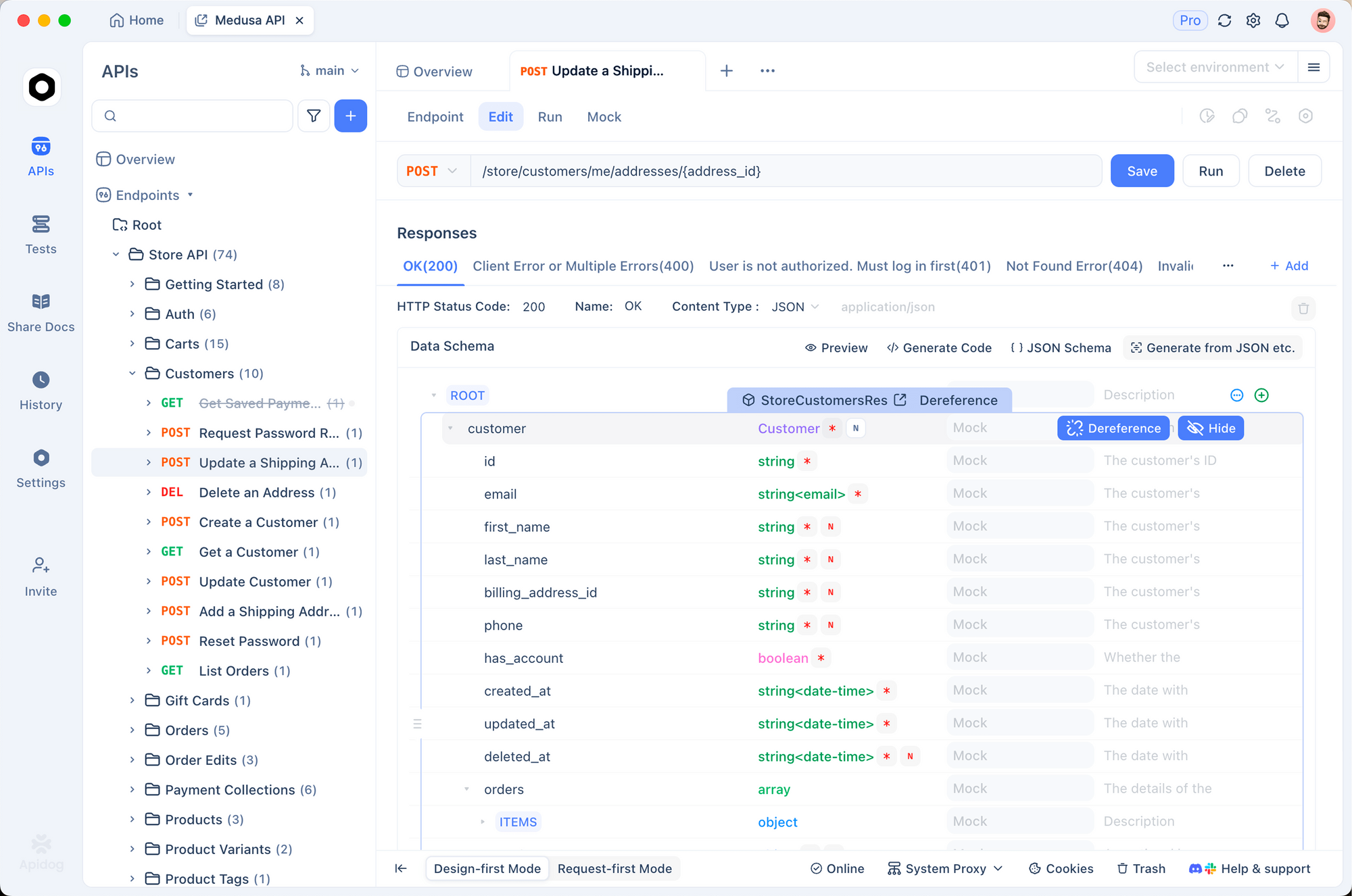
Apidog's Test Scenarios feature lets you chain multiple API requests into a single automated flow. You can:
- Import your Twilio webhook endpoint spec directly into a test scenario
- Add steps for each message flow: send SMS, receive delivery callback, handle inbound reply
- Use the orchestrate mode to reorder steps and run them in sequence
- Pass data between steps using
{{$.stepId.response.body.field}}syntax to chain message SIDs
This maps directly to how Twilio's API works. You send a message, Twilio returns a message SID, and your app receives a webhook callback. With Apidog's test scenario, you can validate all three steps as a single automated test run.
Contract Testing in Apidog adds another layer. Apidog's Response Validation feature checks actual API responses against your OpenAPI spec automatically. For Twilio integrations, you can define your expected webhook payload schema in your spec, then let Apidog validate:
- That the HTTP status code matches what you've documented
- That all required fields in the webhook body are present
- That field types match (a message SID should be a string; a timestamp should be in the right format)
- That no extra fields appear unless your spec allows
additionalProperties
This works during API requests, debug cases, test cases, and automation test steps. You get contract coverage without writing custom assertion scripts for every field.
To get started: Download Apidog free, import your Twilio API spec or define your webhook schema, then build a test scenario that mirrors your SMS send-and-receive flow.
Conclusion
Twilio SMS API pricing starts at $0.0083 per segment for US long codes, but your real per-message cost includes carrier fees, phone number rental, and 10DLC registration. For a single AT&T outbound message, you're paying about $0.0118 per segment once carrier fees are added. For campaigns using standard 10DLC campaigns, add $10/month per campaign on top.
The pricing is transparent and well-documented. The volume discounts are automatic. But you need to account for every line item, not the headline rate alone.
Once you've modeled your costs, build your integration and test it thoroughly. Apidog's Test Scenarios and Contract Testing let you validate your Twilio webhook flows and confirm your API responses match your spec, all without writing custom test boilerplate.
FAQ
Q: What is the base price for a US outbound SMS on Twilio?
A: The base Twilio rate is $0.0083 per message segment for US long code outbound SMS. Carrier fees are added on top of this. An AT&T message adds $0.0035, making the real cost $0.0118 per segment to that carrier.
Q: Does Twilio charge for inbound SMS?
A: Yes. Twilio charges $0.0083 per segment for inbound SMS on long codes and toll-free numbers. Carrier fees may also apply depending on the originating carrier.
Q: What is 10DLC and do I have to pay for it?
A: 10DLC is the US registration system for A2P SMS sent from 10-digit long codes. If you're sending any application-generated messages to US consumers on a long code, you must register. Brand registration costs $4.50 (one-time). Campaign fees range from $1.50 to $10/month depending on campaign type.
Q: How much does a Twilio short code cost?
A: A random short code costs $1,000/month, billed quarterly. A vanity short code (a number you choose) costs $1,500/month. Both require a one-time $500 setup fee if MMS-enabled. Short codes use the same per-message SMS rate of $0.0083.
Q: Does Twilio offer volume discounts?
A: Yes, automatically. The first 150,000 messages per month per number type cost $0.0083 each. The rate drops through six tiers down to $0.0073 for more than one million messages per month. Enterprise committed-use discounts are also available by contacting sales.
Q: Is there a free trial for Twilio?
A: Yes. Twilio provides a free trial account with credits included. No credit card is required to sign up. Trial accounts can send and receive real SMS messages, though outbound messages include a trial prefix until you upgrade.
Q: What's the cheapest Twilio alternative for SMS?
A: Plivo and Telnyx both offer lower per-message rates than Twilio. Plivo's US outbound rate is $0.005 per message and inbound is $0.00035. Telnyx charges $0.004 per message. Both require 10DLC registration for US A2P traffic. Twilio tends to offer better documentation, support, and feature coverage for more complex use cases.