APIs are the backbone of modern software, and thorough testing is essential. Not all API testing tools are equal when it comes to running large or repeated test collections. As of March 1, 2026, the Postman free plan is limited to a single user and 25 collection runs per month—so teams that need unlimited runs either pay Postman pricing ($14/user for Team) or use Postman-like tools with a real unlimited collection runner. This post covers the top API testing tools that offer unlimited collection runner capabilities and why they matter now that Postman free plan limitations have tightened.
Pro tip: The Postman free plan is now 1 user only and 25 runs/month. Need free collaboration for 2–4 people and unlimited test runs? Try Apidog—up to 4 users, unlimited test runs, and full API design, mock, and docs at $0. Sign up free (no credit card); import Postman collections and switch in minutes.
What is an Unlimited Collection Runner?
An unlimited collection runner lets you run a set of API requests (a collection) as many times as you want. That’s useful for different scenarios, data sets, or load tests. Instead of running each test by hand, the runner runs them for you—automatically and repeatedly. The unlimited part means no monthly cap: whether you run hundreds or thousands of tests, the tool doesn’t stop you. With the Postman free plan capped at 25 runs per month (and 1 user only from March 2026), free Postman alternatives with unlimited runners are more relevant than ever.
Why Do You Need a Tool with an Unlimited Collection Runner?
Testing an API with many endpoints and variables by hand is slow and error-prone. An unlimited collection runner gives you:
- Efficiency: Automate tests instead of running them manually.
- Scalability: Run as many tests as you need, from small suites to large ones.
- Performance testing: Stress-test APIs under different loads.
- Time-saving: Run thousands of tests in minutes.
Postman free plan limitations (25 runs, 1 user) make it hard to do this on the free tier. Tools with unlimited collection runner—like Apidog—let you run as often as you need without hitting a ceiling.
1. Apidog: The All-in-One API Testing Tool with Unlimited Runs
Apidog is a free Postman alternative that offers an unlimited collection runner and up to 4 users on the free plan—no 25-run cap and no 1-user limit. You can design, test, document, and mock APIs in one place. Test scenarios in Apidog are the equivalent of Postman collection runners; you can organize requests, create test scenarios, share them, and generate reports. For teams hit by Postman free plan (1 user, 25 runs), Apidog is one of the best Postman alternatives for unlimited runs and free collaboration.


Key Features
- Unlimited Collection Runner: Run collections as often as you need—no monthly limit like the Postman free plan.
- Up to 4 users free: Collaborate without paying Postman pricing for the Team plan.
- Mock Server: Test APIs before the backend is ready.
- Detailed Reporting: Insights for every test run.
- Collaboration: Share tests and API docs across the team.
With Apidog you can cover functional and load testing without hitting the Postman free plan limitation on runs or users.
Why Choose Apidog?
Apidog is a better Postman alternative for teams that want unlimited test runs and free collaboration. Download Apidog for free and import Postman collections to get unlimited collection runner and 4 users at $0.
PRO TIP: If you are having trouble choosing between Postman and Apidog, check out this comprehensive analysis: Postman VS Apidog.
Migrating from Postman to Apidog for Unlimited Collection Runner
Postman is popular, but the Postman free plan has a limited collection runner (25 runs/month) and, from March 2026, 1 user only. To get an unlimited runner and team use in Postman, you must subscribe to a paid plan (Postman pricing starts at $14/user/month). Apidog gives you an unlimited collection runner and up to 4 users free—a strong free Postman alternative for replacing Postman without paying.
How to get Unlimited Collection Runner in Postman for Free
Apidog offers a user-friendly and intuitive interface, making it easy for beginners to quickly grasp and utilize its features. Let's follow the steps below to see how we to export Postman Collection and test all your APIs in Apidog effectively and efficiently.
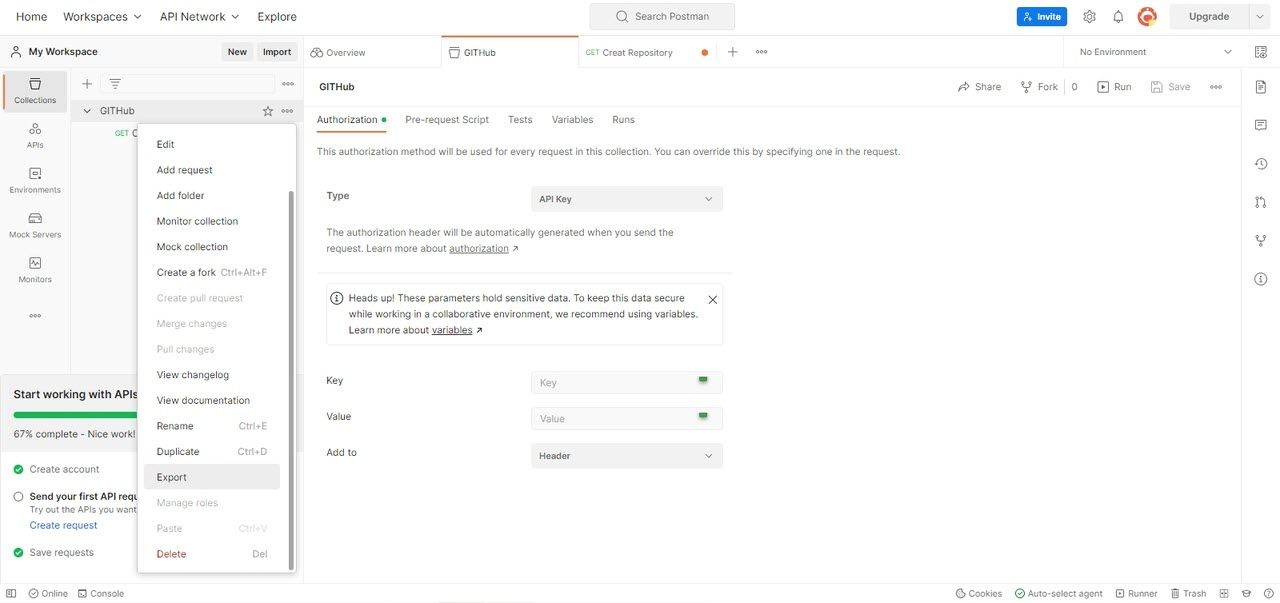
Step 1: Export Your Postman Collection
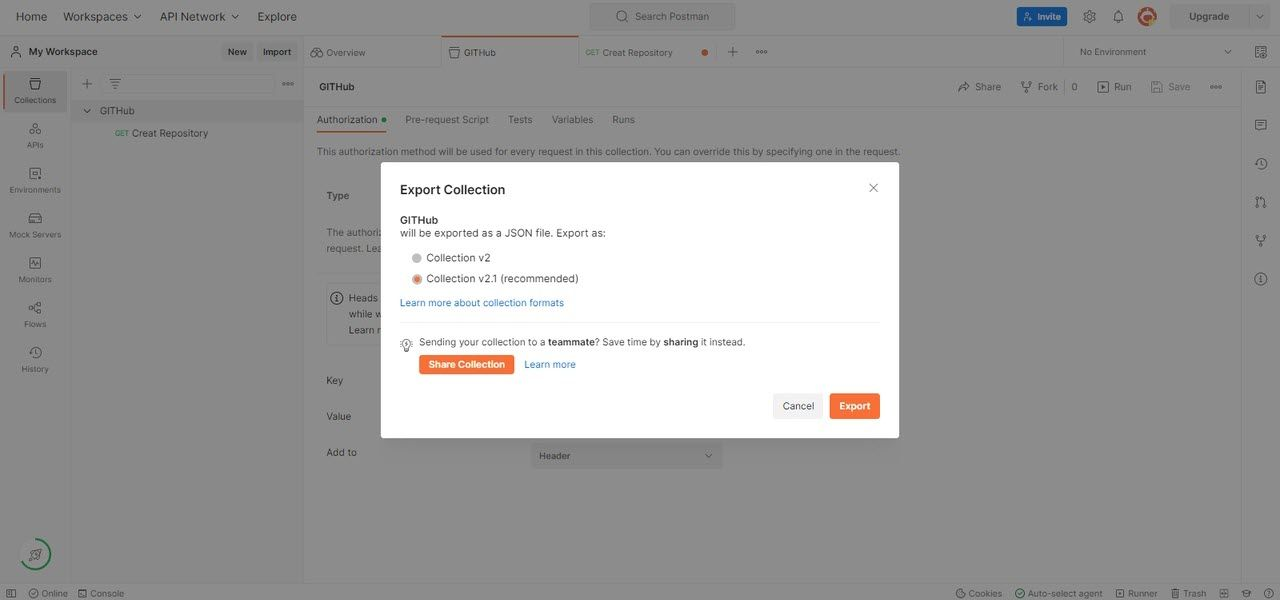
You can select the desired collection click the "Export" option, and seamlessly transfer the collection from Postman to Apidog, as shown in the screenshot below.
Note: It is recommended that you select Collection v2.1. This is because if you export the file in the Collection v2.1 format, all queries, directories, and details about your environment will be included in the file.
Step 2: Import Postman Collection into Apidog
Log in to Apidog, import the exported file as shown in the picture, select "Settings" from the left menu, and then select "Import Data".

Select "Postman" and upload a file from downloads. Upload the output data source from Postman. Select the files you want to import. Click the “Confirm” button.

After importing successfully, you can view endpoints in the left-sidebar in APIs. And if you want to test these requests, just select the desired endpoint, choose the right environment and click "Send".

Step 3: Create a New Test Scenario
Click the "+" button on the "Tests" page in the Apidog latest version, and setting up the details of the New Test Scenario, such as the priority, test scenario name, and folder. Check out the test scenario creation tutorial here.

Step 4: Import from Endpoints
Create detailed test scenarios that provide specific steps and conditions to execute the test. Include input data, expected outcomes, and any preconditions or postconditions.

Review the test scenarios and cases to ensure they are comprehensive and cover all critical functionalities and features. Validate the cases to ensure they accurately represent the test scenario objectives.

Step 5. Run the Test Scenario
Review the test scenarios and test cases to ensure they are comprehensive and cover all critical functionalities and features. Validate the test cases to ensure they accurately represent the test scenario objectives.
Run the test cases and track the results. Document any defects or issues that are found during the testing process.

Migrating from Postman to Apidog for more efficient and API testing is easier, explore this step-by-step guide to get started.

What’s Great About Postman—and Where It Falls Short
Postman has a large community and many features. But on the Postman free plan you get 1 user only and 25 collection runs per month (March 2026). For an unlimited runner and team use, you need a paid plan—Postman pricing starts at $14/user/month. That’s why many look for a replacement for Postman with unlimited collection runner and free team collaboration. Apidog is a free Postman alternative that offers both.
3. Kong Insomnia: An API Management Leader with Collection Runner Capabilities
Kong Insomnia is a well-known name in the world of API management. It’s more than just a testing tool—it’s a full-fledged API gateway. Insomnia v10 ships with a built-in Collection Runner that allows you to run an unlimited number of collection runs whether you are storing your data locally, on Git, or in the cloud.

Key Features:
- API Gateway: Manage your APIs efficiently with Kong’s powerful gateway.
- Automated Testing: Use Kong in combination with tools like Apidog or Postman to automate testing.
- Performance Monitoring: Get real-time insights into your API’s performance.
- Security: Built-in security features to ensure your APIs are protected.
 Marco Palladino
Why Go for Kong?
If you're already using Kong for API management, integrating an unlimited collection runner tool is seamless and efficient. It’s perfect for large organizations that need to scale their API testing alongside their infrastructure.
4. ReadyAPI: Robust API Testing for Enterprises
ReadyAPI by SmartBear is designed specifically for enterprise-level testing. If you’re working with a lot of APIs or need a tool with deep integration into other systems, ReadyAPI is an excellent option.

Key Features:
- Unlimited Collection Runner: Built-in functionality for running bulk tests.
- Load Testing: Stress-test your APIs to ensure they can handle high traffic.
- Comprehensive Reporting: Get granular details on each test run.
- Seamless Integration: Works well with other SmartBear products.
Why Consider ReadyAPI?
ReadyAPI is designed for big businesses that need enterprise-grade features. If your company requires advanced reporting, security, and integration options, this tool is for you.
5. SoapUI: A Go-To for SOAP API Testing
For those working with SOAP APIs, SoapUI is probably the best tool out there. While most tools focus on RESTful APIs, SoapUI specializes in SOAP-based services. Like the other tools on this list, it offers an unlimited collection runner as part of its paid plans.

Key Features:
- Collection Runner: Run extensive tests on your SOAP APIs.
- API Mocking: Test APIs before they’re even built.
- Load Testing: Ensure your APIs can handle high traffic.
- Integration: Works well with other testing and development tools.
Why SoapUI?
If you’re working with SOAP APIs, SoapUI is one of the few dedicated tools out there. The collection runner feature ensures you can test your APIs as often as needed.
More Open Source & Free Alternatives
Looking for open source or free tools? Check out this curated list of Postman alternatives for more options that may fit your workflow.
The Benefits of Using Tools with Unlimited Collection Runners
Using tools with unlimited collection runners is a no-brainer if you're serious about API testing. Here are some of the benefits:
- Increased Productivity: Run hundreds, if not thousands, of tests without lifting a finger.
- Better Test Coverage: Ensure all endpoints, edge cases, and scenarios are thoroughly tested.
- Time-Saving: Spend less time manually running tests and more time on development.
- Scalability: Whether you’re a solo developer or part of a large team, these tools can handle the workload.
Conclusion
An unlimited collection runner changes how you do API testing. The Postman free plan is now 1 user only and 25 collection runs per month (March 2026)—Postman is dead for small teams with more than 1 user on the free tier. Postman pricing for teams starts at $14/user/month. Among the tools we covered, Apidog stands out as a free Postman alternative with unlimited test/collection runs and up to 4 users on the free plan—no run cap and no single-user limit.
Sign up for Apidog for free (no credit card), import your Postman collections, and run as many tests as you need. For a deeper comparison, see Postman vs Apidog.