APIs (Application Programming Interfaces) are the backbone of today’s software ecosystem, enabling seamless communication between systems, apps, and users. At the heart of efficient API development are API frameworks—robust libraries and toolkits that accelerate building, securing, and scaling APIs. This guide dives deep into the top API frameworks shaping the industry, their core features, use cases, and how you can leverage them (including with tools like Apidog) to deliver reliable and high-performance APIs.
What Are API Frameworks and Why Are They Important?
An API framework is a structured set of tools, libraries, and conventions designed specifically to simplify and standardize the process of building APIs. Whether you're developing RESTful, GraphQL, or RPC-style APIs, the right framework provides:
- Standard routing and request handling
- Authentication and authorization mechanisms
- Data serialization and validation
- Error handling and logging
- Integration with databases and external services
Why Top API Frameworks Matter
Choosing from the top API frameworks is more than a technical preference—it directly impacts:
- Development Speed: Frameworks reduce boilerplate, letting you focus on business logic.
- Scalability: Top frameworks are optimized for high-load scenarios and microservices.
- Security: Built-in tools help protect against common threats.
- Maintainability: Clean conventions and documentation ensure long-term project health.
- Ecosystem Support: Large communities mean better support, plugins, and learning resources.
Selecting the right API framework is a foundational decision that influences your application's performance, security, and future growth.
Top API Frameworks: Comprehensive Overview
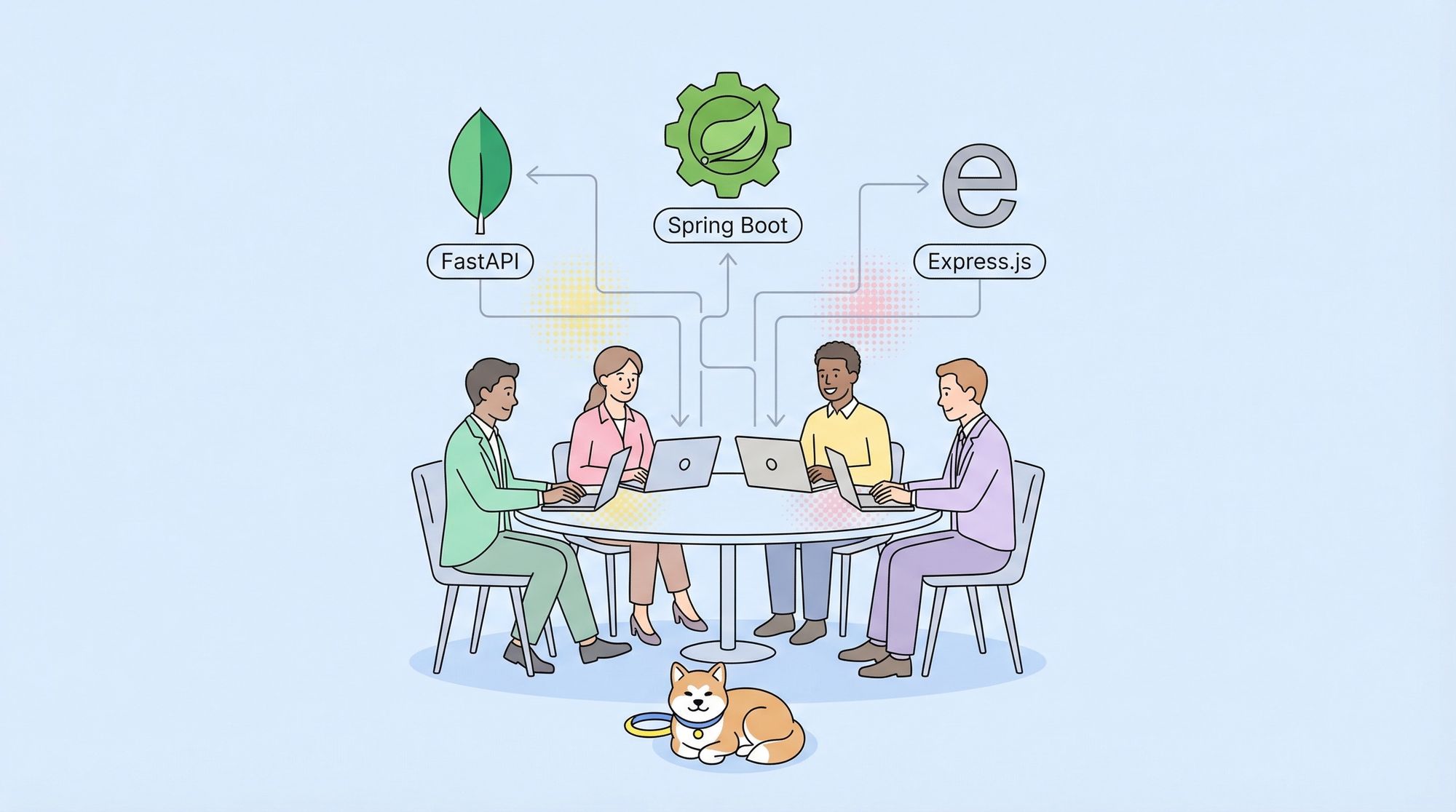
Let’s break down the leading API frameworks by programming language, highlighting their distinctive features, ideal scenarios, and what sets them apart in the crowded API landscape.
1. FastAPI (Python)
FastAPI has rapidly become one of the top API frameworks for Python developers. Its key strengths include:
- Asynchronous support: Built on Starlette and Pydantic, enabling high-performance async endpoints.
- Automatic OpenAPI/Swagger docs: Instant interactive documentation.
- Data validation: Pydantic-based request/response models.
- Type hints: Enforces typing for robust code.
Ideal for: High-performance microservices, modern REST APIs, ML model serving.
Example:
from fastapi import FastAPIapp = FastAPI()@app.get("/")
async def read_root():
    return {"Hello": "World"}
2. Django REST Framework (Python)
Django REST Framework (DRF) extends Django, making it one of the top API frameworks for full-featured, secure REST APIs.
- Out-of-the-box authentication, permissions, and serialization
- Browsable API interface
- Rich ecosystem and plugins
Ideal for: Enterprise-level APIs, rapid prototyping, projects already using Django.
3. Express.js (Node.js)
Express.js is the most popular Node.js API framework, renowned for its minimalism and flexibility.
- Simple routing and middleware
- Large community and plugin support
- Great for RESTful APIs and microservices
Ideal for: Lightweight APIs, rapid MVPs, scalable Node.js backends.
Example:
const express = require('express');
const app = express();app.get('/', (req, res) => {
  res.send('Hello World!');
});
app.listen(3000);
4. NestJS (Node.js/TypeScript)
NestJS is a progressive Node.js framework using TypeScript, designed for enterprise applications.
- Modular architecture with dependency injection
- Built-in support for GraphQL, WebSockets, and microservices
- Strong typing and testability
Ideal for: Complex, scalable APIs, monorepos, and teams preferring TypeScript.
5. Spring Boot (Java)
Spring Boot is the gold standard among Java API frameworks.
- Convention over configuration: Rapid setup.
- Integrated security, data, and messaging
- Huge ecosystem with robust documentation
Ideal for: Enterprise APIs, cloud-native applications, microservices.
Example:
@RestController
public class HelloController {
    @GetMapping("/")
    public String index() {
        return "Hello World!";
    }
}
6. Quarkus (Java)
Quarkus is a modern, Kubernetes-native Java API framework.
- Fast startup and minimal memory footprint
- Optimized for GraalVM native images
- Live coding and hot reload
Ideal for: Cloud-native microservices, serverless functions, containerized deployments.
7. Flask-RESTful (Python)
Flask-RESTful builds on Flask’s simplicity, offering a lightweight approach to RESTful APIs.
- Easy to learn and flexible
- Good for prototyping and small-scale APIs
Ideal for: Simple APIs, learning projects, quick integrations.
8. LoopBack (Node.js)
LoopBack is an API framework focused on rapid API creation, especially for data-driven apps.
- Automatic API generation from models
- Built-in connectors for databases and services
- Swagger/OpenAPI support
Ideal for: CRUD APIs, legacy integrations, rapid backend scaffolding.
9. Micronaut (Java)
Micronaut is a JVM-based framework designed for microservices and serverless.
- Low memory overhead
- Ahead-of-time (AOT) compilation
- Easy cloud integration
Ideal for: High-performance microservices, Java serverless functions.
10. Laravel (PHP)
Laravel is the most popular PHP framework for API development.
- Elegant syntax and conventions
- Built-in OAuth2, authentication, and API resources
- Rich ecosystem
Ideal for: PHP-based APIs, SaaS backends, rapid development.
How to Choose Among the Top API Frameworks
When evaluating the top API frameworks, consider:
- Programming language and team expertise
- Performance and scalability needs
- Security requirements
- Community support and ecosystem
- Ease of documentation and testing
Apidog can be integrated into any of these frameworks to streamline API design, documentation, and testing—regardless of your technical stack.
Real-World Applications of Top API Frameworks
Example 1: Building a Scalable REST API with FastAPI
A fintech startup needs a fast, secure backend for a mobile app. Using FastAPI, the team delivers endpoints with JWT authentication and real-time validation. They leverage Apidog to collaboratively design and mock endpoints, ensuring front-end and back-end developers stay in sync.
Example 2: Enterprise Microservices with Spring Boot
A global e-commerce company adopts Spring Boot to power its order management and payment APIs. With Spring Security and built-in monitoring, the team meets strict compliance standards. Apidog is used to generate and publish interactive documentation, reducing onboarding time for new developers.
Example 3: Rapid Prototyping with Express.js
A SaaS platform validates a new feature by prototyping APIs in Express.js. Middleware makes it easy to add logging and rate-limiting. The team imports their API collection into Apidog for testing and simulating various client scenarios.
Code Snippets: Getting Started with Top API Frameworks
FastAPI Example
from fastapi import FastAPIapp = FastAPI()@app.get("/greet/{name}")
async def greet(name: str):
    return {"message": f"Hello, {name}!"}
Express.js Example
const express = require('express');
const app = express();app.get('/greet/:name', (req, res) => {
  res.json({ message: Hello, ${req.params.name}! });
});
app.listen(3000);
Spring Boot Example
@RestController
@RequestMapping("/greet")
public class GreetController {
    @GetMapping("/{name}")
    public Map greet(@PathVariable String name) {
        return Collections.singletonMap("message", "Hello, " + name + "!");
    }
}
Integrating Apidog with Top API Frameworks
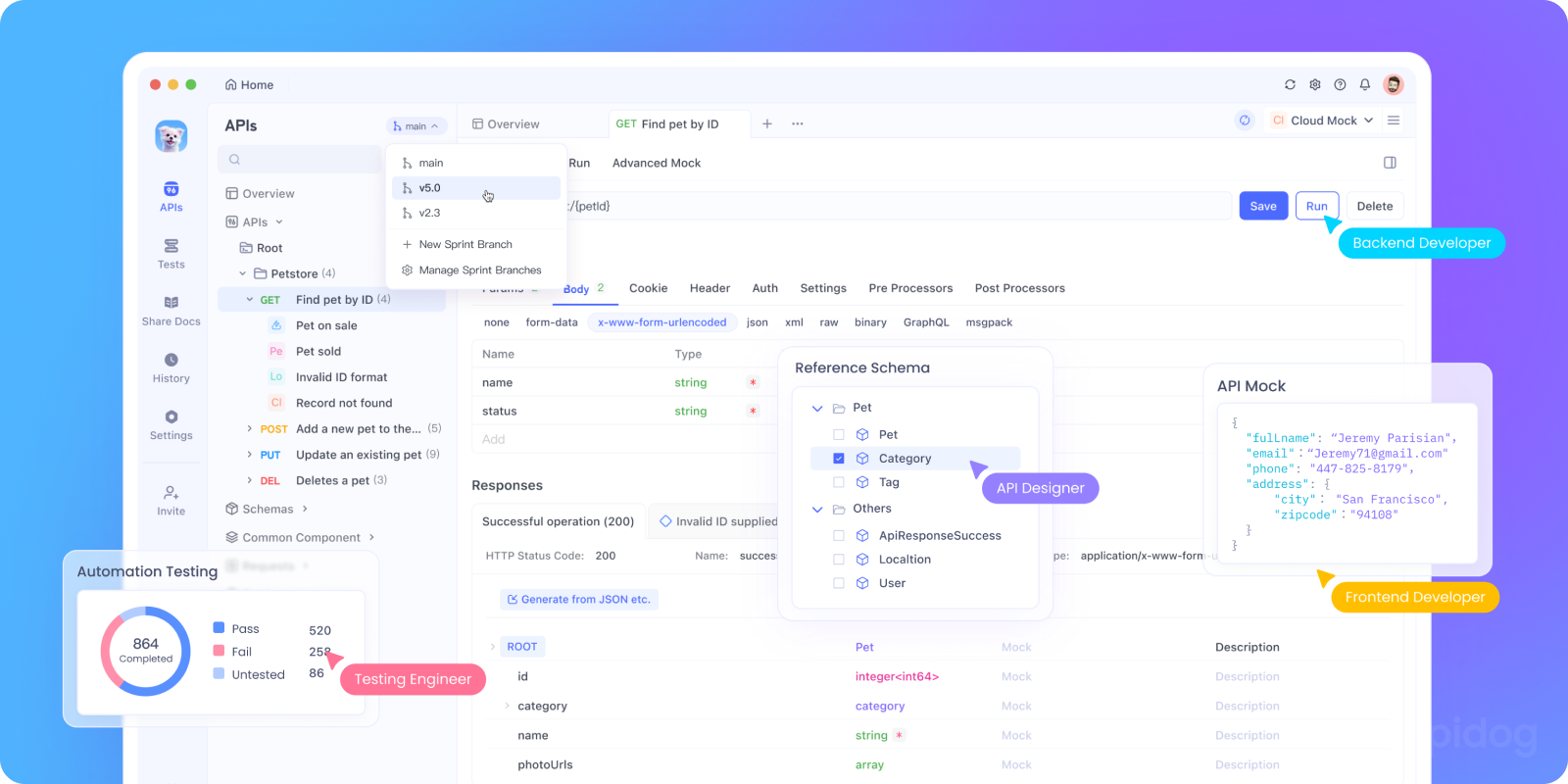
No matter which of the top API frameworks you choose, tools like Apidog supercharge your workflow by:
- Importing and exporting API definitions (Swagger, Postman, etc.)
- Generating online, interactive documentation
- Mocking API responses for front-end and QA teams
- Designing, testing, and debugging APIs collaboratively
Apidog’s language-agnostic platform ensures seamless integration with popular frameworks, enhancing productivity and ensuring consistency throughout the API lifecycle.
Conclusion: Empower Your Projects with the Top API Frameworks
The world’s most successful APIs are built on the foundation of well-chosen frameworks. By understanding the strengths and ideal scenarios for the top API frameworks, you can make informed decisions that ensure your projects are performant, scalable, and secure. Whether you’re building a lightweight MVP or a global-scale enterprise platform, there’s a framework that fits your needs.
Don’t forget: leveraging tools like Apidog can take your API workflow to the next level, from design and testing to documentation and collaboration.