Developers building fintech applications constantly seek efficient ways to handle financial transactions, and wire transfer APIs (bank transfer APIs) stand out as essential tools for enabling direct, secure bank-to-bank transfers. These APIs support a range of operations, from domestic ACH payments to international wires, allowing applications to automate payouts, remittances, and subscriptions with minimal user friction..
What Is a Wire Transfer API (Bank Transfer API)?
A wire transfer API (bank transfer API) functions as a programmatic interface that enables software applications to initiate, monitor, and manage electronic funds transfers directly between bank accounts. Distinct from card-based payment APIs, these focus on bank-linked transactions, often integrating with networks like the Automated Clearing House (ACH) in the United States, Single Euro Payments Area (SEPA) in Europe, or SWIFT for global wires.
From a technical standpoint, wire transfer APIs (bank transfer APIs) typically expose RESTful or GraphQL endpoints for core operations. For example, a standard API might include a POST /transfers/create endpoint where developers submit a JSON payload containing sender details, recipient IBAN or routing numbers, transfer amount, and currency code. Response structures often return a unique transaction ID for subsequent queries via GET /transfers/{id}, providing status updates like "pending," "processed," or "failed."
Security remains paramount, with most APIs mandating multi-factor authentication mechanisms such as API keys combined with OAuth 2.0 tokens or JWTs (JSON Web Tokens). Additionally, they incorporate encryption standards like TLS 1.3 for data in transit and comply with regulatory frameworks, including GDPR for data privacy and PCI DSS for payment security, though the latter applies more to card elements.
Beyond basic transfers, advanced wire transfer APIs (bank transfer APIs) offer features like batch processing for handling multiple transactions in a single call, reducing API overhead. Developers also benefit from sandbox environments that simulate real-world scenarios without actual fund movement, aiding in debugging and compliance testing.
How Do Wire Transfer APIs (Bank Transfer APIs) Work Technically?
Wire transfer APIs (bank transfer APIs) operate through a structured sequence of requests and responses that ensure secure, traceable fund movements. The process begins with authentication: developers generate an access token via a POST /auth/token endpoint, passing client credentials and scopes like "transfers.read" or "transfers.write." This token then authorizes subsequent calls.
Following authentication, account verification occurs. APIs often provide a GET /accounts/verify endpoint, where parameters such as account_number and sort_code are validated against bank databases. Some use Plaid-like linkages for instant verification, while others rely on micro-deposits—small test transfers that users confirm by reporting the amounts.
Once verified, transfer initiation follows. Developers craft a POST request to /transfers, including headers for idempotency (e.g., X-Idempotency-Key) to prevent duplicate processing if retries occur. The body might specify {"from": {"account_id": "acc_123"}, "to": {"iban": "DE89370400440532013000"}, "amount": 500.00, "currency": "EUR", "reference": "Invoice #456"}. The API validates inputs, checks for sufficient funds, and queues the transaction.
Processing happens asynchronously; the initial response provides a transfer_id, and developers poll GET /transfers/{id} or subscribe to webhooks for updates. Webhooks, configured via POST /webhooks, push JSON payloads to a specified URL upon events like "transfer_initiated" or "transfer_settled," including details such as timestamp and status_code.
Error handling integrates HTTP status codes: 200 for success, 400 for validation errors (e.g., invalid currency), 401 for unauthorized access, and 429 for rate limits exceeded. APIs often include retry-after headers and exponential backoff recommendations in documentation.
On the backend, these APIs interface with banking rails—ACH for low-cost, batch settlements (1-3 days) or RTP (Real-Time Payments) for instant transfers. For international wires, they handle currency conversion using mid-market rates and comply with OFAC sanctions screening.
Scalability features include pagination for listing transfers (e.g., ?limit=50&offset=0) and rate limiting (e.g., 100 requests/minute). Developers must manage session tokens' expiration, typically 3600 seconds, by implementing refresh logic.
Overall, this technical flow ensures efficiency, but developers must address integration challenges, leading us to why selection matters.
Why Should Developers Choose the Right Wire Transfer API (Bank Transfer API)?
Developers select the optimal wire transfer API (bank transfer API) to align with application requirements, avoiding pitfalls like high latency or non-compliance that could disrupt user experience. A mismatched API might result in delayed settlements, increasing churn in payment-dependent apps, whereas the right one delivers sub-second responses and robust error resilience.
Key evaluation criteria include performance metrics: APIs with average latencies below 200ms and SLAs guaranteeing 99.99% uptime support high-throughput scenarios, such as e-commerce payouts. Integration complexity also factors in; those offering SDKs in popular languages (e.g., Python's pip install sdk-name) reduce boilerplate code, enabling faster go-to-market.
Security protocols differentiate options—look for APIs with end-to-end encryption, tokenization of sensitive data, and built-in fraud detection using machine learning models that flag anomalous transfers based on velocity checks or geolocation mismatches.
Cost structures vary: transaction-based fees (e.g., $0.25 per ACH) suit variable volumes, while subscription models favor predictable high usage. Developers calculate TCO by factoring in setup costs, currency conversion markups, and refund handling for failed transfers.
Global reach proves essential for apps with international users; APIs supporting 150+ currencies and regions like APAC minimize cross-border fees. Compliance automation, such as automated KYC via integrated services, streamlines regulatory adherence.
In summary, the right API enhances scalability, allowing applications to handle spikes from 1,000 to 100,000 daily transfers without reconfiguration. With these considerations in mind, let's review the top performers.
Top 10 Wire Transfer APIs (Bank Transfer APIs) in 2026
This ranking draws from 2026 industry benchmarks, developer surveys, and performance data, focusing on technical depth, adoption rates, and innovation in wire transfer APIs (bank transfer APIs).
1. What Makes Stripe a Leading Wire Transfer API (Bank Transfer API)?
Stripe leads the pack with its versatile Transfers API, part of a broader payments ecosystem. Developers initiate transfers via POST /v1/transfers, authenticating with secret keys and scoping to connected accounts for platforms.
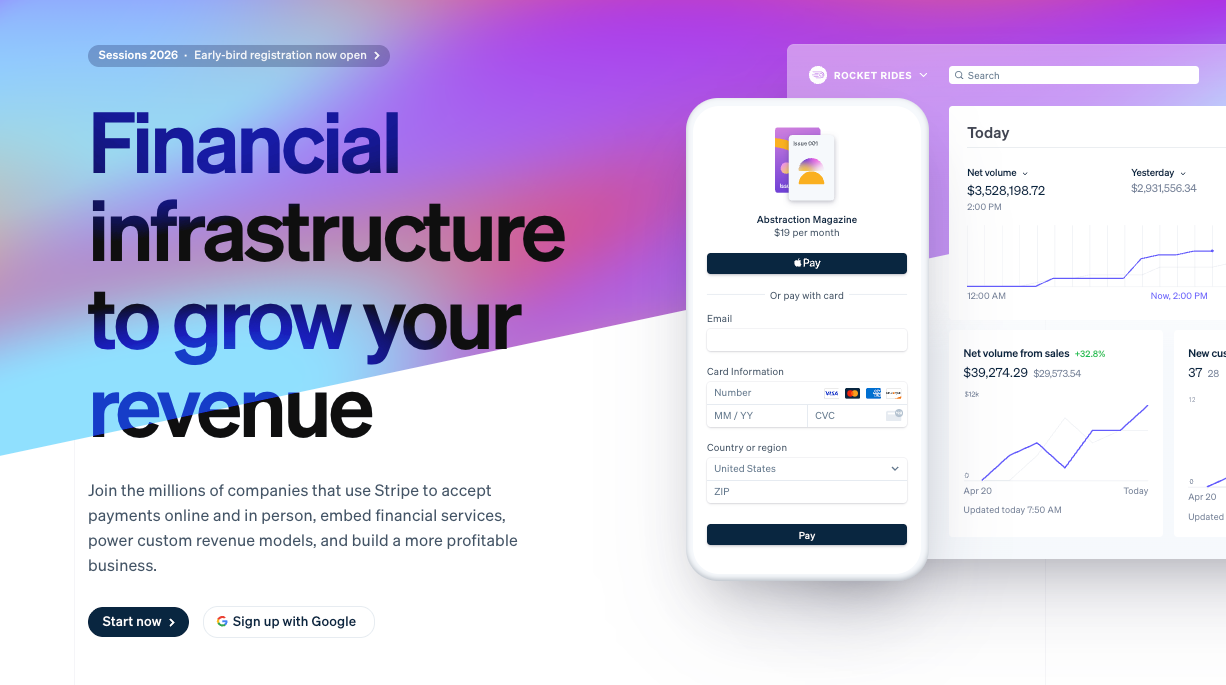
A typical call: curl -X POST https://api.stripe.com/v1/transfers -H "Authorization: Bearer sk_test_..." -d "amount=1000" -d "currency=usd" -d "destination=acct_1Example". Stripe handles routing intelligently, choosing ACH for domestic and wires for urgency.
Webhooks like "transfer.created" enable event-driven architectures, with payloads including metadata for custom tracking. SDKs in Node.js, Ruby, and more feature methods like stripe.transfers.create({}).
In 2026, Stripe's machine learning for fraud adds layers, analyzing patterns in real-time. Latency: 150ms average. Pricing: 0.25% for ACH, scalable to enterprises.
Pros: Extensive docs, Treasury integration for embedded banking. Cons: Higher fees for non-US transfers. Ideal for marketplaces like Shopify.
2. How Does Plaid Excel as a Bank Transfer API?
Plaid revolutionizes bank connectivity in wire transfer APIs (bank transfer APIs) through its Auth and Transfer products. Link banks via /link/token/create, then authorize transfers with /transfer/authorize.

Authentication uses client_id and access_token, with sandbox for testing. Payload example: {"account_id": "acc_id", "amount": "25.00", "user": {"legal_name": "John Doe"}}.
Plaid supports RTP for instant settlements, with webhooks for "TRANSFER_SWEEP" events. Mobile SDKs integrate seamlessly into apps.
Latency: 180ms. Pricing: Free for basics, $0.40 per transfer. Strong US coverage, expanding globally.
Pros: Data enrichment with transaction categorization. Cons: Limited to partnered banks. Suits neobanks like Chime.
3. Why Is Dwolla a Reliable Wire Transfer API (Bank Transfer API) for ACH?
Dwolla specializes in ACH-focused wire transfer APIs (bank transfer APIs), optimizing for cost. Create funding sources via POST /funding-sources, then transfers with /transfers.
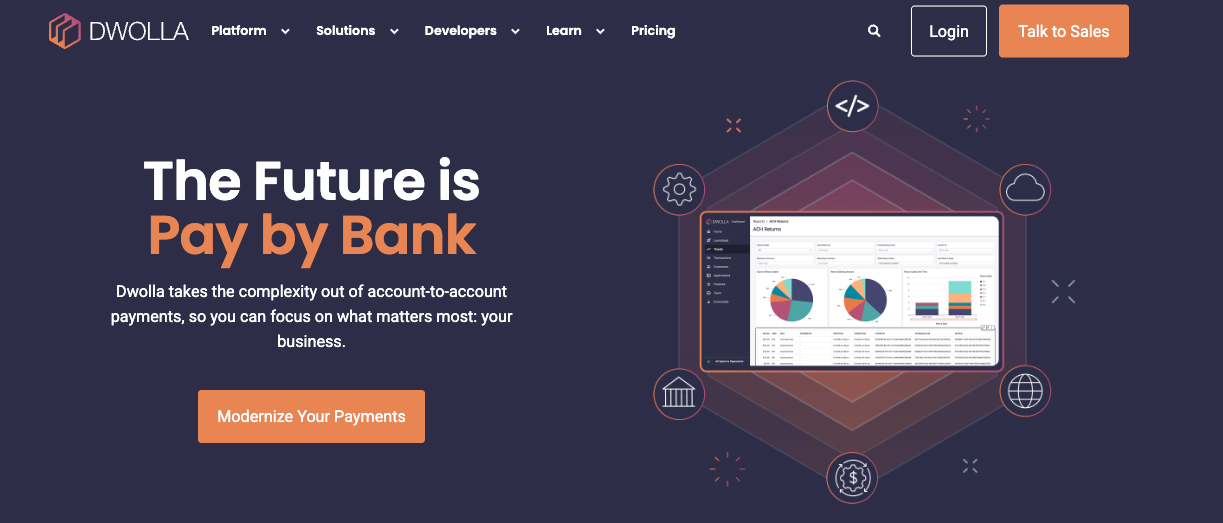
OAuth tokens authenticate, with payloads like {"_links": {"source": {"href": "..."}}, "amount": {"value": "50.00", "currency": "USD"}}.
Same-day ACH cuts times, webhooks notify "customer_verified." Python SDK simplifies: dwolla.transfers.create().
Latency: 220ms. Flat fee: $0.05/transfer. US/Canada focus.
Pros: White-label capabilities. Cons: No instant options. Great for payroll like Gusto.
4. What Sets TrueLayer Apart in Open Banking as a Bank Transfer API?
TrueLayer harnesses PSD2 for European wire transfer APIs (bank transfer APIs). Initiate via POST /v3/payments, using client_secret for JWT.
Example: {"amount_in_minor": 5000, "currency": "GBP", "remitter": {}}. Instant via FPS.
Webhooks for "payment_executed." Go SDK available.
Latency: 120ms. Fee: 0.3%. EU/UK centric.
Pros: AISP integration. Cons: Regulatory dependencies. Used by Updraft.
5. How Does Wise API Handle International Wire Transfers Effectively?
Wise excels in multi-currency wire transfer APIs (bank transfer APIs). POST /v1/transfers with token auth.
Payload: {"targetAccount": 123, "quoteUuid": "uuid", "amount": 100}.
Local routing minimizes fees, webhooks for status.
Latency: 200ms. Fee: 0.43% average.
Pros: 50+ currencies. Cons: Slower for exotic pairs. Powers remittances in apps like Remitly.
6. Why Choose PayPal as a Versatile Bank Transfer API?
PayPal's Payouts API supports batch wire transfer APIs (bank transfer APIs). POST /v1/payments/payouts with OAuth.
Example: {"sender_batch_header": {}, "items": [{"amount": {"value": "9.87"}}}.
Global ACH/wires, webhooks for "PAYOUT_BATCH".
Latency: 250ms. Fee: 2% international.
Pros: Brand trust. Cons: Higher costs. E-commerce staple.
7. What Technical Advantages Does Adyen Offer as a Wire Transfer API (Bank Transfer API)?
Adyen unifies with Transfers API. POST /transfers, API key auth.

{"merchantAccount": "YOUR_MERCHANT_ACCOUNT", "amount": {"value": 1500, "currency": "EUR"}}.
SEPA/instant, webhooks for balances.
Latency: 140ms. Fee: 0.1% + €0.22.
Pros: Omnichannel. Cons: Complex config. For Netflix-scale.
8. How Does Square Facilitate Bank Transfers for Developers?
Square's API for disbursements. POST /v2/payouts, bearer token.

{"idempotency_key": "key", "destination": {"type": "BANK_ACCOUNT"}}.
Next-day ACH, webhooks "payout.sent".
Latency: 190ms. Fee: 1%.
Pros: POS integration. Cons: US-only. Retail apps.
9. Why Is MX a Strong Contender for Banking Wire Transfer APIs?
MX combines aggregation and transfers. POST /transfers, API key.

{"user_guid": "USR-123", "amount": 200}.
ACH/RTP, webhooks "TRANSFER_CREATED".
Latency: 210ms. Subscription pricing.
Pros: Analytics. Cons: Data-heavy. Wealth apps.
10. What Makes Checkout.com a Comprehensive Bank Transfer API?
Checkout.com offers Payouts API for wire transfer APIs (bank transfer APIs). POST /payouts, API key.

{"destination": {"type": "bank_account"}, "amount": 1000, "currency": "USD"}.
Global coverage, webhooks for "payout_updated".
Latency: 160ms. Fee: 0.25% + $0.30.
Pros: Fraud tools. Cons: Enterprise focus. E-com platforms.
How to Integrate Wire Transfer APIs (Bank Transfer APIs) Securely?
Secure integration starts with environment setup: use .env for keys, never hardcode. Implement OAuth flows with libraries like passport.js.
Map endpoints in code, handle async with promises. For errors, use switch on status codes, log with Winston.
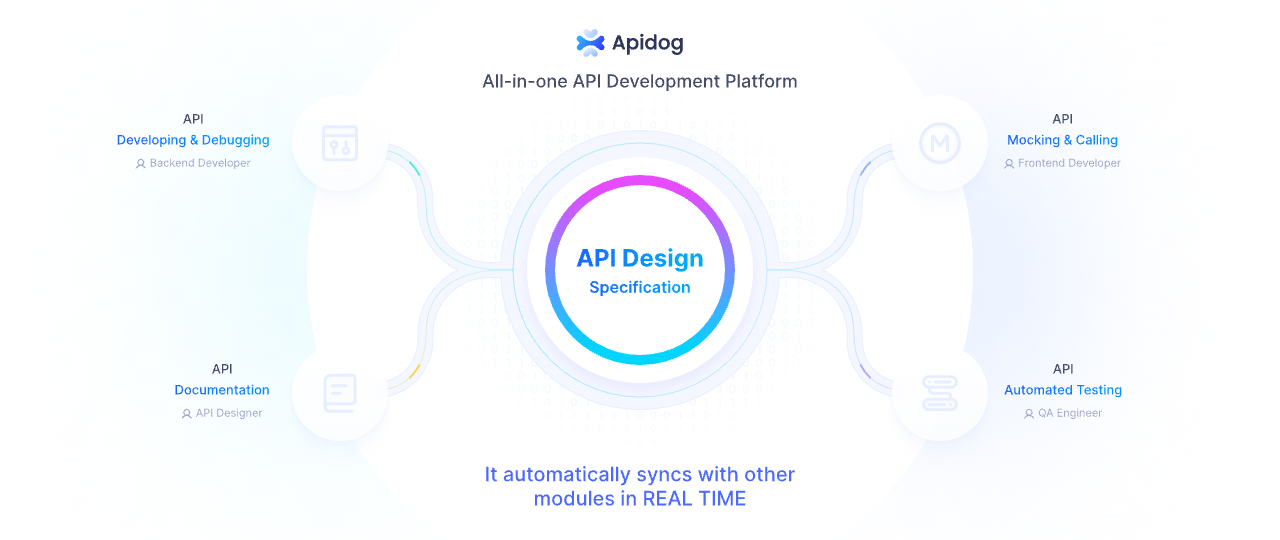
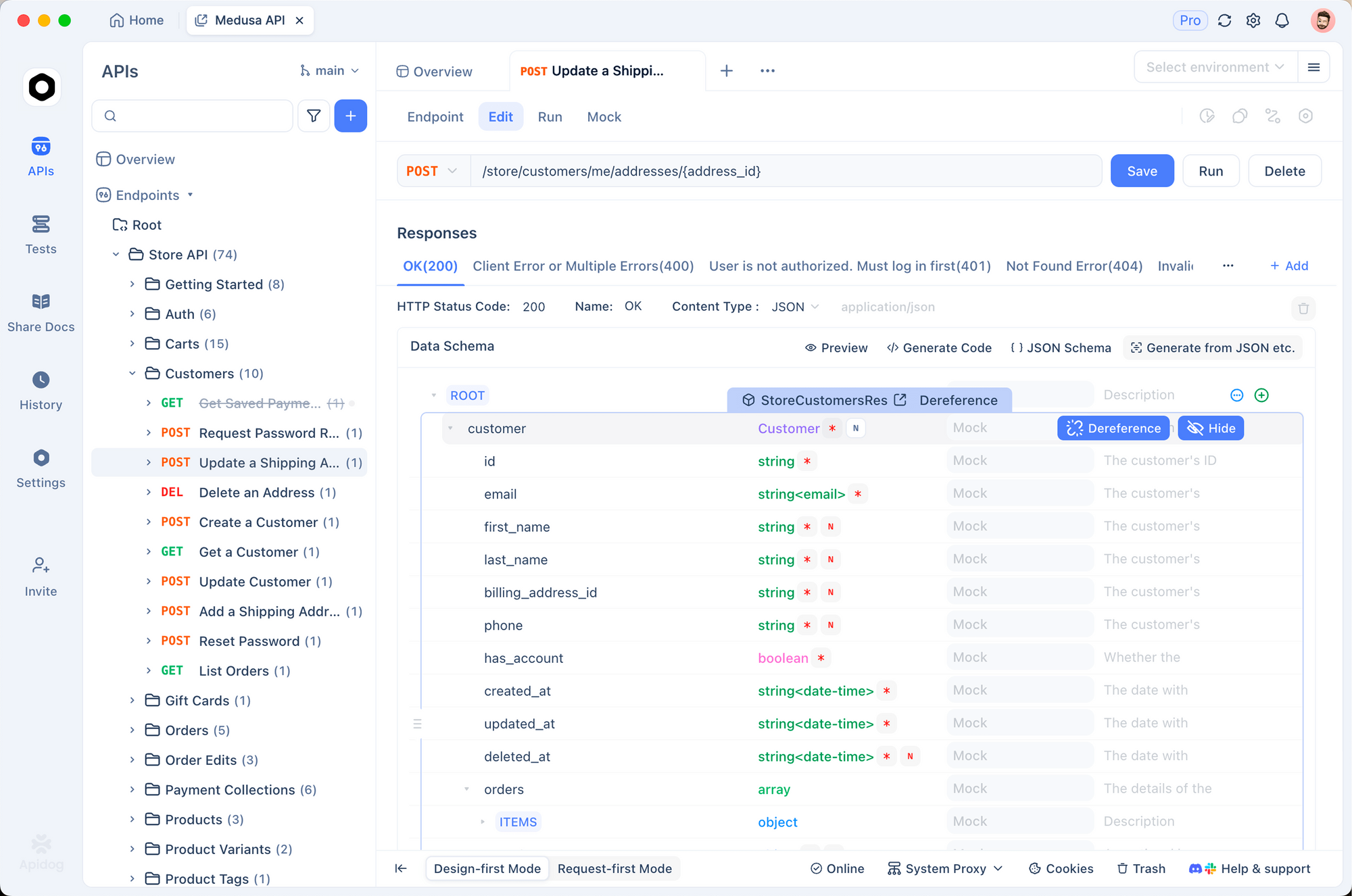
Test with Apidog mocks. Compliance: encrypt PII, audit logs.
Monitor with Prometheus for metrics.
Comparing Fees and Performance of Top Wire Transfer APIs (Bank Transfer APIs)
| API | Fee per Transfer | Latency (ms) | Global Support | Uptime SLA | SDK Languages |
|---|---|---|---|---|---|
| Stripe | 0.25% for ACH | 150 | Yes | 99.99% | 8+ |
| Plaid | $0.40 | 180 | Partial | 99.95% | 5 |
| Dwolla | $0.05 | 220 | No | 99.9% | 3 |
| TrueLayer | 0.3% | 120 | EU/UK | 99.98% | 4 |
| Wise | 0.43% average | 200 | Yes | 99.95% | 6 |
| PayPal | 2% international | 250 | Yes | 99.9% | 7 |
| Adyen | 0.1% + €0.22 | 140 | Yes | 99.99% | 5 |
| Square | 1% | 190 | No | 99.98% | 4 |
| MX | Subscription-based | 210 | Partial | 99.9% | 3 |
| Checkout.com | 0.25% + $0.30 | 160 | Yes | 99.97% | 6 |
This table highlights variances, aiding quick comparisons.
Common Challenges with Wire Transfer APIs (Bank Transfer APIs) and Solutions
Challenges arise in handling failures: network timeouts lead to uncertain states. Solutions involve idempotency keys and status polling with exponential backoff.
Fraud risks persist; mitigate with API-built ML or external services like Sift, scoring transactions on IP, device fingerprints.
Compliance hurdles, like varying KYC rules, resolve through modular integrations with providers like Onfido.
Scalability issues during peaks: use queuing systems like RabbitMQ to buffer requests.
Currency fluctuations affect international transfers; hedge with API rate locks.
Debugging complex: leverage tools like Apidog for tracing.
Conclusion
Navigating the top 10 wire transfer APIs (bank transfer APIs) reveals diverse options for fintech developers. From Stripe's versatility to Wise's international prowess, each offers unique technical advantages. Assess your needs—volume, speed, cost—and integrate securely. For testing, remember to download Apidog for free to accelerate development. As the sector advances, staying updated ensures competitive edges in financial innovation.