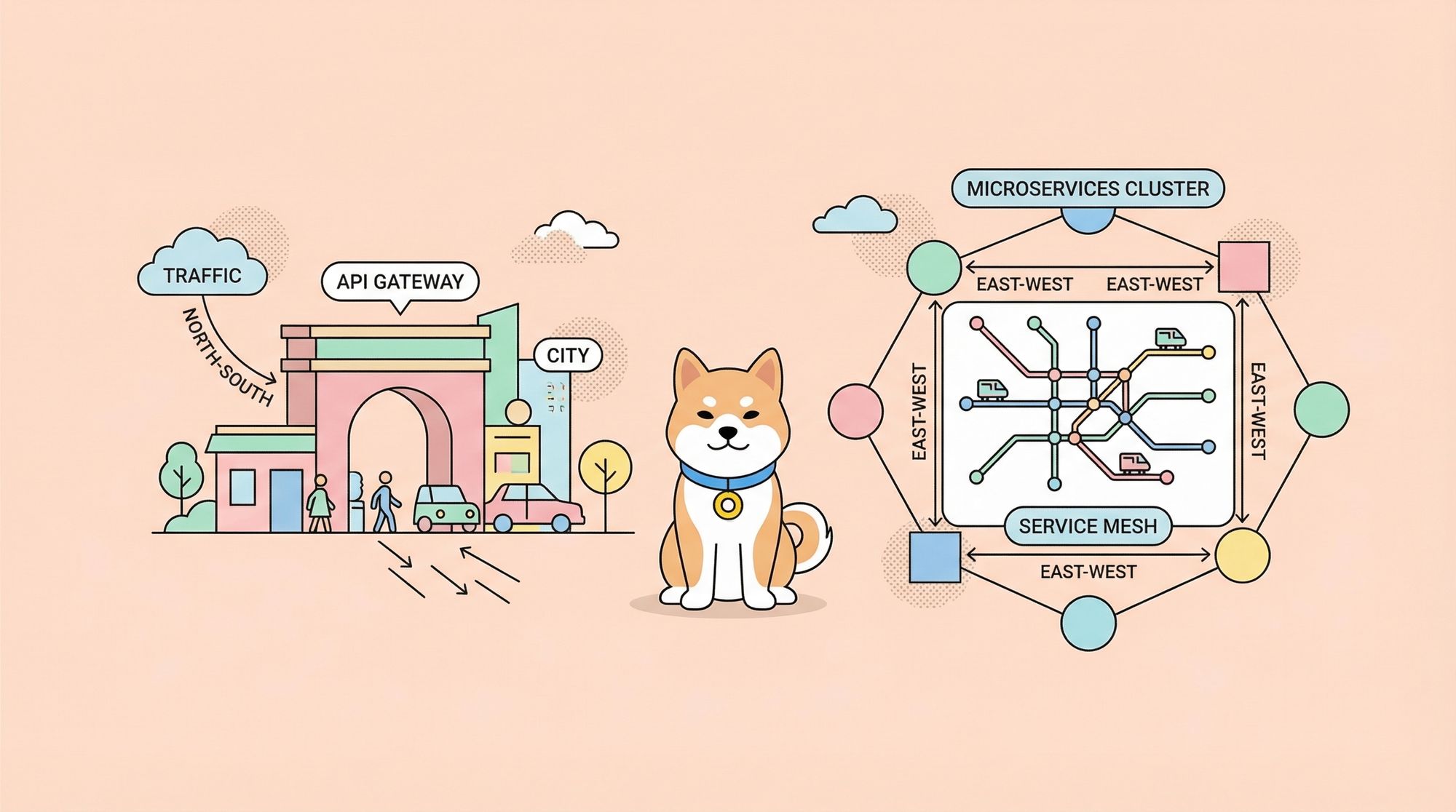
Modern cloud-native applications rely heavily on microservices, and as these architectures grow, managing service-to-service and client-to-service communication becomes increasingly complex. This is where the debate of "service mesh vs API gateway" comes front and center. Understanding the key differences, overlaps, and how they can work together is crucial for architects, developers, and DevOps teams alike.
In this guide, we'll break down service mesh vs API gateway in detail, covering definitions, primary use cases, differences, similarities, and real-world examples. We’ll also show how tools like Apidog help streamline API development in either approach.
What Is Service Mesh vs API Gateway?
Before diving into the nuances of "service mesh vs API gateway," let’s define each term and see why distinguishing between them matters.
What Is an API Gateway?
An API gateway is a server or service that acts as the single entry point for all client requests into your microservices system. It manages north-south traffic (traffic between external clients and your internal services). API gateways provide features such as:
- Authentication and authorization
- Request routing and aggregation
- Rate limiting and throttling
- Protocol translation (e.g., REST to gRPC)
- API versioning
- Monitoring, logging, and analytics
API gateways are critical for exposing your internal services to the outside world in a secure, manageable, and scalable way.
What Is a Service Mesh?
A service mesh is an infrastructure layer that manages east-west traffic—the communication between internal microservices. Rather than focusing on client-to-service traffic, a service mesh handles the complex network requirements of service-to-service interactions, including:
- Service discovery and load balancing
- Mutual TLS and secure communication
- Traffic splitting, canary releases, and A/B testing
- Retries, timeouts, and circuit breaking
- Distributed tracing and observability
A service mesh typically uses lightweight sidecar proxies alongside each service instance to transparently intercept and manage internal traffic.
Why Does Service Mesh vs API Gateway Matter?
Choosing between a service mesh and an API gateway—or understanding when to use both—is essential for:
- Ensuring security at different boundaries
- Simplifying traffic management and deployments
- Achieving fine-grained observability and control
- Avoiding unnecessary complexity and overhead
The right approach ensures your APIs and services are robust, secure, and easy to maintain.
Service Mesh vs API Gateway: Key Differences
Let’s compare service mesh vs API gateway using several critical dimensions.
1. Scope of Traffic
- API Gateway: Handles traffic between external clients and internal services (north-south).
- Service Mesh: Manages internal microservice-to-microservice traffic (east-west).
2. Core Responsibilities
| Feature/Functionality | API Gateway | Service Mesh |
|---|---|---|
| Authentication | Yes | Yes (internal only) |
| Rate Limiting | Yes | Sometimes |
| Request Transformation | Yes | No |
| Service Discovery | Basic | Advanced |
| Load Balancing | Basic | Advanced |
| Traffic Splitting | Limited | Extensive |
| Observability | Yes | Advanced |
| Resilience Patterns | Limited | Advanced |
| Protocol Translation | Yes | No |
| Developer Portal | Yes | No |
3. Placement in Architecture
- API Gateway: Sits at the network edge, before requests enter your internal network.
- Service Mesh: Runs alongside each service (often as a sidecar), managing traffic inside your cluster.
4. Security Focus
- API Gateway: Focuses on perimeter security, API keys, OAuth, JWT validation, etc.
- Service Mesh: Focuses on internal security, mutual TLS, service-to-service authorization.
5. Observability
- API Gateway: Provides high-level API monitoring, usage analytics.
- Service Mesh: Enables deep observability, distributed tracing, and granular metrics for every service interaction.
Service Mesh vs API Gateway: Where Do They Overlap?
While service mesh vs API gateway are distinct, there are areas of overlap. Both can:
- Handle authentication and authorization
- Provide some level of traffic routing and load balancing
- Enable observability and monitoring
However, their focus and depth in these areas differ. For example, an API gateway may provide API key validation for external clients, while a service mesh implements mutual TLS between internal services.
When to Use Service Mesh vs API Gateway (or Both)
API Gateway: When It’s the Right Choice
Use an API gateway when you need:
- To securely expose your microservices to external clients
- Centralized authentication and authorization for all APIs
- Request transformation, protocol mediation, or aggregation
- Developer portal for API documentation and onboarding
- Rate limiting to protect backend services from abuse
Example: A SaaS product exposing REST APIs to mobile and web apps uses an API gateway to manage authentication, API versioning, and usage analytics.
Service Mesh: When It’s Essential
Choose a service mesh if you need:
- Advanced traffic management (canary releases, traffic splitting, A/B testing)
- Secure, encrypted service-to-service communication (mTLS)
- Fine-grained observability (distributed tracing, per-service metrics)
- Automated service discovery and load balancing
- Resilience features like retries, timeouts, and circuit breaking
Example: A large-scale microservices deployment in Kubernetes, where hundreds of services interact, uses a service mesh to manage internal security and reliability.
When to Use Both
In many modern architectures, service mesh and API gateway are complementary:
- The API gateway manages all ingress traffic and external API management.
- The service mesh handles intra-service communication and internal traffic policies.
This layered approach maximizes security, scalability, and manageability.
Practical Examples: Service Mesh vs API Gateway in Action
Let’s see how service mesh vs API gateway play out in real-world scenarios.
Example 1: E-Commerce Platform
- API Gateway: Handles all customer-facing requests (login, checkout, product search). Manages authentication, rate limiting, and API documentation for external partners.
- Service Mesh: Manages internal traffic between microservices (inventory, payment, recommendations), ensuring secure, reliable, and observable service-to-service calls.
Example 2: API Monetization
- API Gateway: Provides a developer portal, API key management, usage tracking, and billing integration—essential for monetizing APIs.
- Service Mesh: Ensures internal traffic between billing, analytics, and core services is secure and resilient.
Example 3: Canary Deployments
- API Gateway: Routes a portion of external traffic to a new API version.
- Service Mesh: Manages more granular traffic splitting and observability for internal services, enabling safe canary or blue-green deployments.
Example 4: Protocol Translation
- API Gateway: Converts external REST calls to internal gRPC or GraphQL, allowing legacy clients to interact with modernized microservices.
- Service Mesh: Focuses on optimizing and securing internal gRPC traffic.
Service Mesh vs API Gateway: Code and Configuration Examples
To further clarify service mesh vs API gateway, here are simplified configuration snippets:
API Gateway Example (Kong)
apiVersion: configuration.konghq.com/v1
kind: KongIngress
metadata:
  name: rate-limited-api
route:
  strip_path: true
  protocols:
    - https
plugin:
  - name: rate-limiting
    config:
      minute: 100
      policy: redis
  - name: key-auth
    config:
      key_names:
        - x-api-key
This config sets up rate limiting and API key authentication for external traffic.
Service Mesh Example (Istio)
apiVersion: networking.istio.io/v1beta1
kind: VirtualService
metadata:
  name: reviews-routing
spec:
  hosts:
    - reviews
  http:
    - match:
        - sourceLabels:
            app: productpage
      route:
        - destination:
            host: reviews
            subset: v2
      retries:
        attempts: 3
        perTryTimeout: 2s
        retryOn: 5xx
This Istio VirtualService manages internal routing and retry logic between services.
Service Mesh vs API Gateway: Best Practices
- Don’t use a service mesh as an API gateway: Service mesh isn’t designed to handle external API management, protocol translation, or developer onboarding.
- Don’t overload your API gateway: While some API gateways offer limited service discovery or mesh-like features, avoid using it for internal traffic management at scale.
- Use both for layered security: Apply gateway-level controls for external clients, and mesh-level security for internal traffic.
- Leverage tools like Apidog: With Apidog, you can design, document, and test APIs that will be managed by your API gateway. You can also model and simulate service-to-service interactions, which is ideal when designing for environments using a service mesh.
Apidog and Service Mesh vs API Gateway
Regardless of whether you’re architecting around a service mesh, an API gateway, or both, Apidog offers robust support for:
- API design and documentation: Create clear, spec-driven APIs ready for gateway management.
- Mocking and testing: Simulate both client-to-service and service-to-service calls, essential for both API gateway and service mesh scenarios.
- Versioning and collaboration: Perfect for teams managing complex microservices architectures.
When comparing service mesh vs API gateway, having comprehensive API design and testing practices in place with Apidog ensures a smooth transition between design, implementation, and deployment.
Conclusion: Making the Right Choice in Service Mesh vs API Gateway
Service mesh vs API gateway is not a matter of choosing one over the other, but understanding their distinct roles. API gateways are vital for managing external API traffic and providing a unified entry point, while service meshes are indispensable for managing complex internal service communication.
In most modern architectures, using both delivers the best of both worlds: robust external API management and secure, observable, resilient internal communication. Tools like Apidog further streamline the design and testing process, regardless of your chosen architecture.