You're on a tight deadline. The frontend team is ready to build, but the backend API is still in design phase. Or maybe you're testing how your application handles API failures, slow responses, or specific edge cases. You need realistic API responses, but you can't or don't want to rely on an external cloud service.
This is where self-hosted API mock servers shine. They give you complete control, privacy, and flexibility to simulate APIs right on your own infrastructure. Whether you're developing in a air-gapped corporate environment, concerned about data privacy, or just want everything running locally for speed, self-hosting your mocks is a powerful strategy.
But with so many options available, how do you choose the right one? Should you use a dedicated tool, or build something yourself?
If you're tired of depending on external services for your development workflow, this guide is for you. We'll explore the landscape of self-hosted mock servers, compare the top contenders, and help you find the perfect fit for your team.
If your organization needs to keep all API specs, mock data, and traffic inside your own infrastructure—whether for privacy, compliance, or internal network requirements—you can run Apidog's self-hosted mock runner directly on your servers or private cloud.
Now, let's explore your self-hosted options!
1. WireMock: The Enterprise-Grade Mock Server
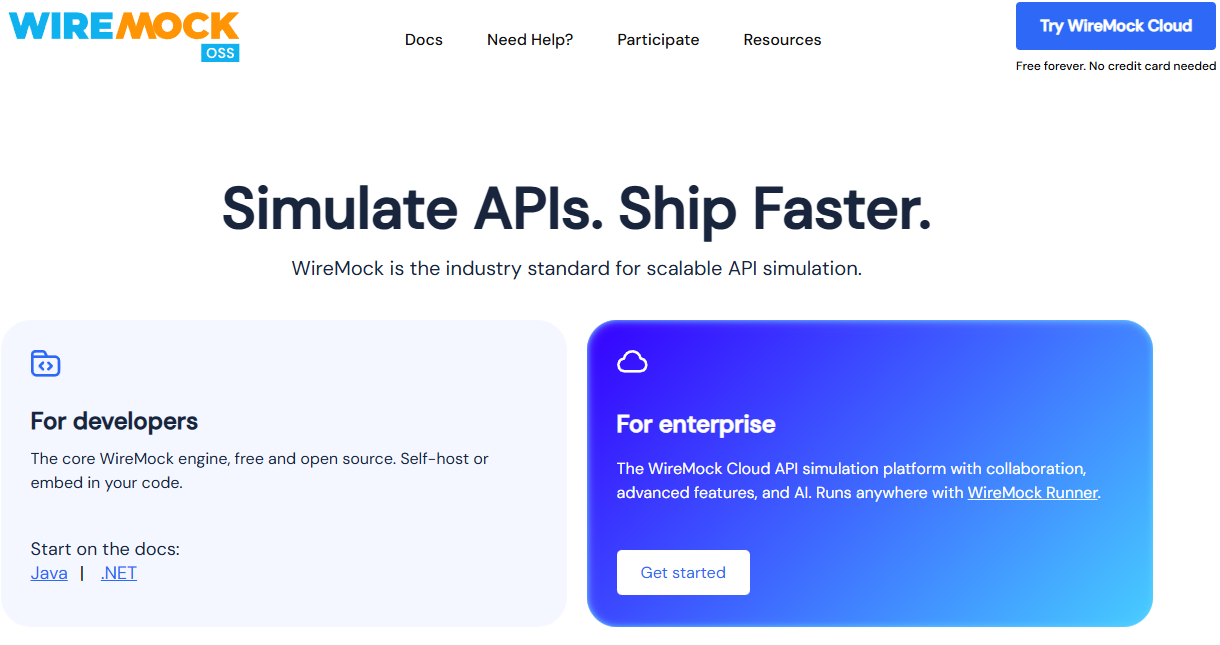
Overview: WireMock is arguably the most powerful and feature-complete open-source mock server available. It's Java-based but can be run as a standalone server or embedded in your tests.
Key Features:
- Record & Playback: Capture traffic from real APIs and replay it as mocks.
- Dynamic Response Templating: Use Handlebars or other templating engines to generate dynamic responses.
- Stateful Behavior: Simulate state changes across multiple requests (e.g., a resource being created then fetched).
- Fault Injection: Easily simulate network failures, delays, and malformed responses.
- Request Matching: Incredibly flexible matching on headers, body content (JSON, XML), query parameters, and cookies.
What WireMock is great at:
- Complete control
- Highly customizable stubs
- Can simulate delays, faults, stateful flows
- Great for microservices
- Runs via Java, Docker, or standalone
Downsides:
- No graphical UI
- No collaboration
- No automatic documentation
- Difficult for non-technical users
- REST-only (no native GraphQL or WebSocket support)
Deployment Options:
- Standalone JAR: Run it with
java -jar wiremock-standalone.jar - Docker Container:
docker run -it --rm -p 8080:8080 wiremock/wiremock - Embedded in Tests: Use as a library in your Java, JUnit, or Spring Boot tests.
Best For: Teams that need industrial-strength mocking, especially in Java/Kotlin ecosystems or for complex testing scenarios.
2. MockServer: The Protocol-Agnostic Powerhouse
Overview: MockServer is another Java-based contender that's particularly strong at mocking not just HTTP, but also HTTPS, WebSockets, and even SMTP.
Key Features:
- Multiple Protocol Support: Mock HTTP, HTTPS, WebSockets out of the box.
- Expectation Management: Clear API for setting up what requests should return what responses.
- JavaScript Templating: Use JavaScript to generate dynamic responses.
- Verification: Verify that certain requests were made during testing.
- Proxy Mode: Can act as a proxy to record or modify traffic.
Deployment:
- Docker:
docker run -d --rm -p 1080:1080 mockserver/mockserver - Java: Run as standalone or embed in tests.
Best For: Teams needing to mock beyond simple REST APIs (WebSockets, etc.) or those who like its clean expectation API.
3. JSON Server: The Zero-Code REST Mock
Overview: JSON Server is a brilliantly simple Node.js tool that creates a full fake REST API from a single JSON file in under 30 seconds.
Pros:
- Very lightweight
- Zero configuration
- Great for small prototypes
Cons:
- Not suitable for real API workflows
- No collaboration
- No environment system
- No automation
How it works: You create a db.json file:
{
  "posts": [
    { "id": 1, "title": "First Post", "author": "Jane" }
  ],
  "comments": [
    { "id": 1, "body": "Great post!", "postId": 1 }
  ]
}
Then run json-server --watch db.json. Instantly, you have REST endpoints:
GET /postsGET /posts/1POST /postsPUT /posts/1DELETE /posts/1GET /posts/1/comments(relationship)
Best For: Frontend developers who need a quick, zero-configuration REST API for prototyping. It's not as flexible for complex scenarios but is incredibly fast to set up.
4. Postman Mock Server (Self-Hosted)
Overview: While Postman is known for its cloud features, they offer Postman's open-source mock server that you can run locally.
How it works: You define your API in a Postman Collection, then use the Newman CLI (Postman's command-line collection runner) with a mock server extension.
Key Features:
- Leverage Postman Collections: If your team already uses Postman for API design/testing, this is a natural fit.
- Example-based: Responses are based on the examples you save in your collection.
- Integration with CI/CD: Can be run via Newman in your pipeline.
Deployment: More complex setup involving Node.js, Newman, and the mock server module.
Best For: Teams already deeply invested in the Postman ecosystem who want to bring mocking in-house.
5. Prism (Stoplight)
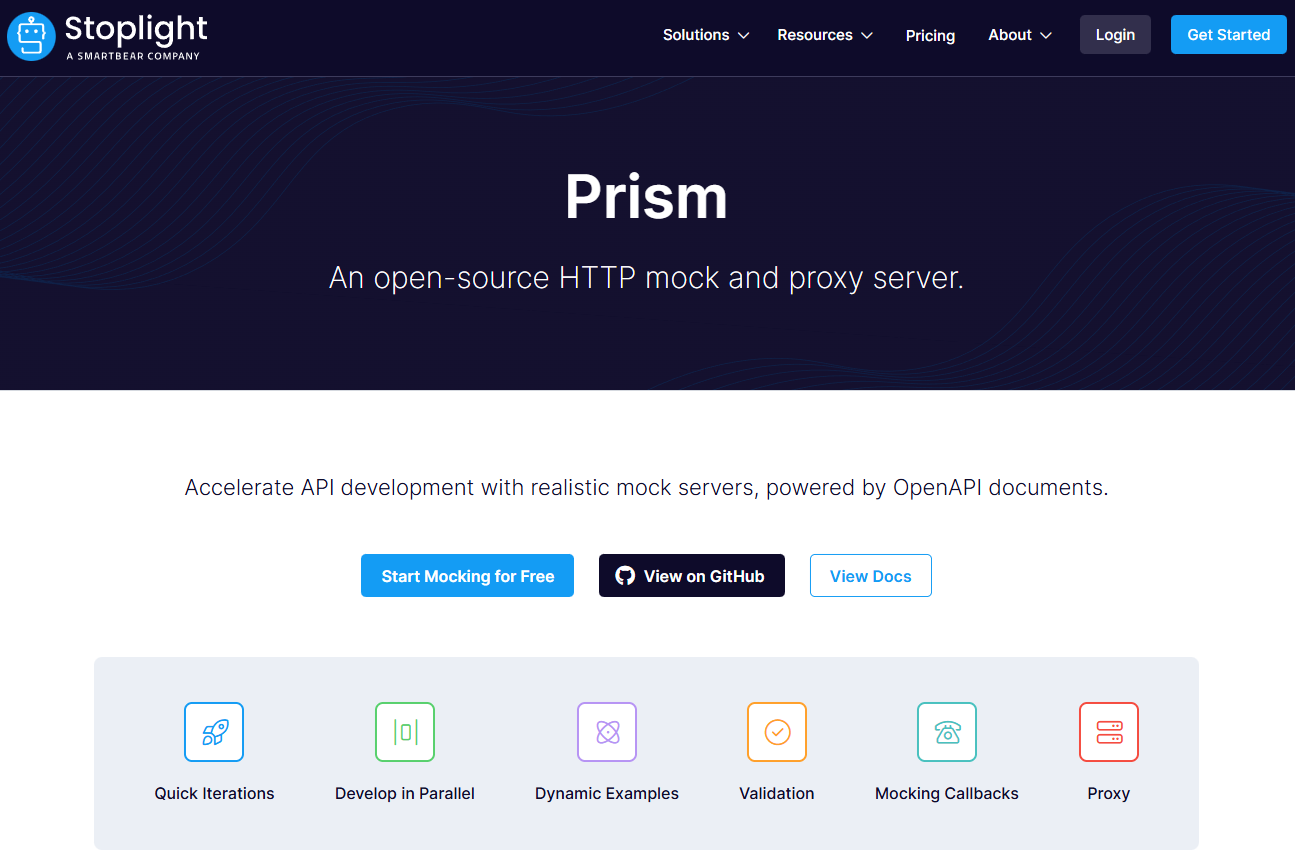
Overview: Prism is an open-source mock server from Stoplight that's built specifically for OpenAPI (formerly Swagger) specifications.
Key Features:
- OpenAPI-First: It validates requests against your OpenAPI spec and returns appropriate errors.
- Dynamic Examples: Can generate realistic mock data based on your schema (e.g., random email addresses, names).
- Proxy Mode: Can act as a validation proxy between your client and real API.
- HTTP Mocking: Simulates different HTTP behaviors.
Benefits:
- Follows your spec exactly
- Can validate requests
- CLI-based and Docker-ready
- Works well with CI/CD
Limitations:
- No UI
- No collaboration
- No advanced mocking logic
- Not ideal for non-technical users
Deployment: Available as a CLI tool or Docker container.
docker run --rm -it -p 4010:4010 stoplight/prism:4 mock -h 0.0.0.0 <https://raw.githubusercontent.com/OAI/OpenAPI-Specification/main/examples/v3.0/petstore.yaml>
Best For: Teams practicing API-first design with OpenAPI/Swagger who want spec-compliant mocking.
6. Mountebank
Overview: Mountebank takes a unique approach. It's not just an HTTP mock server; it's a test double that can mock any protocol by extending it.
Key Features:
- Multi-Protocol: Core support for HTTP, HTTPS, TCP, and SMTP. Others can be added.
- Scriptable: Inject custom JavaScript/Node.js logic for complex responses.
- Imposters: Each mock is called an "imposter" with its own port and protocol.
- Predicates: Sophisticated request matching logic.
Deployment: Node.js application, runs as a service.
Best For: Teams needing to mock non-HTTP protocols or who want extreme flexibility through scripting.
7. Mirage JS (Front-End Focused Mock Server)
Mirage is built for frontend developers using:
- React
- Vue
- Svelte
- Ember
- Next.js
It creates a mock API inside your frontend app.
Pros:
- Great for frontend-heavy teams
- Works offline
- Integrates directly with UI development
- Allows stateful mocks
Cons:
- Not a real network mock
- Not ideal for backend or QA
- Exists only in the frontend layer
Leverage Apidog as Self-hosted Mock Server and More
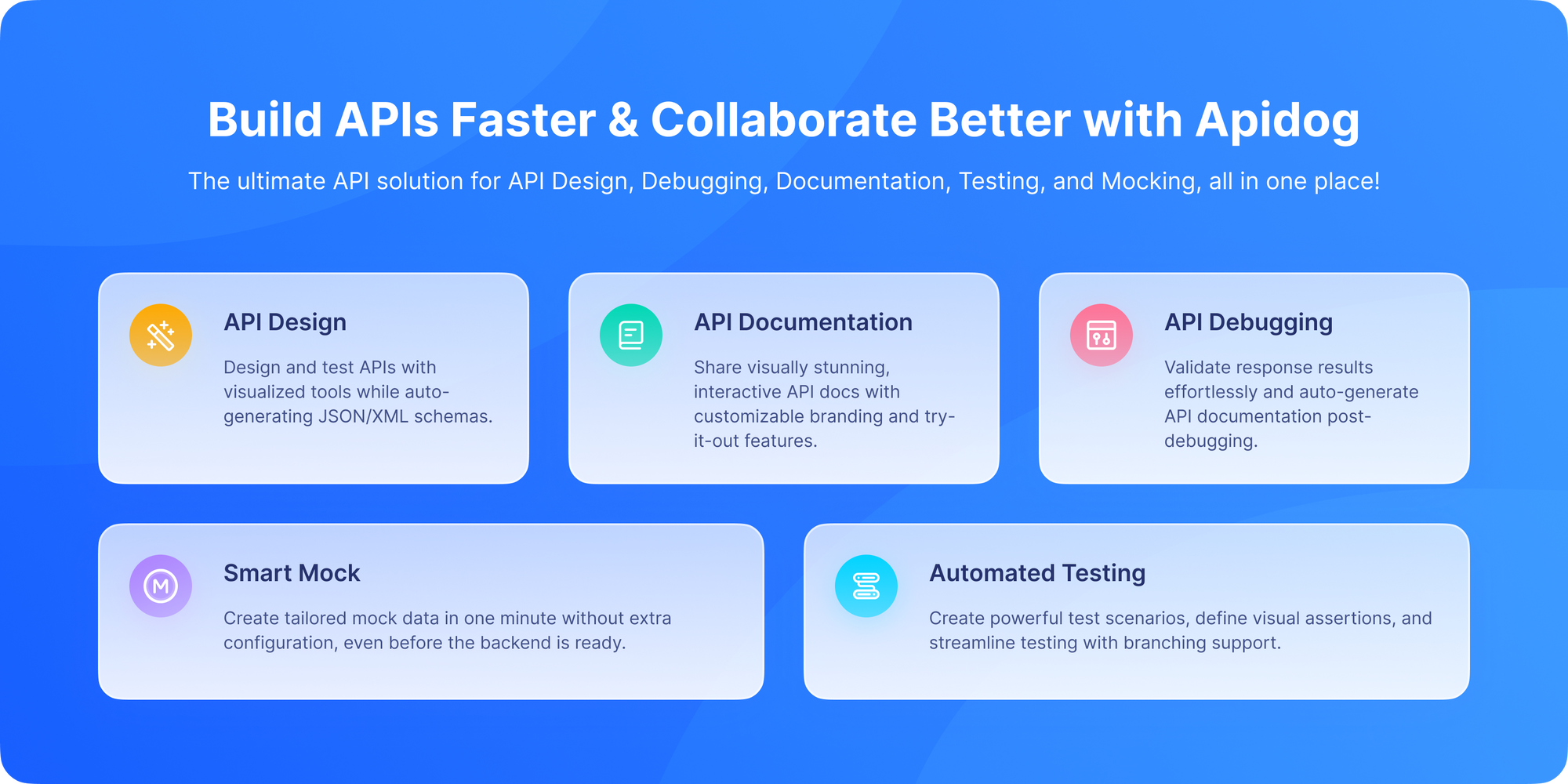
Most mock server tools focus on only mocking. If you're looking for a complete API platform that includes mock servers, API design, collaboration, debugging, documentation, testing, and automation, Apidog stands at the top.
One of Apidog's major strengths is that it supports both:
So for organizations needing private, isolated mocking, Apidog's self-hosted mock runner gives you all the benefits of their cloud platform, but running on your own infrastructure.
Apidog is different.
It helps teams manage the entire API lifecycle, including:
- API design
- API documentation
- API testing
- Mock generation
- Collaboration
- Environments & variables
- CI/CD workflows
- Permissions/roles
- Global team sync
- Self-hosted mock & cloud mock options
Apidog’s Mock Capabilities
- Auto-generated mock responses from API definitions
- Dynamic and rule-based response templates
- Random data generators (e.g., name, email, location)
- Multi-environment mocking
- Integrated team collaboration
- Self-hosted runner mock option
- Cloud mock option
- Role-based access control
- Zero-code or advanced script-based mocks
The self-hosted runner is perfect for teams requiring:
- On-prem deployments
- Private cloud environments
- Internal development networks
- Highly sensitive data workflows
- Large-scale mocking for microservices
Instead of stitching tools together, Apidog gives you one platform where:
Design → Mock → Test → Document → Share
all happen in a unified ecosystem.
For large teams, enterprise needs, or global engineering organizations, this is a huge advantage.
Why Choose a Self-Hosted Mock Server?
A self-hosted API mock server is a service you run on your own infrastructure on-premises, on your company’s private cloud, on a VM, or inside Docker that returns mocked responses for API endpoints.
Before we look at specific tools, let's understand why you might choose to self-host rather than use a SaaS solution.
1. Data Privacy and Security
This is the biggest reason for many organizations. When you self-host, your API specifications, mock data, and traffic never leave your network. This is crucial for:
- Healthcare applications (HIPAA compliance)
- Financial services with sensitive data
- Government or defense projects
- Any team working with proprietary or regulated data
2. Offline Development
Developers on planes, trains, or in areas with unreliable internet can continue working. Your mock server runs locally on your laptop.
3. Complete Control and Customization
You own the entire stack. You can:
- Modify the source code if needed (with open-source tools)
- Integrate deeply with your internal CI/CD pipeline
- Configure networking, firewalls, and access exactly as you want
- Ensure 100% availability (no dependency on a third-party's uptime)
4. Cost Predictability
No surprise monthly bills based on usage. Once deployed on your infrastructure, the marginal cost is minimal.
5. Performance
Network latency is eliminated for local development. Your mock responses come back in milliseconds.
Conclusion: Empowerment Through Control
Self-hosted API mock servers put the power back in your hands. They enable faster development, more reliable testing, and greater privacy all while keeping your dependencies internal.
Whether you choose the simplicity of JSON Server, the robustness of WireMock, or the spec-compliance of Prism, you're investing in a development workflow that's more resilient and independent.
Remember, the best tool is the one that fits seamlessly into your team's existing workflow and solves your specific problems. Start with a simple proof of concept, get feedback from your team, and iterate. Your future self and your frontend developers who are no longer blocked will thank you.
For many teams, starting with a comprehensive cloud platform like Apidog provides the quickest path to understanding modern API mocking, which then informs a more strategic decision about whether and how to self-host.