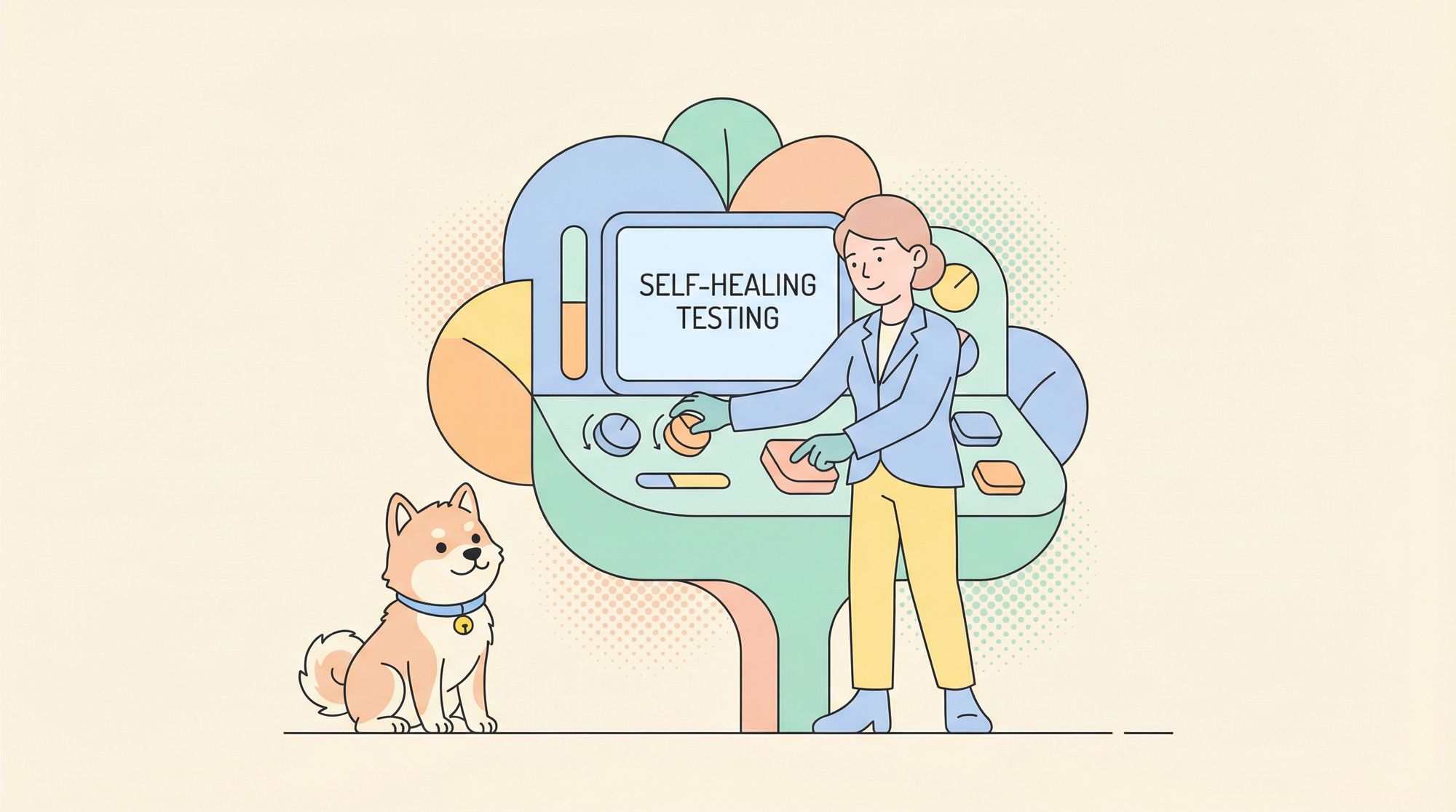
Self-Healing Testing is transforming how software teams maintain automated tests in fast-moving development environments. Instead of manual intervention every time a change breaks a test, modern self-healing systems use AI, machine learning, and intelligent heuristics to automatically detect, adapt, and correct test scripts. This dramatically reduces maintenance overhead and enables continuous Quality Assurance (QA) without constant manual rework.
This guide explains what Self-Healing Testing is, how it works, why it matters, practical examples, and how tools like Apidog support resilient API testing in modern workflows.
What Is Self-Healing Testing?
In traditional automated testing, scripts are brittle: a slight change to a UI element, DOM attribute, or API response often causes failures. Self-Healing Testing refers to automation systems that:
- Detect when a test fails due to changes in the application
- Identify alternative ways to locate elements or verify behavior
- Automatically update test logic without human intervention
- Continue the test run smoothly as if nothing broke
Self-healing systems act like an "immune system" for your test suite, adapting on the fly and preserving test validity even as applications evolve.
What is the Importance of Self-Healing Testing
Modern Agile and DevOps pipelines push changes frequently. Every update (even minor UI tweaks) can break traditional tests. The result is constant maintenance effort and fragile automation. Self-healing testing mitigates this by:
- Reducing test maintenance effort: tests adapt automatically when UI selectors change or workflows shift.
- Improving test stability: fewer false positives caused by brittle locators or outdated scripts.
- Accelerating release cycles: when tests maintain themselves, CI/CD pipelines run uninterrupted.
- Expanding coverage: teams can focus on adding new tests instead of fixing broken ones.
The business impact is significant: teams spend less time fixing tests and more time improving product quality.
How Self-Healing Testing Works
Self-healing mechanisms rely on several intelligent approaches to detect and correct issues:
1. AI-Driven Locator Adaptation
Tests often fail because an element’s locator (ID, XPath, CSS selector) changes. Self-healing systems maintain alternative locator strategies and attribute heuristics to recover when the primary fails.
For example, if a button’s ID changes, the self-healing engine may:
- Use CSS selectors instead of XPath
- Use visual recognition to identify the element by appearance
- Use relative position to nearby stable elements
This locator fallback strategy ensures tests continue even when UI attributes change.
2. Continuous Test Monitoring and Learning
Self-healing platforms continuously monitor execution patterns and learn from previous runs. When a test step fails, the engine:
- Analyzes the cause of failure (e.g., missing element locator)
- Predicts an alternative strategy
- Applies the fix and reruns the test step
- Records the successful adaptation for future runs
This learning capability builds resilience over time, enabling tests to adapt dynamically to ongoing evolution.
3. Semantic Understanding
Beyond raw locator matching, advanced systems use semantic cues (text labels, surrounding context, workflows) to detect what a step intended to verify. This deeper understanding improves healing accuracy and reduces false results.
Example of Self-Healing Testing
Imagine an e-commerce site where the "Add to Cart" button is identified by:
<button id="addToCart">Add to Cart</button>
A test script might locate it like this:
cart_button = find_element_by_id("addToCart")
click(cart_button)
After a UI update, the button’s ID changes:
<button id="addToCartButton">Add to Cart</button>
In traditional automation, this breaks the test. With self-healing:
- The system detects the failure
- Searches for alternative attributes (
id="addToCartButton", CSS selector, nearby price label) - Updates the test script on the fly
- Continues the test run without error
This ability to heal reduces false failures and improves test reliability.
What are the Benefits of Self-Healing Testing
- Reduced Maintenance Overhead
Traditional automated tests require constant scripts updates whenever application code changes. Self-healing dramatically cuts this burden, freeing teams to focus on strategic testing. - Greater Test Reliability
By handling changes that would normally break tests, self-healing boosts confidence in automated suites and reduces noise in CI/CD pipelines. - Expanded Test Coverage
Teams can create more tests without fear of high maintenance cost, enabling broader functional coverage and early defect detection. - Faster Feedback Loops
When tests adapt automatically, developers receive rapid feedback on real issues rather than brittle failures, supporting faster iteration cycles.
Self-Healing Testing vs Traditional Automation
Here's a comparison to clarify the difference:
| Feature | Traditional Automation | Self-Healing Testing |
|---|---|---|
| Maintenance | High manual effort | Automated maintenance |
| Test Failures | Frequent due to UI/API changes | Fewer false positives |
| Stability | Low over time | High with adaptation |
| CI/CD Impact | Potential pipeline stalls | Smooth execution |
| Scalability | Harder with frequent changes | Easier with growing suite |
Self-healing shifts automation testing from reactive maintenance to proactive continuity in QA workflows.
Continuous QA without Maintenance
The ultimate promise of self-healing testing is continuous QA without manual maintenance. In a world of rapid releases and frequent application updates, automated tests traditionally lag behind. Self-healing frameworks allow QA to become truly continuous — tests evolve as applications evolve.
In advanced implementations, tests don't just detect failures — they learn from them, adjusting with minimal human intervention. This continuous self-improvement mirrors AI systems that refine themselves based on experience, making testing resilient and future-proof.
How Apidog Supports Self-Healing Testing for APIs
While much of self-healing discussion focuses on UI tests, APIs are central to modern applications. API endpoints change frequently — new parameters, version updates, response structure changes — and can break test scripts.
Apidog helps developers manage API tests with robustness that complements self-healing principles:
Apidog Strengths
- Dynamic Assertions: Validate response codes, payload structures, and values with flexible assertion rules.
- Automated Test Suites: Save and run API tests continuously against changing endpoints.
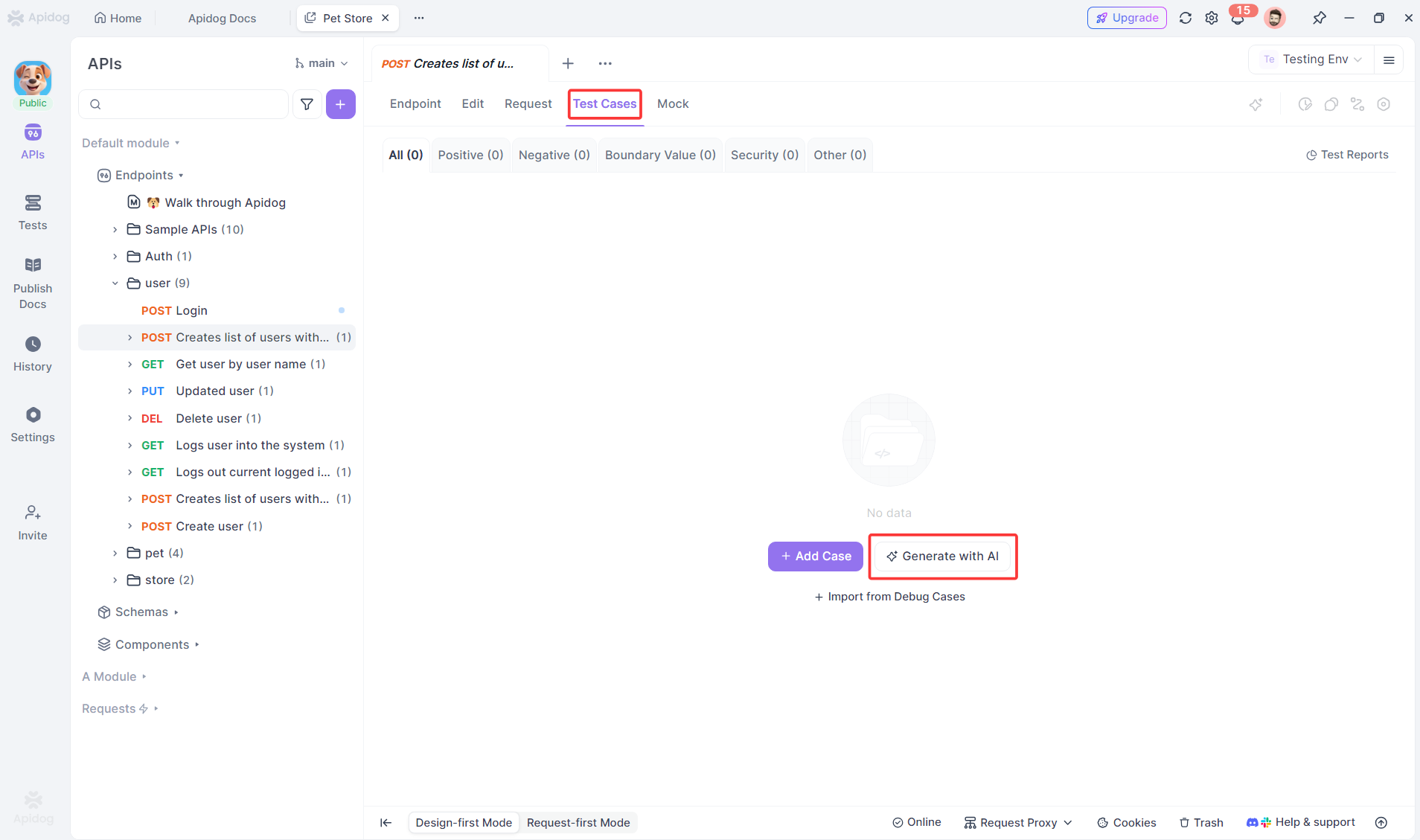
- Mocking and Test Environments: Simulate API behaviour and isolate changes.
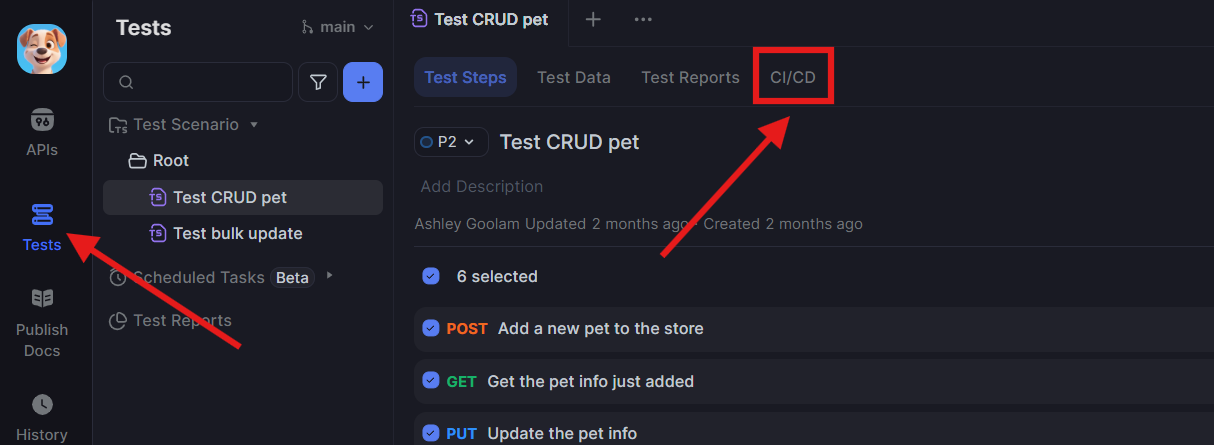
- CI/CD Integration: Run tests automatically on commits and deploy pipelines.
Example API Test Definition in Apidog
{
  "url": "https://api.example.com/users",
  "assertions": [
    "statusCode == 200",
    "response.body.users.length > 0"
  ]
}
By coupling Apidog's automation with self-healing UI and API tests, teams ensure both front-end and back-end layers remain reliable through rapid changes.
Frequently Asked Questions
Q1. What makes Self-Healing Testing unique?
Unlike traditional automation that breaks with changes, self-healing adapts test logic automatically, reducing manual script updates.
Q2. Is Self-Healing Testing fully autonomous?
It significantly reduces human involvement but still benefits from oversight to validate healing decisions in complex cases.
Q3. Can self-healing work for APIs as well as UI tests?
Yes — while most tools focus on UI, APIs benefit from dynamic assertions, flexible validation, and automated test regeneration. Tools like Apidog and endtest help with API self-testing.
Q4. Does self-healing eliminate the need for manual QA?
No — manual exploratory and edge case testing remains important. Self-healing complements manual effort by automating repetitive maintenance.
Q5. What are common self-healing strategies?
AI-driven locator fallback, visual recognition, semantic element understanding, and historical pattern analysis are core strategies.
Conclusion
Self-Healing Testing represents a significant leap in automated quality assurance. By intelligently adapting tests to changes in UI and API structures, self-healing reduces maintenance, increases reliability, and supports truly continuous QA — aligning test automation with the pace of modern development.
When paired with tools like Apidog for API endpoint validation, teams can build resilient test suites that evolve alongside their applications, drastically improving confidence, stability, and delivery velocity.