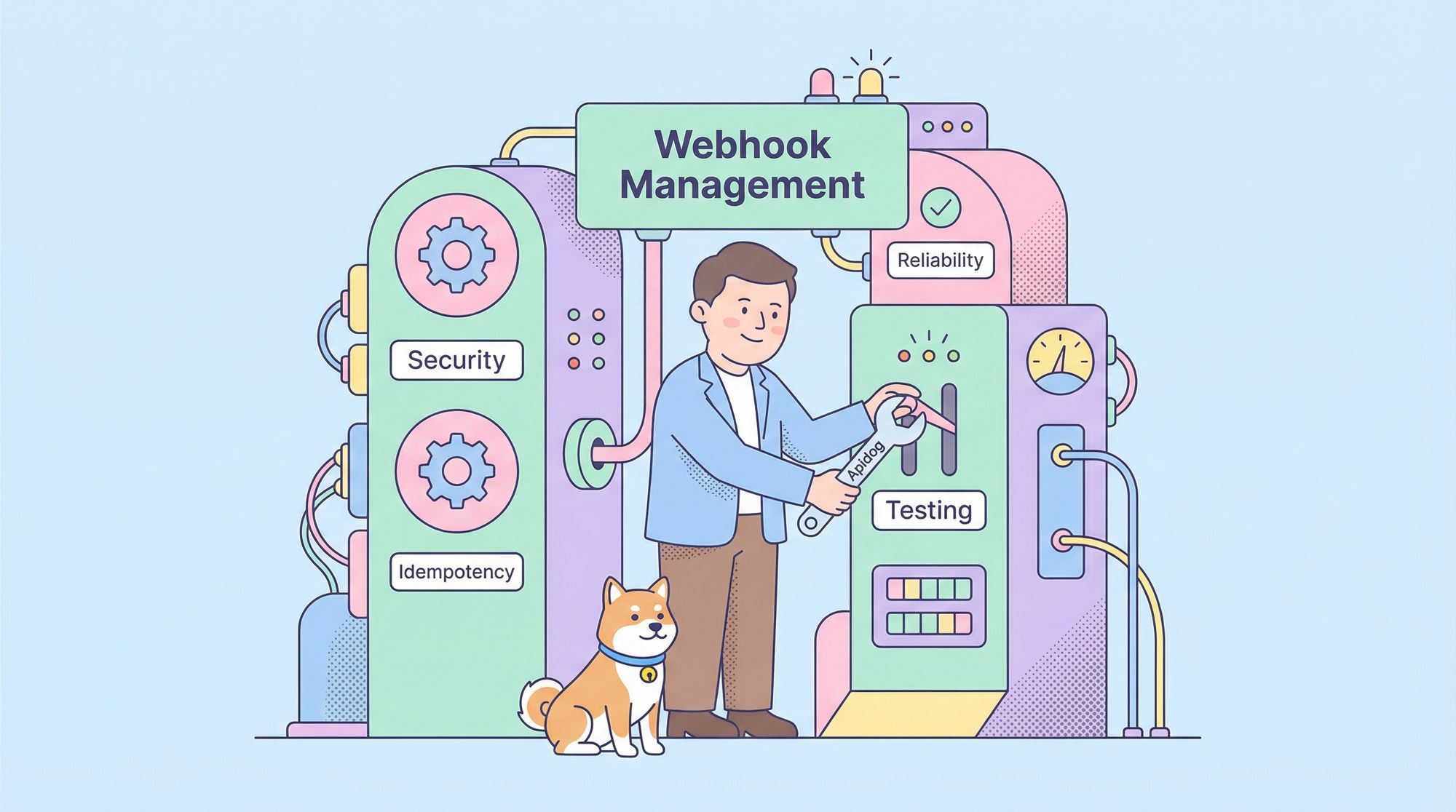
In payment processing, webhooks deliver real-time notifications when events occur like a successful charge or subscription renewal. Developers often overlook small details in webhook setup, but those details determine whether your system handles high-volume traffic gracefully or fails under pressure. A robust webhook implementation keeps orders fulfilled, subscriptions active, and customers satisfied.
This guide covers key payment webhook best practices. Follow these steps to build systems that scale and stay secure.
Why Payment Webhooks Matter in Modern Applications
Payment gateways like Stripe, PayPal, Adyen, and Razorpay rely on webhooks for asynchronous events. A customer completes checkout, but the bank confirms the payment later. Your application polls the API repeatedly to check status, or it listens for a webhook notification.
Webhooks push updates instantly. This approach reduces latency and eliminates unnecessary API calls. However, gateways deliver events "at least once," meaning duplicates appear during retries. Your endpoint must handle this without creating duplicate orders or double-charging users.
Many teams start with simple POST handlers. They process events immediately. Problems emerge when traffic spikes or networks glitch. A failed endpoint triggers retries, and without safeguards, your database fills with duplicates.

Secure Your Webhook Endpoints First
Security forms the foundation of payment webhook best practices. Gateways send sensitive data over HTTPS. Never expose endpoints publicly without protection.
Use HTTPS exclusively. Gateways reject HTTP URLs. Configure TLS 1.2 or higher to prevent interception.
Validate signatures. Stripe includes an HMAC signature in headers. Compute it from the payload and compare it to the received value. Reject mismatches to block spoofed requests.
PayPal uses transmission signatures. Concatenate timestamp, payload, and signing key, then hash with SHA-256. Verify before processing.
Implement IP whitelisting where possible. Stripe publishes IP ranges. Allow only those in your firewall.
Add rate limiting. Gateways send bursts during peak times. Use tools like Redis to throttle requests and prevent overload.
These measures stop unauthorized access. They ensure only legitimate events trigger actions.
Implement Idempotency to Handle Duplicates Gracefully
Gateways retry failed deliveries. Your endpoint receives the same event multiple times. Process it once.
Use unique event IDs. Stripe provides id in the event object. Store processed IDs in a database with a unique index. Check for existence before processing.
If the ID exists, return 200 OK immediately. This acknowledges receipt without side effects.
For payments, track transaction IDs like payment_intent.id. Update order status only if the event is new.
This practice prevents duplicate emails, inventory deductions, or charges. It makes your system resilient to retries.
Design for Reliability with Retries and Queues
Endpoints must respond quickly. Gateways timeout after 5–30 seconds. Return 200 OK fast, then queue processing.
Use message queues like RabbitMQ or Kafka. Receive the webhook, store it, and enqueue for background workers.
Workers handle business logic—update databases, send emails, notify users. If a worker fails, retry internally.
Apply exponential backoff in your queue. Increase delays between attempts to avoid overwhelming systems during outages.
Monitor delivery. Log every attempt. Track failures. Set alerts for repeated errors.
This setup handles spikes. It decouples webhook receipt from processing.
Test Webhooks Thoroughly Before Production
Testing catches issues early. Use tools to simulate events.
Stripe offers a CLI for forwarding live events to localhost. Trigger payment_intent.succeeded and verify handling.
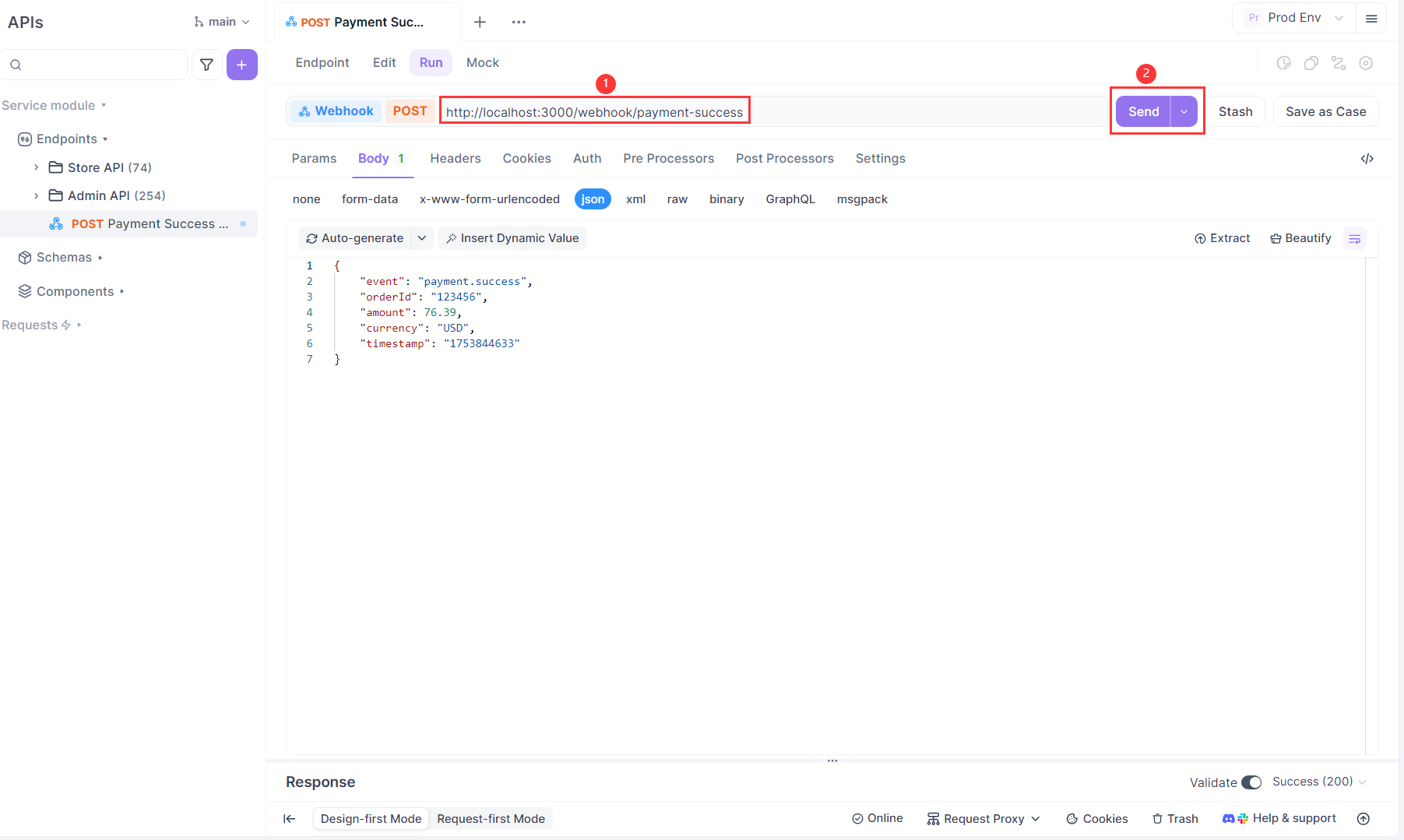
Apidog excels here. Create webhook endpoints in your project. Fill request bodies with sample payment payloads. Send test requests to debug URLs.
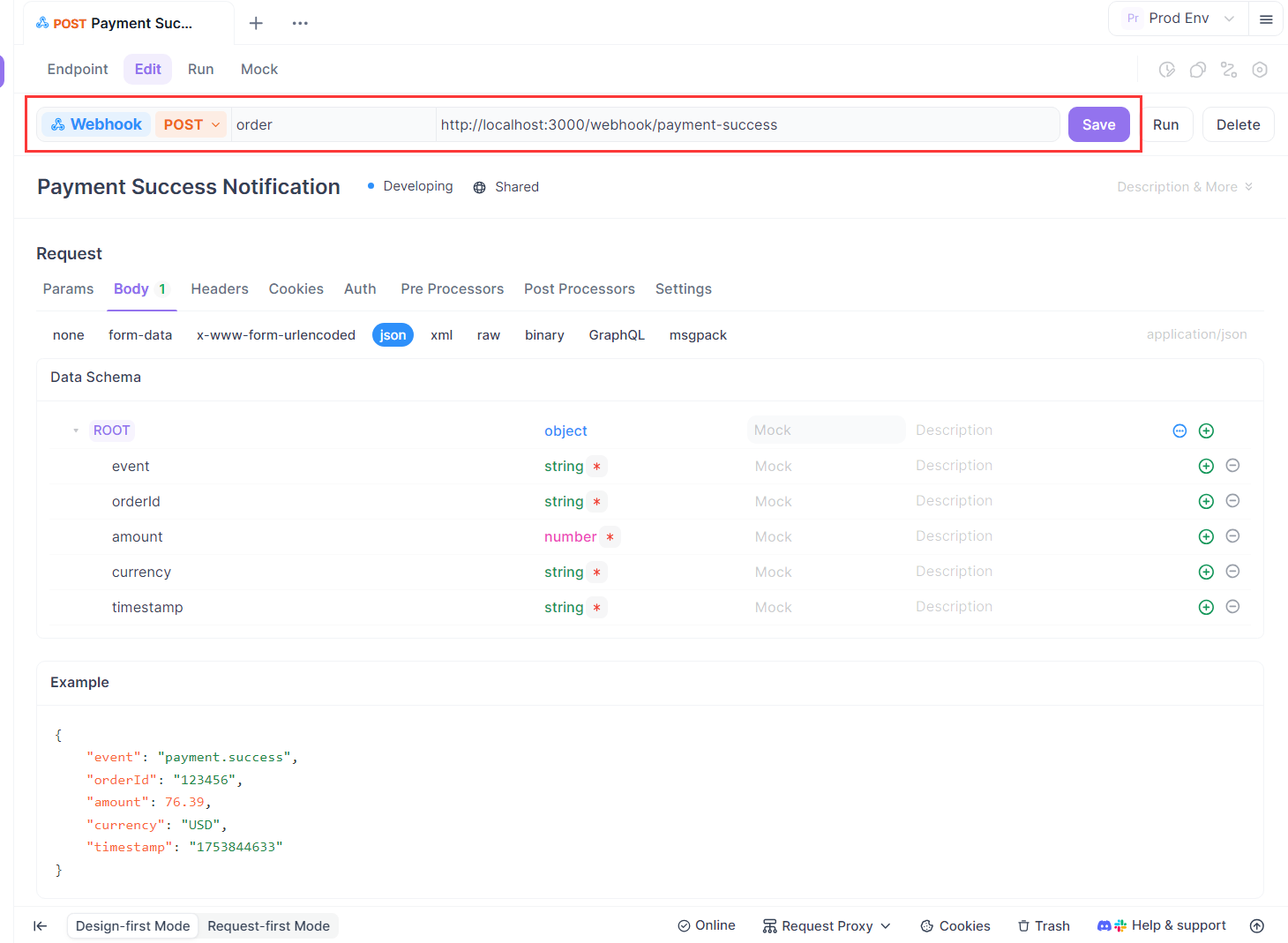
Verify signatures and process logic. Export to OpenAPI for documentation.
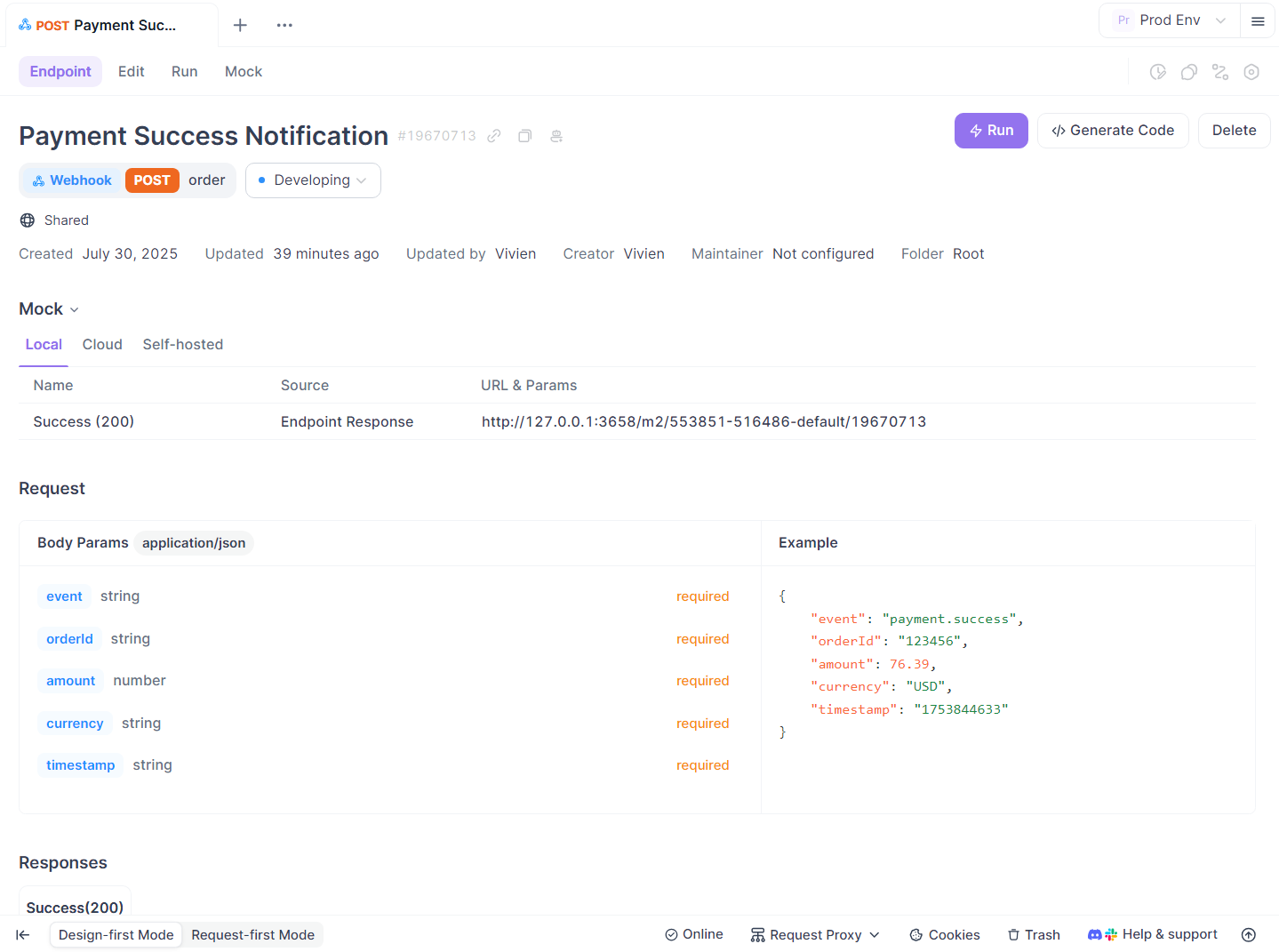
Test edge cases. Send duplicates. Simulate timeouts. Check idempotency.
These tests ensure your endpoint behaves correctly under real conditions.
Handle Specific Payment Events Effectively
Focus on critical events. Listen to payment_intent.succeeded in Stripe for successful charges. Update order status and ship products.
For subscriptions, monitor invoice.payment_succeeded and invoice.payment_failed. Handle upgrades with customer.subscription.updated.
PayPal sends PAYMENT.CAPTURE.COMPLETED. Capture funds and fulfill orders.
Adyen provides detailed payment statuses. Use AUTHORISATION for approvals and CAPTURE for settlements.
Always verify status via API before fulfillment. Webhooks can arrive out of order. A failed event might follow a succeeded one due to chargebacks.
Optimize Performance for High-Volume Traffic
Scale endpoints horizontally. Use load balancers to distribute requests.
Process asynchronously. Offload heavy tasks to workers.
Monitor latency. Aim for sub-100ms responses.
Use caching for repeated verifications. Store signatures temporarily to speed checks.
These optimizations keep your system responsive during Black Friday sales or subscription renewals.
Common Mistakes to Avoid
Many developers return 200 OK only after processing. This triggers retries if processing fails.
They ignore duplicates. This leads to double orders.
They skip signature validation. This opens doors to attacks.
They process synchronously. This causes timeouts.
Avoid these pitfalls. Follow the practices above.
Integrate Tools for Better Development
Apidog streamlines webhook work. Create endpoints quickly.
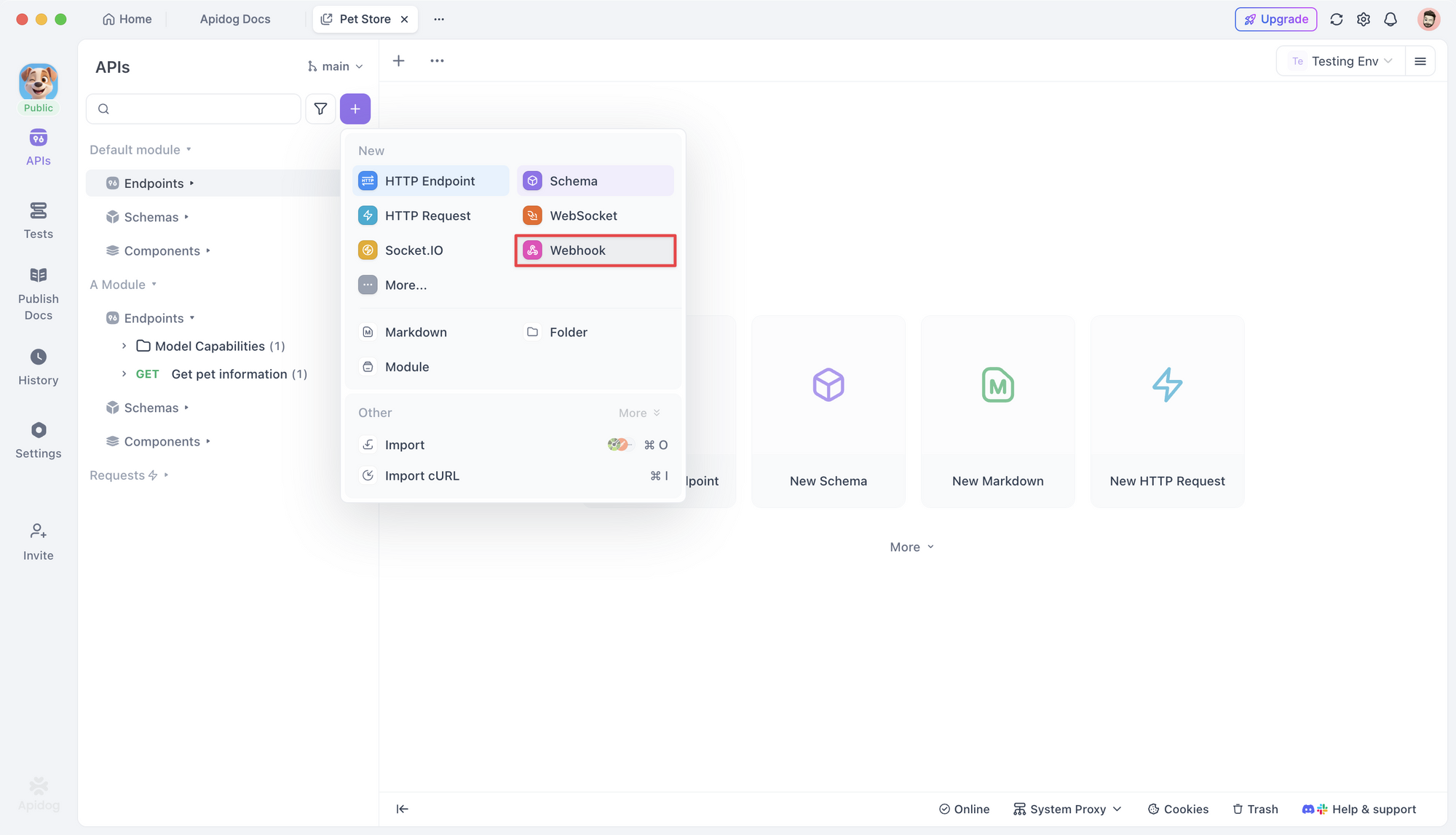
Debug with mock data. Test retries and failures.
Export specs to share with teams. Generate client code. Keep documentation current.
Use Apidog alongside gateways. Simulate Stripe or PayPal payloads. Verify your handler.
This saves time. It reduces bugs.
Monitor and Maintain Your Webhook System
Set up logging. Capture event IDs, timestamps, and outcomes.
Use dashboards. Track delivery rates and failures.
Review logs weekly. Fix patterns like repeated timeouts.
Update signatures and IPs as gateways change.
A maintained system stays reliable.
Conclusion: Small Changes Yield Big Reliability Gains
Payment webhook best practices focus on security, idempotency, and reliability. Secure endpoints. Handle duplicates. Test thoroughly.
Implement these steps. Your system handles failures gracefully. Customers receive seamless experiences.
Start with Apidog today. Download for free and build robust webhook integrations. Your payment flows will thank you.