You've built an amazing API. You've meticulously documented it with OpenAPI. Now comes the crucial part: getting developers to actually use it. You need to publish your documentation publicly, but you face a dilemma. Do you host a static OpenAPI file somewhere and hope developers can navigate it? Do you build a custom portal from scratch, spending weeks on design and search functionality? Or is there a better way?
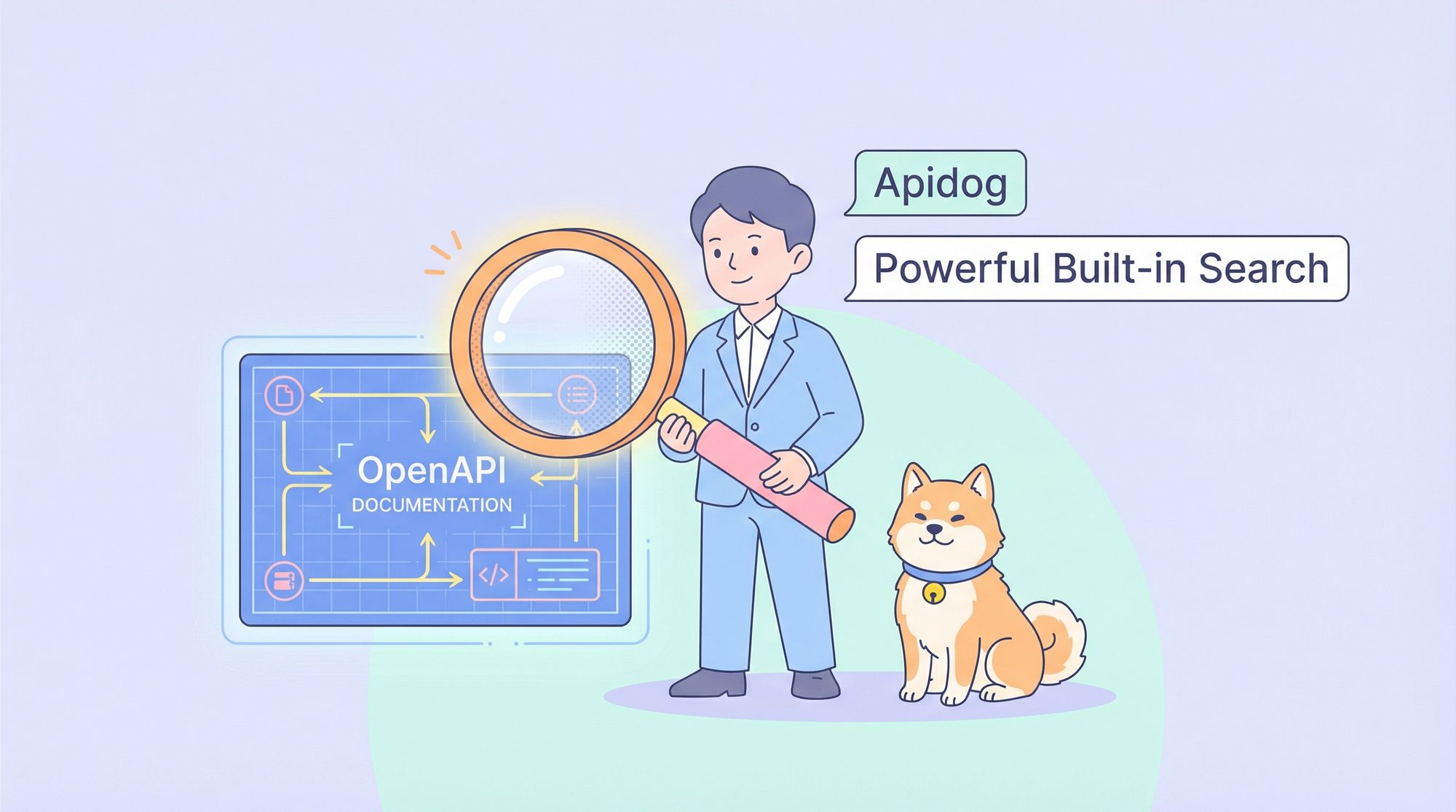
The answer is Apidog. It is a comprehensive platform that solves the exact problem of hosting beautiful, functional, public API documentation with powerful built-in search capabilities.
Think about it: when developers visit your API docs, they're not coming to admire your design skills. They're coming to solve a problem. They need to find the right endpoint quickly, understand the parameters, and test their integration. If they can't find what they need in seconds, they'll leave. That's why search isn't just a nice-to-have feature; it's an absolute necessity.
Now, let's explore exactly how Apidog makes hosting public, searchable OpenAPI documentation not just possible, but remarkably easy and effective.
The Problem: Static Docs in a Dynamic World
Traditional approaches to OpenAPI documentation often fall short:
- Static HTML Generators (like Swagger UI/Redoc): You generate a static site. It looks great, but it's a pain to update. Every time your API changes, you must regenerate and redeploy the site. There's no built-in search, so developers must scroll endlessly or rely on their browser's crude
Ctrl+F. - README files on GitHub: Even worse. It's just a markdown file. No interactivity, no testing, and definitely no search.
- Building a Custom Portal: This gives you full control, but at an enormous cost. You're now in the business of building and maintaining a web application with search indexing, responsive design, and hosting logistics, distracting you from your core product.
What developers really need is documentation that is:
- Always Up-to-Date: Synced directly with your API design.
- Instantly Searchable: Letting them find endpoints, parameters, and error codes in milliseconds.
- Publicly Accessible: On a professional, branded URL.
- Interactive: Allowing them to make real test calls.
Apidog is built from the ground up to deliver exactly this.
Why Hosting Public OpenAPI Docs Matters More Than Ever
APIs are no longer internal-only assets. Today, APIs are:
- Products
- Growth drivers
- Revenue channels
- Integration backbones
And because of that, your API documentation is often the first impression developers get of your product.
However, many teams still struggle with:
- Docs hidden behind authentication
- No search functionality
- Poor layout and readability
- Zero SEO visibility
- Outdated Swagger or Redoc pages
This is exactly where Apidog changes the game.
From OpenAPI Spec to Public Portal in Three Steps
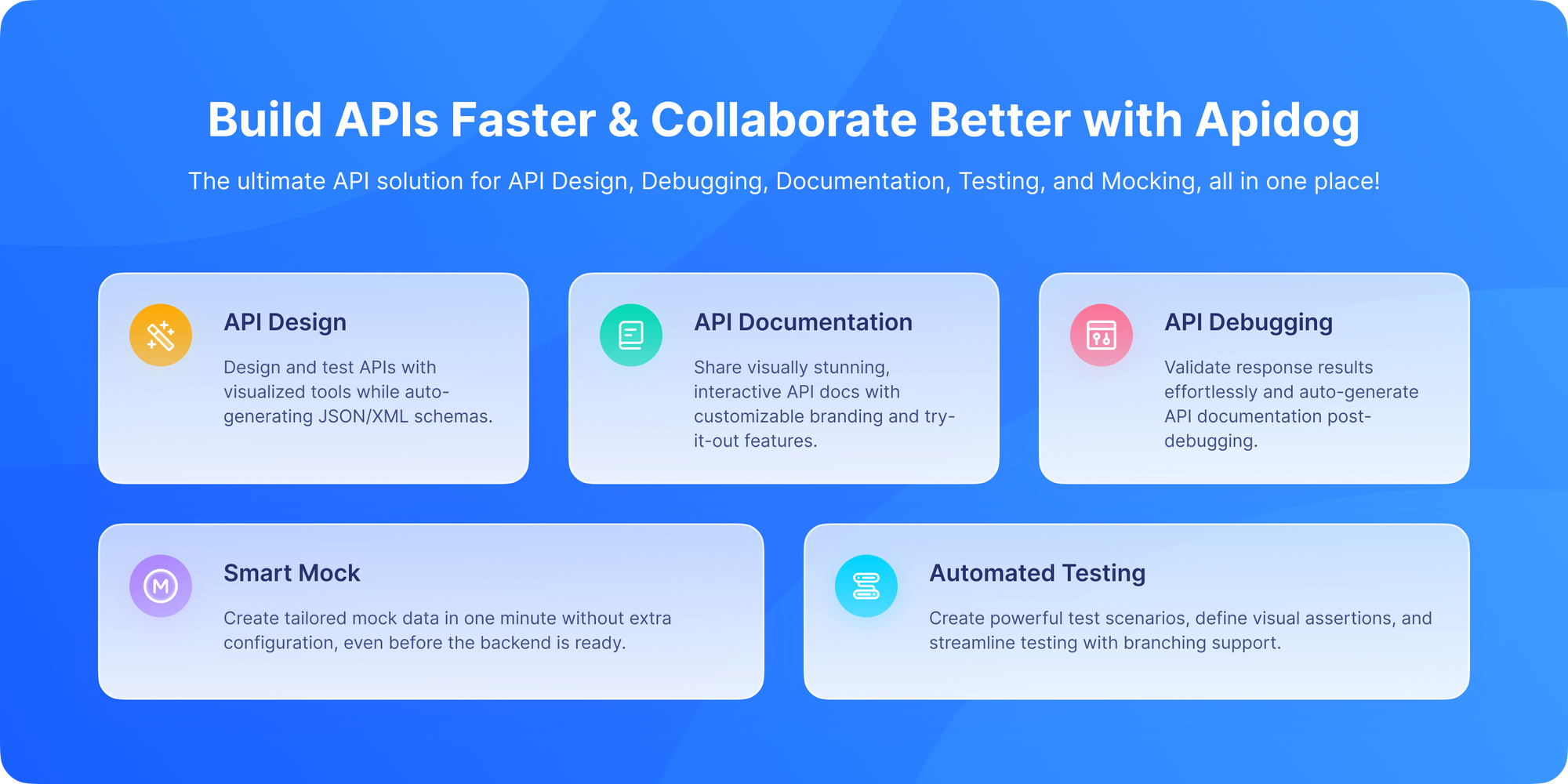
Apidog turns the complex process of documentation hosting into a simple workflow. Here’s how you go from an OpenAPI file to a live, searchable portal.
Step 1: Import and Design
Your journey begins by bringing your API into Apidog. You can:
- Import an existing OpenAPI Specification (YAML or JSON) directly. Apidog parses it perfectly, preserving all your endpoints, schemas, and examples.
- Design your API from scratch within Apidog's intuitive visual editor. As you design, Apidog automatically generates the OpenAPI spec for you.
This is your single source of truth. Any change you make here, adding an endpoint, updating a response schema, is immediately reflected in your future published documentation.
Step 2: Configure Your Public Presence

This is where Apidog shines for public documentation. You don't just "generate" docs; you publish them.
Using the Publish API documentation with Apidog feature, you configure how the world sees your API:
- Custom Domain: Publish your docs to a professional URL like
api.yourcompany.comordocs.yourproduct.com. This is crucial for branding and trust. - Visibility Controls: Choose exactly which parts of your API to make public. You can keep internal endpoints private while exposing your public API.
- Automatic Updates: Set it to auto-update. Whenever you modify your API design in Apidog, the published documentation can refresh automatically. No manual redeploys.
Your documentation is no longer a static snapshot; it's a living, breathing representation of your API.
Step 3: Activate the Secret Weapon: Built-In Search
Once published, the Documentation Search feature becomes your users' best friend.
This isn't a simple text search. It's a powerful, indexed search that understands API structures. A developer can type:
"user email"and find all endpoints and parameters related to user emails."POST"to filter for only POST methods."error 429"to instantly locate rate limiting information.
The search is global, fast, and appears prominently in the documentation layout. It dramatically reduces the time-to-first-successful-API-call for any developer exploring your API, which is the ultimate goal of good documentation.
Beyond Basic Hosting: Advanced Features That Make a Difference
Apidog doesn't stop at just hosting and search. It provides a suite of features that elevate your docs from good to exceptional.
Custom Layouts for Brand Perfection
First impressions matter. With Custom layouts, you have complete control over the look and feel of your public documentation portal.
- Match Your Branding: Use your company's colors, logos, and fonts to create a seamless experience from your main website to your API docs.
- Control Navigation: Structure the sidebar navigation to guide users logically through your API, grouping related endpoints.
- Add Custom Pages: Insert welcome pages, getting-started guides, authentication overviews, and changelogs directly into the documentation structure. This turns a mere API reference into a full-fledged developer hub.
This level of customization ensures your documentation feels like an integral part of your product, not a generic, third-party afterthought.
Apidog allows you to customize the layout of your public OpenAPI documentation.
You can:
- Control navigation structure
- Organize endpoints logically
- Highlight key sections
- Improve readability
This is especially important when your API is public-facing.
SEO Settings: Let the World Discover Your API
What good is public documentation if no one can find it? Apidog's SEO Settings tackle this head-on. You can optimize each page of your documentation for search engines:
- Custom Title Tags & Meta Descriptions: Craft compelling titles and descriptions for each endpoint page. Instead of "GET /users", you can have "Retrieve User List API Endpoint | YourProduct API".
- Search Engine Visibility: Control indexing to ensure Google and other search engines can discover and rank your API documentation pages.
- Structured Discovery: This makes your API discoverable not just by developers actively searching for it, but by those searching for problems your API solves (e.g., "how to send SMS with API").
This means:
- Developers can discover your API organically
- Your docs appear in search results
- Your API becomes easier to adopt
By making your documentation SEO-friendly, you turn it into a powerful acquisition channel, attracting developers who are actively seeking solutions you provide.
The Integrated Advantage: Docs That Are Alive
This is Apidog's killer feature. Your published documentation isn't a separate entity.
- Interactive Console: Every endpoint in your published docs has a "Try it out" console. Developers can fill in parameters, add headers, and hit Send to make a real call to your live API, right from the documentation page. This is the fastest path from learning to doing.
- Always in Sync: Since the docs are generated directly from your Apidog project (the source of truth), they are never out of date. The moment you deprecate an endpoint or add a new field, it's reflected publicly.
Conclusion: Documentation as a Product
In today's API economy, your documentation is a core part of your developer product. It's the primary interface through which potential users evaluate and adopt your technology.
Apidog empowers you to treat your documentation with the importance it deserves. By combining reliable OpenAPI hosting with indispensable features like powerful built-in search, brand-aligned custom layouts, and discovery-focused SEO settings, it removes all the traditional headaches.
You get to focus on building a great API, while Apidog ensures the world can find, understand, and successfully use it. Stop treating documentation as a chore. Start using Apidog to build a public documentation portal that becomes a genuine asset for growth and developer satisfaction.