Mockoon has been a go-to choice for many developers who need quick, local API mocking. Its friendly interface and simple setup make it perfect for getting started. But as your projects grow and your team expands, you might find yourself needing more advanced features like team collaboration, cloud hosting, or integrated testing capabilities.
If you're exploring alternatives to Mockoon, you're in the right place. This guide breaks down the top API mocking tools available today, helping you find the perfect fit for your specific needs and workflow.
Now, let’s explore why teams look for Mockoon alternatives and what options make sense today.
Understanding Mockoon's Strengths and Limitations
What Makes Mockoon Popular
Mockoon is a desktop-based API mocking tool that excels at:
- Quick Setup: Create mock endpoints in minutes
- Local Development: Run mock servers on your machine
- Simple Interface: User-friendly GUI for defining responses
- Offline-First: Works without internet connectivity
This makes it ideal for:
- Solo developers
- Early-stage projects
- Quick prototyping
- Learning API concepts
Why Teams Outgrow Mockoon
As projects scale, several limitations become apparent:
1. Limited Team Collaboration
- No shared workspaces
- Manual export/import of configurations
- No real-time collaboration features
- Difficult to maintain consistency across team members
2. Local-Only Approach
- Mocks only run on individual machines
- Hard to share with distributed teams
- QA and stakeholders can't easily access mocks
- No cloud hosting options
3. No API Contract Integration
- Mock definitions separate from API specifications
- Risk of mocks drifting from actual API design
- No automatic documentation generation
- Manual synchronization required
4. Scaling Challenges
- Managing many endpoints becomes cumbersome
- Limited environment and version management
- No automated testing integration
- Difficult to maintain as APIs grow
Types of API Mocking Tools
Before diving into alternatives, it's helpful to understand the three main categories:
1. Standalone Mocking Tools
Dedicated applications focused solely on creating mock servers. Examples: Mockoon, JSON Server.
2. API Development Platforms
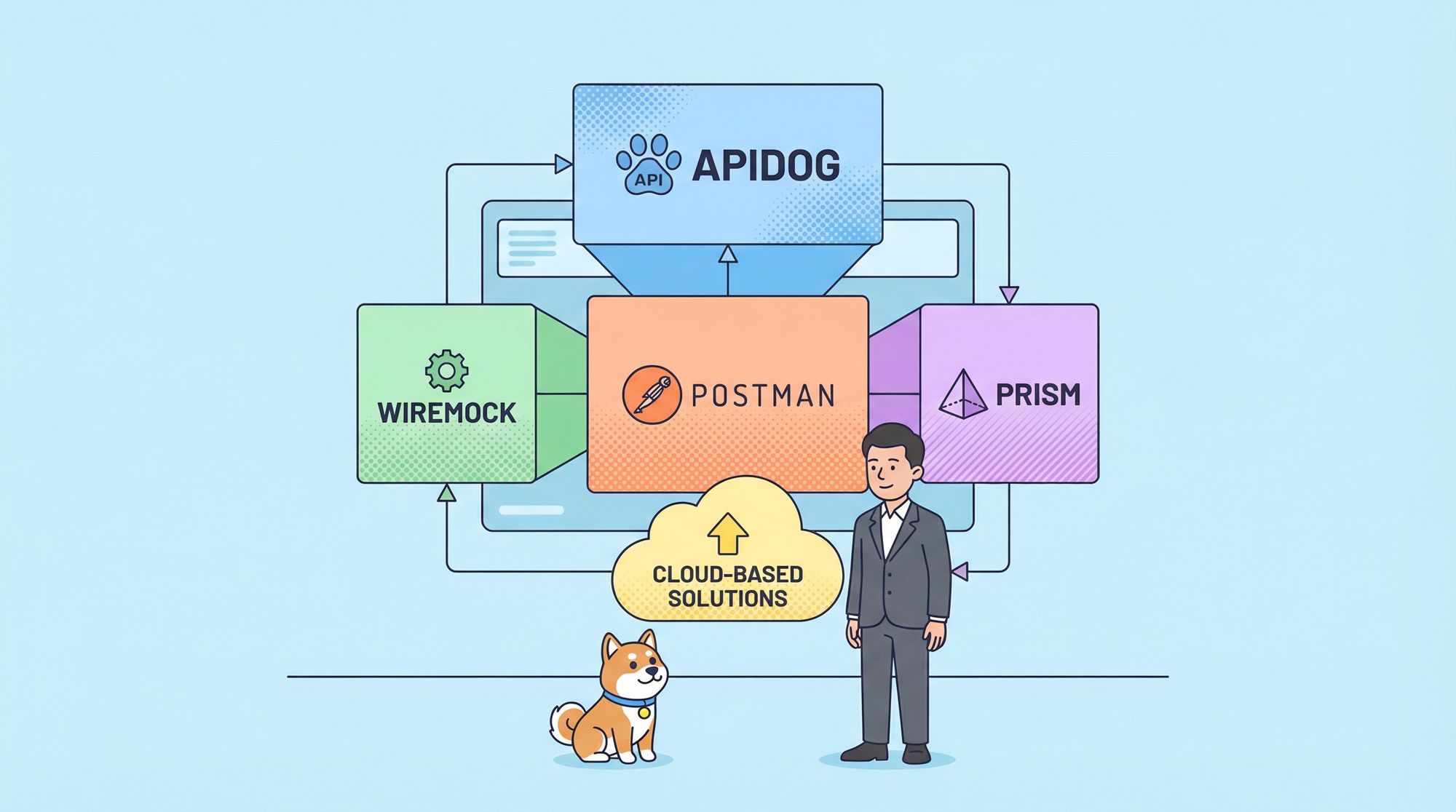
Comprehensive tools where mocking is one feature among many (testing, documentation, design). Examples: Postman, Apidog, Insomnia.
3. Code-Based Solutions
Libraries and servers you integrate into your codebase or CI/CD pipeline. Examples: WireMock, MSW (Mock Service Worker).
Top Mockoon Alternatives
1. Apidog - The All-in-One Solution
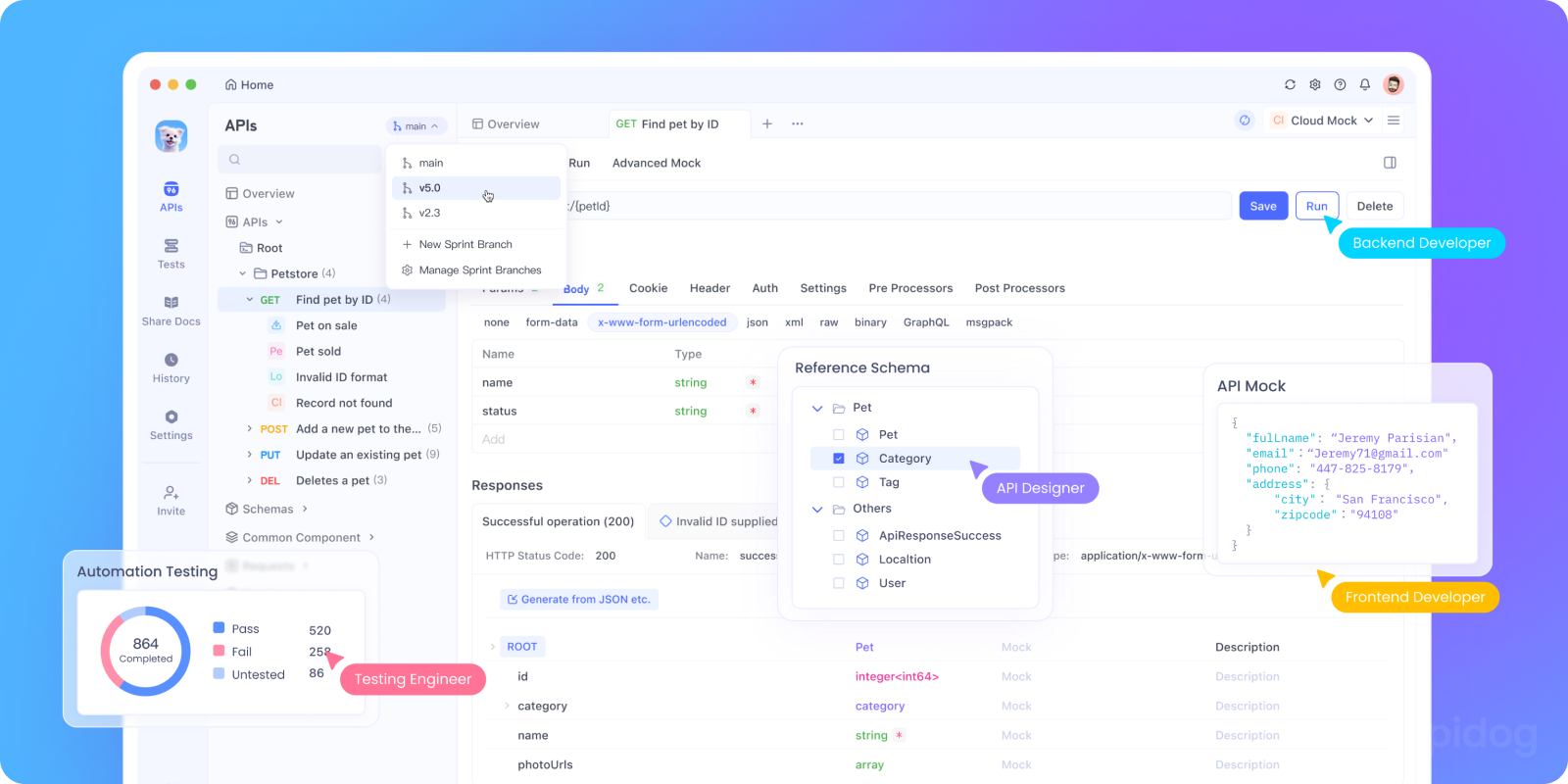
Best For: Apidog is for teams wanting a unified API development workflow
Key Features:
- Design-First Mocking: Automatically generates mock servers from API designs
- Team Collaboration: Shared workspaces with role-based access
- Unified Platform: Design, mock, test, and document in one tool
- Dynamic Responses: Smart mock data generation with templates
- OpenAPI Integration: Import existing specifications instantly
Advantages Over Mockoon:
- Real-time team collaboration
- Cloud-hosted mock servers
- Automatic documentation generation
- Integrated testing capabilities
- Contract-driven development support
Ideal Use Cases:
- API-first development teams
- Organizations wanting to reduce tool sprawl
- Teams needing seamless frontend-backend collaboration
- Projects requiring comprehensive API lifecycle management
2. Postman - The Ecosystem Giant
Best For: Teams already invested in the Postman ecosystem
Key Features:
- Mock Servers: Cloud-based mocking linked to collections
- Environment Variables: Dynamic mock responses using variables
- Monitoring Integration: Connect mocks to API monitoring
- Documentation: Auto-generated docs from mock examples
Advantages Over Mockoon:
- Massive ecosystem integration
- Cloud hosting included
- Advanced variable system
- Enterprise-grade features
Considerations:
- Can feel overwhelming for simple mocking needs
- Setup process is more complex than Mockoon
- Free tier has usage limitations
3. WireMock - The Developer's Power Tool
Best For: Java/Kotlin teams and automated testing scenarios
Key Features:
- Programmable Mocking: Configure via API or JSON files
- Advanced Matching: Match requests on headers, body content, cookies
- Stateful Scenarios: Create complex, multi-step mock behaviors
- Record & Playback: Capture real API interactions automatically
- CI/CD Integration: Perfect for automated testing pipelines
Advantages Over Mockoon:
- Extreme precision and control
- Automated testing integration
- Stateful mock scenarios
- Enterprise-grade reliability
Considerations:
- Steep learning curve
- Requires programming knowledge
- No GUI interface
- Best suited for technical teams
4. Prism - The OpenAPI Specialist
Best For: Teams with strong OpenAPI/Swagger workflows
Key Features:
- Spec-Driven: Automatically creates mocks from OpenAPI specifications
- Dynamic Data Generation: Creates realistic test data based on schemas
- Validation Mode: Validates real API responses against specs
- CLI-Based: Command-line tool for automation
Advantages Over Mockoon:
- Perfect OpenAPI integration
- Automatic realistic data generation
- Validation capabilities
- Open-source and free
Considerations:
- Command-line only (no GUI)
- Requires existing OpenAPI specifications
- Less suitable for ad-hoc mocking
5. Cloud-Based Solutions (Beeceptor, Mocky)
Best For: Quick prototyping and simple mocking needs
Key Features:
- Instant Setup: Create mock endpoints in seconds via web interface
- Public URLs: Immediately accessible mock servers
- Zero Installation: Browser-based configuration
- Simple Rules: Basic conditional logic and response delays
Advantages Over Mockoon:
- No installation required
- Instantly shareable URLs
- Perfect for quick demos
- Cross-platform accessibility
Considerations:
- Limited customization options
- Data stored on third-party servers
- Not suitable for complex APIs
- Basic collaboration features
Choosing the Right Tool: Decision Framework
For Solo Developers
- Quick prototyping: Beeceptor or Mocky
- Local development: Stick with Mockoon
- Learning APIs: Mockoon or Apidog
For Small Teams (2-5 developers)
- API-first approach: Apidog
- Existing Postman users: Postman Mock Servers
- OpenAPI workflow: Prism
For Large Teams/Enterprise
- Comprehensive platform: Apidog
- Automated testing focus: WireMock
- Postman ecosystem: Postman Mock Servers
Conclusion
Mockoon remains an excellent tool for individual developers and simple use cases. However, as teams grow and workflows become more complex, alternatives like Apidog offer significant advantages in collaboration, integration, and scalability.
The best choice depends on your specific needs:
- Choose Apidog for comprehensive API lifecycle management
- Choose WireMock for automated testing and enterprise scenarios
- Choose Postman if you're already in their ecosystem
- Choose Prism for OpenAPI-centric workflows
- Choose cloud solutions for quick, simple mocking needs
The key is finding a tool that enhances your workflow rather than complicating it. For most growing teams, that means moving toward integrated platforms that bring mocking, testing, and documentation together in one collaborative environment.
Ready to explore a more integrated approach? Try Apidog free and see how unified API development can transform your team's productivity.