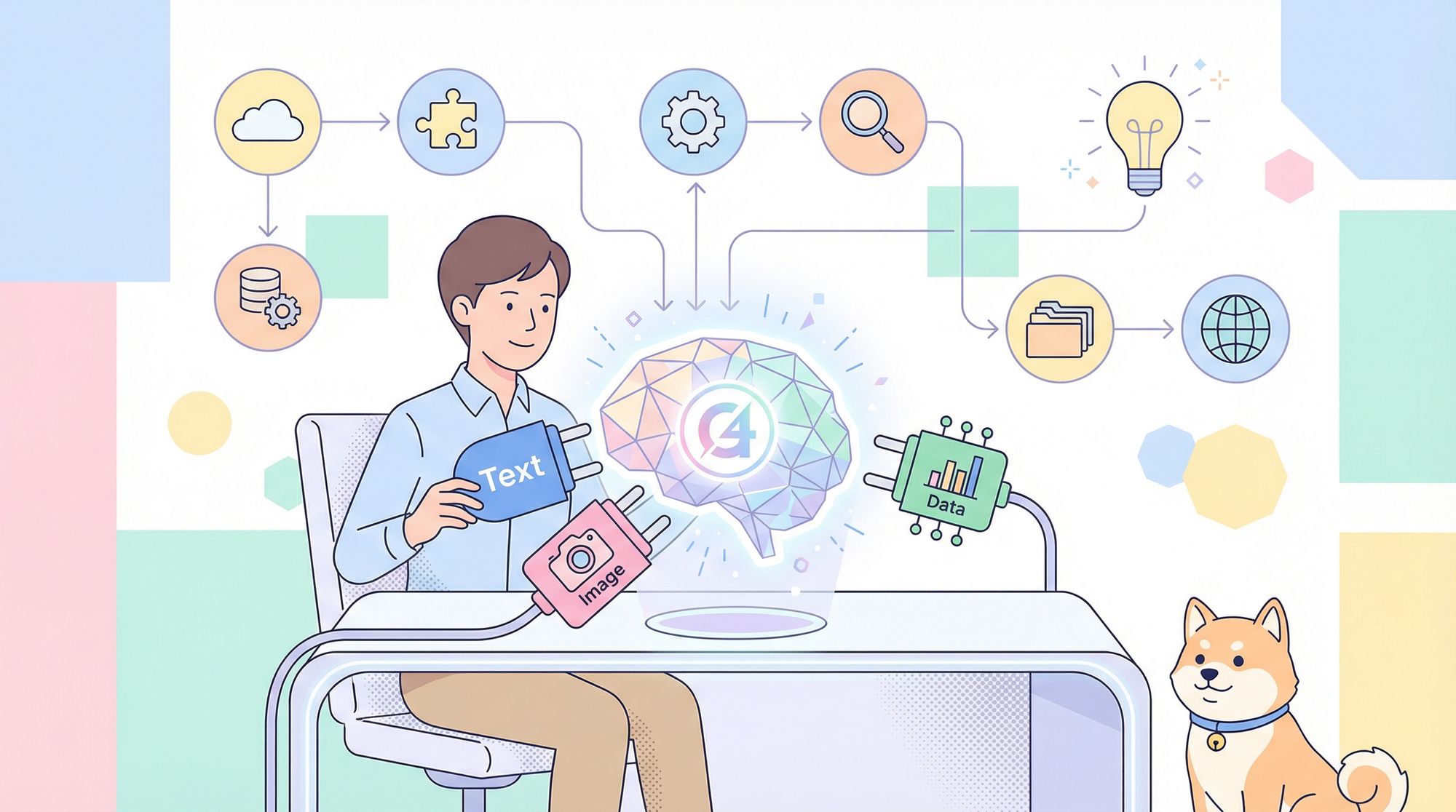
The artificial intelligence field is rapidly evolving, and xAI's Grok 4 stands out as a new reference point for advanced reasoning and developer integration. Built on a powerful hybrid neural architecture, Grok 4 sets new records in mathematical, scientific, and software engineering benchmarks—making it especially relevant for API-focused engineers and teams seeking robust, next-generation AI systems.
💡 Want to test or integrate AI APIs like Grok 4? [Download Apidog](
) — a powerful API testing platform trusted by technical teams for automating, validating, and optimizing AI integrations.
What Makes Grok 4 Unique for Developers
Grok 4 is not just another large language model—it combines advanced reasoning, multimodal understanding, and scalable APIs. For API engineers, Grok 4’s architecture enables:
- Complex multi-step reasoning: Outperforms previous models on tasks requiring logic and domain expertise.
- Efficient parallel processing: Handles multiple, simultaneous API queries without bottlenecks.
- Flexible API integration: Designed for smooth integration into your backend, apps, and workflows.
Its hybrid transformer architecture with novel attention mechanisms allows Grok 4 to deliver superior context awareness and maintain computational efficiency, even at scale. The training pipeline utilizes both supervised and reinforcement learning, resulting in robust, adaptive model behavior—crucial for production environments.
Technical Deep Dive: Architecture & Performance
Core System Design
Grok 4’s architecture features:
- 1.7 trillion parameters: Significantly more than previous generations.
- Specialized attention heads: Tuned for code, math, and natural language understanding.
- Distributed cognitive modules: Enables parallel, domain-specific processing ideal for API endpoints handling diverse workloads.

This technical foundation allows Grok 4 to serve as a unified system, excelling in tasks that demand both breadth and depth—whether parsing complex API payloads or generating precise outputs for high-stakes applications.
Real-World Benchmark Results
Grok 4’s performance metrics set new industry standards:
- AIME (Math): 95 — Outperforms human experts in advanced math problem-solving.
- GPQA (Graduate-level Q&A): 87-88% — Excels in science and technical comprehension.
- SWE-bench (Software Engineering): 75 — Top-tier performance for code and debugging tasks.
- Humanity Last Exam (Reasoning): 45% — Demonstrates breakthrough multi-step reasoning capabilities.

For engineers, these results translate to reliable, high-accuracy outputs across demanding API-driven domains.
Advanced Reasoning for Math, Science, and Code
Mathematical and Scientific Proficiency
Grok 4 analyzes and solves complex problems, such as:
- Advanced calculus and abstract proofs
- Physics and engineering scenarios
- Symbolic and numeric computation
Its dual approach—combining symbolic manipulation with numeric calculations—makes it highly useful for scientific APIs, research platforms, and educational tools.
Software Engineering & Code Generation
The Grok 4 Code variant delivers:
- Intelligent code completion: Context-aware suggestions for multiple languages
- Automated debugging and optimization: Identifies bugs and suggests performance improvements
- Refactoring recommendations: Analyzes codebases and proposes maintainability enhancements
With SWE-bench scores of 72–75%, Grok 4 is well-suited for developing, testing, and maintaining complex API-driven software systems.
Multimodal Capabilities and API-Driven Use Cases
Unified Multimodal Processing
Grok 4 processes and generates:
- Text: Natural language understanding and generation
- Images: Analyzes visuals, extracts data, and generates descriptions
- Structured Data: Handles JSON, tabular, and custom formats
For API developers, this means you can build endpoints that accept diverse input types and return rich, context-aware outputs. Imagine an API that analyzes medical images and correlates findings with patient records in one call.
Developer Integration & API Testing with Apidog
Grok 4 offers comprehensive RESTful APIs with detailed docs and code samples. Integration is straightforward, and the APIs are designed for high throughput and low latency.
Apidog stands out as an API developer’s toolkit for:
- Request/response validation
- Performance monitoring
- Automated test workflows
- Rapid experimentation with endpoints and parameters

With Apidog, you can confidently develop, test, and deploy Grok 4-powered APIs—ensuring quality and reliability before going live.
Grok 4 vs. Leading AI Models: Competitive Analysis
How Grok 4 Compares
- Superior reasoning: Outperforms OpenAI, Google, and Anthropic models in math, science, and code tasks.
- Robust multimodal capabilities: Handles text, image, and structured data in unified workflows.
- Developer-centric APIs: Streamlined for rapid integration and production deployment.
While the AI landscape remains competitive, Grok 4’s technical strengths and developer-friendly design make it a compelling choice for enterprise and R&D teams.
Industry and Team Adoption
Industries already benefiting from Grok 4 include:
- Finance: Sophisticated risk analysis and algorithmic trading via math APIs
- Healthcare: Medical research and diagnostic tools powered by scientific reasoning
- Education: Step-by-step STEM tutoring and automated content creation
For API-driven teams, Grok 4 opens new opportunities to build smarter, more adaptive backend systems.
Implementation: Infrastructure and Best Practices
Infrastructure Needs
Deploying Grok 4 in production requires:
- Robust hardware: High memory and compute, or scalable cloud deployment
- Sufficient bandwidth: Especially for multimodal or high-volume data processing
- Strong security: Best practices for handling sensitive or regulated data
Integration and Testing Tips
- Robust error handling: Ensure graceful fallback for API failures
- Performance monitoring: Continuously benchmark latency and throughput
- Compliance: Follow governance frameworks for AI and data security
Leverage platforms like Apidog to automate accuracy validation, security checks, and regression testing—streamlining both development and deployment.
Conclusion: Grok 4 and the API Engineer’s Advantage
Grok 4 represents a leap in AI capability for developers and technical leaders. Its unique architecture and benchmark-topping performance empower API-focused teams to solve problems previously out of reach. Whether you’re building analytical engines, code automation tools, or multimodal APIs, Grok 4 and Apidog together enable rapid, reliable innovation.
Ready to bring advanced AI into your APIs? Start testing, validating, and deploying with [Apidog](
) — and unlock the full potential of Grok 4 in your development workflows.