Developers and enterprises increasingly rely on advanced multimodal models like Google's Gemini series for production applications. As Google rolls out the Gemini 3 Pro Preview model in November 2026, understanding its API costs becomes essential for budgeting and scaling. This preview version, accessible via Google AI Studio and Vertex AI, introduces enhanced reasoning, longer context windows, and native tool use.
Google prices the Gemini 3 API on a pure pay-as-you-go token basis for preview access. No free daily quota exists beyond limited AI Studio usage, but preview models often start with reduced or waived billing during early rollout. This article details the confirmed rates from the official preview banner as of November 18, 2026.
Key Capabilities of Gemini 3 Pro Preview
Google equips Gemini 3 Pro with breakthrough improvements over Gemini 2.5. It excels in long-context reasoning (up to 1–2 million tokens expected in stable release), native tool use, structured output, and multimodal understanding. Developers use it for complex agent workflows, video analysis, code generation with execution feedback, and advanced chain-of-thought prompting.
The model supports streaming responses, function calling, and system instructions natively. Additionally, it handles video inputs directly, making it ideal for applications in education, content creation, and scientific research.
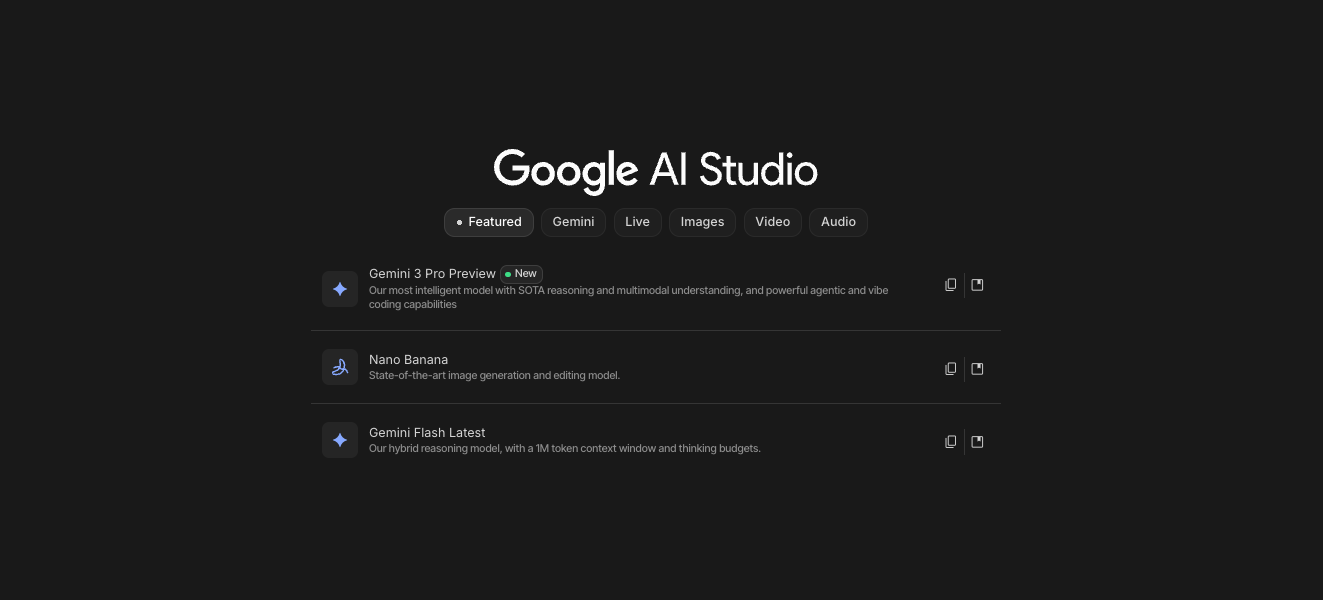
The preview phase allows early access in Google AI Studio with a “New” badge. Production workloads transition to the full Gemini 3 API once Google stabilizes the model, typically within weeks of preview launch.
Official Gemini 3 Pro API Pricing Breakdown (November 2026)
Google bases Gemini 3 Pro Preview pricing strictly on tokens consumed, with a clear context-length breakpoint:
| Context Length | Input (per 1M tokens) | Output (per 1M tokens) |
|---|---|---|
| ≤ 200,000 tokens | $2.00 | $12.00 |
| > 200,000 tokens | $4.00 | $18.00 |
These rates apply to the gemini-3-pro-preview model in the Gemini API and AI Studio when billing activates. Google counts input tokens from the prompt (text + multimodal content) and output tokens from generated text or structured data. Video and audio inputs convert to equivalent token counts based on duration and resolution.
Google offers no batch discount or context caching discount yet for the preview. However, grounding with Google Search remains free up to daily limits in AI Studio. Fine-tuning stays unavailable in preview; it arrives with the stable release.
Google AI Studio usage stays free for reasonable experimentation, but high-volume or scripted API calls trigger pay-as-you-go billing automatically once you link a Cloud project.
How Token Counting Works in Gemini 3 Pro
Google counts tokens using the same tokenizer as previous Gemini models. Text averages ~4 characters per token, while images and video use fixed equivalents (e.g., a 1-minute 720p video ≈ 10–15K tokens, varying by content complexity).
Developers call the countTokens endpoint beforehand to preview exact costs:
from google.generativeai import GenerativeModel, count_tokens

model = GenerativeModel("gemini-3-pro-preview")
tokens = count_tokens(model, contents=["Your prompt here..."])
print(tokens.total_tokens)
This step prevents surprises, especially with long-context prompts exceeding 200K tokens, where rates double.
Real-World Cost Calculations for Gemini 3 Pro API
Engineers estimate expenses accurately with these examples:
Standard chat query (5K input + 1K output, <200K context)
→ Input: 5K × $2 / 1M = $0.00001
→ Output: 1K × $12 / 1M = $0.000012
→ Total ≈ $0.000022 (sub-cent)
Document analysis (150K input + 8K output)
→ Input: $0.30
→ Output: $0.096
→ Total ≈ $0.40 per request
Long-context research task (350K input + 15K output)
→ Input: 350K × $4 / 1M = $1.40
→ Output: 15K × $18 / 1M = $0.27
→ Total ≈ $1.67 per request
A moderate-traffic application processing 100 long-context requests daily incurs ~$50–$70 monthly. High-volume agentic workflows with video easily reach thousands of dollars without optimization.
Free Access and Preview Limitations
Google provides free access to Gemini 3 Pro Preview in AI Studio for interactive use. Rate limits apply (typically 10–50 RPM depending on region and account age), but no charges occur for manual sessions.
Scripted API access requires a Google Cloud project. New projects start on the free tier with generous limits for preview models, but heavy usage quickly upgrades to paid billing. Google often waives charges entirely during the first weeks of a preview — many developers report $0 bills even after thousands of requests in November 2026.
Once the model becomes stable (expected December 2026–Q1 2026), full pricing applies without exception.
Integrating and Monitoring Gemini 3 API with Apidog
Apidog simplifies working with the Gemini 3 API. Import the official OpenAPI spec from Google, set your API key as an environment variable, and send requests directly.
Key benefits include:
- Real-time token count display in responses
- Automatic cost estimation per request (custom script or plugin)
- Collection sharing for team collaboration
- Mock servers to test logic without burning tokens
- Detailed logs to identify expensive prompts
Create a new request to https://generativelanguage.googleapis.com/v1/models/gemini-3-pro-preview:generateContent, paste your JSON payload, and hit send. Apidog parses usage metadata (input/output tokens) instantly, helping you stay under budget.
Cost Optimization Strategies for Gemini 3 Pro
Engineers reduce expenses significantly with these proven techniques:
- Keep prompts under 200K tokens when possible → avoid the 2× rate jump
- Use structured outputs (JSON mode) → shorter, predictable responses
- Implement prompt caching (when available post-preview) → reuse system instructions
- Pre-process videos → extract keyframes or transcribe audio separately
- Monitor via Google Cloud Billing alerts and Apidog dashboards
- Start with shorter contexts → iterate upward only when needed
Combining these practices routinely cuts bills by 40–70%.
Comparison with Other Flagship Models (November 2026)
| Model | Input ≤200K | Output ≤200K | Input >200K | Output >200K | Notes |
|---|---|---|---|---|---|
| Gemini 3 Pro Preview | $2.00 | $12.00 | $4.00 | $18.00 | Highest reasoning |
| Gemini 2.5 Pro | $1.25 | $10.00 | $2.50 | $15.00 | Previous flagship |
| Claude 3.5 Sonnet | $3.00 | $15.00 | Same | Same | No long-context premium |
Gemini 3 Pro commands a premium for its superior reasoning and upcoming 1M+ context, yet output remains competitive with other flagships.
Future Pricing Outlook
Google typically reduces rates 20–50% when a preview model goes stable and efficiency improves. Expect Gemini 3 Pro stable pricing in early 2026 to settle around $1.50/$10 (≤200K) and $3/$15 (>200K), with caching and batch discounts introduced simultaneously.
Conclusion
The Gemini 3 Pro API launches with transparent, context-tiered pricing: $2.00/$12.00 per million tokens up to 200K context and $4.00/$18.00 beyond. Preview access remains essentially free for testing in AI Studio, while production use follows pay-as-you-go.
Leverage tools like Apidog to monitor every token and optimize prompts from day one. This approach lets developers harness Google’s most intelligent model without budget surprises. As the model stabilizes, expect refinements that make it even more cost-effective for reasoning-heavy and multimodal workloads.