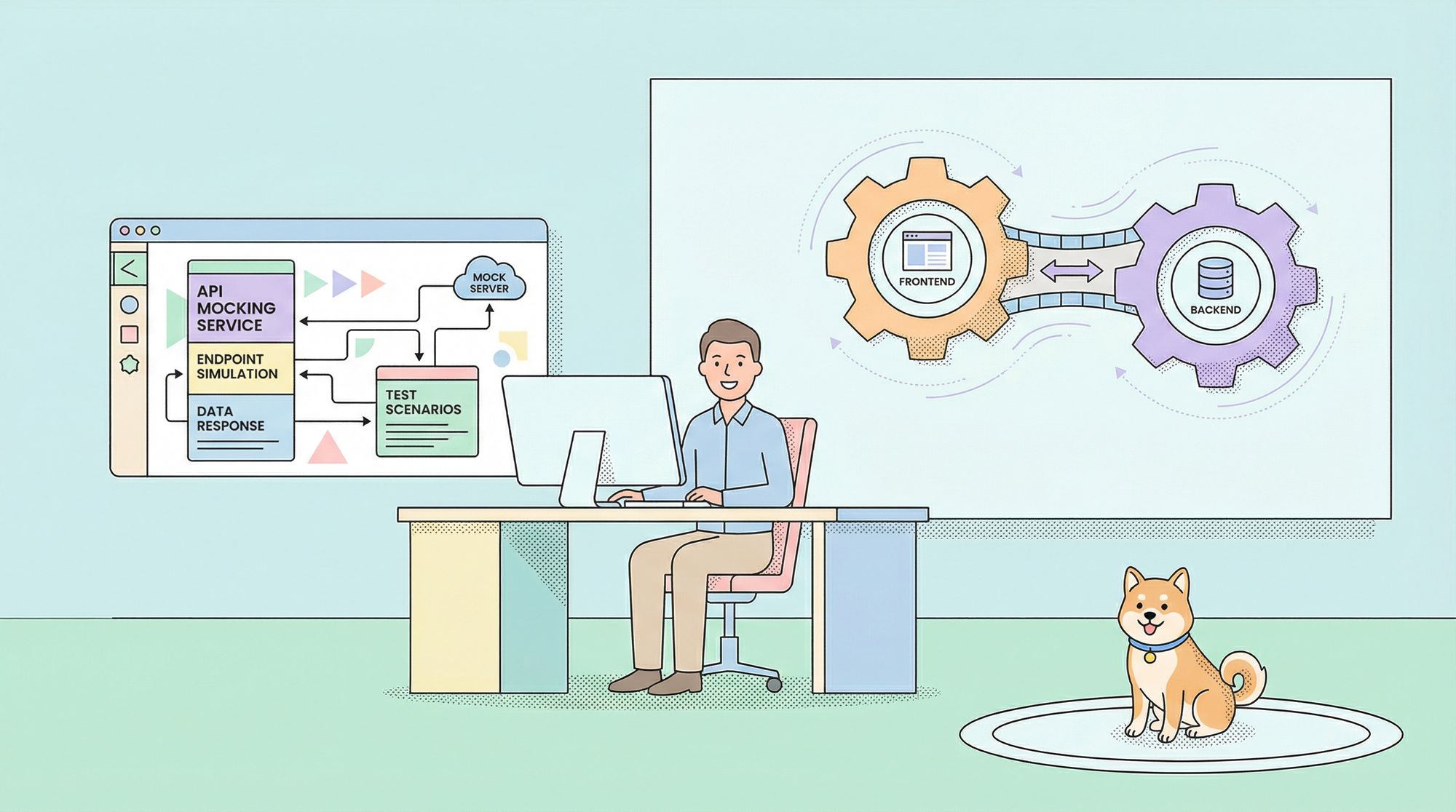
You're on the frontend team, ready to build an amazing user interface. The design is approved, the components are planned, but there's one problem: the backend API doesn't exist yet. Or maybe it exists but is unstable, incomplete, or constantly changing. You're stuck in dependency limbo, unable to make real progress.
Meanwhile, the backend team is swamped with database schemas, authentication logic, and performance optimizations. They promise the API will be ready "soon," but "soon" in development time can feel like forever.
This frustrating scenario used to mean wasted time and delayed projects. But today, there's a brilliant solution that keeps both teams moving forward independently: API mocking with collaboration features.
The right mocking service doesn't just create fake endpoints; it becomes a collaborative space where frontend and backend teams can agree on a contract, build against it simultaneously, and catch issues early. And the best part? Many of these powerful tools have robust free tiers perfect for teams getting started.
Now, let's explore the world of free, collaborative API mocking services and how they can transform your development workflow.
What Makes a Mocking Service "Collaborative"?
When evaluating tools, look for these key collaboration features:
- Shared Workspaces: A central place where team members can access and work on the same mock APIs.
- Role-Based Access Control: The ability to manage who can view, edit, or administer mock APIs.
- Commenting & Discussion: Built-in ways to discuss endpoints, responses, and changes directly on the API spec.
- Version History & Change Tracking: See who changed what and when, with the ability to revert if needed.
- Real-Time Updates: When someone updates a mock, everyone sees the changes immediately.
- Integration with Design Tools: The ability to turn an API design into a mock server instantly.
Top Free API Mocking Services with Collaboration Features
Let's compare several popular options that offer free tiers with collaboration capabilities.
1. Apidog: The All-in-One API Collaborative Platform
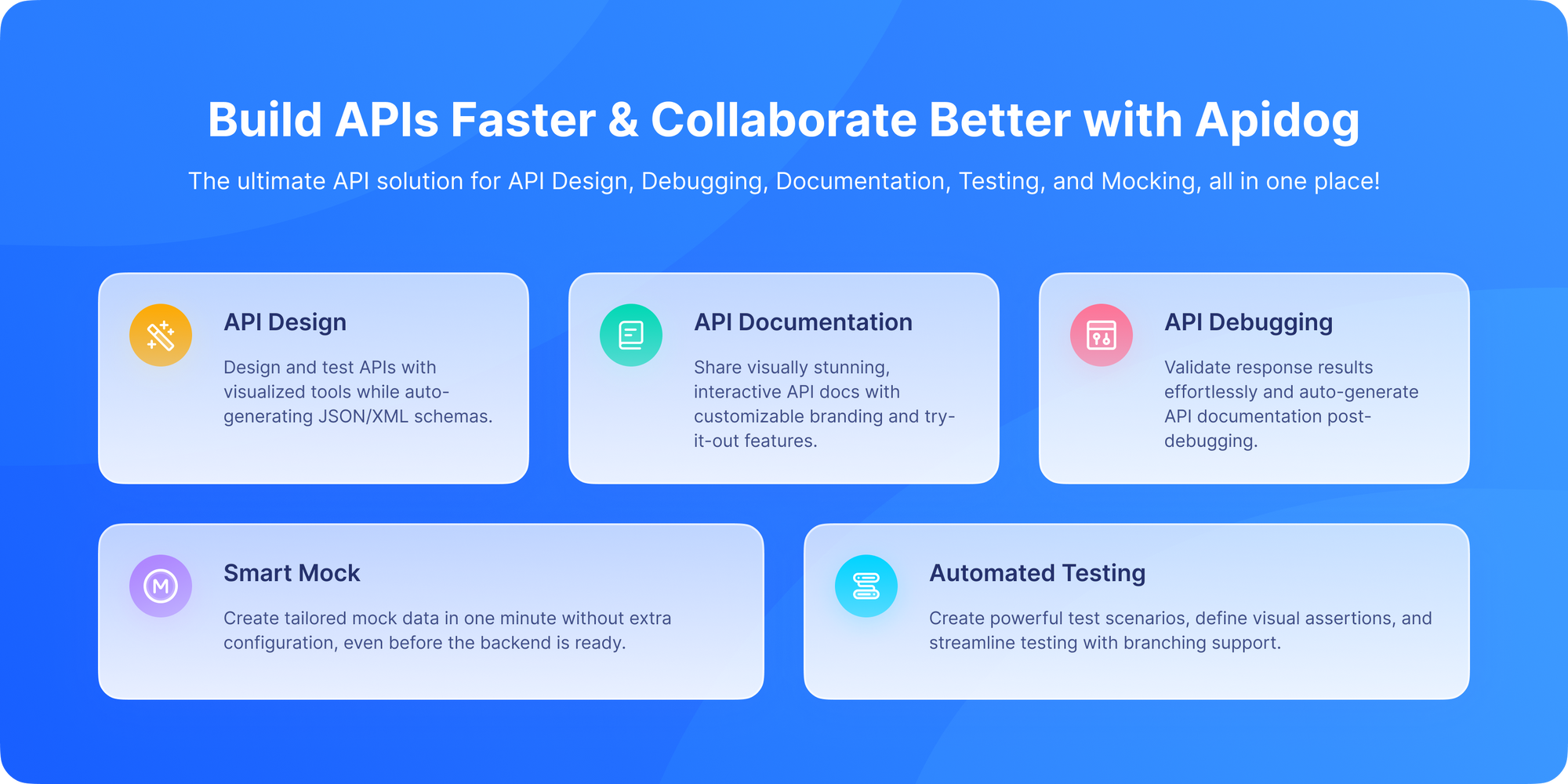
Apidog stands out by integrating the entire API workflow — API design, mocking, testing, debugging and documentation into a single collaborative platform.
Key Collaboration Features (Free Tier):
- Team Workspaces: Create shared projects where team members can collaborate.
- Real-Time Collaboration: Multiple team members can work on the same API design simultaneously.
- Role-Based Permissions: Manage access for viewers, editors, and admins.
- Commenting System: Discuss APIs directly within the platform.
- Version Control: Track changes to your API designs and mocks.
- Instant Mock Servers: Generate a mock server from your API design with one click.
How It Works:
- Design your API endpoints in Apidog's visual editor.
- Click "Generate Mock Server" you instantly get a URL.
- Share the project with your frontend team. They can see the design, documentation, and use the mock URL.
- Backend team can use the same design as their implementation blueprint.
- Everyone stays in sync as the design evolves.
Best For: Teams that want an integrated solution covering the entire API lifecycle with strong collaboration baked in.
Collaboration Features in Apidog That Teams Love
Let’s zoom in on collaboration specifically.
- Shared Projects: Everyone works in the same API project, avoiding duplication.
- Environment-Based Mocking: Different teams can test against different environments without conflict.
- Real-Time Updates: When an API definition changes, the mock updates instantly.
- Cloud Mock & Self-Hosted Mock Options: Teams can choose where mock servers run, which is especially helpful for security-conscious organizations.
These features make Apidog a strong choice for distributed and remote teams.
2. Postman: The API Giant with Mock Servers
Postman is the veteran in the API space, and its free tier includes powerful mocking capabilities.
Key Collaboration Features (Free Tier):
- Shared Workspaces: Limited to 3 members on the free plan.
- Commenting: Team members can comment on collections and requests.
- Collection Sharing: Easily share mock collections via links.
- Built-in Mock Servers: Create mock servers directly from your collections.
- Team Library: Share common elements like environments and variables.
Limitations on Free Tier:
- Only 3 collaborators per workspace
- Limited mock server calls (1000 per month)
- Limited history retention
Best For: Small teams already invested in the Postman ecosystem for testing.
3. Mockoon: The Open-Source Desktop Option
Mockoon is a fantastic open-source desktop application that's completely free with no usage limits.
Key Collaboration Features:
- Import/Export: Share mock configurations via JSON files.
- Git Integration: Store your mock setups in version control.
- Multiple Environments: Create different response sets for various scenarios.
- Template Sharing: Create and share mock templates with your team.
Collaboration Limitations:
- No built-in real-time collaboration – relies on file sharing/Git
- No centralized web interface for the team
- No user management or permissions system
Best For: Developers who prefer open-source tools and don't mind managing collaboration through Git and file sharing.
4. Stoplight Studio: Design-First Collaboration
Stoplight focuses on the design-first approach with visual API design tools.
Key Collaboration Features (Free Tier):
- Shared Workspaces: Collaborate on API designs.
- Style Guides & Linting: Enforce API design standards across the team.
- Visual API Designer: Create OpenAPI specs visually.
- Mocking: Auto-generate mocks from OpenAPI specs.
- Commenting & Reviews: Built-in review workflows.
Free Tier Limitations:
- Limited to 1 project
- Basic mocking features
- Some advanced collaboration features require paid plans
Best For: Teams committed to a strict design-first methodology with OpenAPI.
5. WireMock: The Developer-Centric Option
WireMock is a powerful, open-source mocking library that can be run as a standalone server.
Key Collaboration Features:
- Git Integration: Store mock definitions as code in version control.
- JSON Configuration: Share and collaborate on mock setups via JSON files.
- Extensive Programming: Create complex response logic programmatically.
- Self-Hosted: Complete control over your mocking infrastructure.
Collaboration Approach:
WireMock doesn't have built-in collaboration UI. Instead, teams collaborate through:
- Code reviews of mock definitions
- Shared Docker images or Helm charts
- Documentation of mock APIs
Best For: Development teams comfortable with code-based configuration who want maximum flexibility and control.
Conclusion: Mock Together, Build Better
Gone are the days of developers sitting idle, waiting for dependencies to be ready. Modern API mocking with collaboration features enables teams to work in parallel, maintain alignment, and deliver higher quality software faster.
The key insight is that mocking shouldn't be an isolated activity. It should be a collaborative process that brings frontend, backend, QA, and product teams together around a shared understanding of the API contract.
Whether you choose Apidog for its all-in-one approach, Postman for its ecosystem, or Mockoon for its simplicity, the important thing is to start collaborating around your APIs early in the development process.
The best API isn't just technically sound it's one that was built collaboratively, with input from everyone who will use it. And with today's free collaborative mocking tools, there's no reason not to start building better APIs together, today.