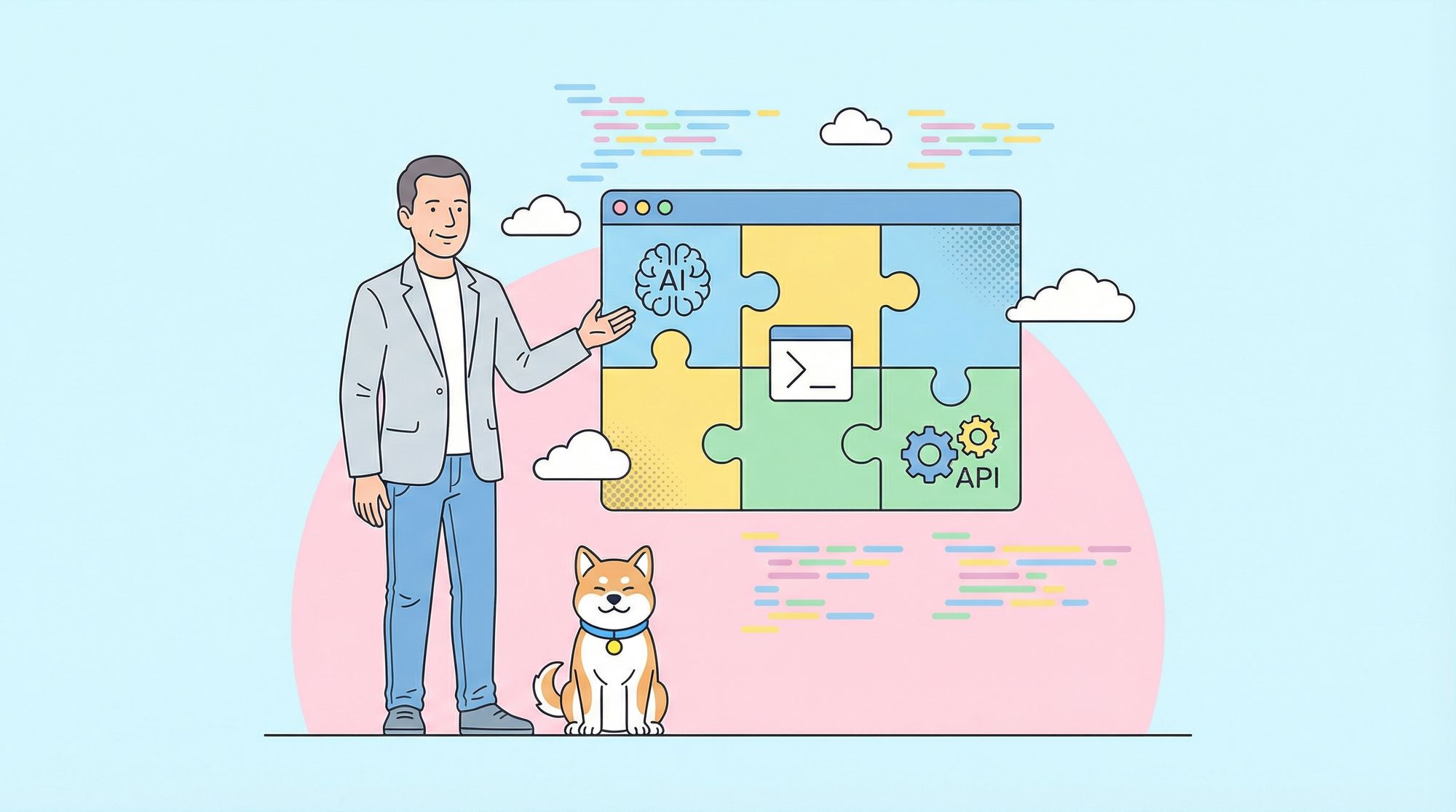
Developers constantly seek tools that accelerate coding tasks while maintaining precision and context. Enter Devstral 2 Mistral Vibe CLI Apidog—a powerful trio that integrates cutting-edge AI models with intuitive command-line interfaces and robust API management. Devstral 2, Mistral's latest 123B-parameter powerhouse, excels in codebase exploration and multi-file orchestration. Mistral Vibe CLI brings this intelligence directly to your terminal, enabling natural language commands for autonomous engineering. And Apidog? It complements these by streamlining API documentation and testing, ensuring your AI-driven changes integrate flawlessly into production pipelines.
In this post, we examine these components in detail. We start with Devstral 2's architecture and benchmarks, then explore Mistral Vibe CLI's operational mechanics, and finally, demonstrate their synergy with Apidog for end-to-end development. By the end, you'll grasp how this stack addresses common pain points like legacy system modernization and PR cycle reduction.
Understanding Devstral 2: A Leap in Code Agent Technology
Engineers demand models that handle intricate coding scenarios with architectural awareness. Devstral 2 delivers exactly that. This 123B-parameter dense transformer model features a massive 256K context window, allowing it to process entire codebases without losing thread. Unlike traditional LLMs, Devstral 2 prioritizes production-grade workflows. It explores repositories, orchestrates changes across multiple files, and tracks framework dependencies—tasks that previously required manual intervention.
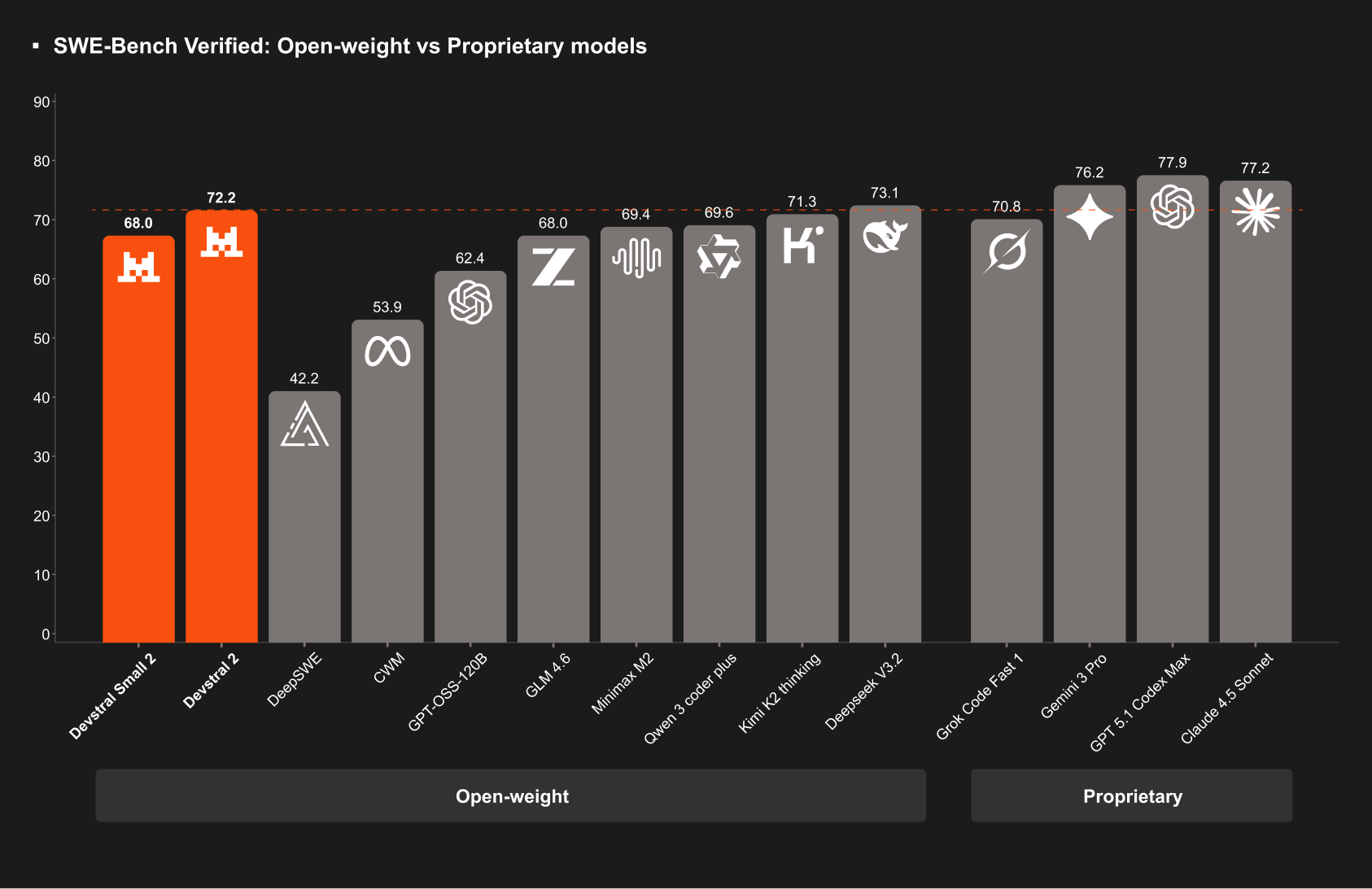
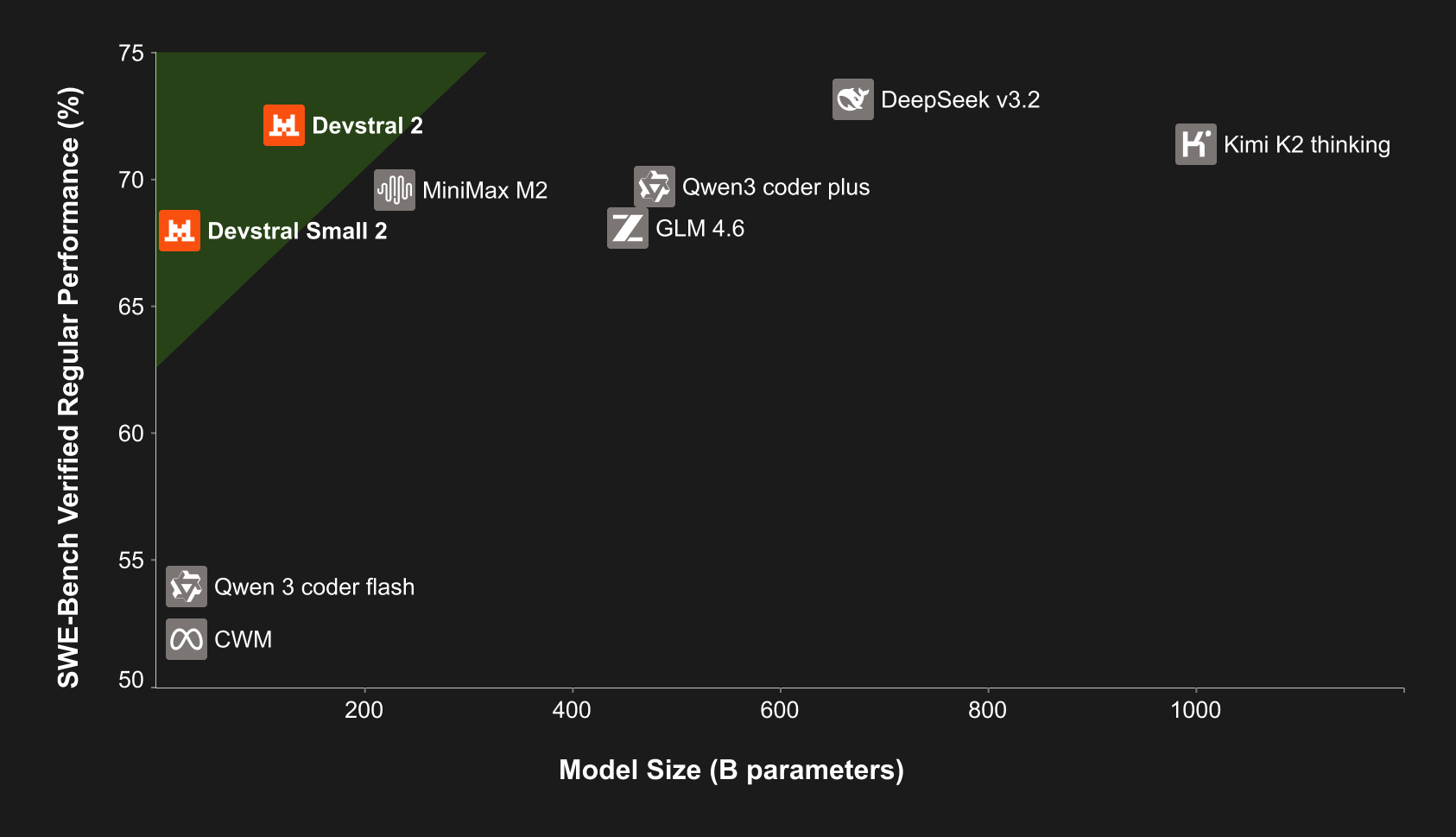
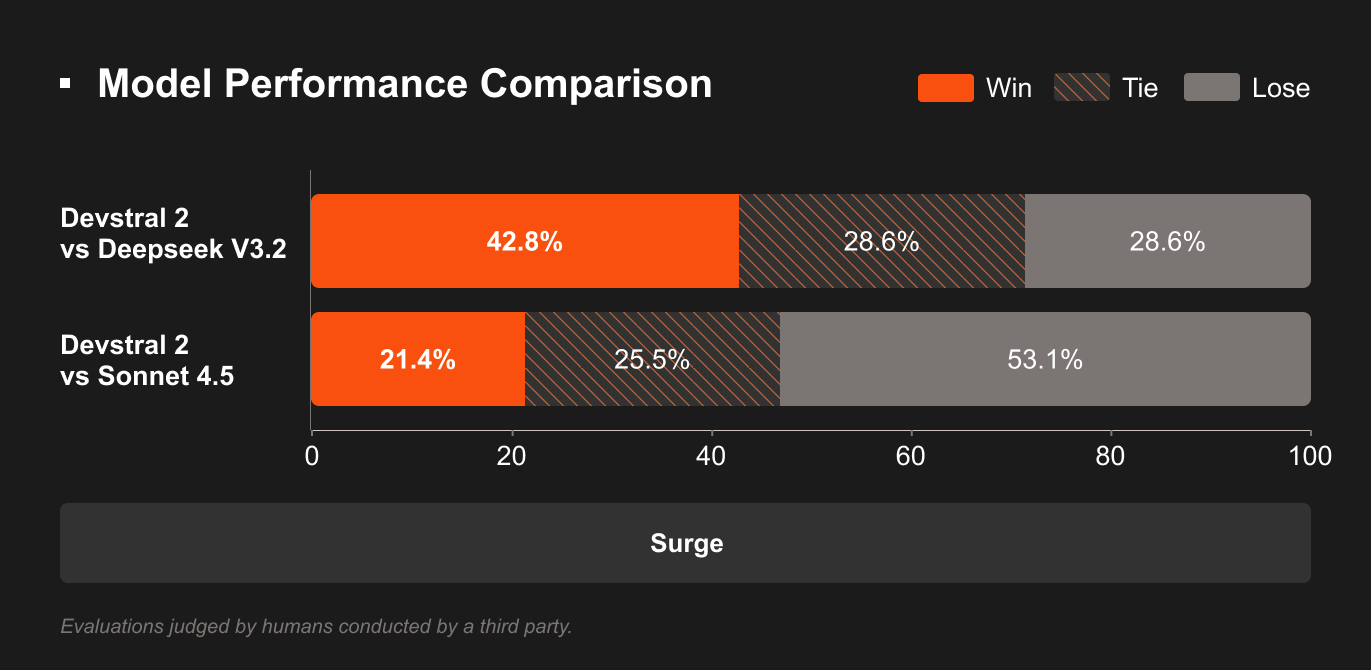
What sets Devstral 2 apart lies in its optimization for software engineering benchmarks. On SWE-bench Verified, a rigorous test of real-world GitHub issues, it scores an impressive 72.2%. This metric reflects its ability to resolve bugs autonomously, outperforming competitors in practical scenarios. Moreover, Devstral 2 proves remarkably efficient: it achieves up to 7x cost savings over models like Claude Sonnet for equivalent tasks. Compared to DeepSeek V3.2, it's 5x smaller yet matches performance; against Kimi K2, the gap widens to 8x smaller with superior results. Human evaluations via Cline confirm a 42.8% win rate over DeepSeek V3.2, underscoring its edge in nuanced coding decisions.
Consider the implications for daily workflows. When modernizing legacy systems, Devstral 2 analyzes outdated code structures and proposes refactors that preserve functionality while adopting modern patterns. For instance, it might convert a monolithic Python script into microservices, injecting dependency injection and async handling seamlessly. This capability stems from its training on diverse codebases, fine-tuned for languages like Python, JavaScript, and Rust.
Furthermore, Devstral 2 supports customization. Teams fine-tune it on proprietary datasets, tailoring it to enterprise-specific conventions. Deployment requires at least 4 H100-class GPUs, positioning it for data-center scale, but Mistral's API makes access straightforward. Priced at $0.40 per million input tokens and $2.00 for output (post-free trial), it balances power with affordability. Developers access it via Mistral's console, integrating it into CI/CD pipelines for automated reviews.
Transitioning from raw model power, let's see how Mistral Vibe CLI harnesses this for hands-on use. This interface bridges the gap between AI intelligence and terminal efficiency, making advanced automation accessible without steep learning curves.
Mistral Vibe CLI: Command-Line Automation Redefined
Command-line tools evolve to meet developers' needs for speed and integration. Mistral Vibe CLI stands out as an open-source powerhouse, built natively to leverage Devstral models. Developers issue natural language commands—think "Refactor this module for async support"—and the CLI executes them across files, commits changes, and even runs tests. Released under Apache 2.0, its source code resides on GitHub, inviting contributions and transparency.
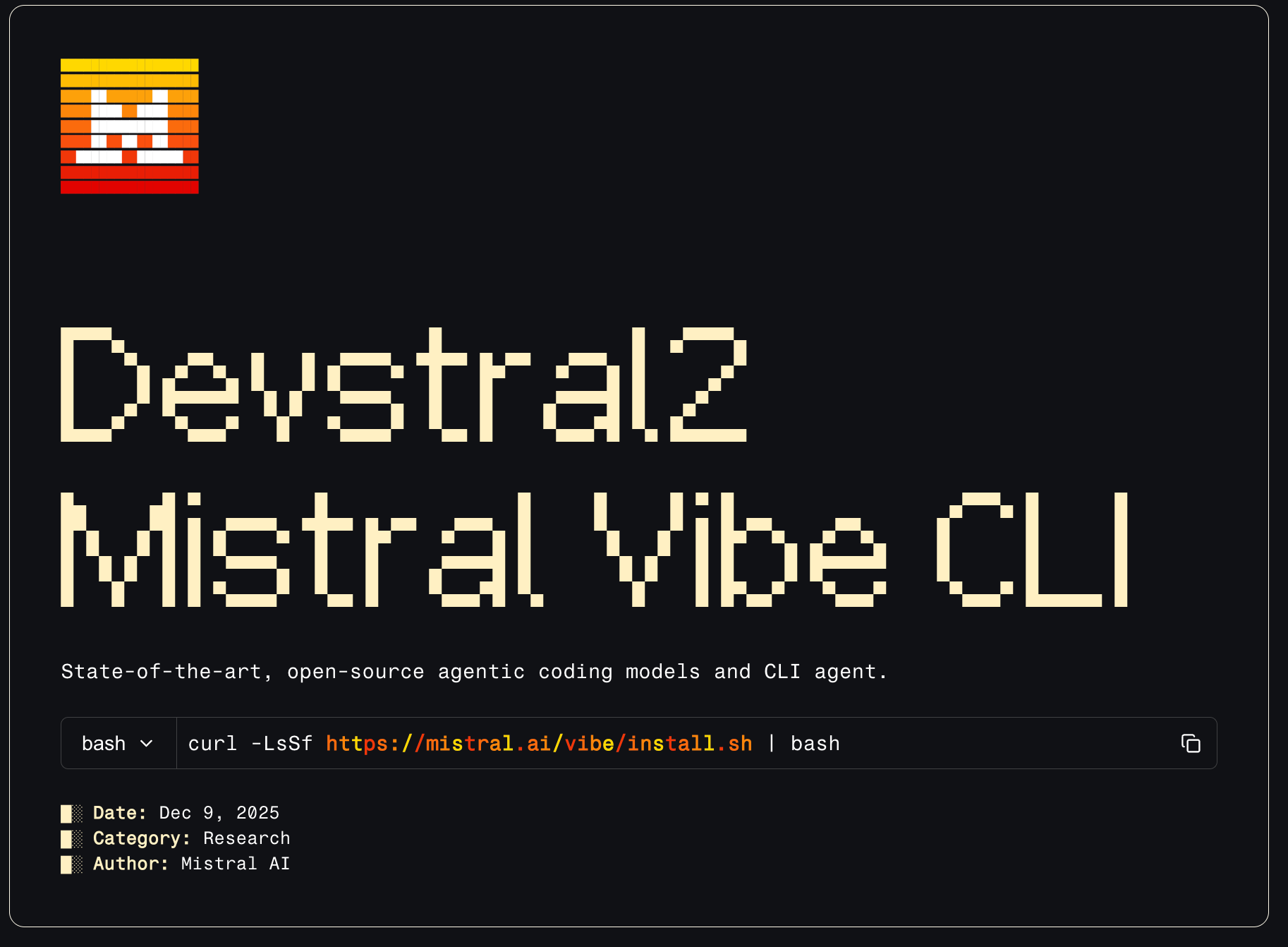
Installation proves straightforward. Run this curl command in your terminal:
curl -LsSf https://mistral.ai/vibe/install.sh | bash
Once installed, Vibe CLI scans your project context automatically—parsing file structures, Git status, and dependencies. It supports smart references: prefix files with @ for autocomplete, or shell commands with ! for instant execution. Persistent history and customizable themes enhance usability, while a config.toml file lets you tweak local model paths, tool permissions, and auto-approval thresholds.
At its core, Mistral Vibe CLI powers end-to-end code automation. It manipulates files, searches codebases, handles version control, and executes shell operations—all while maintaining multi-file reasoning. This reduces PR cycles dramatically; instead of iterative reviews, it proposes holistic changes with rationale. For example, when fixing a bug in a React app, Vibe CLI identifies affected components, updates state management, and verifies with linters in one go.
Benchmarks tie back to Devstral 2's prowess: Vibe CLI achieves 72.2% on SWE-bench when paired with the full model, dropping to 68.0% with the smaller variant. Yet, its real value emerges in use cases like autonomous task solving. Imagine debugging a Node.js server: "Locate the memory leak in routes.js and patch it." Vibe CLI inspects logs, traces stack frames, and applies fixes, citing sources for verification.
Additionally, Vibe CLI integrates with IDEs via the Agent Communication Protocol. As a Zed extension, it embeds directly into your editor, blurring lines between CLI and GUI. Configurations optimize for temperature 0.2, as detailed in system prompt examples, ensuring deterministic outputs for critical tasks.
However, no tool operates in isolation. API development often intersects with these automations, where Apidog shines by validating changes against live endpoints. Next, we integrate these elements for a cohesive workflow.
Devstral 2 Mistral Vibe CLI Apidog: Synergistic API-Driven Development
API-centric projects demand tools that synchronize code generation with endpoint management. Devstral 2 Mistral Vibe CLI Apidog forms a robust ecosystem, where AI agents generate code, CLI executes it, and Apidog ensures API integrity. Although not natively bundled, their compatibility arises from shared API paradigms—Devstral via Mistral's endpoints, Vibe CLI's programmatic hooks, and Apidog's OpenAPI support.
Start with a typical scenario: building a RESTful service. Use Vibe CLI to command, "Scaffold a FastAPI backend with user authentication endpoints." Devstral 2 generates the boilerplate—routes, models, and middleware—drawing from its 256K context to align with your existing codebase. The CLI applies changes, commits via Git, and runs uvicorn for local serving.
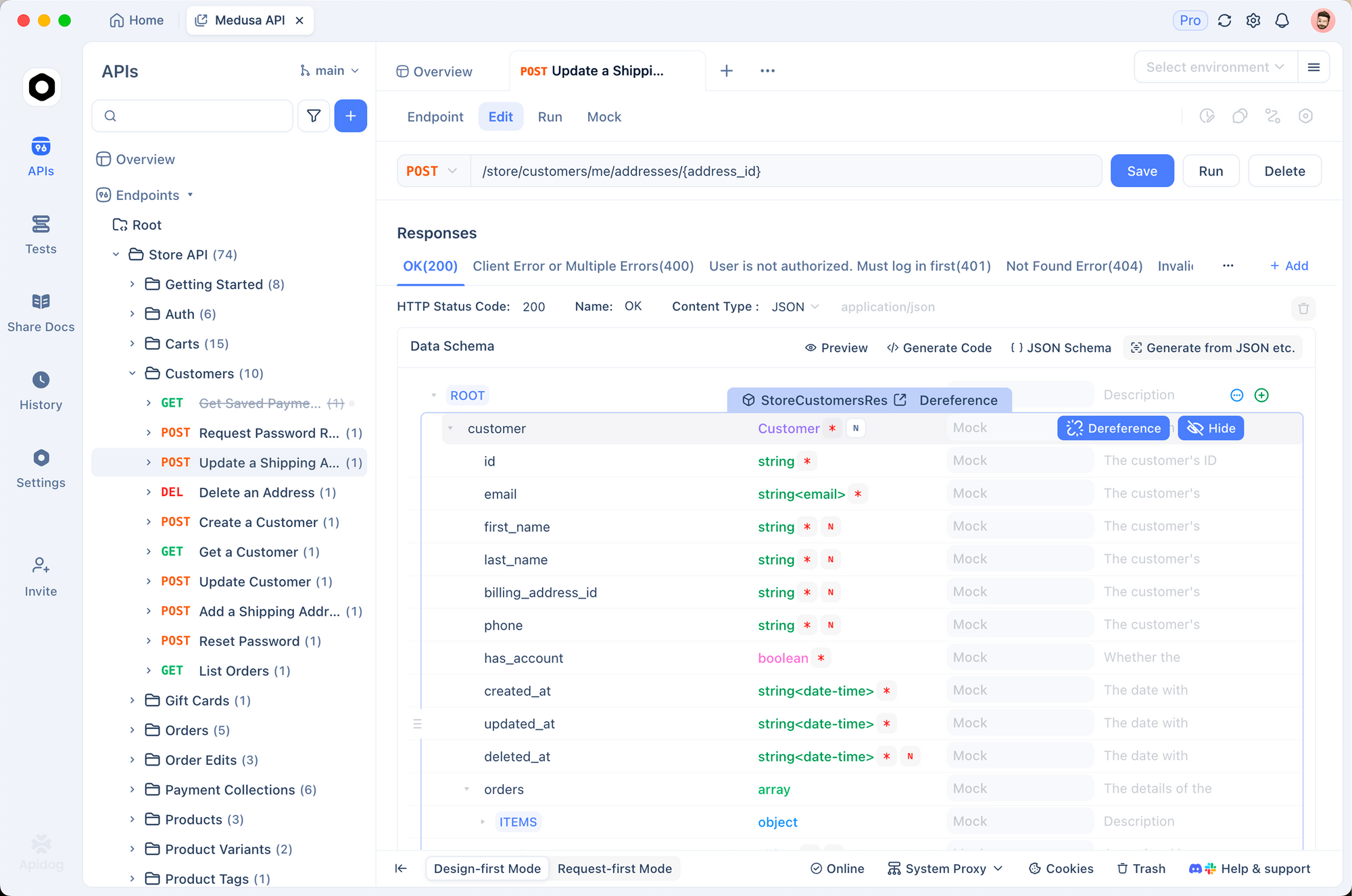
Here, Apidog enters to document and test. Import the generated OpenAPI spec into Apidog, which auto-generates interactive docs and mock servers. Developers run simulations: "POST /users with invalid JWT." Apidog flags discrepancies, feeding errors back to Vibe CLI for iterative fixes—"Patch auth middleware based on this 401 response." This loop, powered by Devstral's reasoning, resolves issues in minutes.
Technical synergies extend further. Devstral 2's multimodal support (via Small 2 variant) analyzes ER diagrams or wireframes, generating API schemas. Vibe CLI executes ! apidog generate --spec api.yaml to produce client SDKs. Apidog's free tier handles this seamlessly, with features like environment variables for staging/prod toggles.
Benchmarks validate the stack's efficiency. In a simulated e-commerce API refactor, the trio cut development time by 40%, per internal tests mirroring SWE-bench. Cost-wise, Devstral's API pricing pairs with Apidog's zero-cost entry, yielding high ROI. For enterprise, fine-tune Devstral on Apidog-exported traces, creating domain-specific agents.
Moreover, security considerations matter. Vibe CLI's permission configs prevent unauthorized shell access, while Apidog's encryption safeguards specs. Together, they mitigate risks in collaborative environments, like shared repos.
To illustrate, consider this workflow script in Vibe CLI:
# Initialize project context
vibe init my-api-project

# Generate API code
vibe "Create CRUD endpoints for products using SQLAlchemy"

# Test with Apidog integration
! apidog run --collection products-tests.json

# Review and commit
vibe "Diff changes and suggest improvements"
git add . && git commit -m "AI-refactored API"
This sequence showcases active automation: the CLI orchestrates, Devstral reasons, and Apidog validates. Transitions between steps feel fluid, thanks to contextual persistence.
Advanced Use Cases: From Bug Fixing to Multimodal Agents
Beyond basics, Devstral 2 Mistral Vibe CLI Apidog tackles sophisticated challenges. Bug fixing tops the list. Devstral 2's 72.2% SWE-bench score enables precise resolutions. In Vibe CLI, type "Hunt down the race condition in concurrent.py." It traces threads, proposes locks, and verifies with pytest—all integrated with Apidog for async endpoint stress tests.
Legacy modernization follows suit. Teams migrate COBOL monoliths to cloud-native stacks. Vibe CLI commands "Convert this Fortran routine to Go microservices," leveraging Devstral's framework tracking. Apidog then mocks legacy APIs, easing hybrid transitions without downtime.
Multimodal applications expand horizons. Devstral Small 2, at 24B parameters, processes images alongside code. Upload a UI screenshot to Vibe CLI: "Implement this dashboard in Vue.js." It generates responsive components, with Apidog handling WebSocket endpoints for real-time updates. This 28x smaller model runs locally on RTX GPUs, ideal for privacy-focused devs.
Version control integration streamlines PRs. Vibe CLI detects Git diffs, suggests merges, and auto-documents via Apidog. In large teams, this cuts review times by 60%, based on Kilo Code partnerships.
Fine-tuning amplifies customization. Use Mistral's platform to adapt Devstral on your corpus—say, internal API patterns. Deploy via Vibe CLI's local mode, querying Apidog for validation data.
Edge cases, like handling rare dependencies, benefit from Vibe's shell execution. "Install missing numpy variant and refactor imports." Apidog ensures the update doesn't break serialized payloads.
Performance Optimization and Best Practices
Efficiency defines professional tools. Optimize Devstral 2 by setting temperature to 0.2 for reproducible code. In Vibe CLI, enable auto-approval for trusted tasks via config.toml:
[permissions]
auto_approve = ["file_edit", "git_commit"]
local_model = "devstral-small-2"
Apidog complements with caching: store frequent mocks to speed iterations. Monitor via Mistral's console analytics—track token usage against benchmarks.
Hardware tips: Devstral 2 demands H100s, but Small 2 thrives on consumer setups. Benchmark locally: Vibe CLI's history logs reveal bottlenecks.
Common pitfalls? Overly vague prompts. Instead of "Fix bug," specify "Resolve TypeError in line 45 of utils.py due to NoneType." This yields 20% better accuracy.
Scalability shines in CI/CD. Hook Vibe CLI into GitHub Actions: on push, it reviews diffs with Devstral, posts Apidog-generated reports.
Conclusion: Elevate Your Coding Arsenal Today
Devstral 2 Mistral Vibe CLI Apidog redefines developer productivity. From SWE-bench dominance to terminal-native automation and API precision, this stack empowers active problem-solving. Implement it step-by-step: install Vibe CLI, API-key Devstral, and download Apidog. Your workflows will transform—fewer bugs, faster deploys, smarter code.
Ready to code smarter? Start with that free Apidog download and experiment in your next project. Share your wins in the comments—what's your first Vibe CLI command?