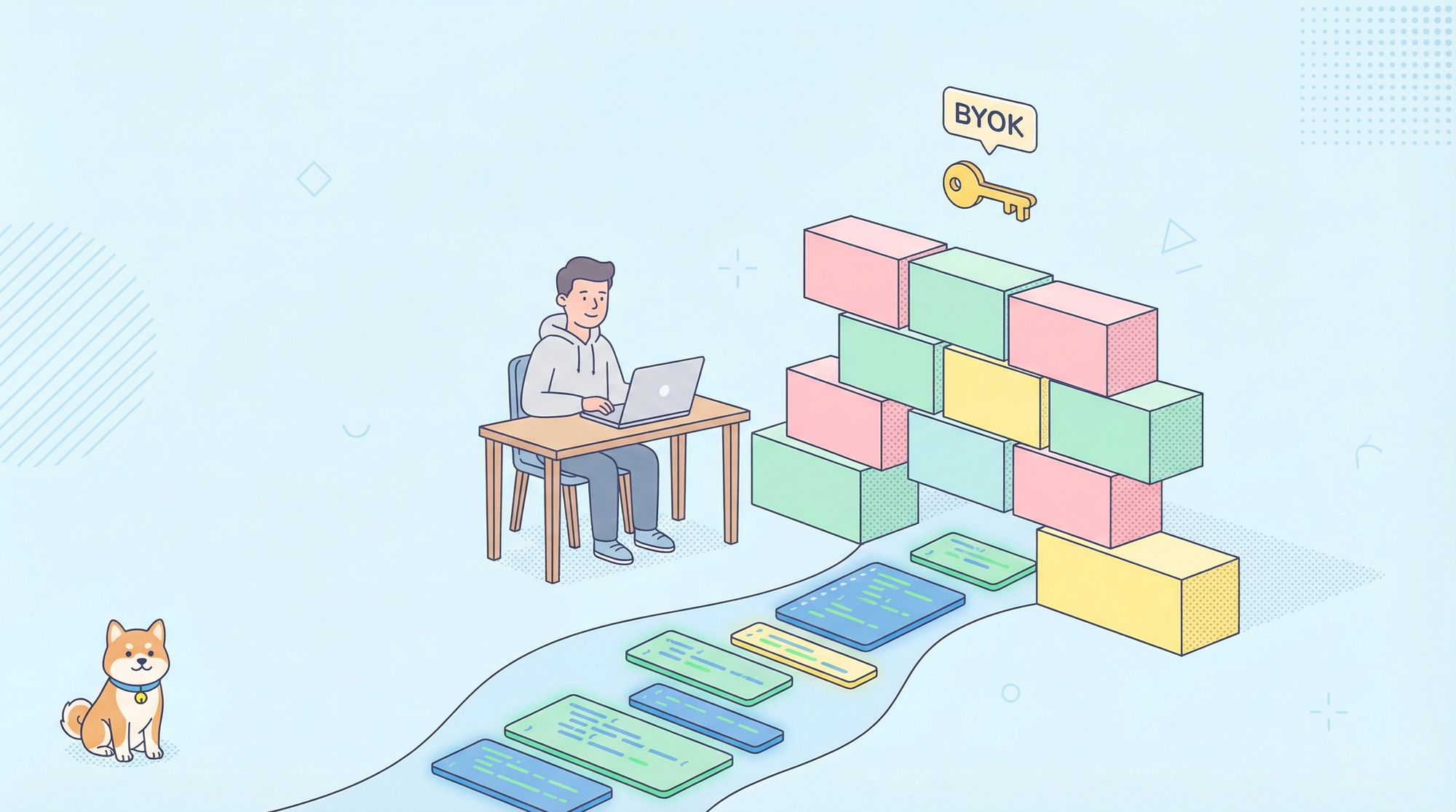
I hit this wall last Tuesday. Configured my Anthropic API key in Cursor, fired up the Agent tab to refactor a legacy auth module and bang, error message: “Agent and Edit rely on custom models that cannot be billed to an API key.” No code, no helpful redirect, just a hard stop. If you’re reading this, you’ve likely pulled the same BYOK (Bring Your Own Key) lever and discovered Cursor’s premium features don’t play nice with raw API keys. Let’s fix that.
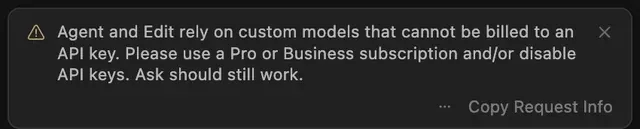
What Does This Error Actually Mean?
Cursor bundles two classes of AI models: standard and custom. Standard models are the raw LLMs you can access directly via OpenAI or Anthropic APIs—think gpt-4o or claude-sonnet-4-5. Custom models are Cursor’s tuned variants, optimized for multi-file context, codebase awareness, and inline edit suggestions. These run on Cursor’s infrastructure and are metered through their subscription plans, not your API credits.
When you enter a BYOK in Settings → Models → API Keys, Cursor unlocks chat completions for standard models only. The Agent and Edit features—those powerful, context-aware tools that read your entire project—depend on custom models. Cursor’s backend blocks these features from routing to external keys to protect their IP and billing model.
Bottom line: BYOK gives you chat, not magic. The error isn’t a bug; it’s a business logic gate.
Why Cursor Blocks Agent/Edit from BYOK
Three reasons drive this decision and understanding them helps you choose the right workaround.
1. Infrastructure Cost:
Custom models run on Cursor’s optimized infrastructure with extended context windows (up to 200K tokens), vector embeddings for your codebase, and predictive caching. Outsourcing this to user API keys would leak margin and create unpredictable latency.
2. Model Fine-Tuning:
Cursor augments base models with proprietary LoRA adapters trained on code editing patterns. These adapters are intellectual property—they don’t exist in the standard models your API key can access.
3. Predictable Billing:
Cursor Pro charges $20/month for unlimited Agent/Edit usage. If you could BYOK, heavy users might burn $50/month in API calls while paying Cursor nothing. The ban ensures sustainable economics.
Immediate Fixes: Get Agent/Edit Working Today
Fix 1: Use Cursor’s Pro Trial (Fastest)
Start the 14-day Pro trial (students can get up to 1 year for FREE with Cursor's Student Plan). No credit card required, and you’ll immediately unlock Agent/Edit with custom models.
# Check your current plan status
curl -X GET "https://api.cursor.sh/v1/subscription" \
  -H "Authorization: Bearer YOUR_CURSOR_SESSION_TOKEN"
If plan: "free", click “Start Pro Trial” in the top-right of the Cursor window.
Fix 2: Switch to Standard Models in Agent
If you must use BYOK, force the Agent to use a standard model. This disables some smarts but keeps the multi-file orchestration.
// .cursorrules
{
  "agentModel": "claude-sonnet-4-5-20251022",
  "disableCustomModels": true,
  "maxContextTokens": 100000
}
Add this file to your project root. Restart Cursor (Cmd+Q on macOS), then launch Agent. It will warn you about reduced capabilities but will run.
Fix 3: Run a Local Proxy (Advanced)
Set up a lightweight proxy that intercepts Cursor’s requests and forwards them to your API key, rewriting model names to standard variants.
# cursor-proxy.py
from flask import Flask, request, jsonify
import requests

app = Flask(__name__)
OPENAI_KEY = "sk-..."

@app.route('/v1/completions', methods=['POST'])
def proxy():
    data = request.json
    # Force standard model
    data['model'] = 'gpt-4o'
    resp = requests.post(
        'https://api.openai.com/v1/completions',
        json=data,
        headers={'Authorization': f'Bearer {OPENAI_KEY}'}
    )
    return jsonify(resp.json())

if __name__ == '__main__':
    app.run(port=5000)
Then in Cursor settings, set API Base URL to http://localhost:5000. This tricks Cursor into using your key, but Agent still fails because it expects custom model endpoints. Use this only for chat.
Better BYOK Alternatives for Agentic Workflows
Instead of fighting Cursor’s guardrails, pivot to tools that embrace BYOK for agentic tasks.
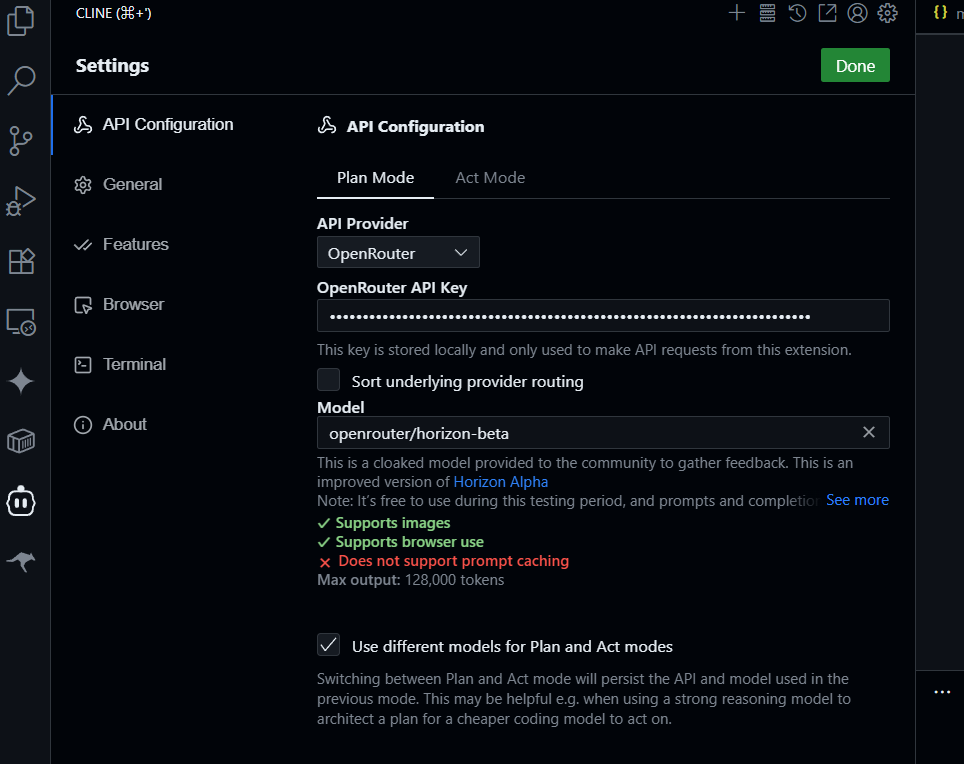
Alternative 1: Switch to using other VS Code integrated tools like Cline (Recommended)
Unlike Cursor’s restricted BYOK, Cline lets you use your API keys without limitations, offering:
- Full Feature Access: No paywalls for Chat, Edit, or Agent-like modes.
- Cost Control: Pay only your provider’s API costs, which can be cheaper than Cursor’s $20/month for heavy users.
- Open-Source: Customize or contribute to Cline’s codebase (github.com/cline/cline).
- Privacy: Direct API calls reduce reliance on third-party servers.
Users on X and Reddit praise Cline in VS Code for its responsiveness and flexibility, especially for multi-file projects and integration with top models like Claude Sonnet 4.5.
Alternative 2: Use Claude Code Directly
Anthropic’s claude-code CLI gives you agentic power with your own API key, no restrictions.

# Install
npm install -g @anthropic-ai/claude-code

# Run with your key
export ANTHROPIC_API_KEY="sk-ant-..."
claude --model claude-opus-4-5-20251101

# Agentic commands
/plan "Refactor auth module to use JWT"
You lose the IDE integration but gain full control and lower costs.

Alternative 3: Continue.dev + BYOK
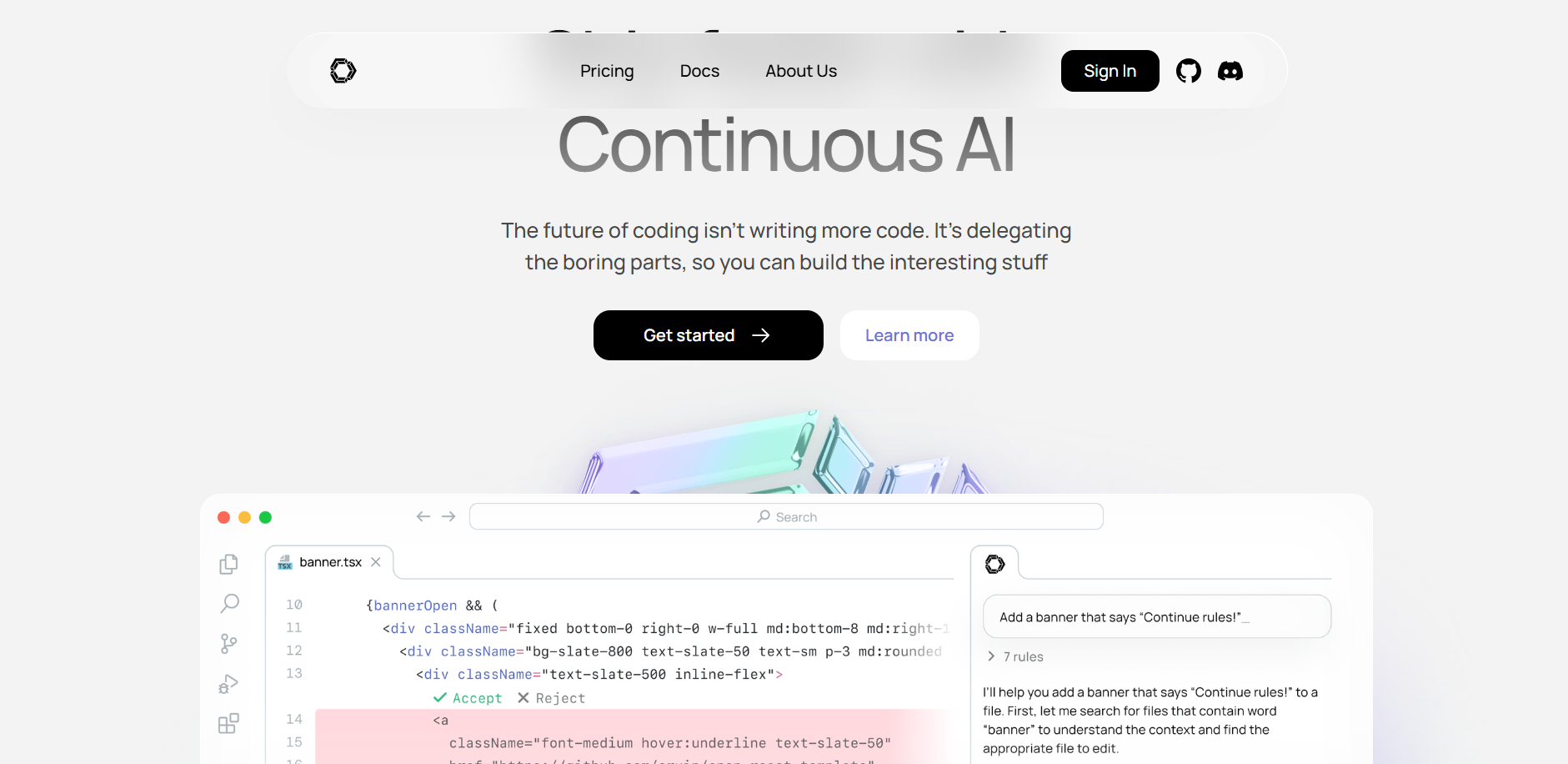
Continue.dev is an open-source Cursor alternative that lets you BYOK for every feature, including agentic autocomplete.
// .continue/config.json
{
  "models": [
    {
      "title": "Claude Opus",
      "provider": "anthropic",
      "model": "claude-opus-4-5-20251101",
      "apiKey": "YOUR_API_KEY"
    }
  ],
  "tabAutocompleteModel": {
    "title": "Claude Sonnet",
    "provider": "anthropic",
    "model": "claude-sonnet-4-5-20251022",
    "apiKey": "YOUR_API_KEY"
  }
}
Debugging the Error: When It Persists After Fixes
If you’ve started the Pro trial and still see the error, reset Cursor’s state.
Clear Cache and Config
# macOS
rm -rf ~/Library/Application\ Support/Cursor/Cache
rm -rf ~/Library/Application\ Support/Cursor/Custom\ Models

# Linux
rm -rf ~/.config/Cursor/Cache
rm -rf ~/.config/Cursor/Custom\ Models

# Windows
rmdir /s /q %APPDATA%\Cursor\Cache
rmdir /s /q %APPDATA%\Cursor\Custom\ Models
Re-authenticate
# Sign out and back in via CLI
cursor --sign-out
cursor --sign-in
Verify Subscription Status
// Open DevTools in Cursor (Help → Toggle Developer Tools)
// Run this in console
await fetch("https://api.cursor.sh/v1/subscription", {
  headers: { "Authorization": `Bearer ${localStorage.getItem("cursorSession")}` }
}).then(r => r.json()).then(console.log);

// Should show: { "plan": "pro", "status": "active" }
If plan still shows free, contact Cursor support—they may have a billing sync issue.
Cost Analysis: When BYOK Actually Saves Money
Let’s run the numbers for a heavy user generating 500 agentic requests/month.
| Scenario | Cursor Pro | BYOK with Claude Opus |
|---|---|---|
| Monthly cost | $20 flat | ~$150 (500 requests × 300K tokens avg × $0.015/1K input + $0.075/1K output) |
| Context limit | 200K tokens (custom) | 200K tokens (standard) |
| Codebase awareness | Yes | No |
| Latency | Optimized | Standard API latency |
| Best for | Full-time devs | Occasional use, budget control |
Break-even: If you use fewer than ~60 agentic requests/month, BYOK via Claude Code is cheaper. Above that, Cursor Pro wins.
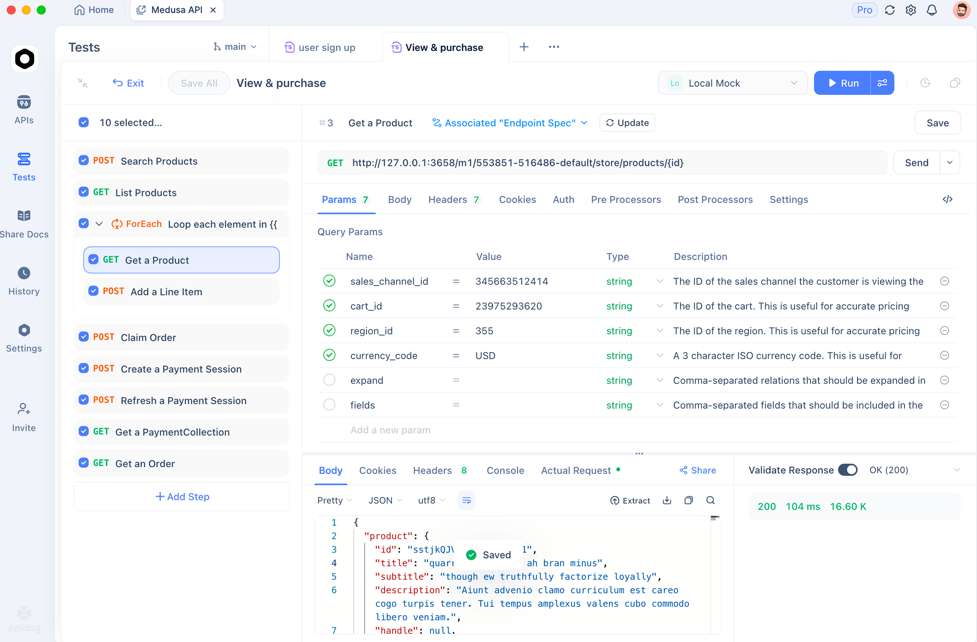
Test Your AI Tool Integrations with Apidog
Building a proxy or custom agent to work around Cursor’s limits means you’re now managing API integrations. When your wrapper calls Anthropic or OpenAI, validate those contracts with Apidog.
Import your API specs, generate test cases for rate limiting and error handling, and run contract tests to ensure your proxy returns the shape Cursor expects. It’s free to start, and it catches the subtle null pointer bugs that crash your IDE integration.
Frequently Asked Questions
Q1. Will Cursor ever allow BYOK for Agent/Edit?
Unlikely. Their custom models are core IP. The best hope is a pay-per-use tier that doesn’t require full Pro.
Q2. Can I use a team member’s Pro account to activate Agent, then switch to BYOK?
No. Cursor checks plan status on every Agent request. If the subscription lapses, Agent stops immediately.
Q3. Does the .cursorrules disableCustomModels flag actually work?
Partially. It forces standard models for chat but Agent still errors. The flag is undocumented and unsupported—use at your own risk.
Q4. What’s the difference between Agent and Chat in Cursor?
Chat is stateless Q&A. Agent maintains context across files, reads your entire codebase, and plans multi-step edits. That context persistence requires custom models.
Q5. Can I self-host Cursor’s custom models?
No. They’re not open-source, and the infrastructure footprint (vector DBs, fine-tuned adapters) makes self-hosting impractical.
Conclusion
The “custom models cannot be billed to an API key” error is Cursor’s way of protecting its premium tier. The fastest fix is starting a Pro trial; the most flexible long-term solution is adopting Claude Code or Continue.dev for agentic work. For developers glued to Cursor’s UX, use the Pro plan for Agent/Edit and BYOK for chat to control costs.
Whatever path you choose, test your API integrations with Apidog—because even the best AI tools break when the contract changes.