
Unlock the full potential of AI-powered coding assistants by integrating the Code Index MCP Server with your development workflow. This guide will show backend engineers, API developers, and technical leads how to seamlessly connect large language models (LLMs) like Claude, Cursor, or VS Code Copilot with your codebase for deep, context-aware code search, analysis, and documentation—all via the Model Context Protocol (MCP).
If your team is looking to streamline code reviews, automate documentation, and enhance codebase insights, the Code Index MCP Server delivers. Plus, for API-driven teams, Apidog offers a robust, integrated platform for API testing, documentation, and collaboration—helping you achieve maximum productivity and seamless teamwork.
What Is the Code Index MCP Server?
The Code Index MCP Server is a Python-powered tool that connects LLMs directly to your codebase. Acting as a “code librarian,” it scans, indexes, and exposes your project structure, enabling AI models to understand, search, and analyze everything from JavaScript to Python, SQL, and more.
Key use cases:
- Automated code review and improvement suggestions
- AI-driven refactoring and bug detection
- Instant code documentation generation
- Dependency and architecture analysis for complex projects
Open-source and extensible, you can find it at github.com/johnhuang316/code-index-mcp.
Core Features of Code Index MCP Server
🔍 Advanced Code Search & Analysis
- Auto-Detects Search Engines: Leverages ugrep, ripgrep, ag, or classic grep for ultra-fast queries.
- Safe Regex Support: Enables complex regex without risk of ReDoS attacks.
- Fuzzy Search: Easily match similar terms; e.g., "authUser" finds "authenticateUser".
- File Structure Analysis: Detects classes, methods, imports, and complexity metrics instantly.
🗂️ Broad Language & Filetype Coverage
Supports over 50 languages and formats, ideal for monorepos or polyglot teams:
- System: C, C++, Rust, Go, Zig
- Object-Oriented: Java, C#, Kotlin, Swift
- Scripting: Python, JavaScript, TypeScript, Ruby, PHP
- Web & Config: React, Vue, HTML, CSS, JSON, YAML, Markdown
- Databases: MySQL, PostgreSQL, SQLite
⚡ High Performance & Scalability
- Smart Indexing: Ignores unnecessary files (e.g., node_modules)
- Persistent Caching: Blazing-fast repeat searches
- Memory Efficiency: Designed for large-scale codebases
- Lazy Tool Loading: Only loads what you need, when you need it
How to Set Up and Use Code Index MCP Server
Prerequisites
Before you begin, make sure you have:
- Python 3.10+ (from python.org)
- uv Tool: Install with
pip install uvor via astral.sh/uv - Node.js: For MCP Inspector (nodejs.org)
- Git: Clone the repo (git-scm.com)
- VS Code, Claude Desktop, or Cursor: For AI integration
Step 1: Quick Integration with Your AI Coding Assistant
1. Install the uv Tool
- Windows PowerShell:
irm https://astral.sh/uv/install.ps1 | iex - macOS/Linux:
curl -LsSf https://astral.sh/uv/install.sh | sh
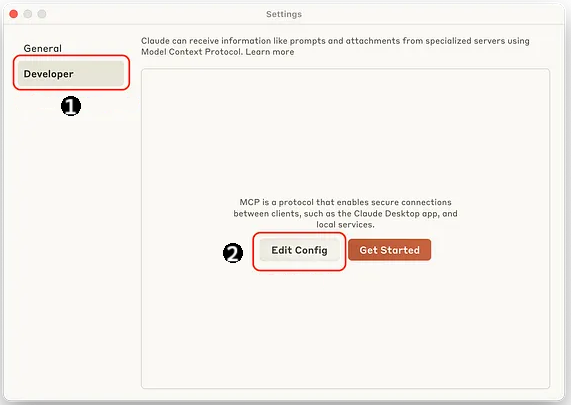
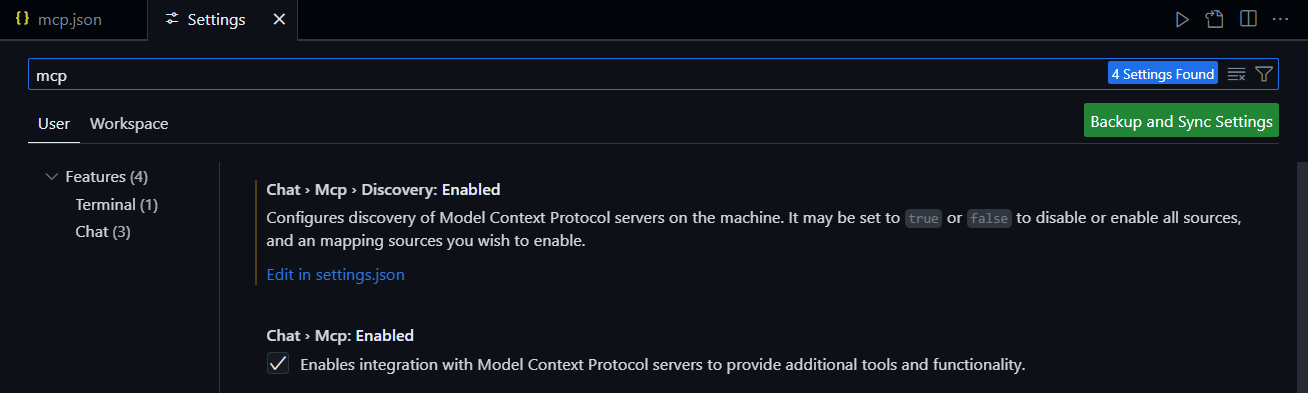
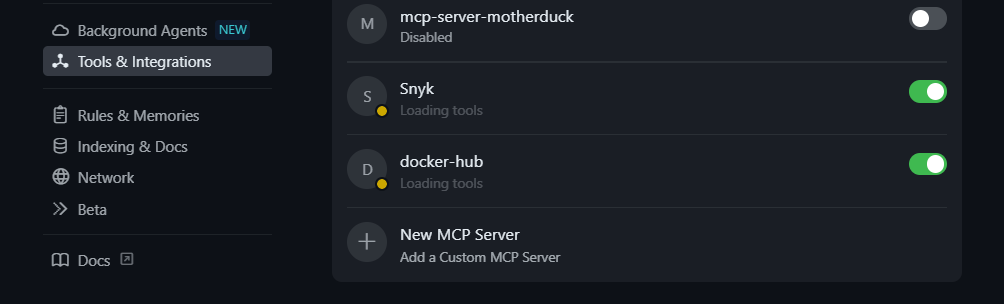
2. Update Your AI Client’s MCP Config
Locate and update the MCP configuration file for your client:
-
Claude Desktop:
- macOS:
~/Library/Application Support/Claude/claude_desktop_config.json - Windows:
%APPDATA%\Claude\claude_desktop_config.json
- macOS:
-
VS Code:
.vscode/mcp.json
-
Cursor:
~/.cursor/mcp.json
Add the following configuration block:
{
  "mcpServers": {
    "code-index": {
      "command": "uvx",
      "args": ["code-index-mcp"]
    }
  }
}
3. Restart Your AI Client
Close and reopen your client (Claude Desktop, VS Code, Cursor). The MCP server will auto-install and run.
Note:
If file indexing fails, install the watchdog Python package for robust file monitoring:
pip install watchdog
Step 2: Manual Development Setup (For Contributors)
Want to customize or contribute? Set up the server manually:
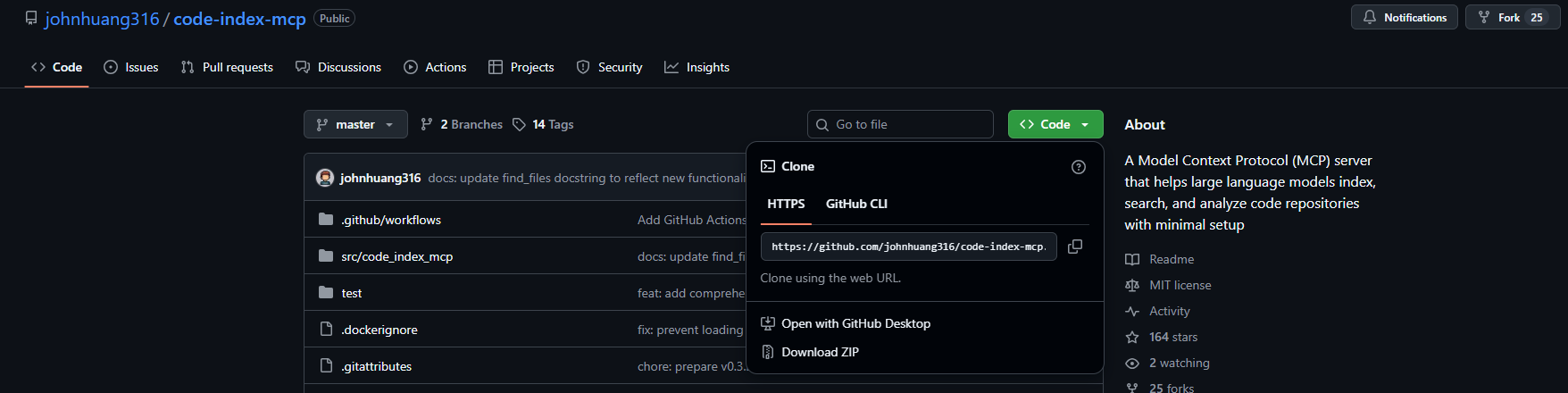
1. Clone the Repository
git clone https://github.com/johnhuang316/code-index-mcp.git
cd code-index-mcp
2. Install Dependencies
uv sync
3. Run the Server Locally
uv run code_index_mcp
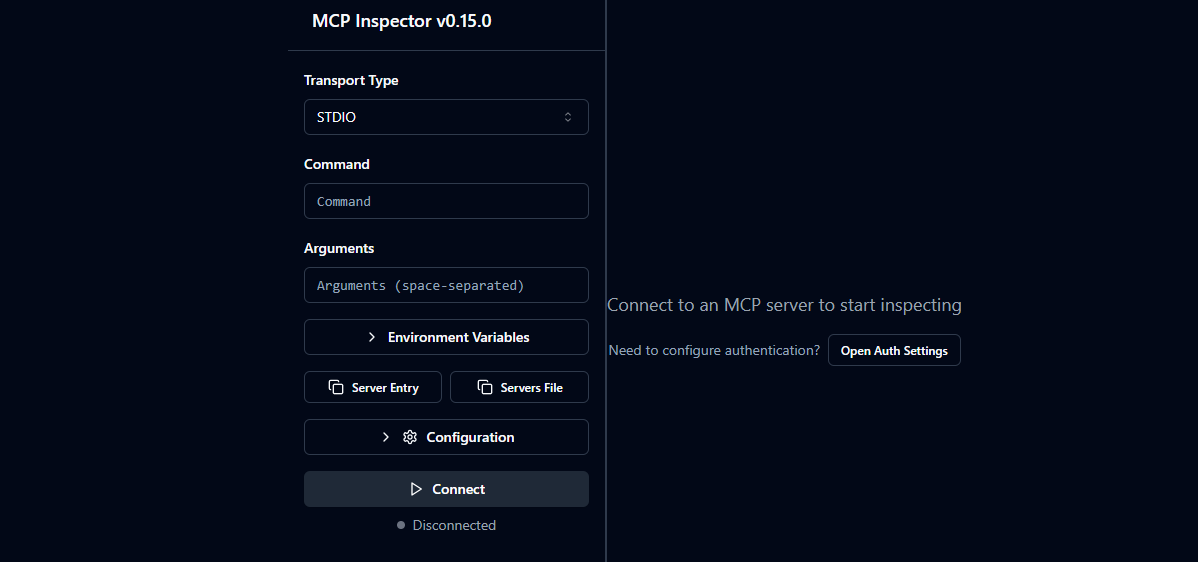
4. Debug with MCP Inspector
If you want to inspect or test the MCP connection:
npx @modelcontextprotocol/inspector uvx code-index-mcp
This lets you verify the server’s status, available tools, and test queries.
Step 3: Explore the Built-in Tools
The Code Index MCP Server exposes a powerful suite of MCP tools:
Project Management
set_project_path: Specify the folder to index (e.g.,/Users/dev/my-react-app)refresh_index: Re-index after code changesget_settings_info: View index status and config
Search & Discovery
search_code_advanced: Regex or fuzzy search (e.g., findget.*Datafunctions)find_files: Locate files by pattern (e.g.,src/components/*.ts)get_file_summary: Summarize file structure, functions, complexity
System & Maintenance
create_temp_directory,check_temp_directory: Manage index storageclear_settings: Reset cache/settingsrefresh_search_tools: Re-detect search tools
Step 4: Run Real-World Searches and Summaries
Here’s how to use Code Index MCP in your daily workflow:
Start the Server
- With quick setup, restart your AI client.
- With manual setup, run:
uv run code_index_mcp
Index a Project
In your AI client (Claude, Cursor, etc.), enter:
Set project path to /Users/dev/my-react-app
The server indexes your codebase for fast, accurate search.
Practical Search Examples
-
Find TypeScript files:
Search for TypeScript files in src/componentsExpected:
src/components/Button.tsx,src/components/Header.tsx -
Summarize a file:
Summarize src/api/userService.tsExample output:
- Functions:
getUser,updateUser - Imports:
axios,Usermodel - Complexity: Medium
- Functions:
-
Fuzzy match:
Find authentication functions fuzzy matching 'authUser'Output:
authenticateUserinsrc/auth/index.ts -
Regex search:
Search for function calls matching "get.*Data"Output:
getUserDatainsrc/api/userService.ts,getFormDatainsrc/utils/form.ts
Step 5: Extend and Customize for Your Team
- Add Language Plugins: Use tree-sitter parsers for custom language support.
- Enable Semantic Search: Integrate with Voyage AI (voyageai.com) for advanced code understanding.
- Automate Indexing: Sync indexes with GitHub Actions and Artifacts.
- Contribute: Submit improvements on GitHub. The project is MIT-licensed and open to collaboration.
Troubleshooting & Best Practices
- Indexing Problems?
Installwatchdog(pip install watchdog) for reliable file system monitoring. - Server Not Starting?
Double-check Python 3.10+ anduvinstallation. - Slow Searches?
Ensureugreporripgrepis available for optimal speed. - MCP Config Issues?
Verify your MCP config file and restart your client.
Why Code Index MCP Server Is a Must-Have for API and Backend Teams
Code Index MCP transforms your LLM into a true codebase expert, enabling deeper understanding and faster navigation across complex, multi-language repositories. In real-world use, it can instantly locate components, summarize files, and perform advanced regex or fuzzy searches—making it an essential productivity boost for API developers and backend engineers.
For teams focused on streamlined API workflows, Apidog offers powerful API testing, beautiful API documentation, and collaboration—all in one platform, making the switch from Postman easy and cost-effective: see why teams are switching.
Conclusion
The Code Index MCP Server empowers your AI assistant to truly understand and navigate your code, enhancing development speed, accuracy, and documentation. Whether you’re debugging a React app or managing a Rust monorepo, it streamlines your workflow and enables smarter, context-aware automation.
To boost your team’s productivity even further, consider integrating Apidog for comprehensive API management, testing, and documentation, all at a fraction of Postman’s cost.
Ready to supercharge your coding workflow? Explore the Code Index MCP Server on GitHub and see real results in your next project.