TL;DR
Claude Mythos Preview appears to be a restricted Anthropic model being tested through Project Glasswing, a cybersecurity-focused preview program rather than a public launch. Reported benchmark numbers suggest it could be far stronger than Claude Opus 4.6 on software engineering tasks, but Anthropic has not released it broadly. The likely reason is dual-use risk: a model that helps defenders may also help attackers.
Introduction
Every major AI lab says it takes safety seriously. Very few labs prove it by holding back a powerful model instead of pushing it into the market as fast as possible.
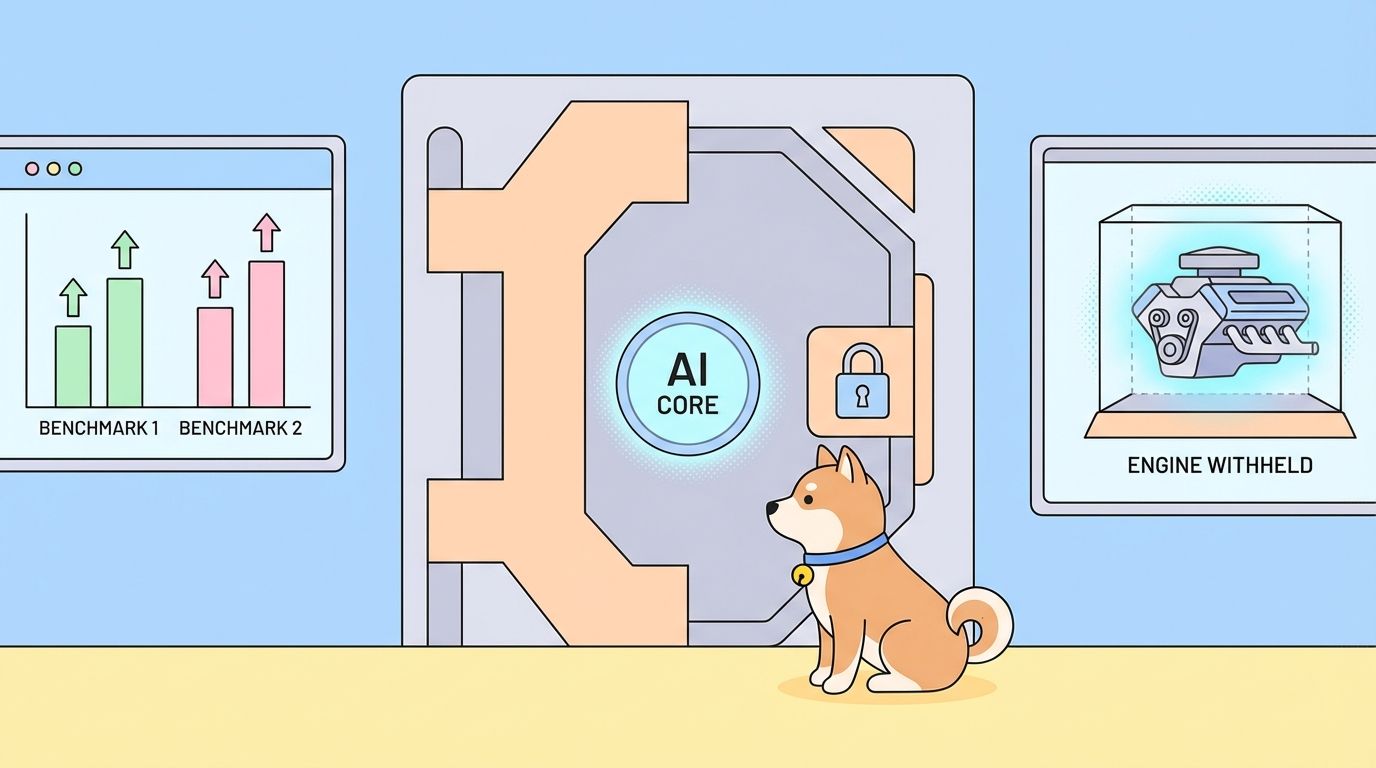
That is what makes Claude Mythos Preview interesting. Anthropic has not announced it like a normal Claude release. There is no broad public API rollout, no standard chat product launch, and no cheerful "try it now" page aimed at everyone. Instead, the model surfaced through reporting tied to Project Glasswing, a restricted program focused on defensive cybersecurity work.
That alone would be enough to make people pay attention. But the benchmark numbers attached to Claude Mythos Preview make the story much bigger. Reported results suggest a large jump over Claude Opus 4.6 on SWE-Bench style coding tasks. If those numbers hold up, Anthropic may already have a model that materially changes the balance between offensive and defensive cyber capability.
What is Claude Mythos Preview?
Based on current reporting, Claude Mythos Preview is an unreleased Anthropic model being made available only to selected defensive cybersecurity partners and researchers.
That wording matters.
This does not look like a standard Claude family launch such as Sonnet or Opus. It looks more like a controlled preview model with access restrictions tied to a narrow use case. Reuters reported that Anthropic is working with major partners including Amazon, Microsoft, Apple, Google, Nvidia, CrowdStrike, and Palo Alto Networks under Project Glasswing. The purpose is defensive cybersecurity research, not mass consumer access.
So the clearest description right now is this: Claude Mythos Preview appears to be a restricted-access Anthropic model for defensive security work, not a public Claude tier.
Why the model is causing so much attention
The answer is simple: the reported benchmark numbers are unusually high.
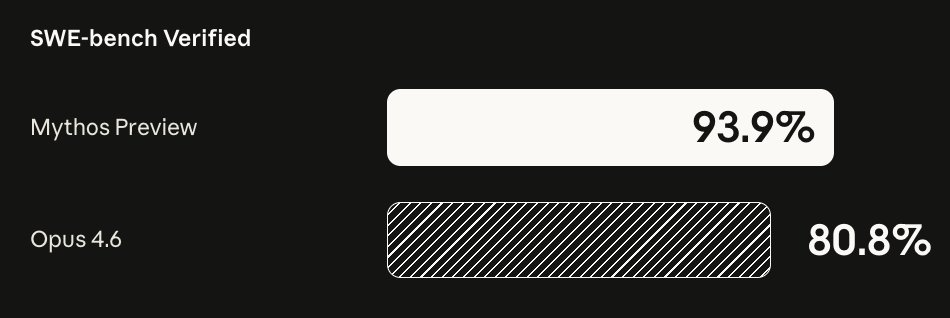
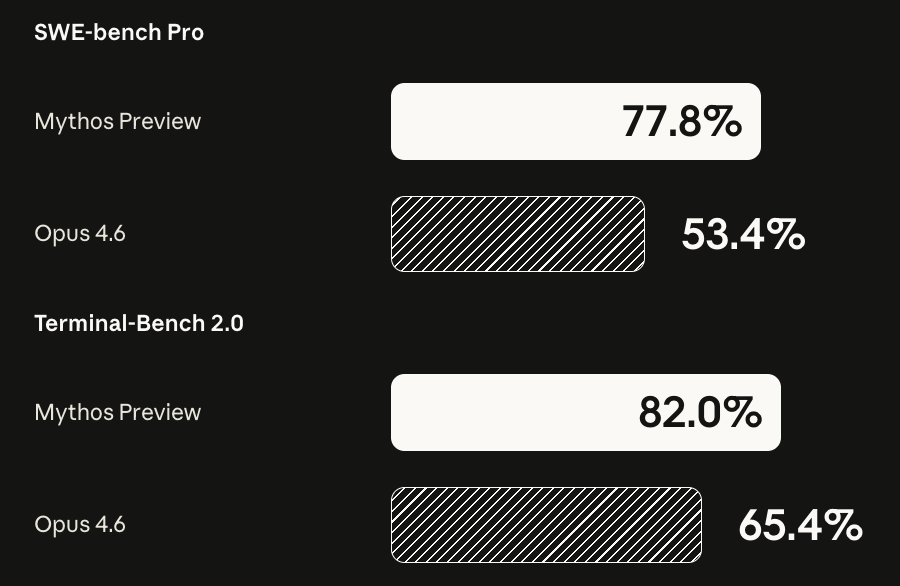
According to coverage that surfaced during today's AI news cycle, Claude Mythos Preview reportedly achieved:
| Benchmark | Claude Mythos Preview | Claude Opus 4.6 |
|---|---|---|
| SWE-Bench Verified | 93.9% | 80.8% |
| SWE-Bench Pro | 77.8% | 53.4% |
If those numbers are accurate, this is not a small upgrade. It is a major jump.
SWE-Bench benchmarks matter because they are one of the clearest public proxies we have for real software engineering ability. They test whether a model can read a repository, understand a bug or issue, make the right code changes, and solve the task under realistic constraints. A jump of this size would suggest Anthropic has moved well beyond its previous public frontier in coding-heavy and agentic tasks.
That is why people are reacting so strongly. The story is not only that Anthropic may have a stronger model. The story is that Anthropic may already have that model and still be choosing not to release it publicly.
Why Anthropic might be keeping Claude Mythos private
The most likely explanation is dual-use risk.
A model that is strong enough to help defenders find vulnerabilities, analyze attack paths, review unsafe code, and automate remediation can also make offensive workflows easier. The same capability that helps a blue team patch systems faster can help a red team or malicious actor move faster too.
That tradeoff gets sharper when a model becomes better at: - repo-scale code understanding - autonomous tool use - vulnerability reproduction - long-horizon problem solving - chaining many actions together without losing context
Those are exactly the abilities modern AI labs want for coding agents. They are also exactly the abilities that raise concern in cybersecurity.
Anthropic has been signaling for a while that frontier model releases may need more targeted rollout strategies. Claude Mythos Preview looks like the clearest example of that strategy so far. Instead of "ship widely and patch later," the move here appears to be "restrict first, learn from vetted users, then decide what happens next."
What Project Glasswing seems to mean
Project Glasswing is the frame that makes the Mythos story make sense.
The reported idea is not simply "here is a better model." It is "here is a better model, but only trusted defensive partners can use it right now." That changes the product story completely.
Instead of a consumer launch, this is closer to a security preview program. Instead of growth being the main KPI, the main KPI may be controlled evaluation: understanding what the model can do for defenders, what misuse risks appear in practice, and whether release safeguards are enough.
That is a meaningful shift for the industry.
Labs have spent the last two years trying to maximize public access while talking about safety. Project Glasswing suggests a different model: the most capable systems may first appear in limited, sector-specific deployments where safety researchers and enterprise partners test them under real constraints.
That may become the norm for models with strong cyber capabilities.
Is Claude Mythos stronger than Opus 4.6?
Based on the reported benchmark numbers, it may be.
But this is where precision matters.
What we can say: - reported numbers suggest Claude Mythos Preview is significantly ahead of Opus 4.6 on SWE-Bench style software engineering tasks - Anthropic is reportedly treating it as a higher-risk model - the model is not being rolled out like a normal public Claude release
What we cannot say with full certainty yet: - that it is stronger than Opus 4.6 across every category - that the published comparison conditions were perfectly identical in every detail - that public users would see the same gains in all workflows
So the careful version is this: Claude Mythos Preview appears to be materially stronger than Claude Opus 4.6 on at least some important coding benchmarks, and strong enough that Anthropic may be restricting access because of the risks.
That is still a very big story.
What this could mean for developers
For most developers, Claude Mythos is not something you can use today. But it still matters because it hints at where the next wave of coding models is going.
Three implications stand out.
1. Public Claude models may not reflect Anthropic's frontier ceiling
Many people assume the best public Claude model is close to the lab's best internal capability. Claude Mythos Preview suggests that gap may be larger than many assumed.
2. Cyber capability may become the main release bottleneck
The biggest constraint on a release may not be model quality anymore. It may be whether the model crosses a threshold where offensive misuse risk becomes too high.
3. The best models may arrive through restricted enterprise programs first
Instead of seeing the strongest systems first in public chat apps, we may see them inside narrow partner networks, industry pilots, and controlled enterprise previews.
That would affect how developers plan roadmaps, evaluate providers, and think about access risk.
What this could mean for the AI industry
Claude Mythos Preview may be less important as a product and more important as a signal.
If Anthropic is willing to hold back a model because of cyber risk, other labs may end up doing the same. That would create a two-track AI market: - public models with broad access and heavier constraints - restricted models with stronger capabilities and tighter access controls
That split would affect benchmarking too. A lab could have a much stronger system than the public has seen, while still competing publicly with a safer, weaker release. It would also make it harder for outsiders to judge the true frontier from public APIs alone.
From a policy point of view, this is exactly the kind of case lawmakers and security researchers have been anticipating. The interesting question is not whether powerful models will exist. It is whether labs can create release mechanisms that preserve defensive value without making offensive misuse dramatically easier.
Claude Mythos Preview may be the first high-profile example of a lab trying to solve that problem in real time.
Should developers care right now?
Yes, but not because you need to switch tools tomorrow.
You should care because this changes how you read model announcements.
When a lab says a public model is its "best available" model, that may no longer mean it is the strongest model the lab has. It may only mean it is the strongest model the lab is willing to release widely. That is a different statement.
You should also care because this affects competitive positioning across providers. If Anthropic is holding back a stronger coding model, then comparisons between public Claude, GPT, Gemini, GLM, and open-weight coding models may understate what private frontier systems can already do.
Conclusion
Claude Mythos Preview is not a normal product launch. It looks like a restricted Anthropic model that may be significantly stronger than Claude Opus 4.6 on software engineering tasks, and restricted enough that Anthropic appears unwilling to release it broadly.
That alone makes it one of the most important AI stories of the moment.
If the reported benchmarks are accurate, the headline is not just that Anthropic built a better model. The real headline is that Anthropic may already be operating in a world where some frontier models are too capable, or at least too risky, for immediate public release.
That would mark a major shift in how advanced AI systems reach the market.
FAQ
What is Claude Mythos Preview?Based on current reporting, it is a restricted Anthropic preview model being tested with selected defensive cybersecurity partners rather than released publicly.
Is Claude Mythos available to the public?No public general release has been announced. Current reporting suggests access is restricted through Project Glasswing.
Is Claude Mythos stronger than Claude Opus 4.6?Reported benchmark numbers suggest it may be significantly stronger on SWE-Bench style coding tasks, but that does not prove it is stronger across every category.
What is Project Glasswing?Project Glasswing appears to be Anthropic's restricted-access program for evaluating Claude Mythos Preview in defensive cybersecurity settings.
Why would Anthropic refuse to release a stronger model?The likely reason is dual-use risk. A model that helps defenders automate code and security work can also make offensive misuse easier.
Can developers use Claude Mythos today?Not broadly. At the moment it appears to be limited to selected partners and researchers rather than public API users.