
TL;DR
RunPod is a GPU cloud marketplace charging $0.34-$0.79/hour regardless of actual usage. Its main limitations are idle cost (you pay even when your GPU isn’t generating), complex setup (Docker containers, ML framework installation), and manual scaling. Simpler alternatives include WaveSpeed (pay per inference, zero setup), Replicate (API access to 1,000+ models), and Fal.ai (fastest serverless inference).
Introduction
RunPod fills a genuine need: cheap, flexible GPU access for workloads that require raw compute. For teams running custom training jobs, fine-tuning experiments, or workloads that don’t fit standard inference APIs, hourly GPU rental is the right model.
For teams using RunPod primarily for model inference, the economics often don’t make sense. You pay $0.34/hour whether your GPU is serving 100 requests or sitting idle. You maintain Docker containers, install ML frameworks, and manage the deployment yourself. Managed inference APIs eliminate all of this overhead.
What RunPod provides
- GPU marketplace: Consumer GPUs (RTX 3090, 4090) and enterprise (A100, H100) at hourly rates
- Flexible deployment: Run any Docker container with any ML framework
- Persistent storage: Keep data and model weights across sessions
- Pod and serverless options: Both always-on pods and serverless functions
The limitations at production scale
- Idle cost: $0.34-$0.79/hour whether generating or not; 24/7 adds up to $245-$570/month
- Setup overhead: Docker configuration, CUDA setup, model loading before first inference
- Manual scaling: No automatic scale-to-zero; you manage replica counts
- Deployment time: Hours from setup to first inference for new models
- Maintenance: Framework updates, security patches, monitoring all on your team
Top alternatives for inference workloads
WaveSpeed
Pricing: Per-inference only, zero idle costs Models: 600+ pre-deployed Setup: API key, first request in minutes Savings: 85-95% versus RunPod for sporadic workloads
WaveSpeed’s pay-per-inference model eliminates idle costs entirely. You pay only when generating. For teams using RunPod for standard image or video generation models, the cost difference is significant: $0.02-$0.08 per image versus paying for GPU-hours whether you’re generating or not.
Replicate
Pricing: Per-second of compute ($0.000225/s Nvidia T4) Models: 1,000+ community models Cold starts: 10-30 seconds on first request
Replicate scales to zero between requests. No idle costs, no container management. The 1,000+ model catalog means most standard workloads are already handled.
Fal.ai
Pricing: Per output (megapixel for images, per second for video) Models: 600+ optimized models Speed: 2-3x faster inference than standard GPU
Fal.ai’s serverless architecture is architecturally closest to RunPod’s serverless tier but with managed model deployment. You don’t run containers; you call an API.
Novita AI
Pricing: $0.0015/image, spot GPU instances at 50% off Models: 200+ APIs + GPU instance access Unique: Hybrid API + raw GPU access in one account
Novita AI is the closest hosted alternative to RunPod for teams that need both managed inference and raw GPU capacity. You can use the API for standard workloads and GPU instances for custom training.
Cost comparison
| Use case | RunPod cost | WaveSpeed cost |
|---|---|---|
| 100 images (RTX 3090, 1 hour) | $0.34 (idle + active) | ~$2-$4 |
| 1,000 images/month (sporadic) | $50-$200+ (idle time) | $20-$80 |
| 10,000 images/month (consistent) | $245+ (24/7 GPU) | $200-$800 |
The math depends heavily on utilization. RunPod becomes cost-competitive only when your GPU is busy 80%+ of the time. For sporadic workloads, managed inference APIs are cheaper.
Testing with Apidog
RunPod requires deploying a pod before you can test anything. Managed APIs test in minutes.
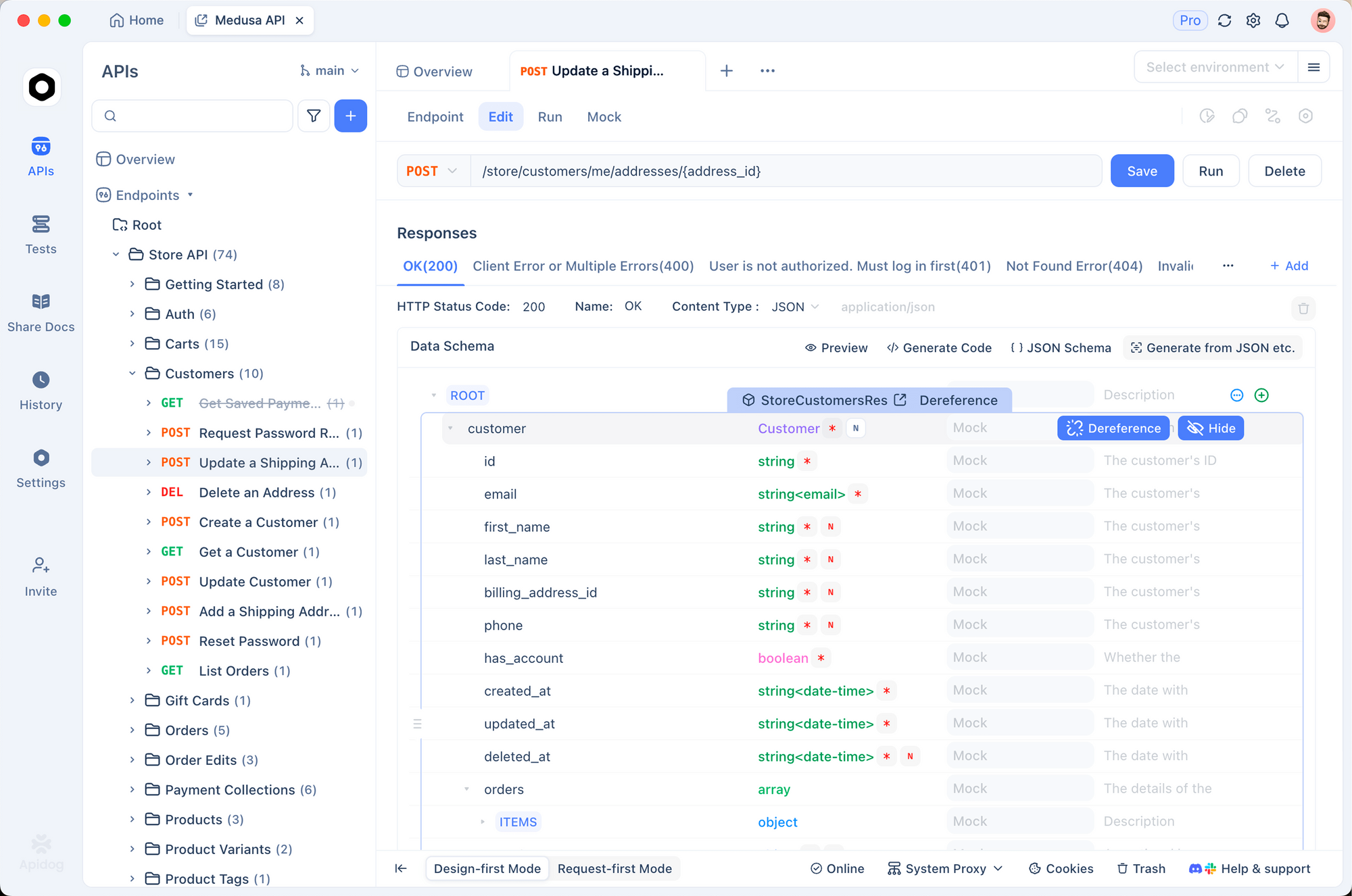
Set up WaveSpeed in Apidog:
Create an environment with API_KEY as a Secret variable. Send a test request:
POST https://api.wavespeed.ai/api/v2/bytedance/seedream-4-5
Authorization: Bearer {{API_KEY}}
Content-Type: application/json

{
  "prompt": "A 3D render of a modern office desk setup, soft lighting",
  "image_size": "landscape_4_3"
}
Add assertions:
Status code is 200
Response body > outputs > 0 > url exists
Response time < 30000ms
Run 10 requests and calculate average cost. Compare against your actual RunPod hourly costs including idle time. The data will tell you which option is cheaper for your specific workload pattern.
When RunPod is still the right choice
RunPod remains the better option when:
- Custom model weights: Your fine-tuned model doesn’t exist on any managed platform
- High, consistent utilization: GPU is busy 80%+ of the time, justifying hourly rental
- Proprietary frameworks: Unusual ML libraries that managed APIs don’t support
- Training workloads: Fine-tuning and training require raw GPU access
For pure inference on standard models, managed APIs are almost always faster to set up and cheaper to run.
FAQ
How much does RunPod’s idle cost actually add up to?At $0.34/hour for 24/7 operation: $245/month. Even at 8 hours/day: $82/month. For workloads with sporadic traffic patterns, pay-per-inference is significantly cheaper.
Can I use a managed API for some workloads and RunPod for others?Yes. Many teams use managed APIs for production inference and RunPod for training and experimentation. The workloads don’t need to be on the same platform.
What’s the fastest way to estimate if switching saves money?Calculate your actual RunPod hours last month (including idle). Multiply by hourly rate. Compare against the cost of the same number of inferences on a managed API. Factor in setup time savings.